Best overall for mixed workouts: a roll-up yoga mat. Best for flat storage and relaxation: Sweatjoy’s TPE Folding Yoga Mat for Napping and Relaxation. Best for floor-focused exercise: a cushioned exercise mat. This 2026 guide compares mat formats for small Singapore homes, with storage, movement space and intended use leading the decision.
- For best exercise mats for small spaces Singapore, choose a roll-up yoga mat as your mixed-workout starting point.
- Sweatjoy’s TPE Folding Yoga Mat for Napping and Relaxation suits shoppers seeking folding storage for relaxation.
- Choose cushioned exercise mats for floor work; check stability before using them for standing exercises.
- Interlocking floor tiles suit a dedicated corner, not a room you need to clear after every workout.
- A lumbar stretching pad is a targeted accessory, not a replacement for a full exercise mat.
Why this matters
A small-space exercise mat has two jobs: support your chosen movements and disappear when the room returns to everyday use. A mat that fits beneath you but blocks a doorway is the wrong fit. So is one that stores neatly but leaves your hands or feet outside its edges.
Sweatjoy sells fitness gear and workout accessories, including the folding mat and lumbar stretching pad discussed here. Those products serve different purposes. Choose by intended use first, storage shape second—not by the word yoga in the name.
For your 2026 shortlist, separate three questions: where you exercise, what you do there and where the mat lives afterwards. That keeps a compact relaxation mat from being mistaken for a general workout surface.
What makes the best exercise mat for a small space?
Use these criteria before choosing a format. A neat folded package is useful, but it does not tell you how a mat behaves during exercise.
- Workout fit: Match the mat to standing poses, floor exercises, stretching or relaxation. These are different jobs.
- Usable footprint: Check the open mat against your floor space and your movements, not just your height.
- Storage shape: Decide whether your home has room for a roll, a folded rectangle or stacked tiles.
- Surface stability: Check that the mat stays put on your actual floor and supports your chosen positions.
- Contact comfort: Look for comfortable support under knees, elbows and hips without assuming softer always means better.
- Care requirements: Read the cleaning and drying instructions before choosing a storage location.
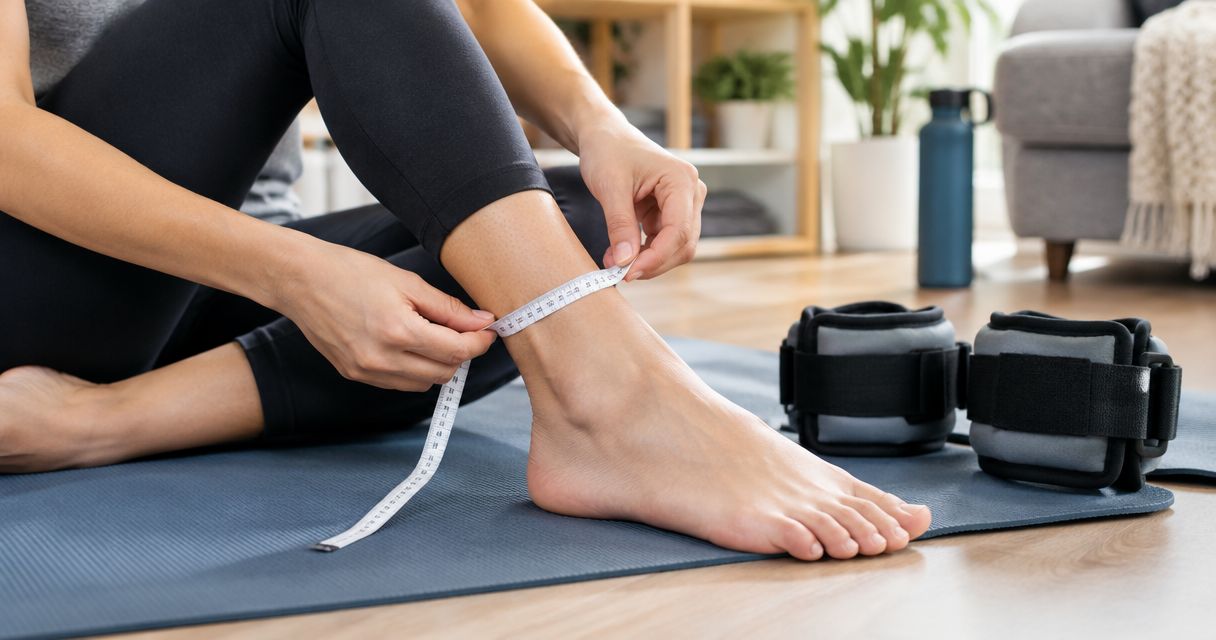
Record 3 measurements in centimetres: clear floor length, clear floor width and the storage opening. Use the seller’s open and stored dimensions to check the fit. Do not estimate folded size from a product photo.
Small-space exercise mats at a glance
The order below prioritises general exercise first, then distinct storage and activity needs. The named products are included only for the uses stated in their descriptions; the other entries are mat formats, not specific tested models.
| Rank | Mat or format | Best for | Standout feature | Key limitation |
|---|---|---|---|---|
| 1 | Roll-up yoga mat | Mixed yoga and controlled bodyweight routines | Rolls away between sessions | A roll still needs a suitable storage space |
| 2 | TPE Folding Yoga Mat for Napping and Relaxation | Folding storage for relaxation | Folding format with a stated relaxation purpose | Its description does not establish suitability for demanding workouts |
| 3 | Cushioned exercise mat | Kneeling, seated and lying exercises | Prioritises contact comfort | A soft surface is not automatically suitable for balance work |
| 4 | Interlocking exercise floor tiles | A dedicated workout corner | Modular floor coverage | Multiple pieces make daily setup and clearing less convenient |
| 5 | New Lumbar Support Massaging Stretch Yoga Mat | Targeted back stretching | Described as a lumbar stretching and massage pad | Not a full-body exercise-mat substitute |
1. Roll-up yoga mat: best for mixed home workouts
A roll-up yoga mat is the starting point when you want one surface for yoga, stretching and controlled bodyweight exercise. It opens as a continuous surface, then rolls away when you finish. Choose a specific model only after checking its dimensions, care instructions and stated uses.
Roll-up yoga mat pros:
- A single surface avoids joins between separate floor pieces.
- Rolling provides a straightforward setup and pack-away routine.
- The format suits a mixed routine without reserving a permanent floor area.
Roll-up yoga mat cons:
- The rolled shape needs its own storage spot.
- Cushioning and surface behaviour differ between models.
- Rollability alone does not establish grip on your floor.
Best for: You practise a mixture of yoga, stretching and controlled bodyweight movements in a shared room.
Before choosing, mark out the proposed mat footprint. Try 2 positions: lying at full length and a hands-and-feet support position. Check whether your body fits, whether nearby furniture interferes and whether you have space to change position without stepping into a walkway.
Verdict: Buy a roll-up yoga mat as the default format for mixed workouts, after checking the individual model.
2. TPE Folding Yoga Mat: best for stowed-away relaxation
Sweatjoy’s TPE Folding Yoga Mat for Napping and Relaxation is described as a folding mat intended for midday naps and lounging. That makes its stated purpose different from an exercise mat promoted for demanding standing or jumping routines. Its folding format is relevant when your storage space suits a flat package rather than a roll.
TPE Folding Yoga Mat pros:
- Folding is an explicitly stated product feature.
- Napping and relaxation are explicitly stated uses.
- Its purpose suits a relaxation area that you clear after use.
TPE Folding Yoga Mat cons:
- The description does not establish grip during sweaty exercise.
- The folding format does not establish the stored dimensions.
- Its stated relaxation purpose is not proof of workout suitability.
Best for: You want a folding mat for napping, lounging and a relaxation-focused corner.
Sweatjoy’s TPE Folding Yoga Mat for Napping and Relaxation is best for shoppers seeking a folding relaxation mat, not a verified all-purpose workout mat. For a 2026 purchase, check the open size, folded size and care instructions against your room before deciding.
Verdict: Buy for its stated relaxation purpose; hold for exercise until its suitability is confirmed.
3. Cushioned exercise mat: best for floor-focused sessions
A cushioned exercise mat puts contact comfort first. Consider this format when your routine mainly involves kneeling, sitting or lying on the floor. Select the individual mat for those activities rather than treating thickness as a complete quality score.
Cushioned exercise mat pros:
- The format prioritises comfort at floor contact points.
- It suits routines that stay close to the ground.
- A dedicated floor-work surface separates comfort needs from balance needs.
Cushioned exercise mat cons:
- A soft surface is not automatically a stable standing surface.
- Stored size depends on the individual mat’s construction.
- Cushioning alone says nothing about resistance to sliding.
Best for: Your sessions centre on floor exercises, gentle mobility and kneeling movements.
Compare contact comfort and stability separately. A surface that feels comfortable beneath your knees still needs to stay put during your actual routine. Check the manufacturer’s intended-use guidance before combining floor work with standing balance exercises.
For small rooms, examine the packed shape as carefully as the open shape. A mat that takes up less floor space during exercise can still be awkward to store.
Verdict: Buy for floor-focused routines; skip as an automatic choice for standing balance work.
4. Interlocking floor tiles: best for a dedicated workout corner
Interlocking exercise tiles connect to create a modular floor area. They suit a room where the workout zone stays in place rather than appearing and disappearing each day. The advantage is layout choice, not necessarily compact storage.
Interlocking floor tile pros:
- Separate pieces let you plan a modular workout area.
- A dedicated layout avoids rebuilding the surface before every session.
- The format suits a clearly defined exercise corner.
Interlocking floor tile cons:
- Daily clearing involves multiple pieces.
- The surface has joins rather than being continuous.
- Suitability for footwear, weights and impact depends on the specific tiles.
Best for: You can reserve a permanent corner for exercise without obstructing the room’s other uses.
Do not confuse floor coverage with soundproofing. Exercise tiles alone do not establish that jumping, dropped equipment or other impacts will be inaudible in neighbouring rooms or homes. Check the product’s stated uses and keep your activity suitable for the space.
If the same area is also a dining space or walkway, a single removable mat is the simpler starting point. Interlocking tiles earn their place when they can stay down.
Verdict: Buy for a dedicated corner; skip for daily shared-room setup.
5. Lumbar Support Massaging Stretch Yoga Mat: best for targeted stretching
Sweatjoy’s New Lumbar Support Massaging Stretch Yoga Mat is described as a lumbar support stretching and massage pad. Its role is targeted back stretching, not providing a general surface beneath your whole workout. Treat it as an accessory with a specific purpose.
Lumbar stretching pad pros:
- Lumbar support stretching is an explicitly stated purpose.
- The description distinguishes it from a general floor covering.
- It offers a targeted option for shoppers seeking that type of accessory.
Lumbar stretching pad cons:
- It does not replace a full exercise mat.
- Its description does not establish whole-body workout coverage.
- A massage description does not establish treatment or recovery outcomes.
Best for: You specifically want a lumbar stretching accessory and already have an appropriate exercise surface.
Follow the product’s use instructions rather than improvising positions. Stop if a movement causes pain. Do not choose this pad to solve a general mat-storage problem: that would replace the tool you need with a different tool.
Verdict: Buy only for targeted stretching; skip as your main exercise mat.
Picture the mat’s place in your room
Think in three zones: Workout space, Movement clearance and Storage space. The mat occupies the first; your arms, legs and transitions need the second. The third decides whether putting everything away is straightforward or becomes a daily obstacle.
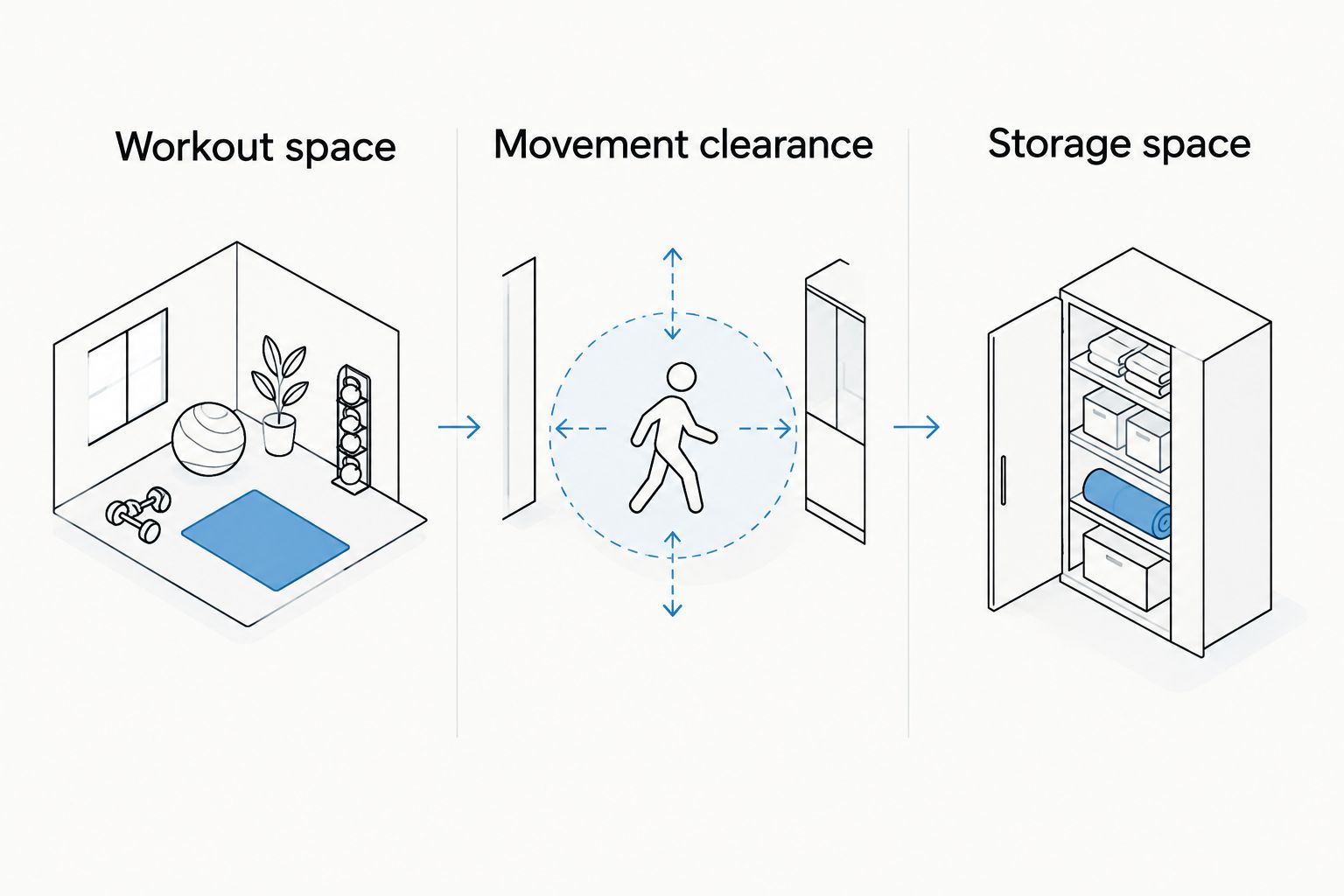
Keep the movement zone away from door swings and frequently used walkways. Put the proposed storage location into the same plan. A cupboard that requires shifting other equipment every time is a less practical home for your mat than an accessible spot.
Named products for relaxation and targeted stretching
These Sweatjoy products cover the two specific uses described above. Choose the folding mat for its stated relaxation purpose or the lumbar pad for targeted stretching—not as interchangeable workout surfaces.


Check the fit before committing
Use this sequence for your 2026 shortlist. It turns vague claims about compactness into checks you can make against your home.
- Measure the floor. Record usable space after accounting for furniture and doors. Compare it with the mat’s stated open dimensions.
- Rehearse the movements. Walk through your planned positions without equipment. Identify where hands, feet and extended limbs need clearance.
- Measure the storage. Compare the stated packed dimensions with the opening and usable interior of your storage spot.
- Read the care instructions. Decide where cleaning and drying happen before the mat goes away.
- Check the intended use. Confirm that the individual product supports your activities, not merely that its name sounds relevant.
After choosing, use 1 complete workout session to evaluate the routine: taking the mat out, setting up, exercising, cleaning as directed and putting it away. Judge the whole process, not just the first comfortable stretch.
How the options are ranked
This 2026 ranking compares intended use, storage format, usable footprint, contact comfort and the checks needed before purchase. It is a format-based buying guide, not a measured performance test of individual mats.
The roll-up format ranks first for a mixed routine. The other entries each own a separate role: folding relaxation, floor-work cushioning, permanent modular coverage or targeted lumbar stretching. A lower-ranked option is the better choice when that specific role matches your needs.
Which exercise mat should you choose?
Choose a roll-up yoga mat if you are undecided and want a general starting point for mixed home workouts. Then check the actual model’s size, surface, care requirements and intended activities. The format alone is not the final purchase decision.
Choose the folding relaxation mat when lounging and easy-to-plan folded storage are your priorities. Choose a cushioned exercise mat when floor contact dominates your routine. Reserve tiles for a permanent corner and the lumbar pad for its targeted purpose.
For 2026, keep the buying rule simple: fit the workout, fit the room, fit the storage. None of those checks replaces the others.
FAQ
What’s the best exercise mat for a small Singapore home?
A roll-up yoga mat is the default format for mixed yoga, stretching and controlled bodyweight routines. Check the individual model’s dimensions, surface and intended uses before buying.
Is a folding mat better than a roll-up mat for small spaces?
A folding mat is better when its packed shape fits your storage space more conveniently. A roll-up mat is better when you have a suitable place for a roll; neither format guarantees better workout performance.
Is Sweatjoy’s folding yoga mat suitable for exercise?
Sweatjoy’s TPE Folding Yoga Mat for Napping and Relaxation is described for napping, lounging and relaxation. Confirm suitability for your specific exercises rather than assuming its title establishes grip or stability.
Should I choose a thick mat for home workouts?
Choose cushioning for your activities, not thickness alone. Floor exercises call for comfortable contact support, while standing work also requires a stable surface.
Can exercise tiles stop workout noise from reaching neighbours?
Exercise tiles do not by themselves establish soundproofing. Their suitability for impact activities depends on the specific product, and a floor covering is not proof that neighbouring homes will hear nothing.
Can a lumbar stretching pad replace an exercise mat?
A lumbar stretching pad does not replace a full exercise mat. The New Lumbar Support Massaging Stretch Yoga Mat is described for lumbar stretching and massage, not whole-body floor coverage.
What should I measure before buying a compact exercise mat?
Measure clear floor length, clear floor width and your storage opening. Compare those measurements with the product’s stated open and packed dimensions, then allow room for your movements.
One last thing
The smallest packed mat is not automatically the best small-space mat. Your extended arms and legs still need room outside the rectangle beneath you.
Rehearse the widest movement in your routine before buying. If furniture blocks it, change the layout or the routine first. A different mat cannot create movement space that the room does not have.