Jumping rope every day is not automatically bad for your knees, but daily jumping can overload them if you increase your training faster than you can recover. Pain, swelling, poor landing control or an existing knee condition are reasons to change the plan rather than push through. For your 2026 routine, choose a schedule your knees tolerate—not a daily streak.
- Is jumping rope every day bad for your knees? Not automatically; workload, recovery and symptoms matter more than the streak.
- Stop jumping if knee pain changes your landing or causes swelling, locking or giving way.
- A weighted jump rope or electronic counter does not establish whether your knees can tolerate daily training.
- World Health Organization activity targets do not require daily jumping rope.
Is jumping rope every day bad for your knees?
Daily skipping is not inherently harmful, but it is not the right starting point for everyone. Repeated jumping loads your legs. Whether that load is manageable depends on your recent training, recovery, technique and knee health.
Use the following comparison to decide what to do next. If equipment is part of your decision, the guide to weighted versus regular jump ropes addresses a separate question: which tool suits your workout.
| Your situation | Best for | Benefit | Limitation or next move |
|---|---|---|---|
| Comfortable, established skipping routine | Maintaining familiar training | Keeps a familiar activity in your schedule | Do not assume comfort makes unlimited extra jumping sensible |
| New to skipping or returning after a break | Building tolerance gradually | Gives you room to practise landing control | Avoid starting with a daily challenge |
| Soreness or discomfort that worsens between sessions | Reducing repeated impact | Creates space to reassess your workload | Do not keep adding jumps while symptoms build |
| Knee swelling, locking or giving way | Clinical assessment | Helps identify a problem that training changes alone cannot explain | Stop jumping rather than testing the knee repeatedly |
Feeling comfortable during a session is useful feedback, not proof that every training increase is safe. Check how your knee feels afterwards and during ordinary activities before repeating the workload.
Why this matters
A daily challenge makes consistency easy to measure. Your knees do not follow the same scoreboard. A completed workout says nothing about whether you recovered from it.
The useful question for 2026 is not whether skipping is universally good or bad. It is whether your current amount of skipping fits your current capacity. A familiar session and a sudden jump in training are different demands, even when you use the same rope.
Separate general fitness from injury management. Sweatjoy sells fitness accessories for gym-goers and fitness enthusiasts; equipment selection does not replace an assessment of persistent knee pain.
Why your knees' response to skipping varies
These factors explain why someone else's daily routine is not a reliable prescription for you:
- Recent training: A regular skipper starts from a different baseline than someone returning after a long break. Match the workload to what you have actually been doing.
- Total impact: Include running, court sports and other jumping in your training picture. Skipping is not your knees' only workload.
- Recovery: Repeating a demanding session before symptoms settle makes it harder to judge what your knee currently tolerates.
- Landing control: Fatigue, unnecessary jump height and awkward landings change the task. End the session when you cannot maintain controlled movement.
- Surface and footwear: Choose stable footing and footwear that fits securely. A slippery floor or unstable mat creates an avoidable problem.
- Existing symptoms or injury: Previous surgery, a current injury or unexplained swelling calls for individual advice rather than a generic daily programme.
Change the training before chasing a new piece of gear. A different rope cannot compensate for a workload your knee is not tolerating.
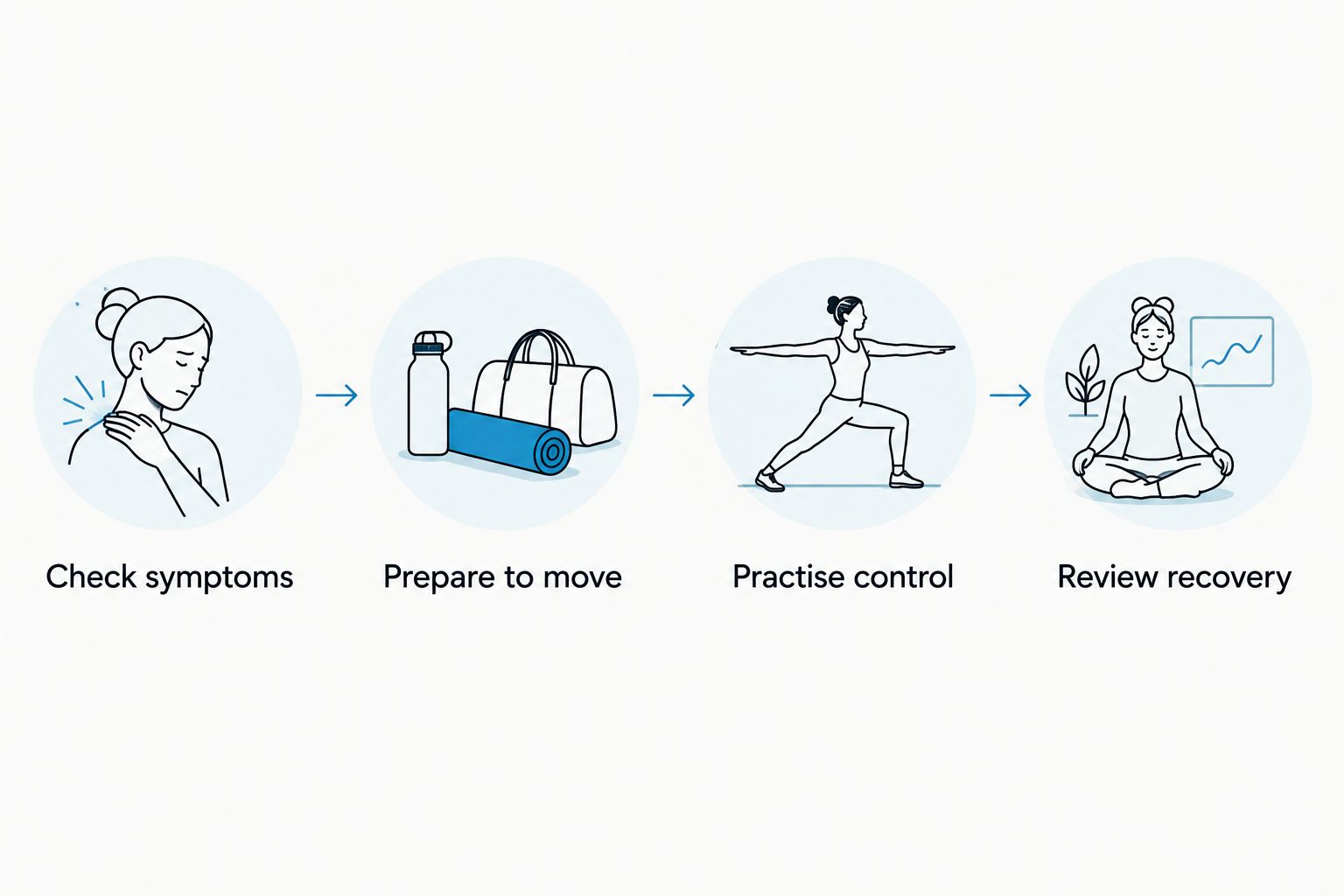
How do you build a knee-conscious skipping routine in 2026?
Start with a repeatable process, not a target copied from a fitness challenge. There is no universal daily jump count that establishes knee safety.
- Check symptoms. Notice pain, swelling, stiffness and whether normal walking or stairs feel different. Do not use a workout to test an already painful knee.
- Prepare to move. Begin with comfortable, easy movement before progressing to jumping. Your warm-up should not provoke knee pain.
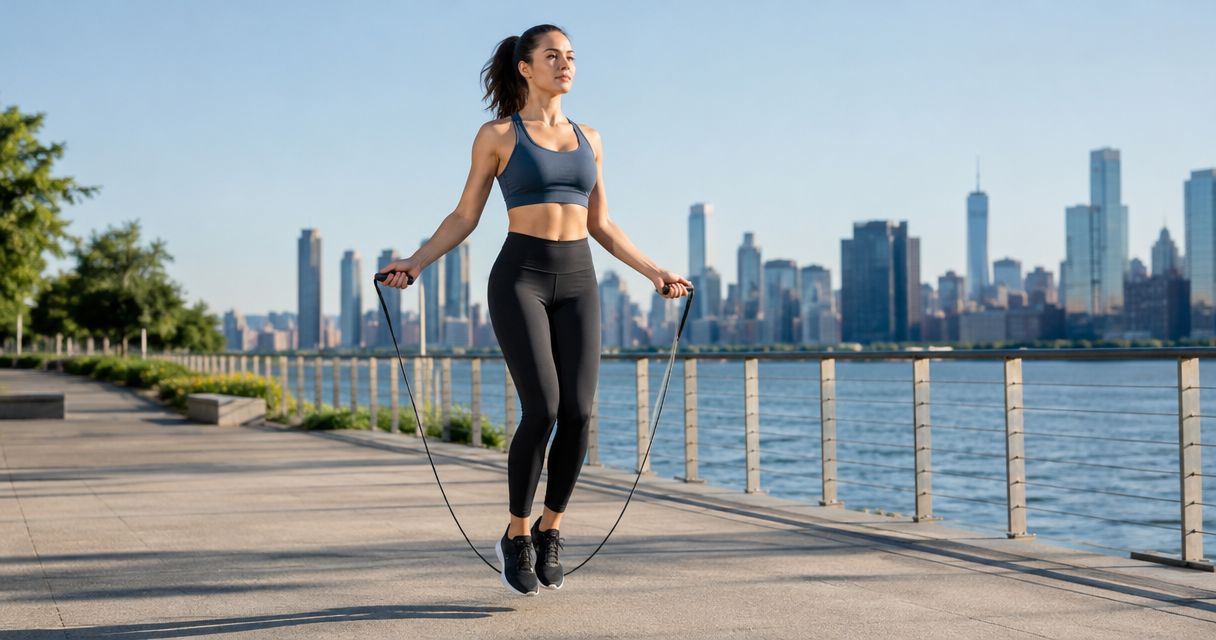
- Practise control. Use low, controlled jumps with a slight bend through your legs. Turn the rope with your wrists rather than jumping unnecessarily high to clear it.
- Review recovery. Check your knee later that day and the following morning. If symptoms increase or your movement changes, reduce or stop the jumping.
The next session should reflect that feedback. Do not add duration, speed and extra resistance together simply because you completed the previous workout.
Keep the landing simple
Aim to clear the rope without turning every repetition into a high jump. Let your knees bend naturally rather than holding them rigid, and keep your movement controlled.
If fatigue makes you stumble, land awkwardly or change your technique to avoid discomfort, stop. Completing the planned total is less important than maintaining a movement you can control.
Choose stable footing
Use a clear space where the rope can travel without catching nearby objects. Check that the floor is dry and that your shoes do not slide.
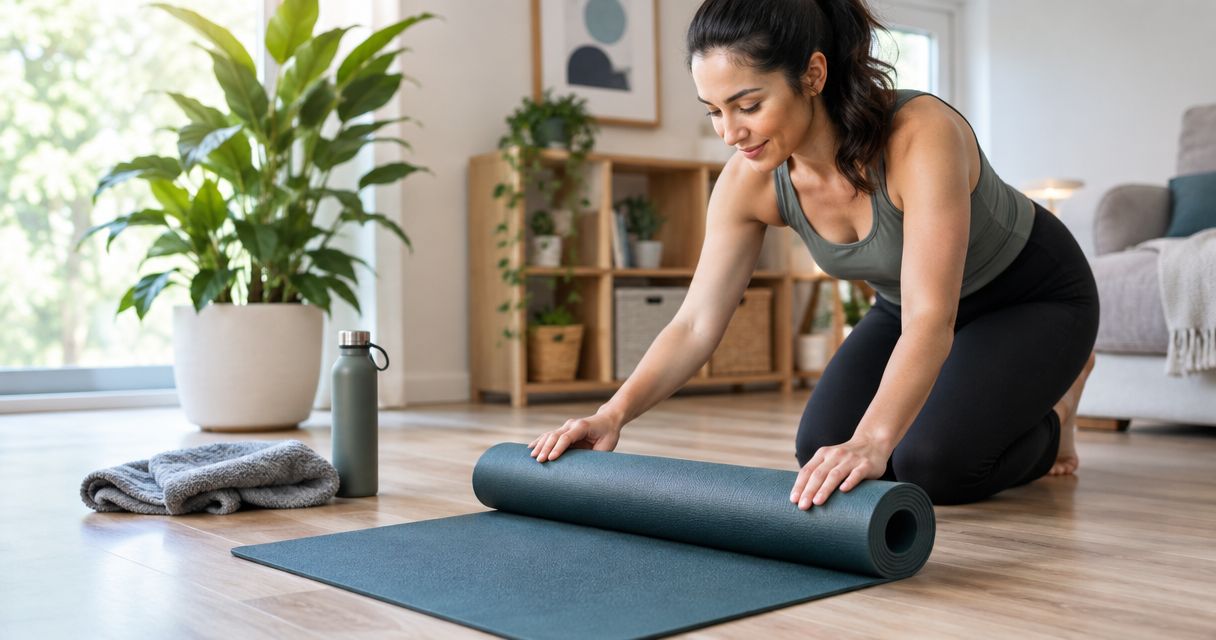
Do not assume a thick yoga mat is automatically suitable for jumping. A mat that shifts, bunches or catches the rope introduces a different problem. Stability matters more than the promise of extra cushioning.
Build recovery into the plan
You can maintain a daily movement habit without jumping every day. Choose a different activity on non-skipping days if it is comfortable for your knee.
Treat recovery as part of training, not a missed workout. If discomfort returns whenever you resume skipping, stop repeating the same experiment and get advice about the cause.
How much exercise do you need without daily skipping?
You do not need daily skipping to meet general activity guidance. The World Health Organization's adult physical activity guidelines recommend at least 150 minutes of moderate-intensity aerobic activity per week, or 75 minutes of vigorous-intensity activity, or an equivalent combination.
The WHO also recommends muscle-strengthening activity involving major muscle groups on at least 2 days per week. These are population-level health targets, not a jumping-rope prescription or clearance to exercise through knee pain.
For your 2026 plan, remember the distinction:
- 150 minutes per week describes a moderate-intensity aerobic activity target, not a minimum amount of skipping.
- 75 minutes per week describes the vigorous-intensity alternative, not a daily jumping requirement.
- 2 days per week describes the muscle-strengthening recommendation, not a rule about how often your knees should tolerate impact.
Use a mix of activities that suits your health and ability. The weekly target does not require every session to use the same movement or equipment.
Does a smart or weighted jump rope protect your knees?
No—an electronic counter is a tracking feature, not a knee-protection feature. A weighted rope also changes the exercise; it does not establish that daily skipping is appropriate for you.
Sweatjoy offers the Smart Weighted Jump Rope with Electronic Counter. Its electronic counter is relevant if you want to track repetitions, but a displayed total cannot tell you whether knee pain is harmless or whether your landing is controlled.
For a 2026 purchase, separate convenience from safety. Decide whether you want counting features, then judge your training response independently of the display.
Sweatjoy is best for gym-goers shopping for fitness accessories, not personalised knee advice. Choose equipment for a clear training purpose, and do not treat it as an injury solution.
A counter also creates a practical temptation: finishing the number even after your technique deteriorates. Let symptoms and control end the workout, not the remaining repetitions.
When should you stop jumping and get medical advice?
Stop jumping if pain makes you limp, shift your weight or land differently. Persistent or recurring pain deserves assessment, especially if reducing the workload does not resolve it.
Seek urgent medical advice for symptoms highlighted in NHS knee-pain guidance, including:
- Being unable to move your knee or put weight on it.
- A badly swollen knee or a knee that has changed shape.
- A knee that locks or gives way.
- Fever or feeling unwell alongside redness or heat around the knee.
These signs are not a cue to try a softer mat or buy a knee sleeve. They need a different response from ordinary workout fatigue.
If you have had knee surgery, have a diagnosed knee condition or are returning after an injury, ask your treating clinician about jumping before starting a daily routine. General exercise advice cannot account for your individual recovery.
Can you jump rope every day if your knees do not hurt?
Pain-free daily skipping is not automatically a problem, but absence of pain does not justify unlimited progression. Keep the workload familiar and reassess when you add other impact training, return after time off or notice changes in recovery.
Do not make daily frequency the goal by itself. A schedule with recovery days can still support consistent training without requiring the same movement every day.
Is jumping rope better for your knees than running?
Neither jumping rope nor running is universally better for every knee. Both involve repeated loading, and the useful comparison depends on your symptoms, technique, training history and total workload.
Choose the activity you tolerate rather than assuming one is automatically protective. If both hurt, switching between them is not a substitute for understanding the pain.
FAQ
Is jumping rope every day bad for your knees if you are a beginner?
Daily skipping is not a sensible default for a beginner because it repeats an unfamiliar impact activity without establishing how you recover. Start with manageable practice and leave room to assess symptoms before repeating it.
Should I keep skipping if my knees hurt after a workout?
Do not repeat a skipping workout that is causing knee pain. Reduce or stop the jumping, and seek assessment if pain persists, recurs or comes with swelling, locking or giving way.
Does a weighted jump rope make skipping safer for my knees?
A weighted jump rope does not establish knee safety. Choose it for its training purpose, not as a treatment for pain or a reason to increase daily jumping.
Will a yoga mat stop my knees hurting when I skip?
A yoga mat is not a reliable solution for knee pain during skipping. Use stable footing, avoid mats that shift or catch the rope, and address the painful workload rather than relying on cushioning.
How many minutes should I skip each day to protect my knees?
There is no universal daily skipping duration that protects everyone's knees. Your training history, current symptoms and recovery matter more than a fixed timer target.
Can I exercise on days when I do not jump rope?
Yes, you can choose another activity that your knee tolerates on non-skipping days. Avoid replacing skipping with a different painful exercise simply to maintain a daily streak.
When is knee pain after skipping urgent?
Seek urgent medical advice if you cannot bear weight, your knee is badly swollen or deformed, it locks or gives way, or redness and heat occur with fever or feeling unwell. Stop jumping rather than testing the knee again.
One last thing
For your 2026 training log, write down how your knee feels the morning after skipping—not just the workout total. That entry gives you information a repetition counter cannot provide.
Keep the habit flexible and the stop rule firm. You can change the activity, shorten the session or take a recovery day without abandoning your fitness goal. You do not need to prove consistency by repeating a movement that hurts.