Best overall: a polyurethane-topped rubber mat designed for hot yoga. Best for keeping your current mat: a fitted yoga towel over a stable base. Best for a natural surface: a cork-topped rubber mat. This 2026 guide separates those hot-yoga options from the relaxation-focused mat sold by Sweatjoy, so you choose for sweaty practice rather than the word yoga on a label.
- Best yoga mats for hot yoga Singapore: prioritise wet grip, floor stability and cleaning instructions.
- Choose a polyurethane-topped rubber mat designed for hot yoga as the default for sweaty flows.
- A fitted yoga towel suits an existing mat, but cannot fix a base that slides.
- Sweatjoy’s TPE Folding Yoga Mat is described for naps and lounging, not verified hot-yoga performance.
Why this matters
Your hands need traction on the top surface. The bottom needs to stay put against the studio floor. A mat can pass one test and fail the other, leaving you adjusting your equipment instead of holding your pose.
For your Singapore hot-yoga shortlist in 2026, start with the intended use and care instructions. Material names help you narrow the field, but they do not establish how a particular mat behaves when wet. Choose the surface for your practice, then check the specific product.
A relaxation mat solves a different problem. Comfort for lying down does not establish grip for standing transitions, and a folding format does not prove suitability for heated classes.
What makes the best yoga mat for hot yoga?
Use these 5 buying criteria before comparing colours or patterns:
- Wet grip: Look for a mat explicitly designed for sweaty practice. Dry-grip claims alone do not answer the hot-yoga question.
- Floor stability: Check whether the base stays flat and resists movement on the floor you use. A grippy top cannot compensate for a sliding underside.
- Standing support: Choose cushioning that supports your knees without making standing poses feel unstable. Thickness alone is not a quality score.
- Cleaning compatibility: Read the care instructions before buying. Your cleaning routine must suit the top layer, base and any bonded materials.
- Carry and storage fit: Check the listed dimensions and weight against your commute and drying space. A mat that stays damp inside your bag is difficult to maintain.
Keep those criteria separate. A comfortable surface can be awkward to clean; an easy-to-clean surface can still need a towel when your hands become sweaty. The right choice is the combination you can use consistently.
Hot-yoga mat options at a glance
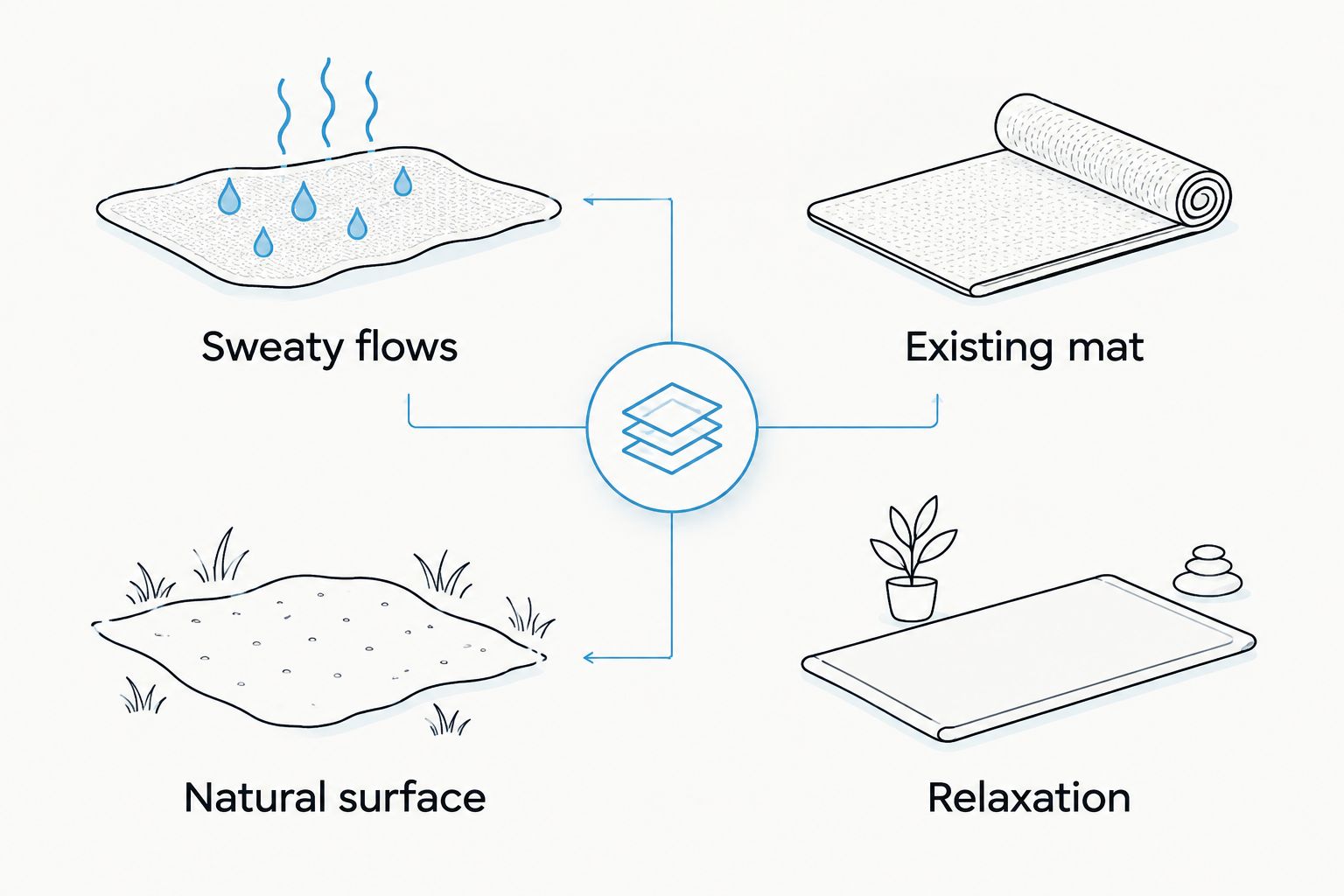
The 2026 ranking below compares 4 options by use case. These are material and setup recommendations, not a claim that every mat made from a particular material performs identically.
| Rank | Option | Best for | Standout feature | Key limitation |
|---|---|---|---|---|
| 1 | Polyurethane-topped rubber mat | Sweaty flows | Dedicated contact surface over a rubber base | Grip and cleaning requirements depend on the exact construction |
| 2 | Fitted yoga towel over a stable mat | Existing mat | Separately washable contact layer | Towel can bunch; base must already be stable |
| 3 | Cork-topped rubber mat | Natural surface | Cork contact layer over a supportive base | Dry and damp grip need separate checks |
| 4 | TPE Folding Yoga Mat for Napping and Relaxation | Relaxation | Folding format and stated lounging purpose | Description does not establish hot-yoga grip |
Match the choice to the problem you actually need to solve. Sweaty hands, a moving base, awkward storage and a desire for lounging comfort are different problems; buying one mat does not automatically solve all of them.
1. Polyurethane-topped rubber mat: best for sweaty flows
A polyurethane-topped rubber mat combines a polyurethane contact layer with a rubber base. For hot yoga, choose a model whose manufacturer explicitly describes it for sweaty practice and explains how to maintain that surface. The material combination is a starting point, not proof of performance.
This is the default shortlist for someone buying a dedicated hot-yoga mat in 2026. You get a single setup rather than managing a separate towel, but you still need to check whether the surface works at the beginning of class as well as after you start sweating.
Polyurethane-topped rubber mat pros:
- Single-piece setup, without a separate towel to position.
- Distinct contact layer and base for evaluating hand grip and floor stability.
- Straightforward shortlist when a product explicitly identifies hot yoga as its intended use.
Polyurethane-topped rubber mat cons:
- A polyurethane label does not prove wet-grip performance.
- Care restrictions differ between products; do not assume any cleaner is suitable.
- A rubber base needs consideration if you have a latex allergy; check the specific material information.
Best for: You want a dedicated surface for sweaty flows and prefer not to reposition a towel during class.
Before buying, check the manufacturer's wet-use guidance, cleaning method and base material. If those details are unclear, choose a better-documented product rather than treating a material name as a guarantee.
Verdict: Buy a polyurethane-topped rubber mat explicitly designed for hot yoga. Skip generic grip claims.
2. Fitted yoga towel over a stable mat: best for an existing mat
A yoga towel adds a fabric contact layer over the mat you already use. It is a setup choice rather than a replacement mat, and it makes sense when your existing base stays flat but the top surface no longer gives you dependable traction during sweaty practice.
Choose a towel intended for yoga, with dimensions that suit your mat. Follow its instructions about dry or damp use instead of assuming every towel needs the same preparation. An ordinary bath towel is not an equivalent purchase specification.
Fitted yoga towel setup pros:
- Keeps a usable base mat in your routine.
- Provides a separate contact layer you can wash according to its care label.
- Lets you assess the towel and base independently rather than replacing everything.
Fitted yoga towel setup cons:
- A towel can wrinkle or bunch during transitions.
- A towel does not fix a mat that slides against the floor.
- You have another item to wash, dry and pack.
Best for: Your current mat is stable, but you need a different surface under sweaty hands and feet.
Test the complete setup, not just the towel. Move slowly between standing and floor positions and check whether the fabric shifts or exposes slippery sections beneath it. If you keep stopping to straighten the towel, the setup is not serving your practice.
Verdict: Buy a fitted yoga towel if your base mat already works. Skip it as a fix for floor slippage.
3. Cork-topped rubber mat: best for a natural contact surface
A cork-topped rubber mat places cork above a rubber base. It belongs on your shortlist when you specifically want that contact material, but the cork label alone does not establish how the finished mat grips or how it should be cleaned.
Check the manufacturer's instructions for moisture and maintenance. Your first standing pose and your later sweaty flow place different demands on the surface, so assess both conditions rather than judging the mat only after it becomes damp.
Cork-topped rubber mat pros:
- Cork provides a distinct contact material for shoppers who prefer it.
- Single-piece setup without a separate fabric layer.
- Top and base can be evaluated against the same grip and stability criteria as other mats.
Cork-topped rubber mat cons:
- Natural-material wording does not establish wet grip.
- Cleaning instructions must account for the cork layer and bonded construction.
- A rubber base still requires a material check for anyone with a latex allergy.
Best for: You want a cork contact surface and are willing to check its behaviour throughout class.
For your 2026 shortlist, reject vague claims that substitute natural materials for practical information. You need intended-use guidance, dimensions and a cleaning method. Those details tell you more about suitability than a broad environmental slogan.
Verdict: Buy a cork-topped rubber mat when its hot-yoga guidance matches your needs. Hold if suitability rests only on the cork label.
4. TPE Folding Yoga Mat: best for relaxation, not hot yoga
Sweatjoy’s TPE Folding Yoga Mat for Napping and Relaxation is described for midday naps and lounging. That stated purpose makes it a relaxation option, not a documented recommendation for sweaty standing practice.
The folding format gives you a specific construction to consider. However, neither the product name nor its supplied description establishes wet grip, floor traction or suitability for a heated studio class. Do not turn an intended-use gap into a performance promise.
TPE Folding Yoga Mat pros:
- Clearly named folding format.
- Explicitly described for naps and lounging.
- Relevant when relaxation is your actual purchase goal.
TPE Folding Yoga Mat cons:
- Hot-yoga wet grip is not established in the description.
- Floor stability during standing transitions is not established.
- Relaxation positioning does not answer a dedicated hot-yoga buying brief.
Best for: You want the relaxation use described by the product, rather than a verified hot-yoga surface.
Sweatjoy’s TPE Folding Yoga Mat suits shoppers seeking a mat described for naps and lounging, not verified hot-yoga grip. Keep that distinction clear when comparing yoga accessories: a product can fit your broader routine without being the right equipment for a heated class.
Verdict: Skip for hot yoga. Consider it only for its stated relaxation purpose.
How the options rank
Wet-use suitability comes first, followed by floor stability, standing support, cleaning and practical storage. The ranking favours a dedicated hot-yoga surface for a new purchase, a towel setup for a sound existing mat, and cork for a specific contact-material preference.
The relaxation mat sits last because its stated purpose does not match the query. This is a buying framework for 2026, not a laboratory test or a product-by-product durability comparison. Intended use must match the class before any other feature matters.
Check your mat before committing to a full class
Use 3 practical checks in a safe space. They are setup checks, not substitutes for the manufacturer's instructions.
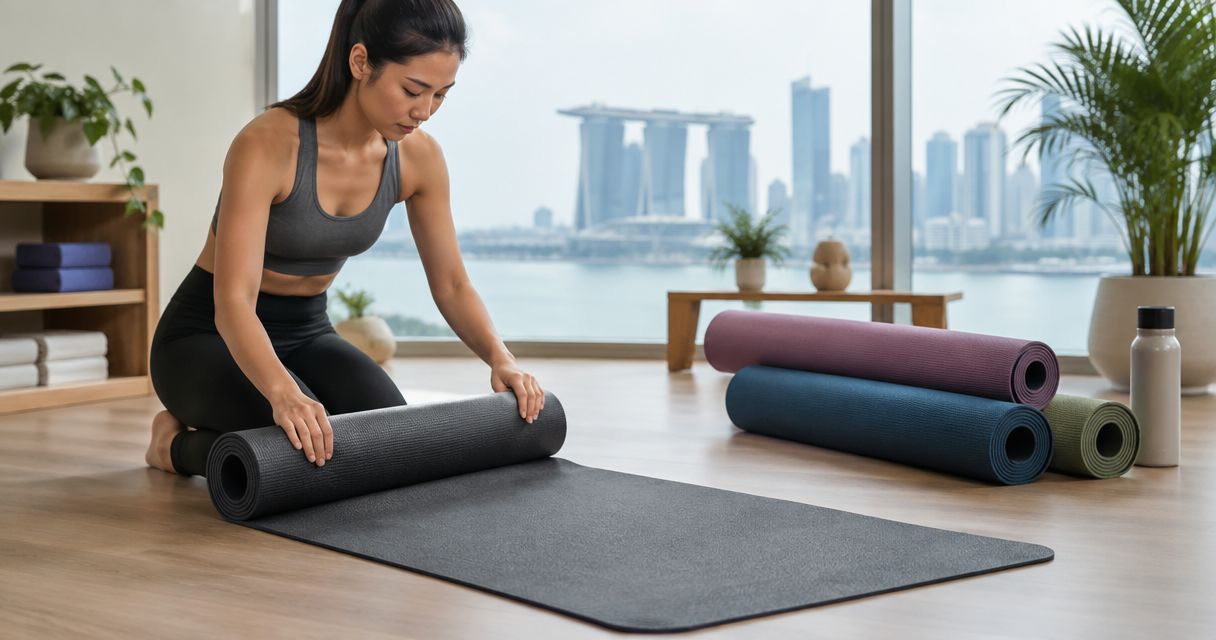
- Check the base. Lay the mat flat on a clean, dry floor like the one you use for practice. Press through your hands and feet without jumping into demanding poses.
- Check the contact surface. Follow the product's instructions for dry or damp use. Confirm that you can place your hands securely before adding movement.
- Check transitions. Move slowly between simple standing and floor positions. Watch for rolling edges, shifting towels or movement underneath the mat.
You are checking 2 contact surfaces: body against mat, and mat against floor. If either surface moves unexpectedly, stop and resolve the setup rather than pushing harder through the pose.
Then check the care instructions. Clean and dry the mat as directed before storing it, and avoid adding oils or cleaners that the manufacturer has not approved for the surface.
Which hot-yoga mat should you choose?
Choose a polyurethane-topped rubber mat explicitly designed for hot yoga if you are buying a dedicated mat. It is the clearest starting point for sweaty flows without adding a separate towel.
Keep your current mat and add a fitted yoga towel if the base already stays put. Choose cork when you specifically prefer that contact surface and the product's instructions support your intended practice. Do not buy a relaxation mat simply because yoga appears in its name.
For your final 2026 decision, write down the problem you are solving: slipping hands, a moving base, difficult care or unsuitable cushioning. Compare products against that problem. A feature that does not address it is not a reason to buy.
FAQ
What's the best yoga mat for hot yoga in Singapore?
A polyurethane-topped rubber mat explicitly designed for hot yoga is the default shortlist for sweaty flows. Check the specific product's wet-use instructions, floor stability and cleaning requirements rather than relying on the material name alone.
Is a cork yoga mat better than a polyurethane yoga mat?
Neither material is automatically better across every finished mat. Choose polyurethane for the dedicated sweaty-flow shortlist, or cork when you prefer that contact surface and the product's hot-yoga instructions support your practice.
Can I use a yoga towel instead of buying a new mat?
You can use a fitted yoga towel over an existing mat that already stays stable on the floor. The towel changes the contact surface, but it cannot correct a sliding base and can bunch during transitions.
Is Sweatjoy's TPE Folding Yoga Mat suitable for hot yoga?
Hot-yoga suitability is not established by the product's supplied description. Sweatjoy's TPE Folding Yoga Mat for Napping and Relaxation is described for naps and lounging, so do not treat it as a verified wet-grip mat.
Should I choose the thickest mat for hot yoga?
Do not choose by thickness alone. You need comfortable support for floor poses without an unstable feel in standing poses; assess the construction and intended use together.
How should I clean a hot-yoga mat?
Follow the exact mat manufacturer's cleaning and drying instructions. Different surfaces need different care, so do not assume that oils, disinfectants or soaking are appropriate for every mat.
What should I check before buying a hot-yoga mat in 2026?
Check wet-use suitability, floor stability, standing support, cleaning compatibility and carry requirements. Confirm those details for the specific product before choosing a material, colour or folding format.
One last thing
A mat can grip your palms while still sliding underneath you. That is why the base deserves its own check, even when the top surface feels secure.
Before your next class, inspect both contact surfaces and any towel placement. Keep Sweatjoy yoga accessories and relaxation equipment separate from your hot-yoga mat decision: choose each item for the job its description actually supports.