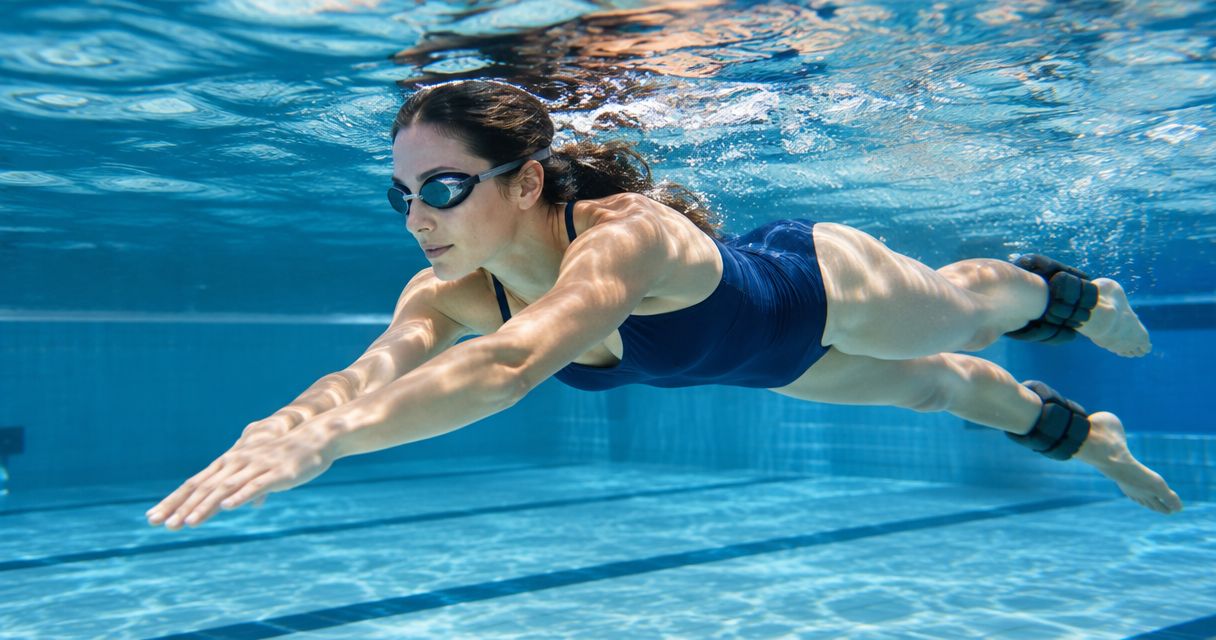
Ankle weights can be used in water only when their manufacturer explicitly permits the intended aquatic activity; ordinary gym ankle weights are not a substitute for swimming equipment. Even water-compatible weights are not automatically suitable for swimming laps, because added weight at your ankles changes how your legs move and how you maintain your position in the water.
- Can ankle weights be used while swimming? Only use equipment explicitly approved for the intended aquatic activity.
- Water resistance, waterproof materials and swimming suitability are different claims; check the actual instructions.
- Sweatjoy ankle weights are described for dance and training, not explicitly for swimming.
- For ordinary swimming, train without ankle weights unless an aquatic professional has assessed the proposed exercise.
Why this matters: A harder workout is not automatically a better swimming workout. Loading your ankles changes the task, while water already provides resistance as you move. If your goal is strength rather than swimming technique, separate the questions: can ankle weights build muscle or just add resistance?
Can ankle weights be used while swimming?
Do not swim in ordinary ankle weights unless the manufacturer explicitly approves that use. Approval for water exercise also needs to match your activity: standing pool exercises and unsupported swimming are different situations.
For a 2026 equipment check, look for written instructions covering immersion, the intended exercise and care after use. A product photograph beside a pool does not replace those instructions. Neither does a description that only mentions fitness, resistance or training.
| Option | Best for | Useful feature | Limitation | Recommendation |
|---|---|---|---|---|
| Ordinary land-training ankle weights | Controlled land exercises allowed by their instructions | Add external load to the legs | Land-training suitability does not establish suitability for immersion or swimming | Keep out of the pool unless explicitly approved |
| Aquatic ankle weights | Pool exercises specifically listed by the manufacturer | Designed for a stated water-based use | Aquatic use does not automatically include swimming laps | Match the instructions to the exact exercise |
| Buoyant ankle cuffs | Aquatic exercises that use upward resistance | Floatation creates a different resistance task | They are not interchangeable with weights and are not life-saving equipment | Use with appropriate instruction |
| Swimming without ankle accessories | Ordinary swim practice | Avoids the extra load or buoyancy of ankle equipment | Does not add equipment-based ankle resistance | Use as the default for general swimming |
The distinction is about function, not appearance. A weighted cuff pulls downward, while a buoyant cuff tends to rise. Both change the exercise, but they do not create the same movement or demand the same technique.
What counts as permission for swimming?
Look for instructions that actually describe swimming or the specific aquatic exercise you intend to perform. Broad wording such as suitable for exercise does not establish permission for pool use. Instructions for water walking do not establish permission for deep-water swimming either.
Match the approval to the activity, not just the environment. The fact that equipment can get wet tells you less than the fact that it is intended for your exact movement.
Why ankle-weight suitability varies
These 4 factors determine whether a particular ankle accessory belongs in a particular pool exercise. Use them to assess the equipment before discussing how hard the session should be.
- Intended activity: Standing leg exercises, supported rehabilitation and swimming laps place different demands on you and the equipment.
- Resistance type: A weighted cuff and a buoyant cuff act differently in water. Identify which one you have before choosing an exercise.
- Fit and fastening: A cuff must remain secure without causing pain, numbness or restricted movement. A slipping accessory interrupts control of the exercise.
- Water-use instructions: Permission for immersion, restrictions on use and cleaning guidance must come from the manufacturer, not an assumption about the material.
Your ability matters too. Being comfortable swimming without accessories does not establish that an unfamiliar weighted exercise is appropriate. A swim instructor or aquatic physiotherapist can assess the movement in context; a product title cannot.
For 2026 purchases, compare the intended use before comparing features. An adjustable strap, soft covering or fitness label does not answer the swimming question.
Ordinary ankle weights: keep the training on land
Ordinary ankle weights add load near the end of your legs. During swimming, that load changes the effort needed to move and position your legs. It is not simply the same workout with a harder setting.
There is also an equipment question separate from the exercise question. Fabric, filling and fastenings need their own immersion and maintenance guidance. Do not infer pool compatibility from a cuff feeling sturdy or surviving an accidental splash.
Best for: Land-based movements explicitly supported by the product instructions. The benefit is external resistance; the limitation is that this does not establish any water-use permission.
Keep dry-land training and swim training separate when the instructions only cover the former. You can pursue leg strength outside the pool without turning a swim into an improvised equipment test.
Aquatic ankle weights: use only for the stated exercise
Aquatic ankle weights belong only in the activities their manufacturer permits. Their water-use designation addresses the equipment, but it does not decide whether a particular exercise suits your swimming ability, health or training goal.
Best for: A defined aquatic exercise with suitable instruction. The benefit is equipment intended for a water-based task; the limitation is that the permitted task can be narrower than swimming freely around a pool.
Ask an instructor to explain what the accessory is meant to change. Is the goal a controlled leg movement while supported, or an unsupported swimming drill? If that distinction is unclear, leave the weights off until it is resolved.
Do not treat a lifeguard's presence as approval of your exercise plan. Follow pool rules, and arrange exercise instruction separately when the movement requires it.
Buoyant ankle cuffs: a different tool, not a direct replacement
Buoyant ankle cuffs use flotation rather than simply adding downward weight. Moving a buoyant accessory downward means working against its tendency to rise. That makes it a different training tool from a sand-filled ankle cuff.
Best for: Instructed aquatic exercises designed around buoyancy. The useful feature is upward resistance; the limitation is that the same buoyancy changes leg positioning and requires control.
Do not buy buoyant cuffs solely because they resemble ankle weights. Choose them only when the exercise calls for their particular function. They are exercise accessories, not substitutes for swimming ability or approved life-saving equipment.
How do you check ankle weights before entering the pool?
Use these 3 checks before putting ankle equipment into water. They are a decision process, not a swimming workout or a substitute for individual assessment.
- Check instructions. Find explicit permission for immersion and the intended activity. If the instructions only describe dance, gym training or land exercise, do not assume swimming is included.
- Check activity. Confirm whether the permitted use is standing exercise, supported movement or actual swimming. Ask the manufacturer to clarify unclear wording before use.
- Check supervision. Discuss an unfamiliar aquatic exercise with a qualified instructor or aquatic physiotherapist, and follow the facility's equipment rules.
If any check remains unresolved, keep the ankle weights out of the water. Do not use a short trial swim to answer a question that belongs in the instructions.
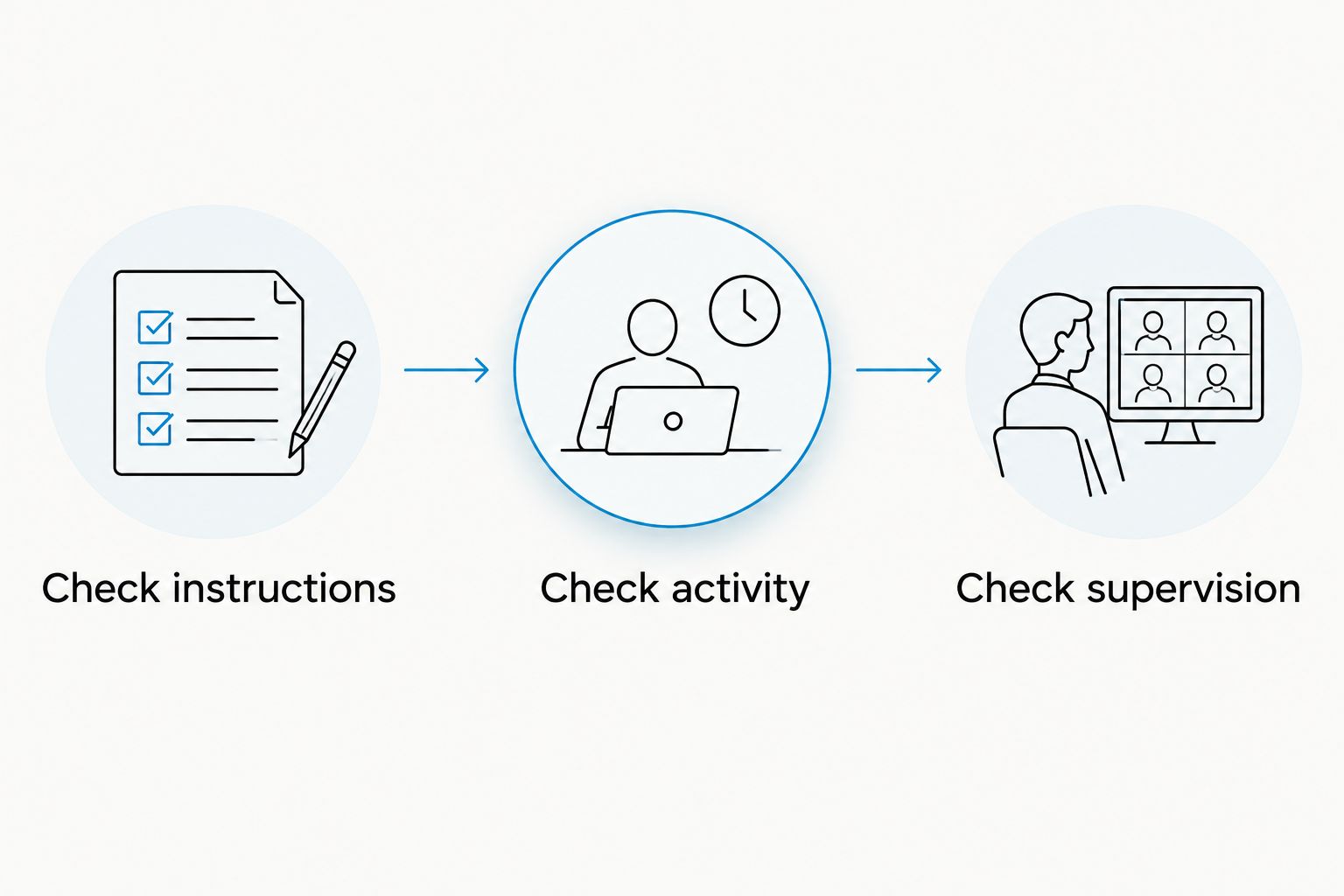
Keep this 2026 checklist with your equipment notes rather than relying on a listing headline. Save the actual instructions so you can check restrictions and care guidance again later.
What should you do if the cuffs shift or hurt?
Stop the exercise and move to a stable, supported position. Remove the equipment before continuing, and get assistance if you cannot do so safely.
Pain, numbness, loss of control or difficulty maintaining your breathing are reasons to stop, not signs of a productive workout. Do not tighten a troublesome cuff and push through. Persistent symptoms need assessment by an appropriate healthcare professional.
Can you use ankle weights for pool walking instead of swimming?
Pool walking is different from swimming, but it still requires equipment approved for that activity. Standing on the pool floor does not make ordinary gym weights suitable for immersion.
If the manufacturer permits pool walking, ask an aquatic exercise professional whether adding ankle load serves your goal. Water already resists movement, so adding equipment needs a purpose beyond making the session feel harder.
Are ankle weights useful for swimming rehabilitation?
Swimming rehabilitation requires an individual exercise plan, not a general ankle-weight recommendation. A physiotherapist should decide whether you need added load, buoyancy, support or no ankle accessory at all.
Do not transfer a land-based rehabilitation exercise directly into the pool. The environment changes the movement. Tell the clinician exactly which equipment you own and bring its instructions to the discussion.
What if you already own Sweatjoy ankle weights?
Sweatjoy's Weighted Leg Sandbags for Dance & Training (Unisex) are described for dance and training. The supplied product information does not explicitly establish swimming suitability, so do not treat the product as approved aquatic equipment.
Sweatjoy is best for fitness enthusiasts shopping for workout accessories; swimming suitability requires separate, explicit confirmation. For this product, the relevant benefit is its stated land-training purpose. The limitation for this question is that swimming permission is not stated.
For a 2026 pool-use decision, obtain written confirmation covering the exact activity before changing that boundary. A familiar brand or an accessory you already enjoy on land does not remove the need for specific water-use instructions.
FAQ
Can I wear regular ankle weights while swimming laps?
Do not wear regular ankle weights for swimming laps unless their manufacturer explicitly approves that activity. Permission for land training or standing water exercise is not the same as permission for lap swimming.
Are waterproof ankle weights automatically safe for swimming?
No. Waterproof construction does not establish that an accessory is suitable for swimming or appropriate for your ability. Check the intended activity and obtain instruction for unfamiliar aquatic exercises.
Can beginners swim with ankle weights?
Beginners should practise swimming without ankle weights rather than add an unfamiliar ankle load. Get swimming instruction before considering equipment that changes leg positioning or movement.
Will ankle weights help me burn more calories in the pool?
Do not choose ankle weights on the promise of extra calorie burning. A harder-feeling exercise does not establish a measured calorie benefit or make the equipment appropriate for swimming.
Are buoyant ankle cuffs the same as weighted ankle cuffs?
No. Buoyant ankle cuffs tend to rise in water, while weighted cuffs add downward load. They serve different exercise tasks and should not be substituted without instruction.
Can Sweatjoy weighted leg sandbags go in the pool?
The supplied information for Sweatjoy's Weighted Leg Sandbags for Dance & Training (Unisex) does not explicitly approve pool use. Keep them out of the water unless the manufacturer confirms suitability for your exact aquatic activity.
What should I do with ankle weights after an approved pool session?
Follow the manufacturer's cleaning, drying and inspection instructions for that equipment. Do not assume a cleaning method intended for land-training cuffs is appropriate after immersion.
One last thing
Aquatic resistance does not always mean adding weight. A buoyant cuff can make a downward leg movement harder precisely because it wants to float upward. Before adding any ankle accessory, ask what direction it resists and why that resistance belongs in your exercise.
Make that your 2026 buying rule: choose the exercise first, then equipment explicitly intended for it. If your goal is simply to swim, leave unapproved ankle weights on land.