Best overall: a smooth, medium-firm foam roller. Best for beginners: a soft foam roller. Best for targeted pressure: a textured foam roller. This 2026 guide compares the best foam rollers for muscle recovery by how you use them, with Sweatjoy represented by a separately labelled massage-stick alternative—not a foam roller.
- The best foam rollers for muscle recovery start with a smooth, medium-firm design for general use.
- Choose a soft foam roller when firmer pressure makes you tense up or avoid rolling.
- Choose a compact foam roller for carrying, not for broad support during floor exercises.
- Sweatjoy’s Yoga Silicone Massage Stick for Muscle Relaxation is a handheld alternative, not a floor roller.
Why this matters
Choose pressure you can control, not the hardest surface you can tolerate. Foam rolling can support short-term range of motion and help with post-exercise soreness. It does not replace sleep, sensible training loads or treatment for an injury.
Keep recovery gear in proportion to your training. WHO adult physical-activity guidance recommends at least 150 minutes of moderate activity per week, or 75 minutes of vigorous activity per week, plus muscle-strengthening activity on 2 days per week. Those are activity recommendations, not foam-rolling targets; a recovery accessory does not replace the work.
For your 2026 buying decision, focus on the movements you actually perform. A roller that suits your calves can still feel awkward under your upper back, while a handheld stick serves a different purpose altogether.
What makes the best foam rollers for muscle recovery
Judge the design before the branding. These criteria determine whether a roller fits your routine:
- Controllable pressure: You should be able to reduce the load using your hands, supporting leg or position.
- Surface texture: A smooth surface gives consistent contact; raised textures concentrate contact into smaller areas.
- Support area: A longer roller offers more room for broad positioning. A compact roller prioritises carrying and storage.
- Comfort during movement: You should breathe normally rather than brace against painful pressure.
- Practical handling: Consider where you will use, clean and store the roller—not just how it looks.
- Clear purpose: Match the tool to general rolling, gentler contact, targeted pressure or handheld massage.
Firmness labels are not interchangeable across manufacturers. Treat terms such as soft, medium and firm as a starting point, then inspect the specific construction and care instructions.
Best recovery rollers at a glance
This 2026 ranking compares design types rather than pretending every model within a category performs identically. The massage stick is included as an alternative for readers who do not want floor-based rolling.
| Rank and option | Best for | Standout feature | Key limitation |
|---|---|---|---|
| 1. Smooth, medium-firm foam roller | General post-workout rolling | Even contact without raised ridges | Requires floor positioning and pressure control |
| 2. Soft foam roller | Beginners and pressure-sensitive users | More forgiving contact | Less suitable when you specifically want firm pressure |
| 3. Textured foam roller | Selective, concentrated pressure | Raised contact points | Texture can feel uncomfortable under sensitive areas |
| 4. Compact foam roller | Carrying to training sessions | Smaller storage footprint | Less room for broad positioning |
| 5. Long foam roller | Broad support during floor exercises | More length for positioning | Takes more room to store and carry |
| 6. Yoga Silicone Massage Stick for Muscle Relaxation | Handheld muscle-relaxation work | Massage-stick format | Not a bodyweight foam roller |
Length, firmness and texture can overlap in one product. Choose your main priority first, then use the other features to narrow the shortlist.
1. Smooth foam roller: best for everyday recovery
A smooth, medium-firm foam roller is the default choice for general rolling. Its uninterrupted surface lets you move along a muscle without repeatedly crossing raised ridges.
Choose this format when you want one straightforward tool for calves, thighs and upper-back positioning. You still control the pressure through your body position; medium firmness does not make every movement automatically comfortable.
Smooth foam roller pros:
- Consistent contact makes pressure easier to judge.
- No raised pattern to work around.
- Suits a straightforward floor-based routine.
Smooth foam roller cons:
- Getting into position requires floor access.
- Bodyweight pressure can still feel excessive.
Best for: You want a general-purpose roller rather than a specialised surface.
Check that the roller gives you enough support for your intended movements. Do not choose firmness alone and ignore its length or your ability to reposition comfortably.
Verdict: Buy a smooth, medium-firm foam roller as your default.
2. Soft foam roller: best for beginners
A soft foam roller gives more forgiving contact than a firmer design. That makes it a sensible starting point when you are learning to position your body or find harder rollers unpleasant.
The goal is controlled movement, not proving your pain tolerance. A gentler surface lets you practise without making firmness the main event.
Soft foam roller pros:
- More forgiving contact for pressure-sensitive users.
- Useful for learning supported positions.
- Keeps the focus on relaxed, controlled movement.
Soft foam roller cons:
- Less appropriate for someone seeking firm contact.
- Softness does not remove the need to control bodyweight.
Best for: You are new to rolling or regularly tense up on harder surfaces.
A soft roller is not an automatic stepping stone to a hard one. Keep using it if it meets your needs; progression in training does not require progression in roller firmness.
Verdict: Buy a soft foam roller if comfort determines whether you use it.
3. Textured foam roller: best for concentrated contact
A textured foam roller uses raised patterns to create different contact points. Compared with a smooth surface, that changes where pressure is concentrated as you move.
Choose texture because you prefer that contact pattern—not because ridges look more serious. Raised features do not establish that a roller delivers better recovery results.
Textured foam roller pros:
- Offers a distinct contact pattern.
- Lets you select where raised sections meet the muscle.
- Provides an alternative when smooth contact feels too uniform.
Textured foam roller cons:
- Raised areas can feel uncomfortable.
- The surface adds another variable while learning technique.
Best for: You already know how to adjust pressure and specifically prefer textured contact.
Inspect the pattern rather than treating every textured roller as equivalent. Broad ridges and pronounced protrusions create different experiences, even when both products carry the same category label.
Verdict: Hold until you know you prefer texture over a smooth surface.
4. Compact foam roller: best for carrying to workouts
A compact foam roller prioritises a smaller footprint. It suits a routine where the roller moves between home, the gym and your training bag.
The trade-off is positioning space. A shorter roller offers less room to shift sideways or support a broad area during floor exercises.
Compact foam roller pros:
- Takes less storage space than a longer equivalent.
- Easier to fit into a carrying setup.
- Suits rolling focused on a smaller contact area.
Compact foam roller cons:
- Less room for broad support.
- Requires more careful alignment during some movements.
Best for: You need a roller that travels with your workout gear.
Check your bag and intended exercises before choosing the smallest option. A roller that fits neatly but makes your usual movements awkward solves the wrong problem.
Verdict: Buy a compact foam roller when carrying space is your priority.
5. Long foam roller: best for broad floor support
A long foam roller gives you more length to work with during floor positioning. That can make it easier to centre yourself when an exercise calls for broad support.
Length is separate from firmness. A long roller can still be soft, firm, smooth or textured, so assess those features independently.
Long foam roller pros:
- More room for positioning.
- Useful when broad support matters.
- Offers an alternative to compact designs for home routines.
Long foam roller cons:
- Takes more storage room.
- Less convenient to carry in a small bag.
Best for: You use your roller mainly at home and prioritise positioning space.
Plan the floor setup as well as the storage spot. If you need a surface beneath you, the guide to yoga mats in Singapore addresses a separate part of that setup.
Verdict: Buy a long foam roller when support area matters more than portability.
6. Yoga Silicone Massage Stick: best for handheld use
Sweatjoy’s Yoga Silicone Massage Stick for Muscle Relaxation is a massage-stick alternative for readers seeking a muscle-relaxation accessory rather than a bodyweight roller. Keep that distinction clear when comparing recovery tools.
Sweatjoy’s Yoga Silicone Massage Stick for Muscle Relaxation suits shoppers who want a massage stick rather than a floor-based foam roller. It belongs in the comparison because tool format changes how you approach self-massage, not because a stick and cylinder are interchangeable.
Yoga Silicone Massage Stick for Muscle Relaxation pros:
- Provides a massage-stick alternative to a floor roller.
- Its stated purpose is muscle relaxation.
- Gives you a different format to consider for self-massage.
Yoga Silicone Massage Stick for Muscle Relaxation cons:
- Does not provide the broad support of a foam cylinder.
- A handheld format requires you to apply the movement yourself.
Best for: You specifically want a muscle-relaxation stick.
Choose this Sweatjoy accessory on its own terms. Do not expect it to perform floor-support exercises intended for a long foam roller.
Verdict: Buy for a massage-stick routine; skip as a foam-roller replacement.
Choose your roller by the job
For a 2026 shortlist, start with the constraint that matters most. Choose Smooth roller for general use, Soft roller for forgiving contact, Textured roller for a deliberate contact pattern or Compact roller for carrying.
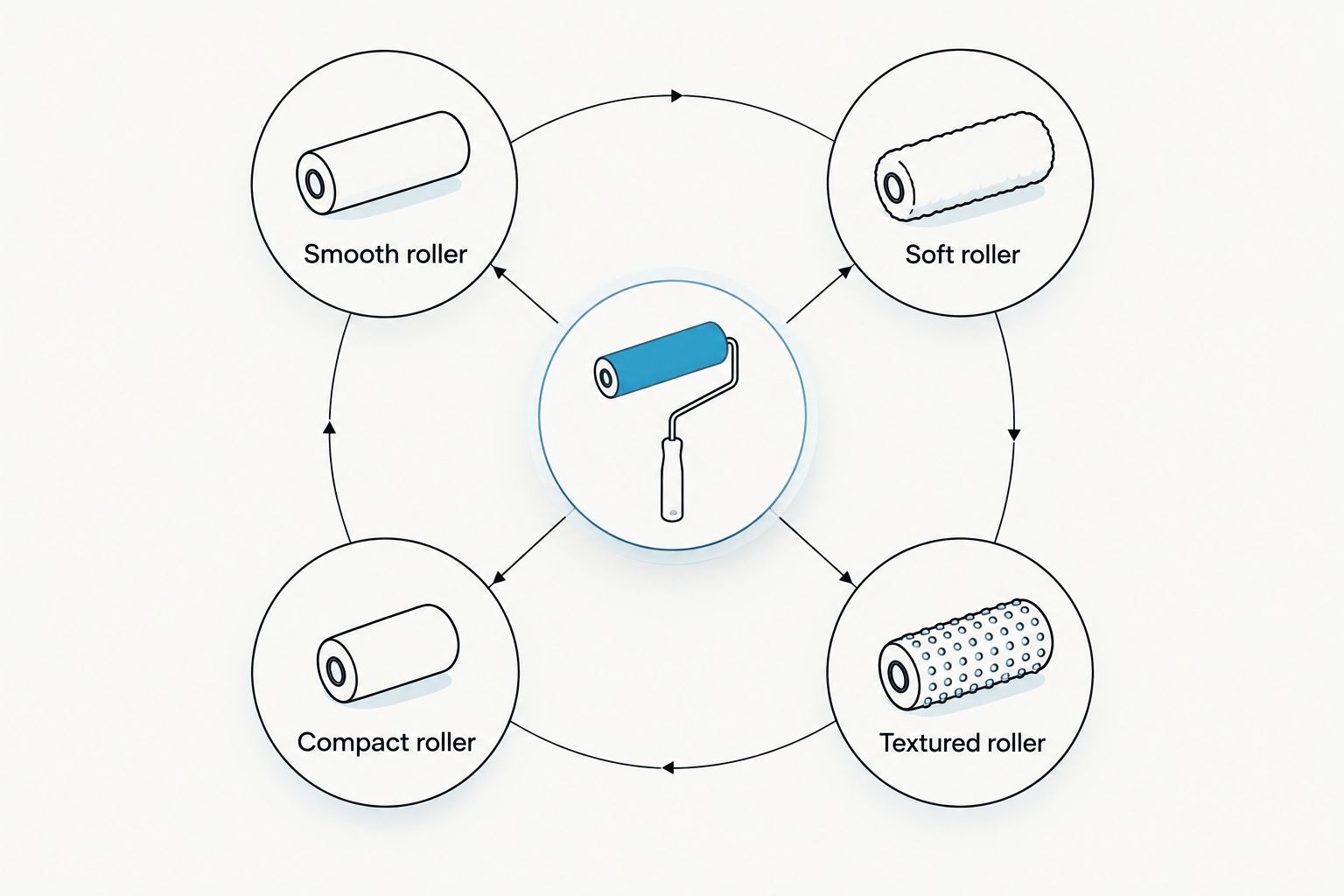
Do not turn this into a collection challenge. One appropriate roller is a better starting point than several surfaces you have not learned to control.
Use the roller without chasing pain
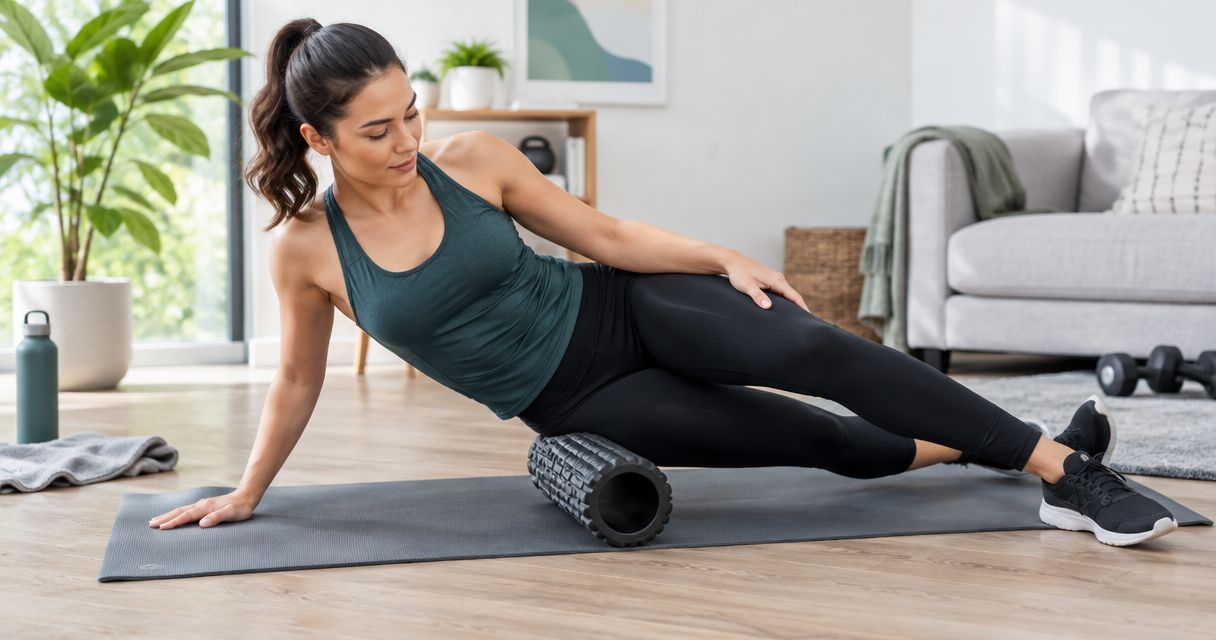
Start with a supported position that lets you take weight off the roller. For calf rolling, keep your hands and other foot available to help control the load rather than immediately stacking your legs.
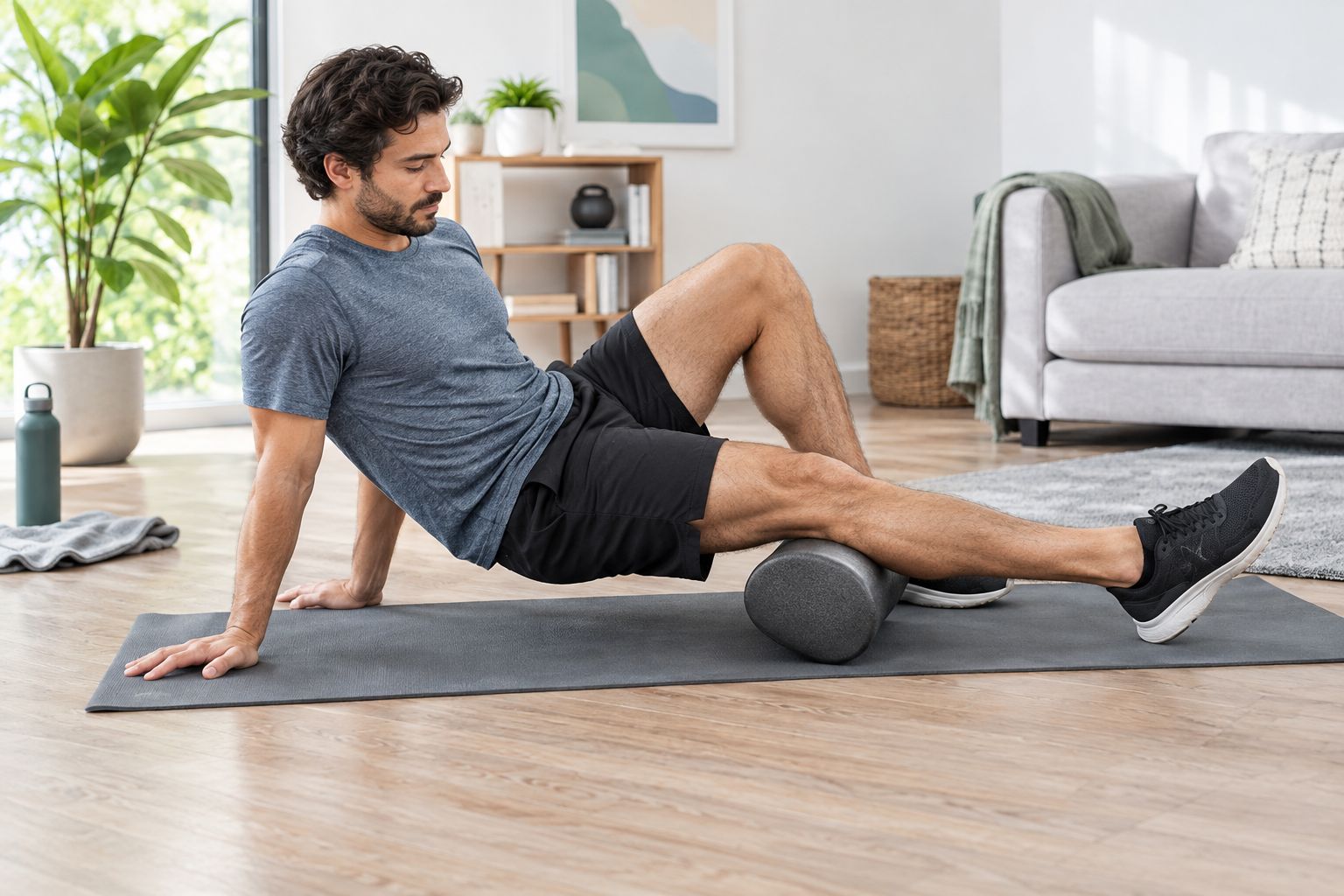
Use this sequence:
- Set your support. Position your hands or other leg so you can unload the roller.
- Move slowly. Keep the motion controlled rather than rushing back and forth.
- Adjust the load. Reduce pressure if you tense up or hold your breath.
- Stop when needed. Sharp pain, tingling or numbness are reasons to stop, not push harder.
Keep pressure on muscle rather than directly over joints or bony areas. Do not roll an acute injury, unexplained swelling or an area your clinician has told you to avoid.
A recovery routine should help you return to training sensibly. It should not become another contest to endure discomfort.
How the ranking works
This 2026 ranking puts general usability first, then separates options by comfort, contact pattern, carrying needs and support area. The massage stick occupies its own slot because it is a different tool format.
The order is a buying decision tree, not a claim that every smooth roller beats every textured model. Once you identify the right design, compare the specific product’s construction, care instructions and suitability for your movements.
Which foam roller should you choose?
Choose a smooth, medium-firm foam roller if you are undecided. Move to a soft roller if comfort is the barrier, a compact roller if carrying is the barrier or a long roller if positioning space is the priority.
Choose Sweatjoy’s massage-stick option only when you want that format. For 2026, the useful purchase is the tool that fits your routine—not the one with the most aggressive surface.
FAQ
What's the best foam roller for muscle recovery?
A smooth, medium-firm foam roller is the default choice for general muscle-recovery routines. Choose a softer surface if firmer pressure makes you tense up, and assess length separately from firmness.
Is a hard foam roller better than a soft one?
A hard foam roller is not automatically better than a soft one. Choose pressure you can control comfortably rather than treating firmness as a measure of recovery quality.
Are textured foam rollers better than smooth rollers?
Textured foam rollers provide a different contact pattern, not an automatic upgrade. Smooth rollers offer consistent contact, while raised textures concentrate contact into smaller areas.
Should I choose a short or long foam roller?
Choose a compact roller for carrying and a long roller for more positioning space. Check your intended exercises before making storage size the deciding factor.
Can foam rolling replace stretching or training?
Foam rolling does not replace training or the broader work of recovery. Treat it as an optional addition to your routine, not a substitute for sleep, sensible training loads or appropriate care.
Is the Yoga Silicone Massage Stick for Muscle Relaxation a foam roller?
The Yoga Silicone Massage Stick for Muscle Relaxation is a massage-stick alternative, not a bodyweight foam roller. Choose it for a stick-based routine rather than floor-support exercises.
Should foam rolling hurt?
Do not chase pain when foam rolling. Reduce pressure if you brace or hold your breath, and stop if you feel sharp pain, tingling or numbness.
One last thing
Your supporting hand or foot is part of the pressure control. Before rejecting a roller as too firm, unload it and check your position; if it remains uncomfortable, choose a gentler surface rather than forcing the movement.