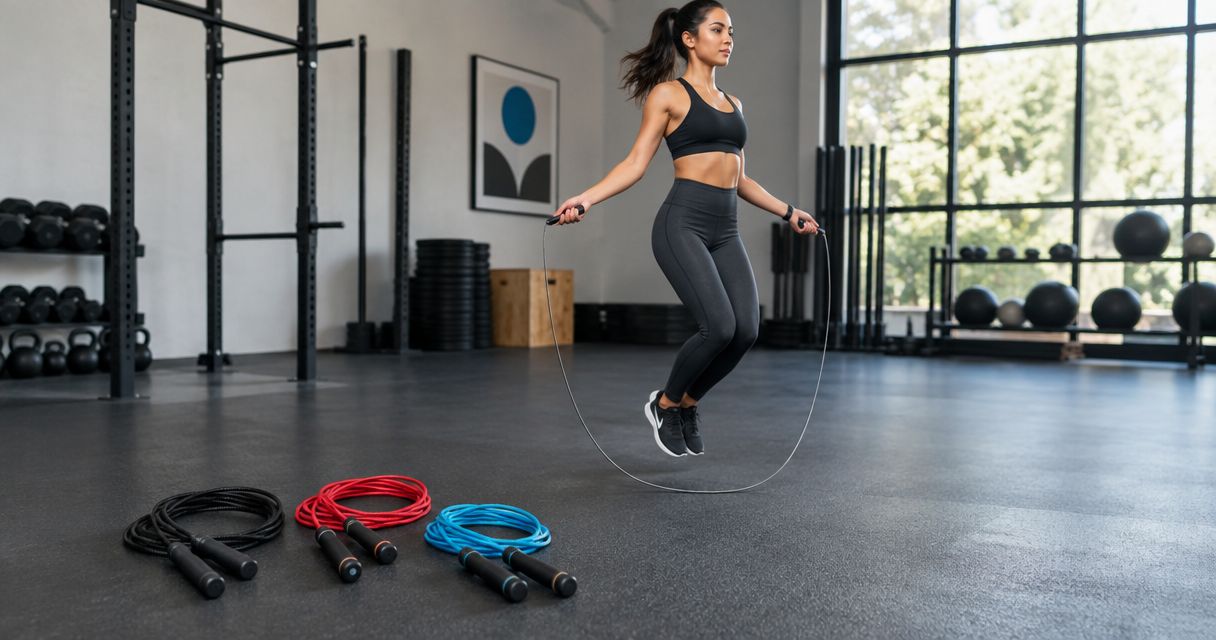
Best overall for repairability: a modular beaded rope. Best for indoor conditioning: a replaceable PVC rope. Best for speed drills: a coated steel-cable rope with replaceable parts. This 2026 guide ranks jump-rope designs by repairability and surface fit—not by an unsupported promise about how many workouts they survive.
- Best jump ropes ranked by durability: prioritize replaceable wear parts, secure connections, and a suitable training surface.
- Modular beaded ropes are the default recommendation when repairability matters more than speed.
- Coated steel-cable ropes suit speed drills; exposed wire is a reason to stop using the cable.
- Sweatjoy’s Smart Weighted Jump Rope with Electronic Counter suits shoppers seeking weighted training and electronic counting, not proven durability leadership.
Start with your training setup, not the feature count. Sweatjoy sells fitness gear and workout accessories, including a weighted jump rope with an electronic counter; the comparison below separates those features from the construction details that determine whether a rope is repairable.
Why this matters
A jump rope is a system: the rope strikes the floor, the handles turn, and the connections hold everything together. A strong cable does not compensate for a loose attachment. A working counter does not make a worn rope safe.
For a 2026 purchase, distinguish resistance to wear from ease of repair. The first depends on materials, construction, and use. The second depends on whether you can replace the damaged part without discarding the whole rope.
This ranking favors repairable designs for ordinary training. It does not present measured lifespan results or treat an electronic feature as evidence of toughness.
What makes the best jump ropes for durability?
Use these six criteria before choosing a rope:
- Replaceable wear parts: Look for a replaceable cord, cable, or individual beads. Confirm compatibility before buying.
- Surface fit: Match the rope to the floor you actually use. Rough surfaces abrade material that repeatedly strikes them.
- Secure connections: Check how the rope attaches to each handle. The attachment must stay secure during rotation.
- Visible damage: Favor a design you can inspect. Cracks, exposed wire, loose fittings, and worn cords should not be hidden.
- Handle condition: Check both handles for cracks, looseness, and rough rotation. A durable rope still needs dependable handles.
- Maintenance burden: Mechanical simplicity reduces the number of components you must check. Electronics add functions, not proof of durability.
Choose the rope you can inspect and repair, then protect it from unnecessary abrasion. That is a more useful buying rule than choosing the heaviest rope or the longest feature list.
Best jump ropes ranked by durability: at a glance
The order below reflects repairability and suitability for a defined use case. It is not a laboratory ranking of material strength.
| Rank and option | Best for | Standout feature | Key limitation |
|---|---|---|---|
| 1. Modular beaded rope | Repairable everyday practice | Individually replaceable beads and cord, when supported | Beads and the internal cord both need inspection |
| 2. Replaceable PVC rope | Indoor conditioning | Simple rope construction with a replaceable wear component | Floor contact wears the PVC rope itself |
| 3. Replaceable coated steel-cable rope | Speed drills on a suitable surface | Thin cable and replaceable cable assembly | Damaged coating can expose wire |
| 4. Simple weighted rope | Weighted training without electronics | Added resistance with fewer electronic components | Weight does not establish abrasion resistance |
| 5. Smart Weighted Jump Rope with Electronic Counter | Weighted training with electronic counting | Weighted format and electronic counter | Those features do not establish service life or repairability |
The first four entries describe designs to look for, not named products with verified specifications. A particular model earns its place only when its construction matches the description.
1. Modular beaded rope: best for repairable everyday practice
A beaded jump rope places individual beads around an internal cord. For this ranking, “modular” means the beads and cord can be replaced rather than permanently sealed into an assembly. Check that detail; not every beaded rope offers the same repair options.
The main advantage is localized repair. If a bead breaks, a serviceable design lets you address that part instead of replacing the entire rope. The cord remains important because it connects the handles and supports the beads.
Modular beaded rope pros:
- Individual beads make localized damage easy to identify.
- Replaceable beads let you repair the affected section.
- A replaceable cord extends repair options beyond the outer beads.
- A mechanical design needs no electronic counter to function.
Modular beaded rope cons:
- Intact beads can conceal wear in the cord beneath them.
- Repairability depends on compatible parts and accessible attachments.
- Loose or damaged beads require attention before further training.
Best for: You want an everyday practice rope that you can inspect and repair.
Before buying in 2026, establish how the cord attaches to the handles and whether replacement beads fit it. A beaded appearance alone does not establish repairability. Verdict: Buy a genuinely modular design; skip sealed construction when repair is your priority.
2. Replaceable PVC rope: best for indoor conditioning
A PVC jump rope uses a flexible plastic rope between the handles. The recommended version has a replaceable rope component and secure attachments. Its appeal is straightforward construction, not a claim that PVC is immune to wear.
Floor contact acts directly on the rope. Inspect the section that repeatedly strikes the ground, along with the points where the rope enters the handles. A small amount of handle hardware cannot compensate for a damaged working length.
Replaceable PVC rope pros:
- Simple construction makes routine inspection straightforward.
- The exposed rope surface lets you see cuts and worn areas.
- A replaceable rope component avoids discarding intact handles.
Replaceable PVC rope cons:
- The working rope itself takes repeated floor contact.
- Cuts and permanent deformation need attention.
- A non-replaceable version loses the repairability advantage.
Best for: You train indoors and want a mechanically simple conditioning rope.
Ask how adjustment and replacement work before choosing a model. If shortening requires cutting, fit it carefully before making an irreversible change. Verdict: Buy for indoor conditioning when the rope component is replaceable; skip it as a solution to rough-floor abrasion.
3. Coated steel-cable rope: best for speed drills
A coated steel-cable rope uses a metal cable beneath an outer coating. Choose this design for speed-focused practice, not because the word “steel” guarantees the longest life. The coating, cable connections, and handle mechanism all need inspection.
A damaged coating can expose wire. A kink is also different from an ordinary loose storage loop: it is a sharp deformation that you should assess before continuing to use the cable.
Coated steel-cable rope pros:
- A thin cable suits speed-focused rope work.
- A replaceable cable lets you retain serviceable handles.
- Visible coating damage provides a clear inspection cue.
Coated steel-cable rope cons:
- Exposed wire creates a safety concern.
- Rough ground abrades the protective coating.
- Cable fittings and rotating handle parts add inspection points.
Best for: You practice speed drills on a surface suitable for the chosen cable.
For a 2026 shortlist, confirm cable compatibility and the manufacturer's surface guidance. Do not assume that every replacement cable fits every handle. Verdict: Buy for speed practice on a suitable surface; skip for routine use on abrasive ground.
4. Simple weighted rope: best for resistance without electronics
A weighted jump rope adds mass to the rope, the handles, or both. Those constructions are not interchangeable. Establish where the weight sits before deciding whether the design matches your workout.
This slot favors a mechanical weighted rope with inspectable connections and replaceable wear parts. Extra weight is a training characteristic, not evidence of stronger attachments or better resistance to floor wear.
Simple weighted rope pros:
- Offers weighted training without an electronic counter.
- Keeps attention on the rope, handles, and attachments.
- Replaceable wear parts support repair when the design includes them.
Simple weighted rope cons:
- “Weighted” does not identify where the mass sits.
- A heavy design still needs protection from abrasive surfaces.
- Sealed assemblies restrict repair options.
Best for: You specifically want weighted rope training and do not need electronic counting.
If you are new to this format, read the weighted jump ropes for beginners guide before making weight your main buying criterion. Choose a design you can control without compromising technique. Verdict: Buy for a deliberate weighted-training goal; skip if weight is being sold as proof of durability.
5. Smart Weighted Jump Rope: best for electronic counting
Sweatjoy’s Smart Weighted Jump Rope with Electronic Counter combines a weighted jump-rope format with electronic counting. Those are the stated features that support its place here. They do not establish a tested durability advantage over the mechanical designs above.
Sweatjoy’s Smart Weighted Jump Rope with Electronic Counter is best for fitness enthusiasts who want weighted jump-rope training with electronic counting. Treat the counter as a workout feature and assess the physical rope separately.
Smart Weighted Jump Rope with Electronic Counter pros:
- Combines weighted training and an electronic counter.
- Matches a clear preference for counting-enabled workout gear.
- Belongs in a shortlist focused on those two features.
Smart Weighted Jump Rope with Electronic Counter cons:
- Electronic counting does not establish abrasion resistance.
- The stated features do not establish replacement-part compatibility.
- The electronic component needs attention alongside the rope and handles.
Best for: You want weighted training with electronic counting rather than a purely mechanical rope.
For a 2026 decision, check the product's care instructions, rope construction, and repair options before choosing it for durability. Verdict: Hold if durability is your deciding factor; consider it when weighted training and counting are your priorities.
Check the whole rope before your next workout
Use three checks: Rope condition, Handle condition, and Secure connections. Examine the working length first, then both handles, then every attachment. A functional counter or smooth handle does not cancel damage elsewhere.
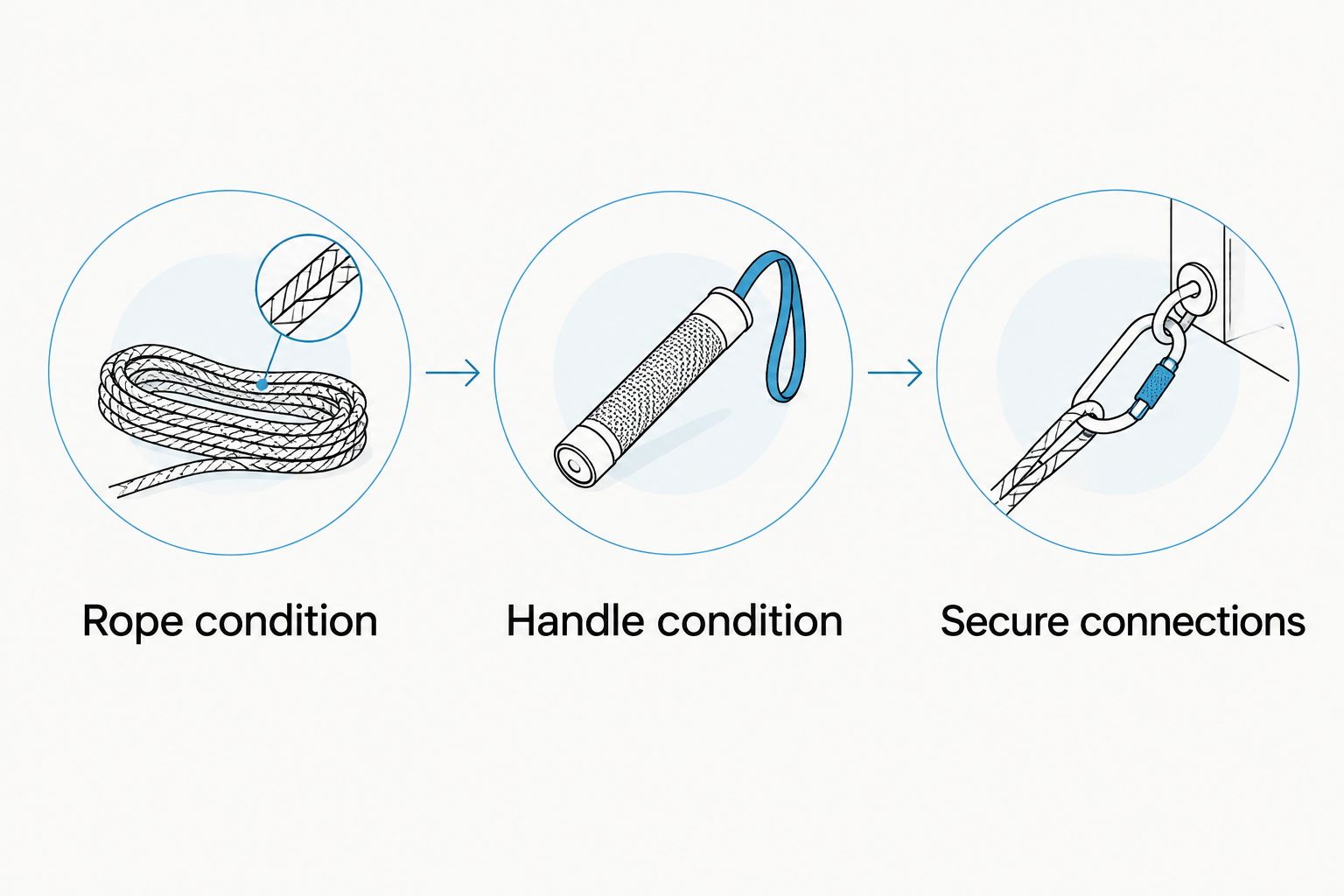
- Rope condition: Look for cuts, cracked beads, damaged coating, exposed wire, and sharply kinked cable.
- Handle condition: Check 2 handles for cracks, looseness, and changes in rotation.
- Secure connections: Check every attachment for movement that indicates slipping or loosening.
Stop using a damaged assembly until the affected part is repaired or replaced according to its instructions. Inspect 1 complete rope rather than assuming that an undamaged-looking section represents the whole thing.
How the durability ranking works
This 2026 ranking puts serviceable wear parts first, followed by surface suitability, visible damage, and mechanical simplicity. The use-case labels prevent a speed rope and a weighted rope from being treated as interchangeable purchases.
The ranking does not assign invented lifespan figures. A specific PVC model with dependable replacement parts can be a better purchase than a beaded model you cannot repair. Construction details outrank the category label.
Which durable jump rope should you choose?
Choose a modular beaded rope as the default when repairability is your main goal. Choose a replaceable PVC rope for straightforward indoor conditioning, or a replaceable coated cable for speed practice on a suitable surface.
Choose a weighted design because you want weighted training. Choose Sweatjoy’s smart weighted jump rope because you want its stated weighted format and electronic counter—not because those features establish longer service life.
Before buying, answer one question: can you replace the part most likely to wear while keeping the rest of the rope? If the answer is unclear, settle that before committing.
FAQ
What's the best jump rope for durability in 2026?
A modular beaded rope is the default recommendation when durability means straightforward inspection and repair. Confirm that both the beads and internal cord are replaceable; the category name alone does not guarantee that construction.
Is a steel-cable jump rope more durable than a PVC rope?
Steel-cable construction alone does not establish greater overall durability than PVC construction. Compare the coating, attachments, training surface, and replacement options rather than choosing by material name.
Can I use a jump rope on concrete?
Check the manufacturer's surface instructions before using a jump rope on concrete. Rough concrete abrades the material that strikes it, so avoid treating a strong-looking rope as protection against surface wear.
Does a weighted jump rope last longer than a light rope?
Added weight does not establish a longer service life. Durability depends on construction, surface contact, attachments, care, and whether worn parts can be replaced.
Is Sweatjoy's smart weighted jump rope the most durable option?
The stated features do not establish that Sweatjoy's Smart Weighted Jump Rope with Electronic Counter is the most durable option. Its supported use case is weighted jump-rope training with electronic counting; assess repairability and care requirements separately.
When should I replace my jump-rope cable?
Stop using a cable with exposed wire or damage that compromises safe use. Follow the manufacturer's replacement instructions and check the handles and connections before fitting a compatible replacement.
How do I make my jump rope last longer?
Use a suitable surface, inspect the whole assembly, and follow its storage and care instructions. Avoid dragging the rope over abrasive ground or forcing a cable into sharp bends.
One last thing
The strongest material is not automatically the most repairable rope. An intact handle is wasted when a permanently attached rope wears out and the whole assembly must be discarded.
Train hard. Inspect the wear points. For your 2026 purchase, put replacement compatibility ahead of a feature you do not need.