Best overall match for a straightforward post-workout routine: Sweatjoy’s Yoga Silicone Massage Stick for Muscle Relaxation. Best for broad muscle contact: a smooth roller stick. Best for varied surface contact: a textured roller stick. This 2026 guide compares the named option from Sweatjoy with common stick designs so you can choose by control, reach and intended use—not unsupported recovery promises.
- Sweatjoy’s Yoga Silicone Massage Stick for Muscle Relaxation is the named pick for a simple post-workout massage routine.
- The best massage sticks for muscle recovery let you control pressure without awkward positioning.
- Smooth roller sticks suit broad contact; textured roller sticks suit readers who prefer a more pronounced surface.
- Compact massage sticks prioritise packing space, but shorter reach limits where you can use them comfortably.
Why this matters
A massage stick is a handheld tool for applying pressure to accessible muscles. It belongs in a recovery routine as an optional comfort tool, not as proof that your muscles are ready for another hard session.
The useful distinction is control. With a handheld stick, you adjust pressure through your hands instead of placing your body weight over a floor roller. That makes positioning important: a tool you cannot hold comfortably is a poor match, regardless of its appearance.
For this 2026 shortlist, the named product and the design alternatives have different roles. The alternatives describe buying categories, not specific models with verified specifications. Choose the design first, then check the exact item before buying.
What makes the best massage sticks for muscle recovery?
Use these criteria before reading the ranking. A useful stick should match the muscles you can reach and the kind of contact you actually want.
- Pressure control: You should be able to reduce force immediately without losing your grip or changing position awkwardly.
- Comfortable reach: Check whether you can reach your intended muscle area while keeping your shoulders and wrists comfortable.
- Surface preference: Smooth and textured surfaces feel different. A more pronounced texture is not evidence of better recovery.
- Handle usability: Judge the grip with both hands. Handle comfort matters as much as the rolling surface.
- Storage and cleaning: Check the exact dimensions, materials and care instructions rather than assuming every stick packs or cleans the same way.
- Clear purpose: A massage stick should be described as a massage tool. Do not assume that a yoga support stick or exercise bar does the same job.
Buy for comfortable control, not maximum pressure. If a tool encourages you to press harder than you can comfortably tolerate, it misses the point.
Massage sticks at a glance
These 4 options occupy different use-case slots. The first is a named store product; the remaining entries are design categories to help you assess alternatives without pretending unverified models have been tested.
| Option | Best for | Standout feature | Key limitation |
|---|---|---|---|
| Yoga Silicone Massage Stick for Muscle Relaxation | A straightforward post-workout massage accessory | Explicitly presented as a silicone massage stick for muscle relaxation | Dimensions, handle construction and care instructions need checking |
| Smooth roller stick | Broad, uncomplicated surface contact | A smooth contact surface without raised texture | Less suited to readers who specifically prefer pronounced texture |
| Textured roller stick | A more noticeable surface feel | Raised texture changes the contact sensation | Texture is not proof of greater recovery benefit |
| Compact massage stick | Keeping a massage tool in a training bag | Shorter-format design prioritises packing space | Reduced reach and hand spacing can limit comfortable use |
The table is a selection guide, not a claim that these designs produce different clinical outcomes. In 2026, the same buying rule applies: match the tool to your routine before comparing appearance or extra features.
1. Yoga Silicone Massage Stick for Muscle Relaxation: best for simplicity
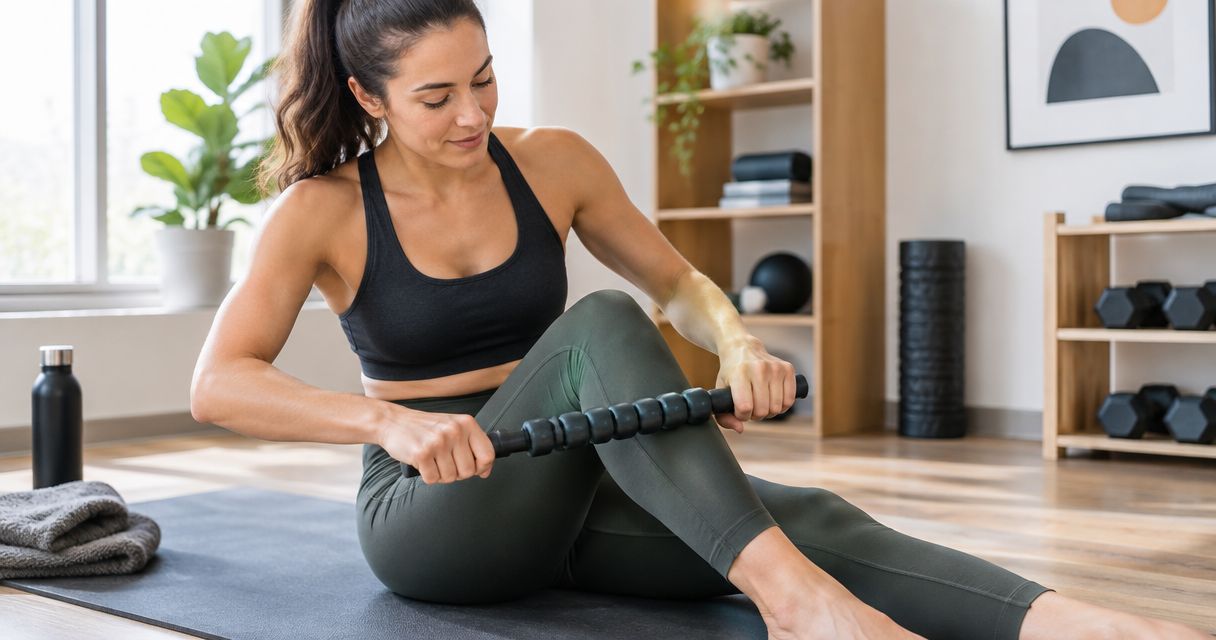
The Yoga Silicone Massage Stick for Muscle Relaxation is Sweatjoy’s clearest match for readers seeking a dedicated massage accessory. Its supplied description identifies it as a massage roller intended to target sore muscles. That establishes its purpose, but it does not establish a measured recovery benefit.
Sweatjoy’s massage stick is the most direct named option here for gym-goers seeking a simple post-workout massage accessory. Choose it for that role rather than treating the product wording as a promise about soreness duration, flexibility or injury prevention.
Yoga Silicone Massage Stick for Muscle Relaxation pros
- Its stated purpose directly matches muscle massage.
- The product title identifies silicone rather than leaving the material entirely unspecified.
- It is a dedicated massage accessory, not an exercise tool repurposed by assumption.
Yoga Silicone Massage Stick for Muscle Relaxation cons
- The supplied information does not establish its length or handle dimensions.
- Roller construction and cleaning instructions require checking before purchase.
- No supplied testing establishes how its results compare with other massage sticks.
Best for: Gym-goers who want a named, purpose-matched massage accessory and will check the remaining practical details.
Before choosing it, confirm that the dimensions suit your hands and intended muscle areas. A product can match the category perfectly and still be awkward for your particular reach.
Verdict: Buy for a simple massage routine once fit and care details match your needs.
2. Smooth roller stick: best for broad muscle contact
A smooth roller stick uses a contact surface without pronounced raised texture. It is the design to shortlist when you want to move along an accessible muscle area without deliberately choosing a ridged or knobbled surface.
The distinction is feel, not a guaranteed outcome. You still control pressure through your hands, and the exact roller shape determines how contact is distributed. Smooth does not automatically mean soft.
Smooth roller stick pros
- The surface avoids pronounced raised texture.
- It gives you a straightforward design to assess if you dislike knobbled contact.
- Its simple contact pattern makes surface preference easier to judge.
Smooth roller stick cons
- A smooth surface alone says nothing about roller firmness.
- Broad contact is less appealing if you specifically want a pronounced textured sensation.
- Handle spacing and overall length still determine whether the tool is comfortable.
Best for: Readers prioritising broad contact over a strongly textured feel.
Compare the actual roller shape, not just the word smooth. A narrow hard roller and a wider smooth roller are not interchangeable simply because neither has raised bumps. Check whether the handles give you room to hold the tool without squeezing your fingers against the rolling section.
For a 2026 buying decision, smooth is a useful design preference—not a recovery credential. Choose it because you prefer the contact, not because the listing promises that simpler equipment works faster.
Verdict: Buy when broad, uncomplicated surface contact is your main priority.
3. Textured roller stick: best for pronounced surface contact
A textured roller stick adds raised features to the massage surface. Those features change where the tool contacts you and how the rolling sensation feels. They do not establish that the stick reaches deeper tissue or speeds recovery.
Choose this category only if you prefer that contact style. More texture is not an upgrade for everyone, and a design that looks aggressive is not necessarily useful for your routine.
Textured roller stick pros
- Raised features provide a distinct surface sensation.
- Different texture patterns give you a clear design preference to compare.
- The category suits readers who actively dislike a plain rolling surface.
Textured roller stick cons
- Pronounced texture can be uncomfortable on sensitive areas.
- Surface patterns can require extra attention during cleaning, depending on construction.
- Texture does not substantiate claims about faster recovery or better muscle repair.
Best for: Readers who already know they prefer a more noticeable surface feel.
Look closely at the exact pattern and material before choosing. Rounded raised sections, narrow ridges and hard protrusions describe different contact surfaces; the category name alone cannot tell you which you will tolerate.
Keep pressure adjustable. If you find yourself bracing, holding your breath or pressing through sharp discomfort, stop rather than interpreting the sensation as evidence that the stick is working.
Verdict: Hold unless you specifically prefer textured contact; otherwise choose a simpler surface.
4. Compact massage stick: best for training-bag storage
A compact massage stick prioritises a shorter format. Its main buying argument is practical: you want a massage tool that fits the space you have allocated in your training bag.
That trade-off affects use. Shorter length leaves less room for hand spacing and reaching around your body. Measure your available storage space, then check whether the tool still gives you a comfortable grip.
Compact massage stick pros
- A shorter format supports a storage-first buying decision.
- It suits readers who want their massage tool beside their training essentials.
- Its intended role is easy to define: accessible muscle areas and limited packing space.
Compact massage stick cons
- Shorter reach limits which areas you can comfortably access.
- Reduced handle spacing can make the grip feel cramped.
- Compact dimensions alone do not establish lower weight or better construction.
Best for: Gym-goers whose main constraint is bag space rather than reach.
Do not buy compact simply because the tool looks convenient in a photograph. Compare its stated length with the inside of your bag and consider where your hands will sit during use. Storage fit and body fit are separate checks.
If you will mainly use the stick at home, portability has less value. Prioritise comfortable handling instead of accepting a smaller tool that forces an awkward position.
Verdict: Buy for a genuine packing constraint; skip if shorter reach compromises comfortable use.
Check the fit before you commit
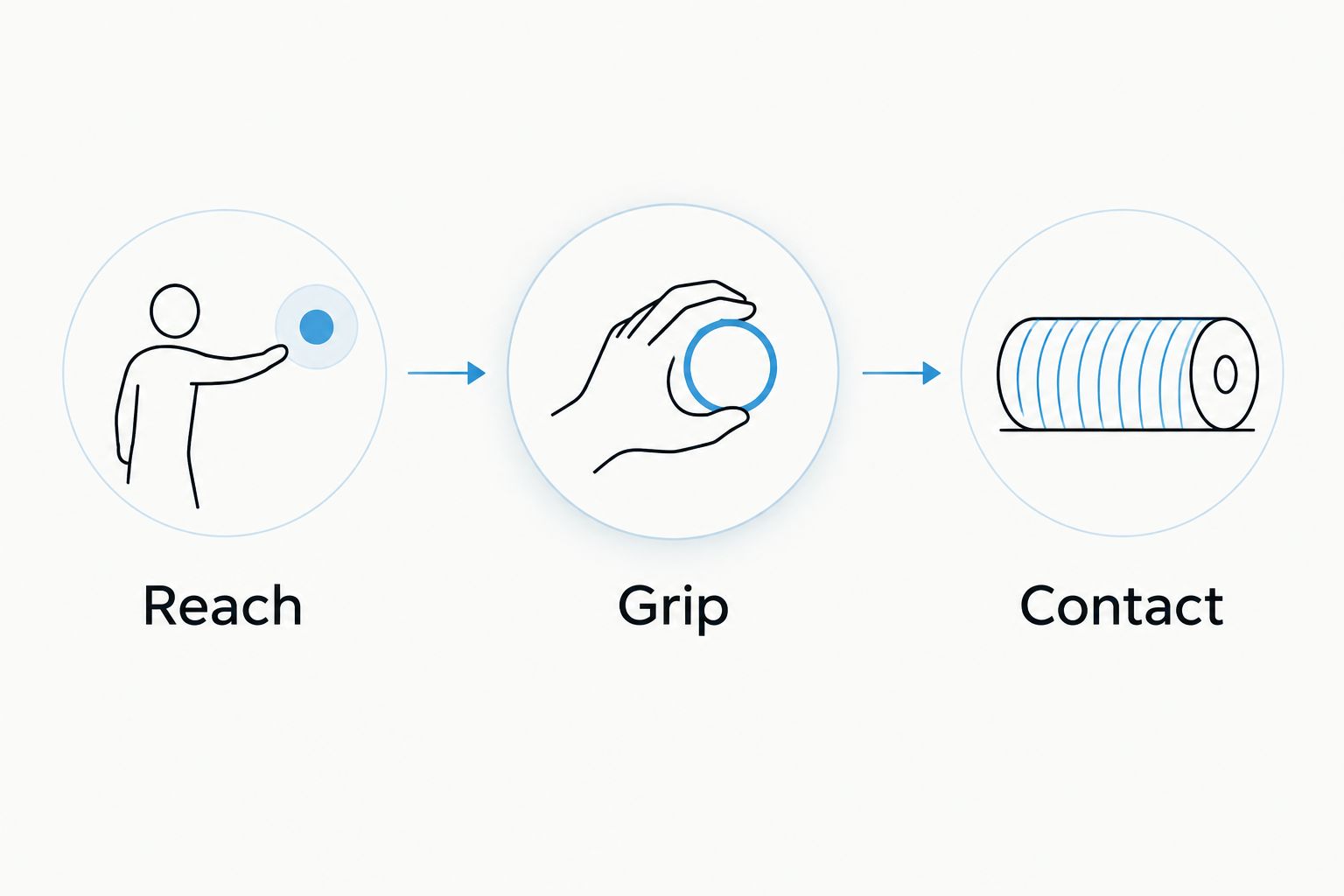
Use 3 checks to narrow your choice: Reach, Grip and Contact. They turn a long product listing into a practical decision.
- Reach: Can you position the stick over your intended muscle area without twisting or straining?
- Grip: Can you hold both handles comfortably and ease pressure immediately?
- Contact: Does the surface match your preference, rather than someone else’s tolerance?
If a listing leaves one of these questions unanswered, check the missing detail before buying. Do not fill the gap with assumptions based on photographs of a different model.
Use a massage stick without chasing pain
Start with light pressure over an accessible muscle area. Keep your position comfortable and move slowly enough to notice how the contact feels. Increase pressure only while the sensation remains comfortable; force is not a measure of success.
Avoid rolling directly over joints, bony points, broken skin or an area with a suspected injury. Stop for sharp pain, tingling or numbness. Persistent or unexplained symptoms belong with a qualified healthcare professional, not a more forceful massage session.
A stick does not replace rest or sensible training decisions. Feeling temporarily more comfortable does not prove that an injury has resolved or that you should repeat a demanding workout.
For your 2026 routine, keep the tool’s role narrow: optional self-massage, with pressure you control. Do not turn recovery equipment into another workout to endure.
How the ranking works
This ranking prioritises purpose, controllable handling, surface preference and practical fit. The named product appears first because its stated role directly matches the query; the design categories follow as distinct alternatives for broad contact, texture preference and packing space.
The order is not based on hands-on testing or measured recovery outcomes. No category wins on medical effectiveness here. The useful comparison is which design fits your intended use with the fewest compromises.
Which massage stick should you choose?
Start with the Yoga Silicone Massage Stick for Muscle Relaxation if you want Sweatjoy’s dedicated massage-stick option. Confirm its dimensions and care instructions before committing.
Choose a smooth roller stick if broad contact is your priority. Choose a textured roller stick only if you prefer its surface feel. Choose a compact massage stick when bag space is a real constraint, not simply because smaller looks easier.
For undecided readers, comfortable handling is the default decision rule. The best massage sticks for muscle recovery in 2026 are the ones you can use gently and consistently without awkward reach or pressure you cannot control.
FAQ
What are the best massage sticks for muscle recovery?
The best massage sticks for muscle recovery match your reach, grip and surface preference. Sweatjoy’s Yoga Silicone Massage Stick for Muscle Relaxation is the named option in this guide; smooth, textured and compact designs serve different practical needs.
Is a smooth massage stick better than a textured one?
A smooth massage stick is the better fit when you prefer broad contact without raised texture. A textured design changes the surface sensation, but texture alone does not prove greater recovery benefit.
Should I choose a compact massage stick for the gym?
Choose a compact massage stick when packing space is your main constraint. Check that its shorter format still leaves enough hand spacing and reach for comfortable use.
Does a massage stick need to hurt to work?
No, pain is not a target for massage-stick use. Keep pressure comfortable and stop if you experience sharp pain, tingling or numbness.
Can I use a massage stick after every workout?
A massage stick is optional after a workout, not a required recovery step. Base use on comfort and avoid repeatedly pressing an area that feels irritated or injured.
Can a massage stick treat a muscle injury?
Do not treat a massage stick as treatment for a muscle injury. Persistent pain, swelling or unexplained symptoms require assessment rather than stronger self-massage.
What should I check before buying a massage stick online?
Check the exact dimensions, handle layout, contact surface and cleaning instructions. Product photographs and recovery claims do not establish whether the stick will fit your hands or intended use.
One last thing
Check the handles as carefully as the roller. You control a handheld massage stick through your grip, so an uncomfortable handle can undermine an otherwise suitable surface.
Before adding another accessory, decide where this one belongs in your routine. One comfortable tool with a clear purpose beats a collection you do not enjoy using.