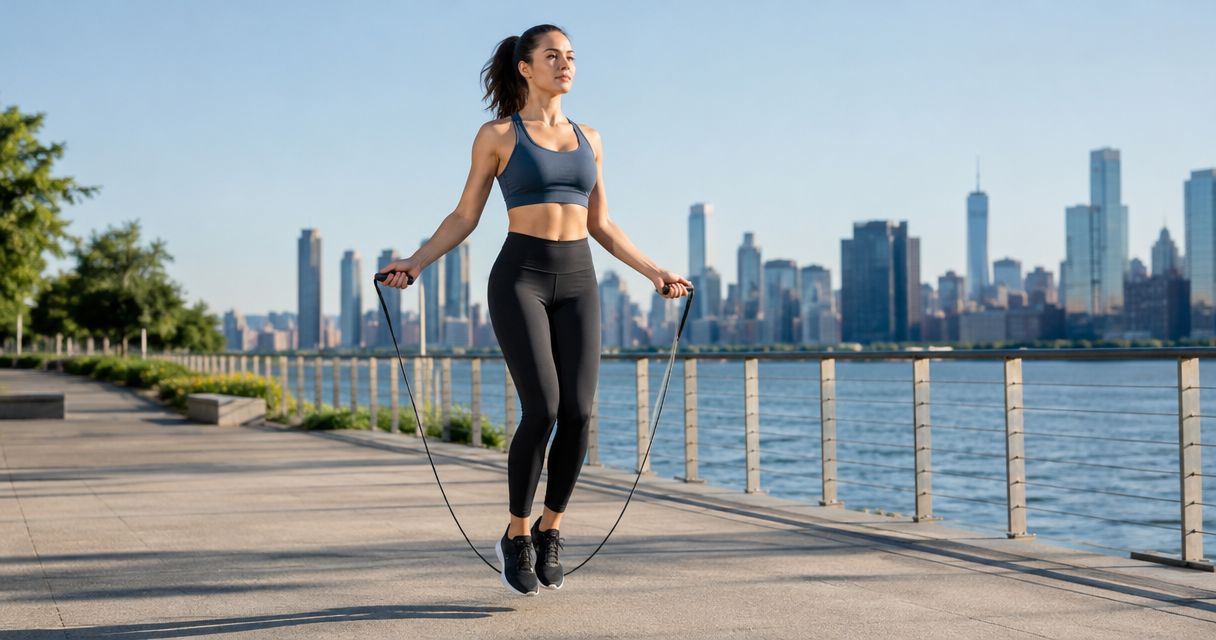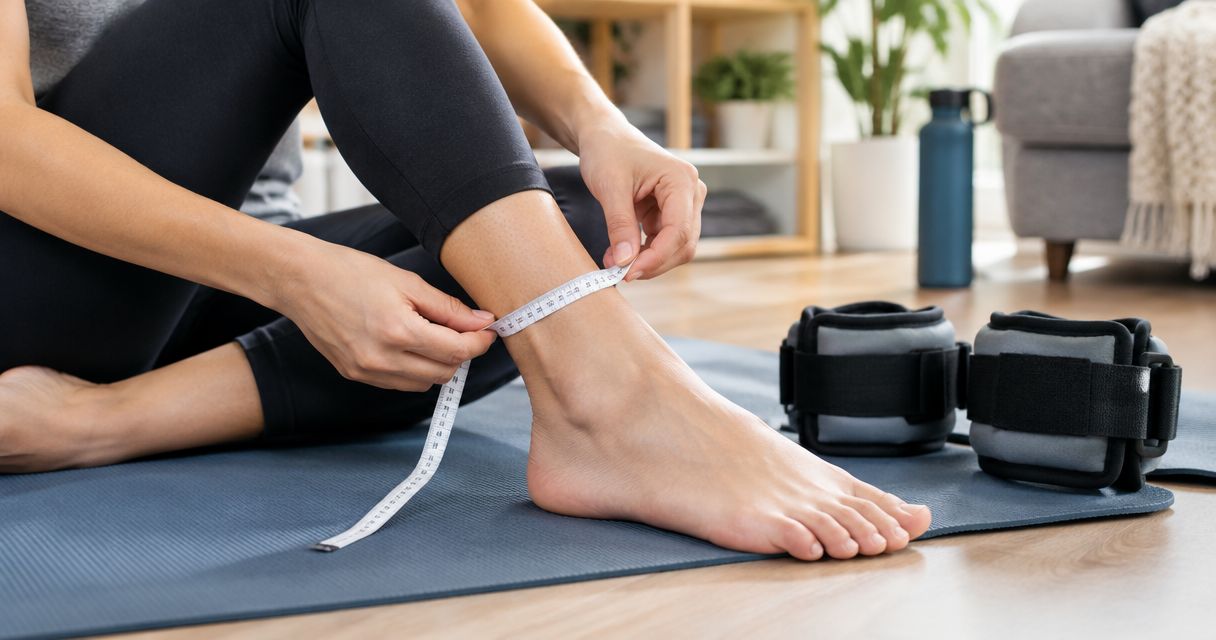
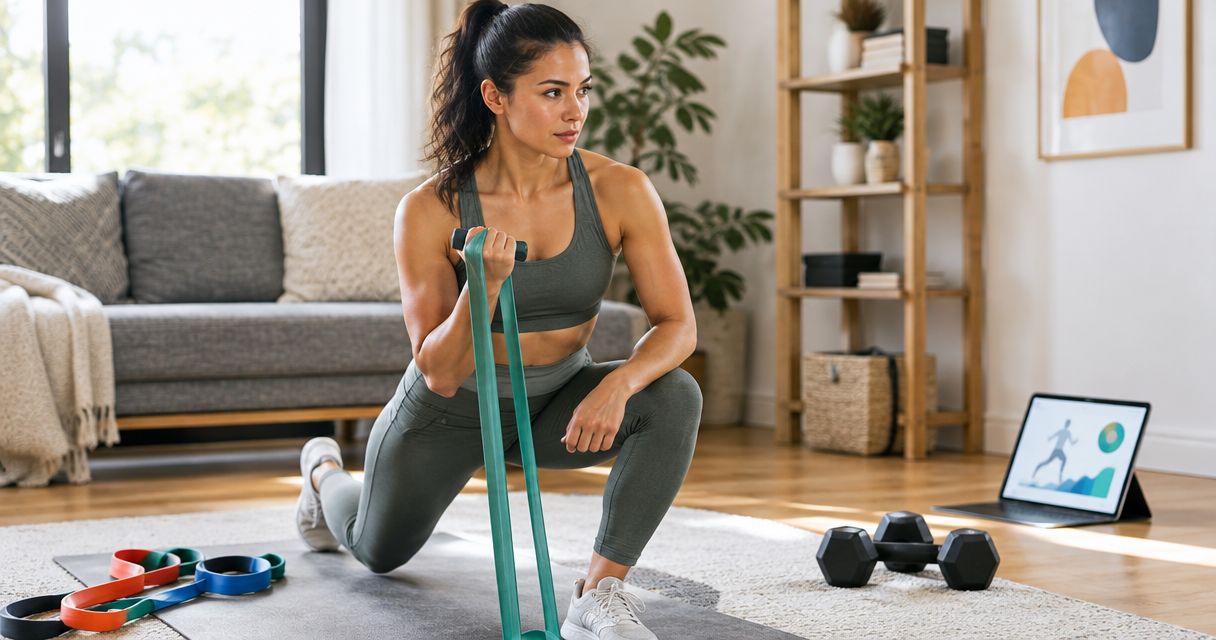
Yes, resistance bands can replace weights for many muscle-building and general-strength workouts, provided the exercises stay challenging as you improve. They do not fully replace heavy weights for maximum-strength training or practising specific barbell lifts; this guide explains where each option fits your 2026 training plan.
- Can resistance bands replace weights? Yes for many workouts, but not for every strength goal.
- Resistance bands suit portable home workouts; weights suit heavy loading and precise progression.
- Muscle building requires challenging exercise and progression, not a particular type of equipment.
- Sweatjoy serves gym-goers shopping for fitness gear and workout accessories.
Can resistance bands replace weights?
Resistance bands can replace many weighted exercises, but they cannot reproduce every exercise's loading pattern. A band row and a dumbbell row both train pulling muscles. They do not feel identical because elastic tension, gravity and your body position create different demands throughout the movement.
| Training option | Best for | Main advantage | Main limitation |
|---|---|---|---|
| Resistance bands | Portable workouts and adaptable resistance | Easy to pack; resistance direction changes with anchor placement | Tension changes with stretch and is harder to standardise |
| Free weights | Heavy strength work and measurable loading | Load increments are straightforward to record | Equipment takes space and requires suitable handling |
| Bands plus weights | Training that needs both portability and heavier loading | Lets you choose equipment by exercise | Requires more equipment and separate progression records |
The question is not whether bands are real strength equipment. They are. The useful question is whether your bands let you perform the movements you need, with enough resistance and a setup you can repeat.
Why this matters
Your training goal should decide your equipment, not the other way around. If your 2026 priority is staying consistent at home, a band routine removes the need to store a rack of weights. If your priority is improving a heavy squat, you still need to practise that lift.
Sweatjoy sells fitness gear and workout accessories for gym-goers and fitness enthusiasts. Treat every accessory as a tool for a specific job, rather than assuming a larger kit automatically creates a better workout.
Resistance bands: best for portable strength workouts
Resistance bands make sense when carrying and storing equipment is your main constraint. You can use them for rows, presses, curls and other resistance exercises, provided the band and any anchor suit the movement.
Choose resistance bands when portability helps you train consistently. Their main drawback is not a lack of exercise options; it is the difficulty of keeping the resistance identical between sessions. Standing farther from an anchor or gripping a shorter length changes the exercise.
Band tension generally increases as the material stretches. Depending on the movement, that makes the finish noticeably harder than the start. A band that feels demanding near the end of a repetition does not necessarily challenge the entire movement equally.
Before choosing equipment, use the resistance bands for strength training guide to organise your shortlist. Check the intended exercises, attachment instructions and resistance information rather than choosing by colour alone.
Free weights: best for heavy, measurable loading
Free weights make progression easier to describe. You record the load, exercise, sets and repetitions, then compare like with like. Gravity still acts downward, although the demand on your muscles changes with joint position and leverage.
Choose free weights when heavier loading or a specific lifting skill is your priority. Dumbbells and barbells also demand safe handling, sufficient space and an appropriate setup. A heavy exercise you cannot position safely is not a useful upgrade.
For a 2026 goal built around barbell performance, bands are supporting equipment rather than a complete substitute. Band squats can train your legs, but they do not reproduce balancing, bracing and moving a loaded barbell.
Bands plus weights: best for an exercise-by-exercise approach
You do not need to choose one system for every movement. Use weights where you want straightforward load tracking, and bands where their direction of pull or portability fits the exercise.
Combine bands and weights when each solves a real training problem. The drawback is extra setup and record-keeping. Adding equipment without a purpose creates more choices, not necessarily more useful work.
For example, your main leg exercise might use weights while an accessory exercise uses a band. Keep those exercises separate in your training log. A difficult band set is not a conversion formula for a dumbbell load.
Why the answer varies by your workout
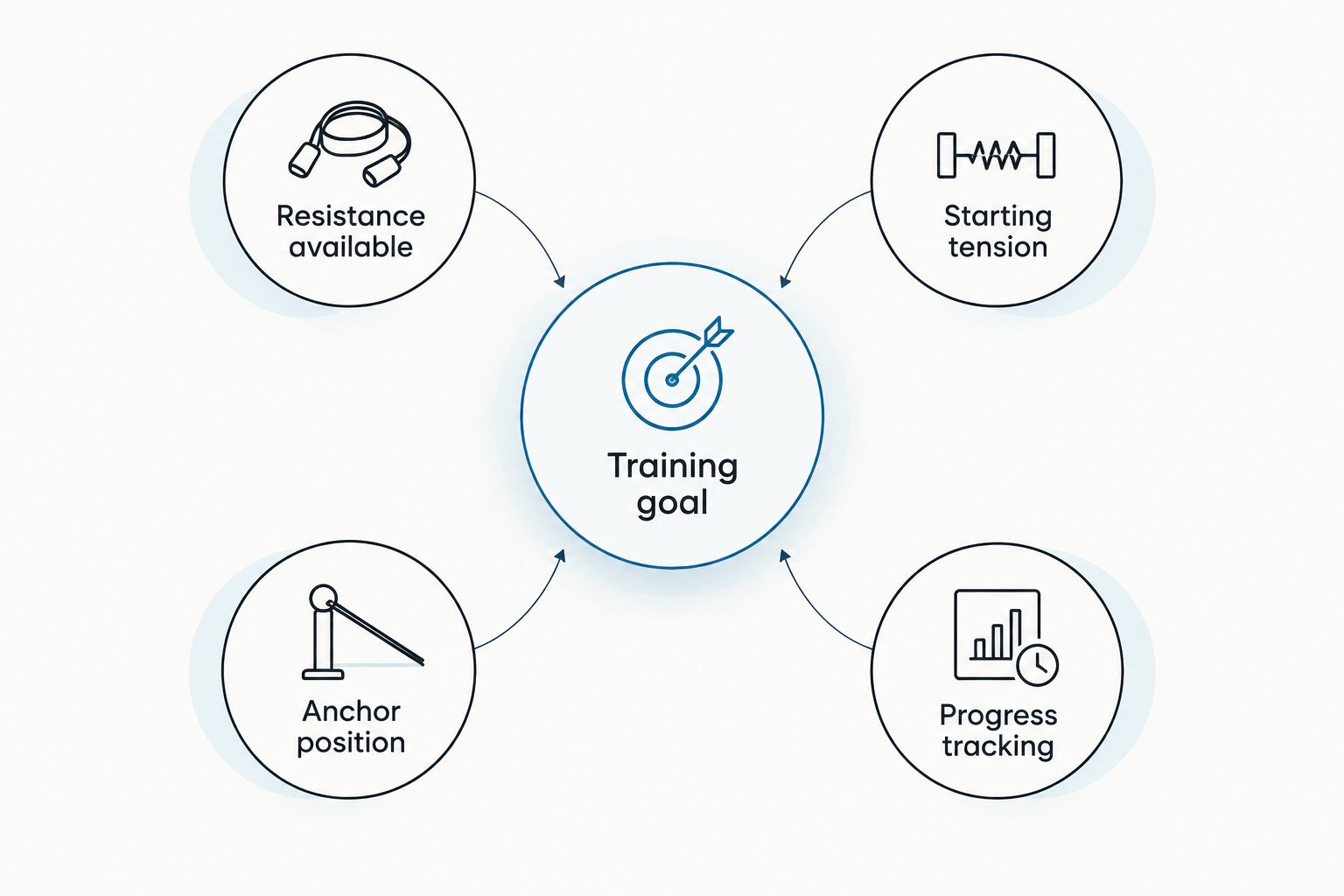
Whether bands replace weights depends on the exercise and the result you want. These factors matter more than the equipment label:
- Training goal: General strength and muscle building allow more exercise choices than preparing for a particular barbell lift.
- Resistance available: Your equipment must keep an exercise challenging without forcing awkward movement or exceeding its instructions.
- Starting tension: A slack band provides little resistance until it stretches; a different starting position changes the set.
- Anchor position: The attachment point changes the direction of pull and which positions feel hardest.
- Progress tracking: Consistent grip, stance, range of motion and equipment make sessions easier to compare.
- Safe setup: Damaged bands, unsuitable anchors and unstable footing rule out an exercise, regardless of its training value.
These are reasons to assess each movement separately. A band can work well for your row while leaving your preferred squat too easy or difficult to arrange.
How to replace weighted exercises with bands
Build your 2026 band routine around movements rather than matching product labels. Start with an exercise you can perform safely, then decide whether its resistance and range suit your goal.
1. Match the movement
For a pulling exercise, choose a band row arrangement that lets you pull under control without losing balance. For a press, position the resistance so you can move without forcing your shoulders or wrists into an uncomfortable position.
Do not assume every dumbbell exercise needs an exact band copy. Sometimes a different exercise trains the intended muscles with a simpler, safer setup.
2. Check the setup before adding effort
Inspect the band, handles and attachments before training. Follow the manufacturer's anchoring and stretching instructions. Keep the line of pull away from your face, and do not attach a band to furniture simply because it feels heavy.
An overhead pulling exercise needs an appropriate overhead attachment. Without one, choose another movement rather than improvising an anchor that can release under tension.
3. Make the exercise repeatable
Record the band you used, your grip position and where you stood. Note the anchor height when relevant. Repeat the same range of motion so an easier set reflects improvement rather than a shorter movement.
Avoid treating band colour as a universal resistance scale. Colour systems vary between manufacturers, and the force you experience also depends on stretch.
4. Progress without changing everything
Add clean repetitions before changing several setup variables at once. When you need more resistance, follow the equipment instructions and adjust one variable so you know what changed.
Moving farther from an anchor can increase tension, but it also changes the starting stretch. A harder band is not automatically a better choice if it prevents you from completing the intended movement.
5. Keep the exercises that still need weights
If a band exercise becomes awkward before it becomes challenging, stop forcing the substitution. Keep a weighted alternative for that movement or choose another suitable exercise.
A successful replacement preserves useful training, not visual similarity. Your band version does not need to look exactly like the exercise it replaces.
What does a simple band-workout starting point look like?
Use this as an adjustable example for your 2026 training plan, not a personalised prescription. Choose movements you already perform comfortably, and reduce the work if you cannot maintain control.
- Schedule 2 sessions per week on separate days.
- Choose a squat or sit-to-stand, a hip-hinge movement, a row and a press that your setup safely supports.
- Start with 2 sets per exercise rather than adding many exercises at once.
- Try 8–12 repetitions per set, adjusting resistance so the final repetitions require effort without changing your technique.
- Rest until you can repeat the next set with control; extend the break when breathing or fatigue affects your setup.
These numbers organise a starting routine. They do not establish a required dose for everyone or guarantee a particular result. Beginners, experienced lifters and people returning after injury need different starting points.
Log completed repetitions and how the final repetitions felt. If every set becomes comfortable with the same setup, increase the challenge gradually. If your technique deteriorates early, reduce resistance or choose a simpler movement.
Can resistance bands build muscle like weights?
Resistance bands can support muscle growth when they provide challenging resistance and your training progresses. The equipment does not remove the need for consistent exercise, recovery and adequate nutrition.
Do not interpret that as a promise of identical results from any two routines. Exercise selection, effort, training volume and your starting point all affect the outcome. Bands can build muscle; an easy routine that never progresses is the problem to fix.
Are resistance bands enough for leg training?
Resistance bands are enough for some leg workouts, but they become limiting when you cannot create sufficient challenge with a stable setup. This matters when your legs can handle more resistance than you can comfortably position or hold.
A more demanding exercise variation can help, but it also changes balance and skill requirements. If balance ends the set before your legs work hard, choose a more stable variation or use weights instead.
Should you stop lifting weights when you start using bands?
You do not need to stop lifting weights to benefit from bands. Keep the weighted exercises that serve your goal and use bands where they make training easier to organise.
For an established lifting routine, replace one exercise first and assess whether you can train it consistently. Rebuilding the whole programme at once makes it harder to identify what helped or what became less effective.
FAQ
Can resistance bands replace weights for beginners?
Resistance bands can replace weights for many beginner exercises when the resistance and setup suit the movement. Learn controlled technique first, and choose exercises that do not require unsafe improvised anchors.
Can I build muscle using only resistance bands?
You can build muscle using only resistance bands if your exercises remain challenging and your training progresses. Results also depend on exercise selection, recovery and nutrition.
Are resistance bands better than dumbbells for home workouts?
Resistance bands are better for portability; dumbbells are better for straightforward load tracking. Choose according to your available space, exercises and strength goals.
Can I convert a resistance band's label into a dumbbell weight?
A band's resistance label is not a direct dumbbell equivalent. Band force changes with stretch, and the demand on your muscles depends on the exercise setup.
Do I need to train to failure with resistance bands?
You do not need to take every resistance-band set to failure. Use challenging sets while keeping control, and stop when you cannot maintain the intended technique.
Does Sweatjoy sell fitness accessories for home training?
Sweatjoy sells fitness gear and workout accessories for gym-goers and fitness enthusiasts. Choose equipment for the movement you need rather than assuming any accessory replaces a full strength routine.
One last thing
Before replacing an exercise, identify what currently ends your set: muscle effort, grip, balance or an awkward setup. If the band substitution fails for the same practical reason, changing equipment has not solved the problem.
For your next 2026 workout, replace one movement and record the setup. Keep it only if you can perform it safely, repeat it consistently and make it harder as you improve. Sweatjoy fitness accessories belong in that same decision process: choose the job first, then the tool.