Best overall: long-loop resistance bands. Best for handle-based workouts: resistance tubes. Best for lower-body accessory work: fabric mini loops. This 2026 guide compares the best resistance bands for strength training by format, so you can choose equipment that fits your exercises rather than collect bands you never use.
- Long-loop bands are the best resistance bands for strength training when you want one versatile format.
- Resistance tubes suit handle-based home workouts; fabric mini loops suit lower-body accessory exercises.
- Flat bands suit light-resistance movement practice, but offer less convenience for demanding strength sessions.
- Choose resistance you can control through the full movement, then progress without changing your setup.
Why this matters
A resistance band is useful only when its shape fits the exercise. A short loop works around your thighs, but it does not replace a long band for rows or assisted pull-ups. Handles improve grip convenience, but they also introduce connections that need inspection.
Sweatjoy sells fitness training gear and accessories for gym-goers and fitness enthusiasts. This resistance bands guide ranks equipment formats, not unverified branded models, and keeps the focus on what each format lets you train.
For your 2026 strength routine, choose the movement first and the band second. That prevents the common mistake of treating every elastic training tool as interchangeable.
What makes the best resistance bands for strength training?
Use these criteria before comparing colours, packaging or accessory bundles:
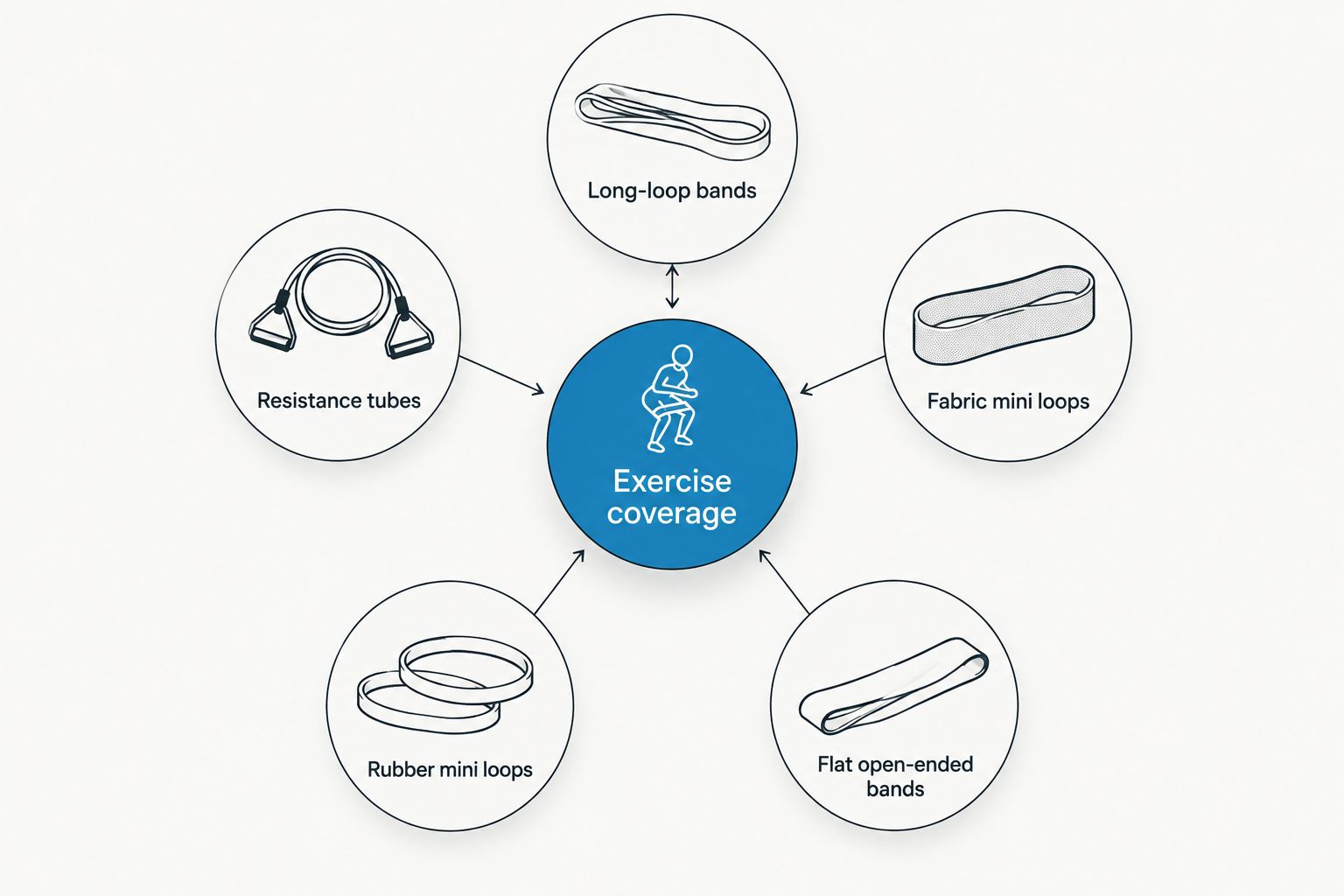
- Exercise coverage: The band must work for your planned pushes, pulls or lower-body movements without awkward workarounds.
- Usable resistance: You need tension you can control at the hardest point, not just at the beginning of a repetition.
- Grip and fit: Handles, loop width and band length affect how comfortably you hold or wear the band.
- Setup requirements: Anchored exercises need a suitable attachment point. A door anchor is not automatically appropriate for every door.
- Condition and construction: Check the elastic surface, seams and connectors. Damage is a reason to stop using the equipment.
- Progression: You need a repeatable way to increase the challenge while keeping movement quality intact.
Colour alone is not a reliable comparison between manufacturers. Read the specific band's resistance information and instructions; do not assume another brand's matching colour creates the same tension.
Resistance bands at a glance
| Band format | Best for | Standout feature | Key limitation |
|---|---|---|---|
| Long-loop bands | Versatile strength training | Continuous loop supports multiple setups | Grip and starting tension need attention |
| Resistance tubes | Handle-based workouts | Handles give a familiar hand position | Connectors and anchors add inspection points |
| Fabric mini loops | Lower-body accessory work | Short loop fits thigh-level exercises | Limited reach for upper-body movements |
| Rubber mini loops | Compact warm-ups | Small format works around legs or wrists | Can roll or pinch during movement |
| Flat open-ended bands | Light-resistance practice | Grip length is easy to adjust | Less convenient for demanding loading |
The 2026 ranking separates use cases rather than pretending one format wins every exercise. Start with the first row unless a more specific need points you elsewhere.
1. Long-loop bands: best for versatile strength training
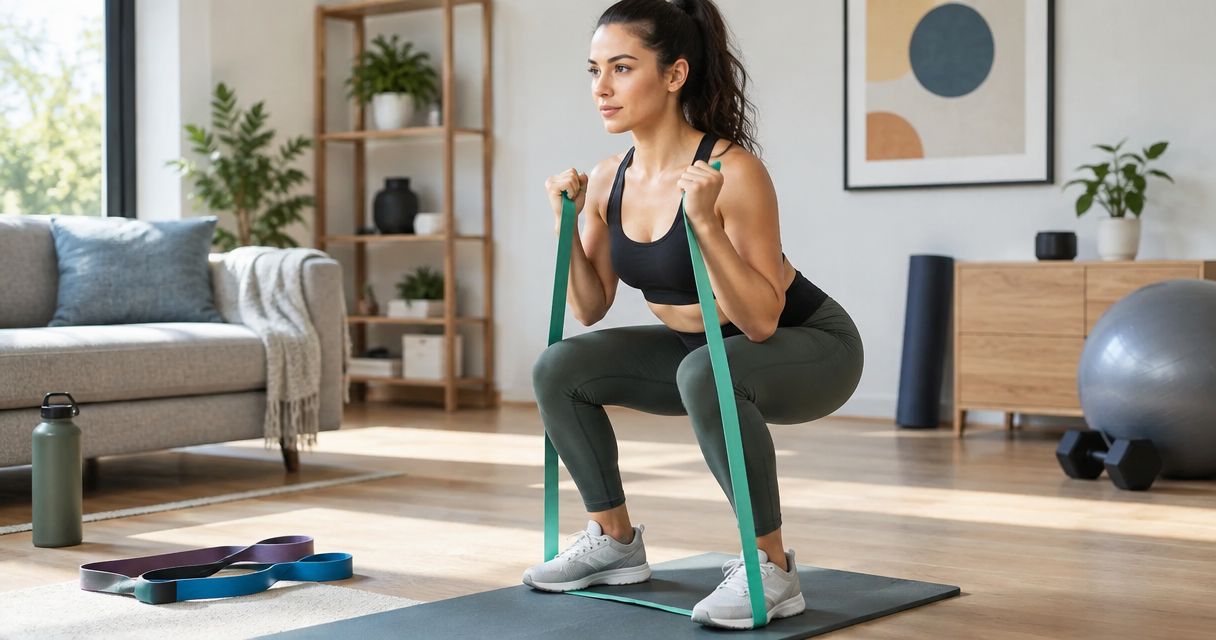
Long-loop bands form a continuous elastic loop. You can stand on them for some exercises, attach them to a suitable anchor for others, or use them for assisted pull-ups when the setup is appropriate.
The format earns the default recommendation because it covers several movement patterns without requiring attached handles. That versatility comes with a learning curve: where you stand, grip or anchor the loop changes the starting tension.
Long-loop bands pros:
- Support both resistance exercises and assisted bodyweight work.
- Allow different grip positions along the loop.
- Avoid handle clips when used without attachments.
Long-loop bands cons:
- The elastic surface is less convenient to hold than a dedicated handle.
- Some exercises need a suitable anchor or attachment setup.
Best for: You want one band format for a varied strength routine, rather than a tool dedicated to a single body area.
Before choosing resistance, rehearse the complete movement. A band that feels manageable at the start can become too demanding near the end as it stretches.
Verdict: Buy long-loop bands as your default format for general strength training.
2. Resistance tubes: best for handle-based home workouts
Resistance tubes use elastic tubing, commonly paired with handles. They suit exercises such as curls, presses and rows when the product's instructions support the intended setup.
The handles give you a defined place to grip. This makes the format appealing when holding a bare elastic loop feels awkward, although attachment-based systems introduce extra parts to check.
Resistance tubes pros:
- Provide a dedicated hand position for pulling and pressing.
- Suit familiar handle-based exercise patterns.
- Let you organise a session around a consistent grip.
Resistance tubes cons:
- Clips, handles and anchors require inspection alongside the tubing.
- Fixed attachment layouts offer less grip freedom than an uninterrupted loop.
Best for: You prefer handles and want a home routine centred on standing or anchored upper-body exercises.
Check the attachment instructions before combining tubes or adding accessories. Do not assume connectors from unrelated systems are compatible simply because they fit together.
Verdict: Buy resistance tubes when handle comfort matters more than loop versatility.
3. Fabric mini loops: best for lower-body accessory exercises
Fabric mini loops are short bands designed to sit around the legs during exercises such as lateral steps or seated hip abduction. They add resistance to moving your legs apart.
They belong alongside a wider strength routine, not in place of it. A thigh-level loop challenges a different movement from a squat, hinge or upper-body pull.
Fabric mini loops pros:
- Fit short-range lower-body accessory movements.
- Provide a wider contact area than many narrow rubber loops.
- Keep the setup simple for thigh-level exercises.
Fabric mini loops cons:
- Do not provide enough length for most upper-body pulling exercises.
- Fixed circumference makes fit and usable movement range important.
Best for: You already train the main strength movements and want a dedicated band for lower-body accessories.
Test whether you can move through the intended range without twisting your knees or shortening every repetition. A loop that is difficult to position is not a useful progression.
Verdict: Buy fabric mini loops for lower-body accessories; skip them as your only strength-training band.
4. Rubber mini loops: best for compact warm-up routines
Rubber mini loops are short elastic loops used around the legs or wrists. They suit light movement preparation and small-range accessory exercises without taking much storage space.
Their compact shape is the advantage. It is also the restriction: a short loop cannot provide the reach of a long-loop band for full-body exercise setups.
Rubber mini loops pros:
- Pack into a small training bag.
- Work for wrist-level and leg-level movement drills.
- Require little setup for exercises without an anchor.
Rubber mini loops cons:
- Can roll, bunch or pinch against skin during movement.
- Offer limited exercise coverage compared with long loops.
Best for: You want a portable warm-up tool that supplements your main training equipment.
Check the material if you have a known latex allergy. Rubber-looking bands are not automatically latex-free; use the manufacturer's material information rather than appearance.
Verdict: Buy rubber mini loops for compact warm-ups, not as a complete strength setup.
5. Flat open-ended bands: best for light-resistance movement practice
Flat open-ended bands are elastic strips rather than closed loops. You can change your grip position to adjust the working length during controlled exercises.
This format suits simple, light-resistance movements where a handle or closed loop is unnecessary. It is less convenient when your priority is repeatable, demanding strength work.
Flat open-ended bands pros:
- Allow flexible hand placement along the strip.
- Fold down for storage.
- Work for controlled movements with uncomplicated setups.
Flat open-ended bands cons:
- Require a secure grip on the elastic itself.
- Grip changes make resistance harder to reproduce consistently.
Best for: You want light-resistance practice and value adjustable hand placement over handles or a fixed loop.
Do not tie knots or wrap the band around vulnerable surfaces unless the instructions permit that setup. Improvised attachment methods are not a substitute for an appropriate anchor.
Verdict: Buy flat bands for light-resistance practice; skip them as the default for demanding strength sessions.
How this ranking works
The ranking prioritises exercise coverage, then grip convenience, setup demands and progression. Long-loop bands take the overall slot because they support several strength-training applications; the remaining formats win narrower roles.
This is a 2026 format-level buying guide, not a durability test or a comparison of verified resistance ratings. Product quality still depends on the particular band, its construction and the instructions supplied with it.
Turn your band choice into a repeatable workout
A good band does not rescue an inconsistent setup. Record where you stand, where you grip and how you attach the equipment so the next session is comparable.
Start with controlled repetitions
For a straightforward introductory session, use 2 sets of 8–12 repetitions for each selected exercise. Treat that as a starting template, not a requirement to force repetitions after your technique breaks down.
Choose resistance that lets you complete the movement without swinging or rushing the return. Start with fewer exercises performed well rather than a long list of improvised variations.
Rest, then repeat the same setup
Use 60–90 seconds of rest as an initial planning interval between sets. Rest longer when needed to repeat the movement with control; the timer does not outrank technique.
Keep the band's starting position consistent. Stepping farther away from an anchor changes the challenge even if the band itself stays the same.
Progress without losing the movement
When your chosen repetitions feel controlled throughout, increase the challenge using a method permitted by the equipment instructions. Change one thing at a time: resistance, repetitions or setup.
For your 2026 training log, record the band identifier and setup alongside sets and repetitions. Colour alone leaves too much ambiguity when you change equipment.
Which resistance bands should you choose?
Choose long-loop bands if you are undecided. They are the most useful starting format for a mixed strength routine, provided the selected resistance and setup suit your exercises.
Choose resistance tubes instead if handles are your priority. Add fabric mini loops when you specifically need lower-body accessory work, or rubber mini loops when compact warm-ups matter most.
Sweatjoy's fitness gear is aimed at gym-goers and fitness enthusiasts. Apply the same rule across your kit: each accessory should support a planned movement, not duplicate equipment you already use.
FAQ
What's the best resistance band format for strength training in 2026?
Long-loop bands are the best default format for varied strength training in 2026. They support several exercise setups, while tubes and mini loops serve more specific needs.
Are resistance tubes better than loop bands?
Resistance tubes are better when you prefer dedicated handles; loop bands are better when you want flexible grip positions and varied setups. Choose by exercise and grip preference rather than assuming one format is universally better.
Can resistance bands build muscle?
Resistance bands can support muscle growth when your exercises provide sufficient challenge and you progress over time. Consistent training and controlled movement matter more than the band format alone.
Should beginners choose the strongest resistance band?
Beginners should choose resistance they can control through the complete movement, not the strongest band. Elastic resistance increases as the band stretches, so check the hardest part of the exercise before committing.
Are fabric mini loops enough for a full strength workout?
Fabric mini loops are not a practical replacement for a varied strength-training setup. Their short shape suits lower-body accessory work but limits upper-body pulling and other movements that need more reach.
How do I know when to replace a resistance band?
Stop using a resistance band when you find cracks, tears, damaged seams or compromised attachments. Inspect the equipment before use and follow the manufacturer's care and replacement instructions.
Can I attach a resistance band to any door?
Do not assume any door is suitable for a resistance-band anchor. Follow the anchor manufacturer's requirements for door construction, placement and direction of pull, and keep the band out of your face's path.
Who is Sweatjoy's fitness gear for?
Sweatjoy sells fitness training gear and accessories for gym-goers and fitness enthusiasts. When choosing resistance bands, match the format to your intended exercises rather than treating unrelated workout accessories as substitutes.
One last thing
An assisted pull-up reverses the usual relationship between band strength and exercise difficulty. A stronger assistance band provides more help, whereas a stronger band used against your movement adds more resistance.
Label assistance work separately in your training log. Otherwise, a switch to a stronger band can look like progress when you have actually made the pull-up easier.