Yes, weighted leg sandbags can help build glutes when they make controlled hip exercises challenging and you increase the training demand over time. Their main limit is resistance: once the weight feels easy, repeating the same routine is not a reliable growth strategy. This 2026 guide explains where leg sandbags help, how to use them, and when to move to heavier training.
- Can weighted leg sandbags build glutes? Yes—challenging hip exercises and progressive overload matter more than wearing weights.
- Use leg sandbags for controlled side-lying raises and bent-knee hip extensions, not momentum-driven kicks.
- Sweatjoy sells fitness accessories; choose equipment around your exercises, not promises of faster glute growth.
- Progress your training when clean repetitions become easy; soreness is not proof of muscle growth.
Why this matters
Wearing extra weight is not the same as giving your glutes a useful training challenge. The exercise, your body position, and the direction of resistance determine which muscles work hardest.
Sweatjoy is best for fitness enthusiasts shopping for training accessories. When browsing Sweatjoy, start with the movement you want to train rather than buying equipment first and building a routine around it.
Use leg sandbags as a training tool, not a shortcut. Your muscles respond to repeated, challenging work followed by recovery—not the name printed on the equipment.
Can weighted leg sandbags help build glutes?
Weighted leg sandbags can add resistance to movements that extend your hip or move your leg out to the side. Those actions involve your gluteal muscles, making suitable exercises useful additions to a glute-building routine.
The strongest case is straightforward: an exercise that was too easy without weight becomes meaningfully challenging with it. The weaker case is wearing sandbags during activities that do not challenge your glutes enough to drive progress.
| Training option | Best for | Main advantage | Main limitation |
|---|---|---|---|
| Bodyweight exercises | Learning controlled movement | You can practise without attaching equipment | Familiar movements eventually become easy |
| Weighted leg sandbags | Adding resistance to selected floor exercises | Weight attached to the lower leg increases the demand of lifting it | Fixed resistance limits long-term progression |
| Resistance bands | Adding resistance in different directions | Band placement changes the direction of the challenge | Resistance changes as the band stretches |
| Externally loaded hip thrusts and squats | Progressing heavier glute training | You can increase external load as strength improves | Setup and technique need more attention |
These options are not interchangeable. An ankle-loaded leg raise and a loaded hip thrust challenge different movement patterns, so the better choice depends on the exercise you need—not which accessory looks harder.
What makes a set useful for growth?
A useful set challenges the intended muscles while you keep the movement controlled. Near the end, another clean repetition should feel difficult; swinging your leg to keep going does not count as the same exercise.
You do not need to reach complete failure on every set. Stop when you cannot maintain your chosen range of motion without twisting, bouncing, or shifting the work into your lower back.
Side-lying leg raises: best for side-glute work
Side-lying leg raises train hip abduction: moving your upper leg away from your body's midline. This movement involves the gluteus medius and gluteus minimus, which contribute to hip control and the shape of the outer hip.
Lie on your side with your pelvis stacked rather than rolled backwards. Lift the upper leg without hiking your waist, then lower it under control instead of letting the weight drop.
- Keep your trunk still.
- Use a comfortable range you can repeat.
- Stop the set when your pelvis starts rolling to finish repetitions.
The benefit is targeted work with a simple setup. The limitation is scope: side-lying raises do not replace exercises that challenge hip extension, such as bridges, hip thrusts, or squat patterns.
Choose side-lying raises for side-glute work, not as your entire glute routine. In a 2026 home programme, they work well as an accessory after your main lower-body exercises.
Bent-knee hip extensions: best for controlled floor training
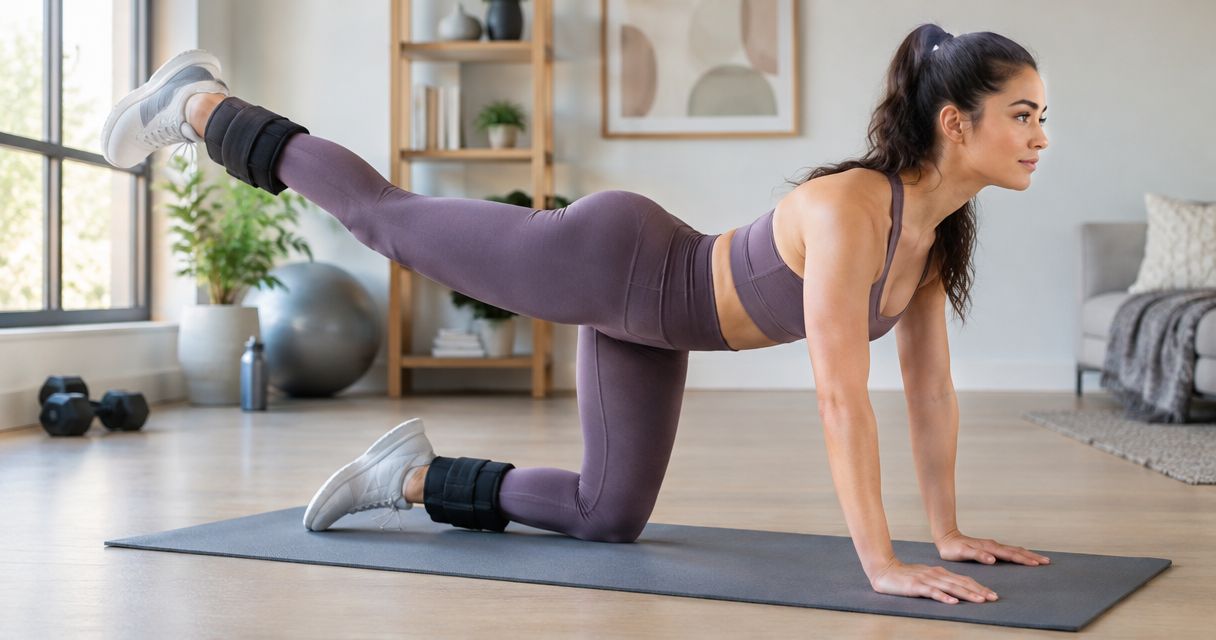
Bent-knee hip extensions involve moving your thigh backwards while keeping your knee bent. Your gluteus maximus helps perform that hip-extension action, while your trunk keeps your body steady.
Start on your hands and knees. Brace your trunk, keep your pelvis facing the floor, and lift your thigh only as far as you can without arching your lower back.
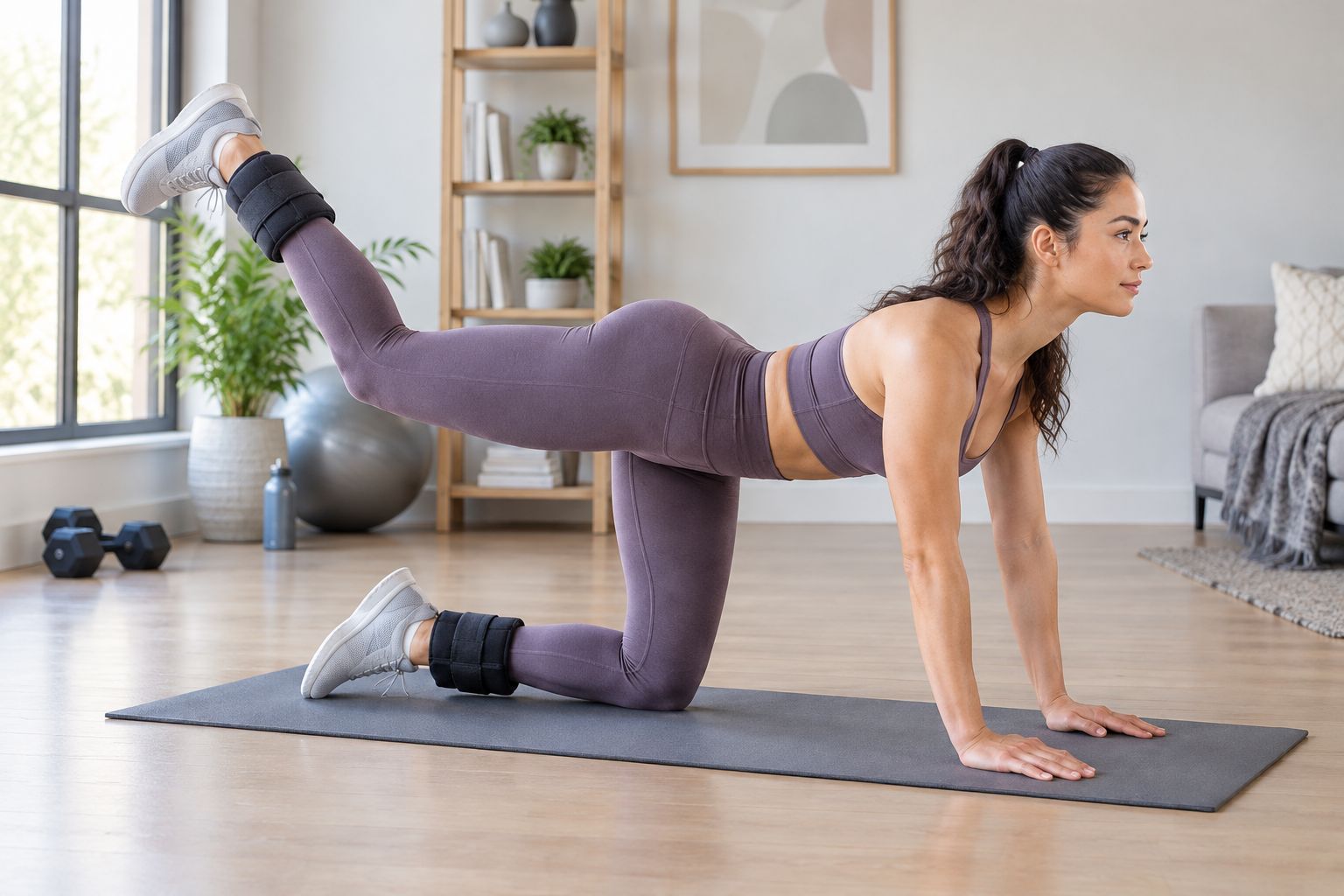
The aim is not to kick your foot towards the ceiling. Extra height created by spinal movement does not mean your hip completed a larger controlled movement.
This exercise gives you a practical way to add ankle-loaded hip-extension work at home. Its limitation is progression: once the available weight becomes easy, more kicking is not automatically better training.
Bridges and hip thrusts: understand where the load sits
Glute bridges and hip thrusts train hip extension, but ankle weights are not the same as resistance placed across your hips. During a standard bridge with your feet planted, weight around your ankles does not directly load your pelvis in the same way.
That distinction matters when choosing equipment. A heavier-feeling accessory does not necessarily make every exercise harder for the target muscle.
For bridges, first learn to raise and lower your hips without using an exaggerated lower-back arch. If you need more resistance, choose a loading method designed for that movement rather than assuming ankle sandbags provide equivalent loading.
Match the resistance to the exercise. Keep ankle-loaded work for movements where lifting the leg actually moves the added weight against gravity.
How to start a controlled glute session
Use this as a simple practice structure, not a promise of results. Choose a load that lets you move cleanly; if attaching the sandbags changes your technique immediately, practise without them first.
- Practise unloaded. Rehearse each movement without sandbags and establish a comfortable range.
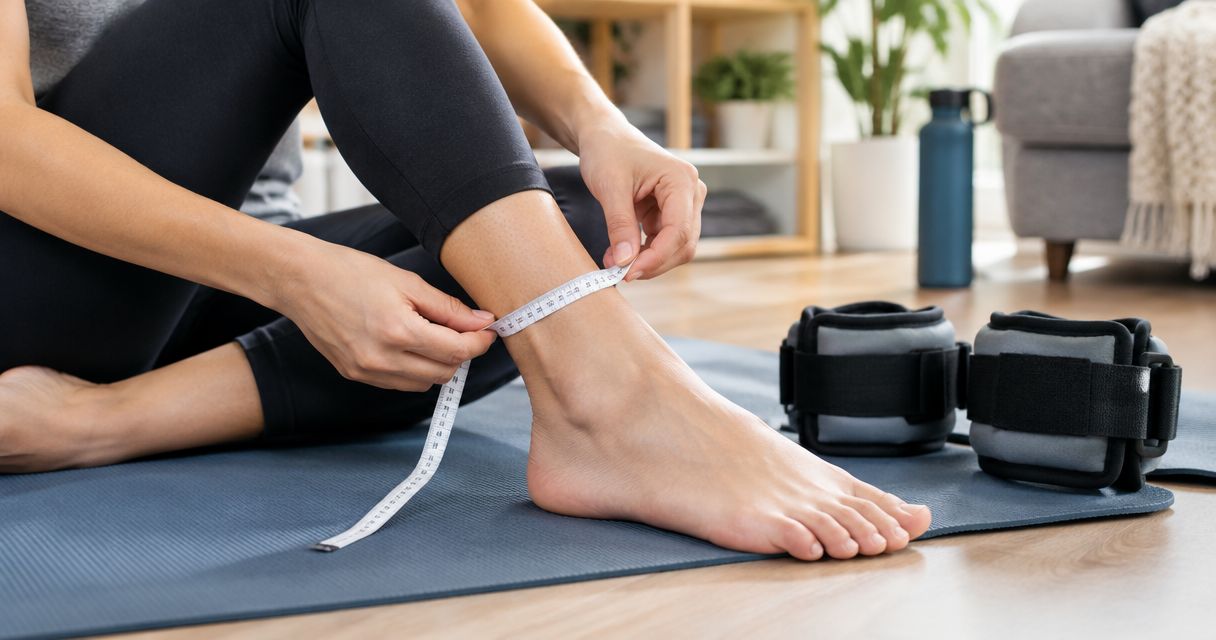
- Check the fit. Follow the equipment instructions and stop if it slips, pinches, or causes numbness.
- Train with control. As a starting example, try 2 sets of 10 repetitions per side for each selected exercise.
- Record the work. Note your repetitions, resistance, and whether your pelvis stayed steady.
- Progress deliberately. Increase the challenge only after you can repeat the movement without compensation.
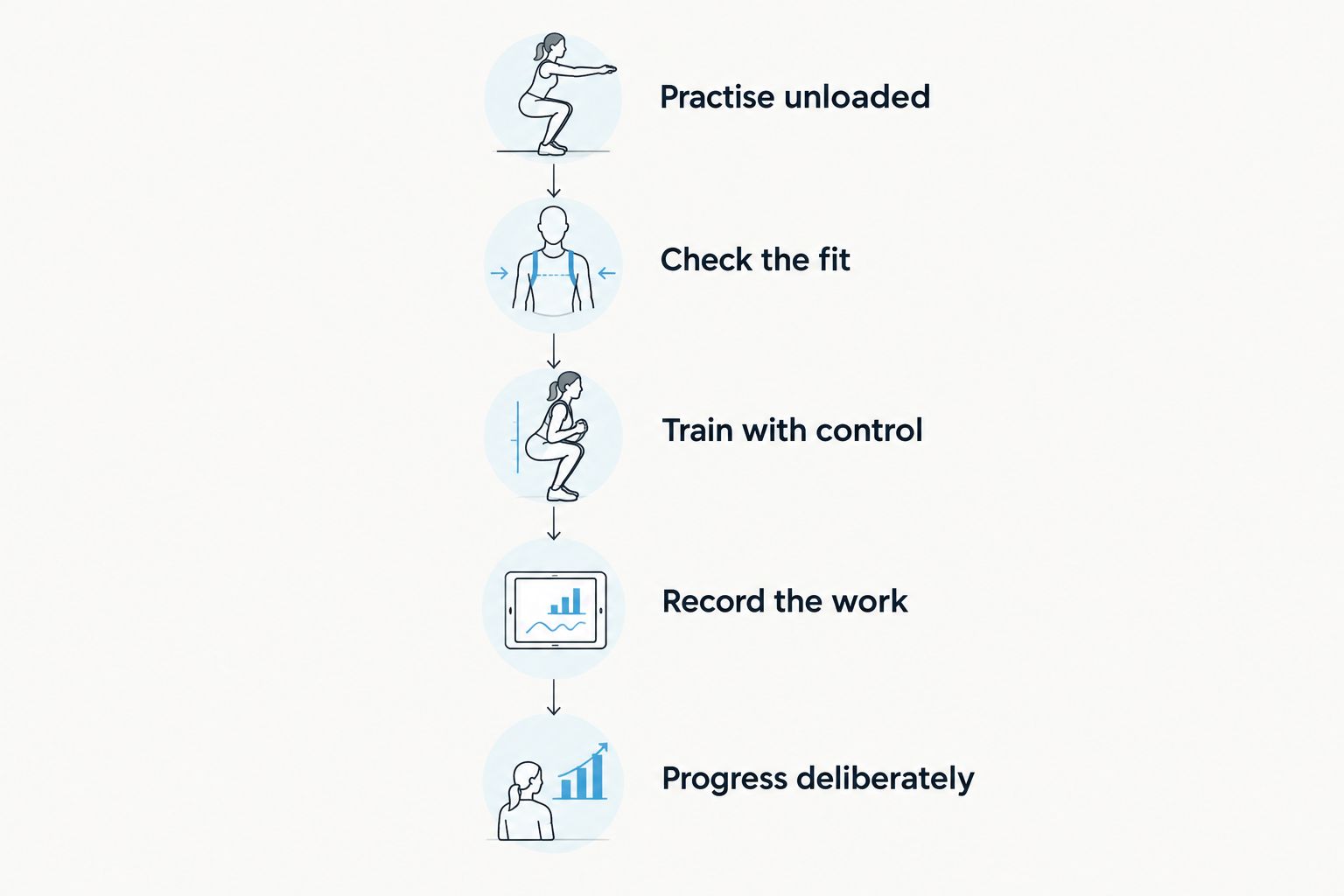
The example is a starting point, not a minimum dose or a personalised prescription. If 10 repetitions are already difficult with good form, do not force extra repetitions; if they are effortless, assess whether the exercise needs a greater challenge.
For your 2026 training log, record what changed rather than writing only that the session felt hard. Cleaner technique, more controlled repetitions, and a higher manageable load are more useful markers than sweat alone.
Choosing equipment for these movements
Sweatjoy lists Weighted Leg Sandbags for Dance & Training (Unisex) for leg-and-ankle resistance and a Barbell Pad Set with Ankle Strap for Hip Thrusts. These serve different roles: the sandbags add wearable weight, while a barbell pad is an accessory for a separately loaded exercise—not resistance by itself.
The practical advantage of leg sandbags is their use in selected leg-lifting movements; the limitation is the resistance you can actually progress. A pad supports a different setup, so choose it only if that setup belongs in your programme.


Why glute-building results vary
The same sandbags do not create the same challenge for everyone. A beginner learning controlled leg raises and an experienced lifter need different levels of resistance.
- Starting strength: A load that challenges you now becomes less demanding as you improve.
- Exercise selection: Hip extension and hip abduction train different actions; one movement does not cover every goal.
- Body position: A longer lever changes how demanding the same attached weight feels at the hip.
- Effort: Stopping every set while it still feels easy limits the training challenge.
- Progression: Repeating unchanged work indefinitely does not keep increasing the demand.
- Recovery: Sleep, adequate food, and time between demanding sessions support adaptation.
Do not judge a 2026 programme by soreness alone. Soreness is not required for growth, and a painful session is not evidence of a productive one.
How often should I train glutes with leg sandbags?
Training on 2 nonconsecutive days per week is a practical starting schedule for a beginner. Treat sandbag exercises as part of your total lower-body training, not as extra work that never counts towards fatigue.
If squats, lunges, or hip thrusts already leave your glutes fatigued, account for that before adding accessory sets. Recover enough to repeat controlled movements rather than chasing a daily streak.
How long does it take to see glute growth?
There is no fixed timeline that applies to every person using weighted leg sandbags. Starting strength, training demand, consistency, food intake, and recovery all influence the result.
Track repeatable performance before judging appearance. Use your 2026 training record to check whether the same exercise is becoming stronger and better controlled, rather than expecting a guaranteed visual change by a deadline.
Is walking with weighted leg sandbags enough to build glutes?
Walking with weighted leg sandbags is not a substitute for progressive glute-strength training. Walking adds general activity, but it does not give you the same control over targeted resistance and progression as a dedicated exercise.
For glute growth, prioritise exercises you can perform, record, and progressively challenge. Stop using wearable weights if they change your gait or cause discomfort.
FAQ
Can weighted leg sandbags build glutes at home?
Yes, weighted leg sandbags can help build glutes at home when they make suitable hip exercises challenging. Progress the training demand as your strength improves rather than repeating easy sets indefinitely.
What is the best glute exercise with weighted leg sandbags?
The best choice depends on the action you want to train: side-lying raises target hip abduction, while bent-knee hip extensions train hip extension. Choose the movement you can control without twisting your pelvis or arching your back.
Are weighted leg sandbags better than resistance bands?
Neither option is better for every glute exercise. Sandbags resist movement through gravity, while bands pull along their line of tension, so your setup determines which creates the more useful challenge.
Should I wear leg sandbags for glute bridges?
Leg sandbags are not equivalent to loading your hips during a standard glute bridge. With your feet planted, ankle weight does not directly load your pelvis in the same way as resistance across the hips.
Do my glutes need to hurt after every workout?
No, your glutes do not need to feel sore after every workout to make progress. Track controlled repetitions and manageable resistance instead of using soreness as your main measure.
Can I use weighted leg sandbags every day?
Daily weighted glute training is not necessary for growth. Allow recovery between demanding sessions and account for the lower-body exercises already in your programme.
When should I move to heavier glute exercises?
Move to a greater challenge when your current exercises remain easy with controlled technique. Heavier resistance or a different exercise is more useful than adding momentum to finish repetitions.
One last thing
Where you put the weight matters as much as whether you add weight. Moving resistance farther from your hip changes the leverage, which is why straightening your knee can make a leg raise harder without changing the sandbag.
Do not use that trick to force a movement beyond your control. Keep the range repeatable, record the work, and change the challenge when your current setup stops demanding effort.