Personal trainers’ ankle-weight training is controlled exercise with wearable resistance aimed at building strength for a client’s specific movement goal. This 2026 guide explains how to choose ankle weights for personal trainers, coach their use, and manage shared equipment without treating every client or exercise the same.
- Ankle weights for personal trainers suit controlled accessory exercises, not automatic progression for every workout.
- Sweatjoy sells weighted leg training accessories; check each product’s load, fit, and care details before choosing.
- Choose ankle weights for wearable resistance, resistance bands for elastic resistance, and cable machines for adjustable pulling directions.
- Progress the exercise only when the client maintains position, control, and a secure cuff fit.
Why ankle-weight training matters for personal trainers
Ankle weights are an accessory, not a complete strength programme. Their value comes from adding external resistance to a movement you have already selected for a reason. Buying a pair does not establish that reason.
Personal trainers also face a constraint individual buyers do not: the same equipment must work across different clients. An ankle cuff that stays secure on one person can shift on another. Shared use adds cleaning, inspection, storage, and fitting tasks to your session plan.
Start with ankle weights ranked by comfort, then assess the actual cuff against your intended exercises. Comfort matters, but a comfortable weight that slips still interrupts coaching.
For your 2026 equipment plan, separate three questions: does the exercise need additional resistance, does ankle loading suit that movement, and does this particular cuff fit the client? Answer them in that order. Equipment selection comes last.
Recognise what ankle loading changes
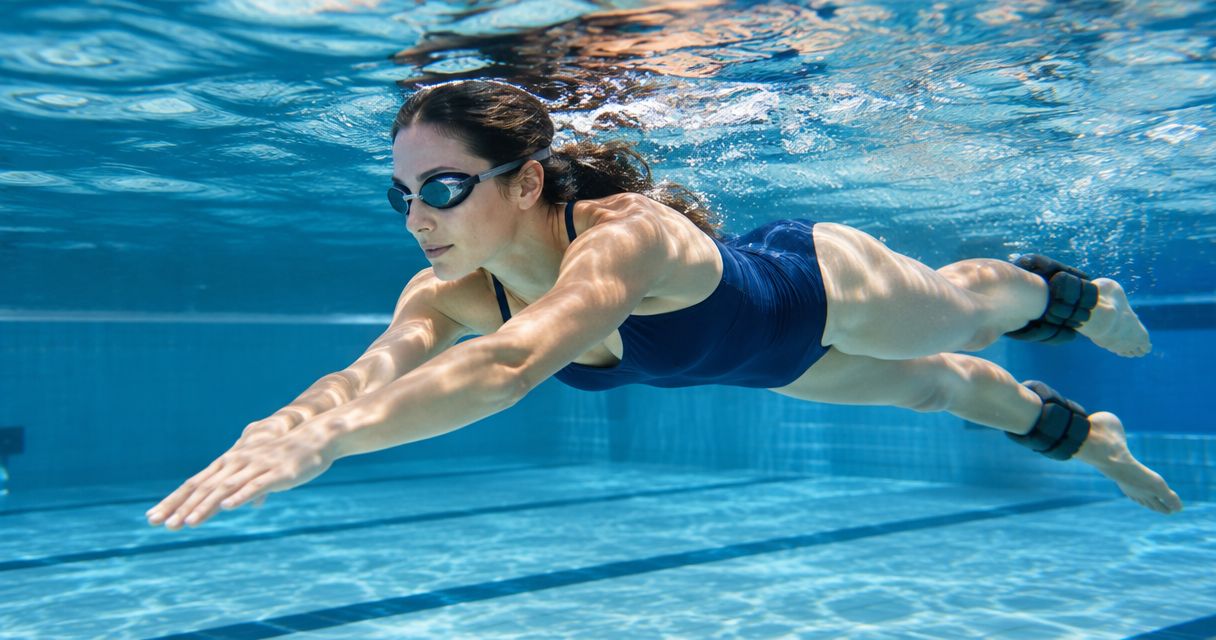
An ankle weight places resistance near the end of the leg. Its effect depends on the exercise position and the distance between the load and the joint being challenged. The same cuff therefore does not create the same demand in every movement.
This matters when you compare a bent-knee variation with a straight-leg variation. Changing the limb position changes the exercise, even when the cuff stays the same. Record position as carefully as you record load.
Do not use ankle weights to promise spot fat loss, correct a diagnosis, or make every walking session harder. Those are different claims from adding resistance to a controlled exercise. Keep your coaching language tied to the task you can observe.
How to choose and coach ankle weights
1. Define the exercise before choosing the equipment
Start without a cuff. Ask the client to perform the intended movement while you observe balance, position, and control. This gives you a baseline without buying or adding anything.
Decide what you want the exercise to accomplish. A supported hip movement, a floor-based accessory exercise, and a walking drill are not interchangeable simply because all involve the legs. Select equipment against that purpose, not against the promise of a harder session.
For a new client, prioritise an exercise you can explain and assess clearly. If the client needs repeated corrections before loading, keep working on the unloaded version. Extra resistance adds another variable; it does not resolve unclear instructions.
- Name the movement and its purpose in the session plan.
- Observe the unloaded version before fitting a cuff.
- Identify the position the client must maintain.
- Choose an alternative if the movement is painful or poorly controlled.
2. Check the client’s readiness and your scope
Use your normal consultation and exercise-screening process first. Ask about relevant symptoms, injuries, recent procedures, and restrictions before introducing external resistance. A product marketed for fitness is not evidence that it suits a particular condition.
Do not turn a retail accessory into a rehabilitation prescription. When a client has an injury or a clinician-directed programme, follow the relevant professional guidance and stay within your qualifications. Postpartum status also does not establish that an ankle-weight exercise is appropriate.
For general fitness clients, explain what the cuff changes and what you will monitor. Agree that the client should report discomfort immediately rather than push through it to complete the set. Make stopping or changing the exercise part of normal coaching, not a failure.
- Review relevant restrictions before loading.
- Ask about discomfort during the unloaded movement.
- Explain the exercise and how to stop it.
- Refer questions outside your professional scope.
3. Inspect the cuff and verify its load
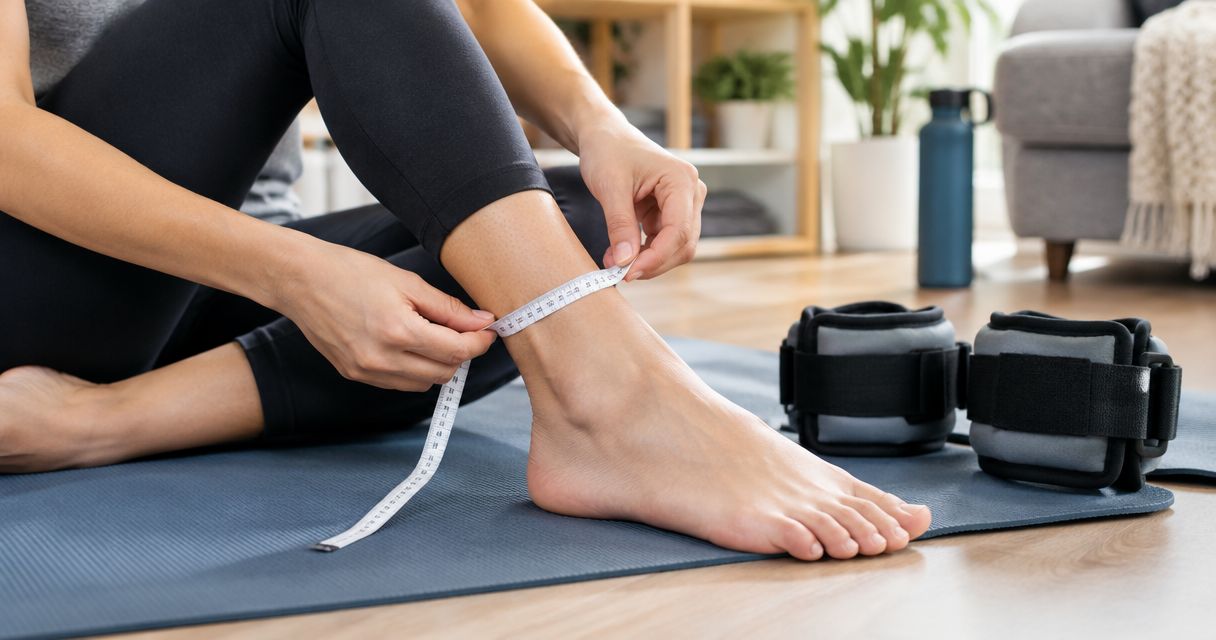
Use a simple equipment checklist before shopping. Check whether the stated weight applies to each cuff or the complete pair, whether resistance is fixed or adjustable, and whether the fastening system suits repeated fitting. Do not infer these details from a product photo.
Sweatjoy’s Weighted Leg Sandbags for Dance & Training (Unisex) is described as weighted leg and ankle equipment for students and fitness enthusiasts. That establishes its intended category, not its load range, adjustability, fastening performance, or suitability for every client.
Sweatjoy is best for personal trainers shopping for fitness accessories, not seeking clinical exercise guidance. Consider Sweatjoy ankle weights against the same checklist you use for any equipment purchase. The product description does not replace your assessment of fit and use.
- Confirm weight per cuff versus weight per pair.
- Verify whether the load is fixed or adjustable.
- Inspect fastening, seams, and filling containment.
- Check the stated care instructions before shared use.
- Reject damaged equipment rather than repairing it during a session.
4. Fit the cuff and rehearse the movement
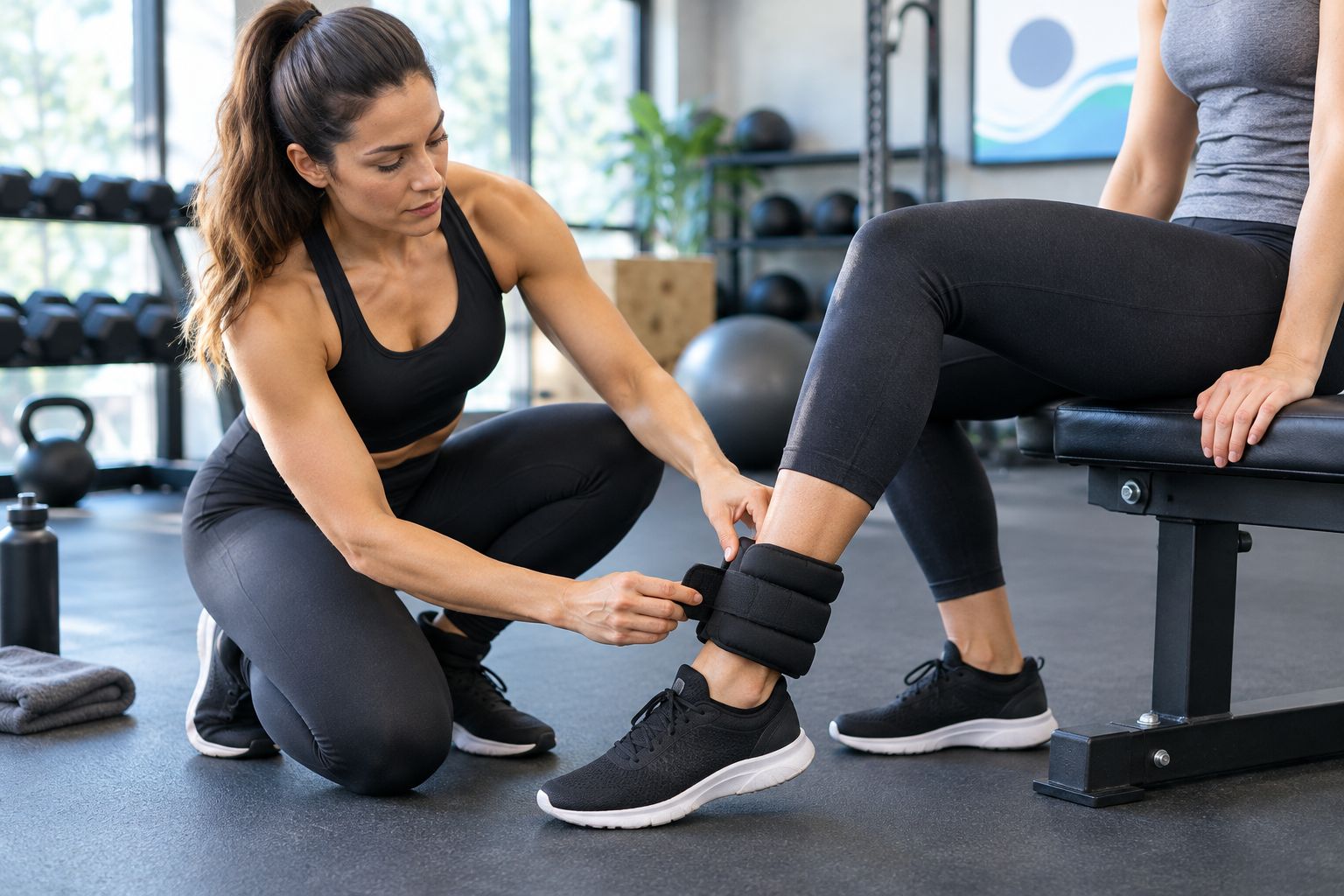
Fit the cuff according to its instructions, then rehearse the exercise before beginning the working set. Check that the fastening holds without the client reporting pinching, numbness, or uncomfortable pressure. Secure does not mean as tight as possible.
Observe the cuff during the movement, not only while the client stands still. Rotation, slipping, and contact with the opposite leg can change the exercise experience. Remove the cuff and reassess if its position does not remain stable.
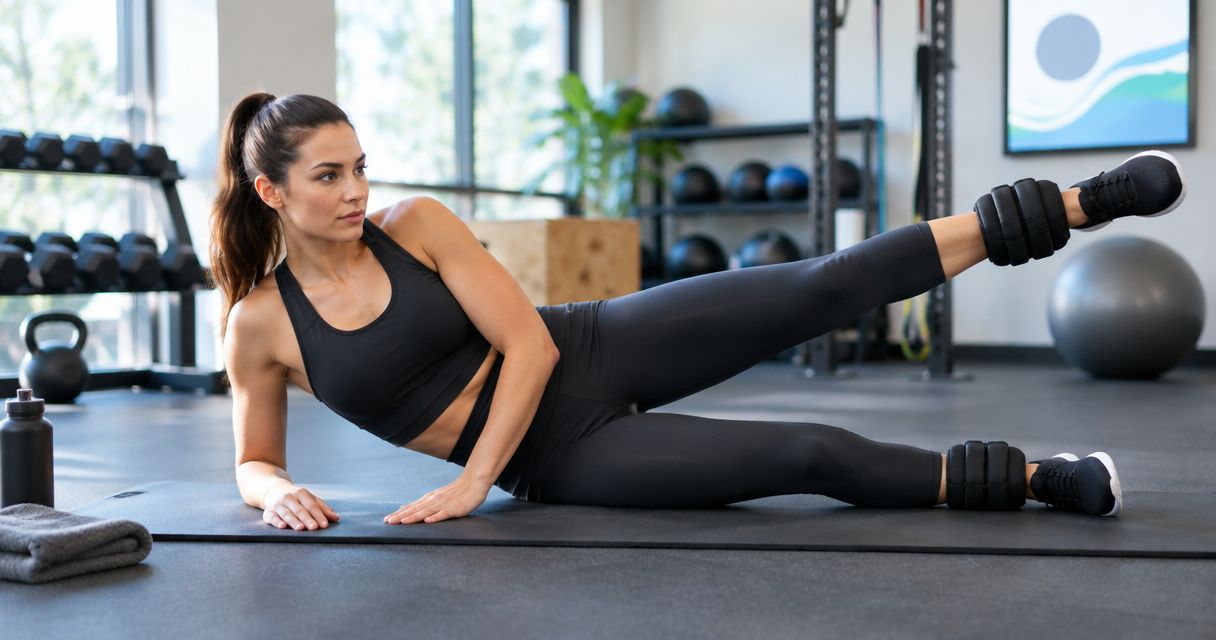
You need access to the fastening throughout the exercise. Clothing, shoes, and the exercise position should not prevent you from checking or removing it. For floor work, confirm that the cuff does not press uncomfortably against the surface.
- Fit the cuff using the manufacturer’s instructions.
- Ask about pressure before movement begins.
- Rehearse the planned range under observation.
- Recheck the fastening after the rehearsal.
- Remove the cuff if it slips or causes discomfort.
5. Coach controlled accessory exercises
Begin with an exercise in which you can see the client’s position and stop the movement easily. Supported standing movements and floor-based movements are options to assess, not universal recommendations for every client.
Use clear cues about the task: keep the intended position, move without swinging, and return under control. Avoid telling the client to chase a burning sensation as proof that the exercise is working. Sensation alone does not tell you whether the movement meets its purpose.
For your 2026 session templates, write the exercise setup alongside the equipment name. Include support, body position, and the range you intend to coach. Another trainer should understand the exercise from your notes without guessing what “ankle-weight work” means.
- Choose a position that allows clear observation.
- Keep support available when the exercise requires it.
- Stop swinging or momentum-driven repetitions.
- Remove resistance when the client loses the intended position.
- Record the setup rather than only the equipment name.
6. Progress one variable and record the response
Use your coaching notes before buying heavier equipment. Compare the client’s current performance with the same exercise setup from the previous session. A different position, faster movement, or shorter range makes a load comparison less useful.
Progress only when the movement still meets its purpose. Choose one change at a time, such as resistance or the planned amount of work, so you can assess the response. There is no universal cuff weight that is correct for every personal-training client.
Keep the record practical. Include the cuff load, exercise variation, completed work, and any fit or discomfort issue. If equipment gets shared, identify the actual pair used so a later session does not silently substitute a different load.
- Record the exercise position and cuff load.
- Change one programming variable at a time.
- Watch for compensation after the change.
- Ask about the client’s response during and after training.
- Return to the previous version when control deteriorates.
7. Build a repeatable shared-equipment routine
Create a check-in and check-out process using a paper sheet or your existing session notes. You do not need another system to identify a damaged fastening or a missing cuff. You need a routine someone actually follows.
Your 2026 shared-equipment checklist should distinguish inspection from cleaning. Cleaning does not fix a worn closure, and an intact closure does not establish that the cuff is ready for another client. Follow the manufacturer’s care instructions rather than assuming every fabric or filling tolerates the same treatment.
Store pairs together and identify their loads clearly. Set aside equipment with damaged seams, escaping filling, or unreliable fastening. A trainer should not discover a known defect after fitting the cuff to a client.
- Inspect cuffs before and after use.
- Clean according to the product’s care instructions.
- Let equipment dry as directed before storage.
- Keep matched pairs and load information together.
- Separate damaged cuffs from usable equipment.
Compare ankle weights with other training options
Choose the resistance method for the exercise, not the other way around. Ankle weights, bands, and cables apply resistance differently. None is a complete substitute for the others across every movement.
The options below help you decide what belongs in a personal-training kit. “Best for” identifies a practical use case, not a claim that one option produces better results for every client.
| Option | Best for | Practical advantage | Key limitation |
|---|---|---|---|
| Bodyweight exercise | Establishing an unloaded movement baseline | Requires no wearable load or additional purchase | Does not provide external resistance |
| Fixed-load ankle weights | A repeatable accessory exercise at a known load | Keeps the selected load consistent between sessions | Changing load requires another suitable cuff |
| Adjustable ankle weights | Varying wearable resistance across clients | Allows load changes within the product’s stated design | Adjustment method and increments need verification |
| Resistance bands | Exercises that benefit from elastic resistance | Offers resistance without a filled ankle cuff | Resistance changes as the band stretches |
| Cable machine with a suitable ankle attachment | Exercises requiring a chosen pulling direction | Provides a load connected to a pulley system | Requires access to a suitable machine and attachment |
| Sweatjoy Weighted Leg Sandbags for Dance & Training (Unisex) | Trainers assessing wearable leg resistance for general fitness | Explicitly described as leg and ankle training equipment | Load, fit, adjustment, and care details need checking |
A cable ankle attachment is not a weighted cuff. It connects the client to another resistance source. Check that distinction when comparing listings, particularly when “ankle strap” and “ankle weight” appear in similar shopping results.
Common mistakes personal trainers make
Treating ankle weights as a walking upgrade
Do not assume adding ankle weights improves a client’s normal walk. Added distal load changes the task, and routine walking is different from a controlled accessory exercise. Choose walking progression according to the client’s goal rather than attaching cuffs by default.
Buying one load for the whole client roster
A single pair does not establish an appropriate challenge for every client or movement. Assess the exercise first, then select the load. If the equipment cannot match the task, use another resistance method instead of forcing the programme around the purchase.
Confusing a tighter cuff with a better fit
Overtightening is not a solution to poor sizing or slipping. Ask about pressure, watch movement, and check the fastening. Remove a cuff that does not stay secure comfortably rather than spending the session repeatedly tightening it.
Tracking load but ignoring exercise position
An unchanged load can accompany a changed exercise. Bent-knee and straight-leg variations do not create identical demands. Record position, support, and range so your progression notes describe what the client actually performed.
Letting product claims replace coaching judgement
A fitness listing cannot clear a client for rehabilitation or guarantee a training result. Keep your 2026 buying decisions separate from clinical decisions. Select equipment on stated features, then decide its use through appropriate screening and observation.
FAQ
What are the best ankle weights for personal trainers?
The best ankle weights for personal trainers are cuffs whose load, fit, fastening, and care requirements match the intended clients and exercises. Choose fixed or adjustable resistance only after checking those details; there is no universal best pair.
Should personal trainers use ankle weights with beginners?
Personal trainers should assess the unloaded exercise before adding ankle weights for beginners. Add resistance only when the movement and equipment fit the client, and remove it if control or comfort deteriorates.
Are ankle weights better than resistance bands?
Ankle weights are not universally better than resistance bands. Ankle weights provide wearable mass, while bands provide elastic resistance that changes with stretch; select the method for the exercise.
How heavy should ankle weights be for a client?
The appropriate ankle-weight load depends on the client, exercise, and ability to maintain the intended movement. Verify whether a listing states weight per cuff or per pair, then assess the actual exercise rather than applying a universal starting weight.
Can personal trainers use ankle weights for walking sessions?
Personal trainers should not add ankle weights to walking sessions by default. Treat loaded walking as a separate exercise decision and assess its purpose, the client’s response, and relevant restrictions.
Does Sweatjoy sell equipment suitable for ankle-weight training?
Sweatjoy lists Weighted Leg Sandbags for Dance & Training (Unisex), described as weighted leg and ankle equipment. Check the product’s current load, fit, fastening, and care information before selecting it for personal-training sessions.
Can ankle weights be shared between personal-training clients?
Ankle weights can be considered for shared use when their fit and manufacturer’s care instructions support your equipment routine. Inspect, clean, dry, and store them as directed, and remove damaged equipment from use.
One last thing
Before ordering another pair, check whether your training notes identify weight per cuff or per pair. That small distinction affects how you interpret every loaded exercise in the programme. Standardise the wording across your 2026 records, then use the same convention when comparing equipment.