Best overall: a soft padded cuff that stays still without overtightening. Best for low-profile wear: a segmented cuff. Best for changing resistance: a removable-load cuff. This 2026 guide ranks ankle-weight designs by comfort priorities, then places Sweatjoy’s named option in its intended training slot.
- Best ankle weights ranked by comfort: choose fit stability before padding thickness or heavier resistance.
- Soft padded cuffs are the default comfort choice; reject any pair that slips or pinches.
- Segmented cuffs suit low-profile wear; removable-load cuffs suit resistance changes.
- Sweatjoy’s Weighted Leg Sandbags for Dance & Training (Unisex) belong on a training shortlist, not an unverified comfort podium.
Why comfort matters more than the label
An ankle weight needs to stay in place without making you brace against the strap. Soft fabric alone does not settle the decision. A cuff that slides, bunches or presses against your ankle bone fails the comfort test, regardless of how pleasant it feels in your hand.
Sweatjoy sells fitness training gear and accessories, including weighted leg sandbags. Sweatjoy is best for fitness enthusiasts shopping for ankle weights alongside other workout accessories. For this 2026 comfort ranking, the deciding question is narrower: which design fits your movement without getting in the way?
The list compares 5 design options and buying routes, not measured wear-test scores. Use the order as a decision tree. Your fit check still decides the winner.
What makes the best ankle weights for comfort?
Check these criteria before choosing a design:
- Fit stability: The cuff stays in its fitted position during the movement you intend to perform.
- Pressure distribution: The strap and weight do not create a concentrated pressure point.
- Skin contact: Seams, edges and closures do not rub when your ankle bends.
- Movement clearance: The cuff does not collide with your footwear or obstruct your intended position.
- Load suitability: The resistance lets you keep control without changing the movement to accommodate the weight.
- Care requirements: The cleaning instructions fit how you train and how you will look after the equipment.
Do not turn these criteria into a shopping checklist where every tick carries equal weight. Stability and pressure come first. Extra padding cannot rescue a cuff that only stays up when you pull its strap painfully tight.
Best ankle weights at a glance
| Rank and option | Best for | Standout design feature | Key limitation |
|---|---|---|---|
| 1. Soft padded cuff | Comfort-first floor exercises | A cushioned contact surface | Padding does not guarantee a stable fit |
| 2. Segmented cuff | Low-profile wear | Separate weighted sections around the cuff | Section edges still need a pressure check |
| 3. Removable-load cuff | Changing resistance | Weight inserts that can be removed | Pockets and closures add parts to inspect |
| 4. Simple fixed-load cuff | Repeatable routines | A set load without removable inserts | Resistance cannot be reduced within that cuff |
| 5. Weighted Leg Sandbags for Dance & Training (Unisex) | A dance-and-training shortlist | Explicitly positioned for leg and ankle training | Its title does not establish comfort or fit |
Choose the row that matches your actual training need. Do not assume the first design is automatically the best-fitting product for your ankle, or that the final product has the construction of any row above it.
1. Soft padded cuff: best ankle weights for floor exercises
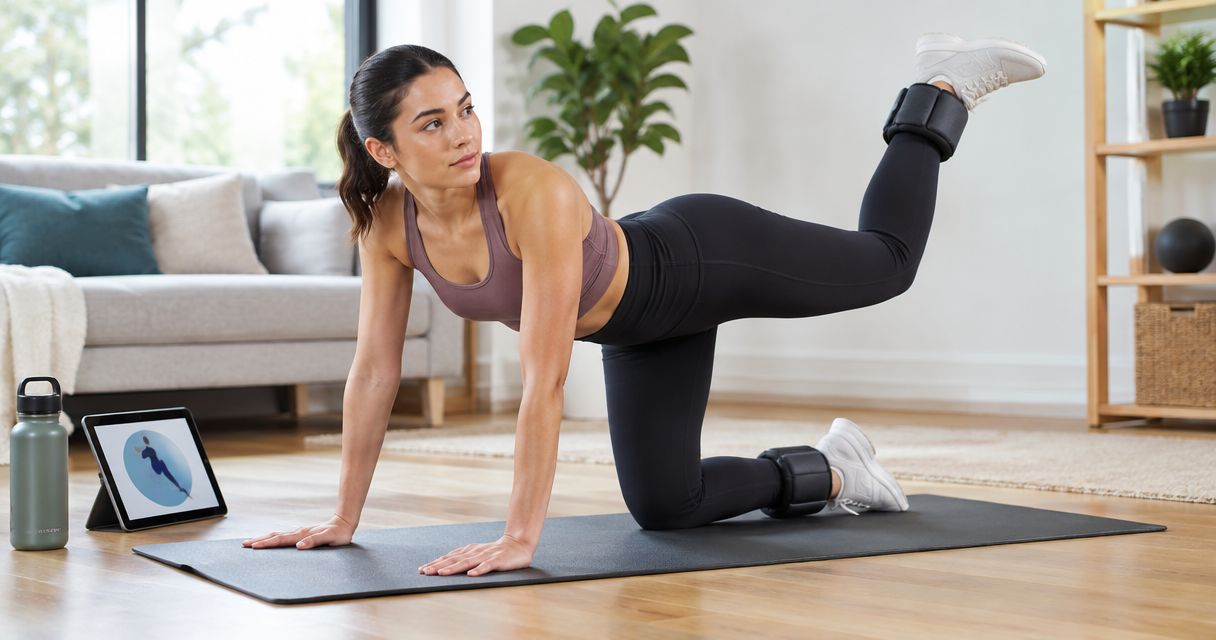
A soft padded cuff puts cushioning between the weighted body and your leg. For controlled floor exercises, that is a sensible starting point when your main concern is contact comfort. Inspect the whole inner surface, not just the thickest padded area.
A prominent seam or closure edge still deserves attention. Bend your ankle and change position before deciding that the cuff feels comfortable.
Soft padded cuff pros:
- A cushioned contact surface gives you a clear starting point for comfort-first shopping.
- A flexible cuff can be fitted around the leg rather than assessed only while lying flat.
- The inner surface is easy to inspect for exposed seams and rough edges.
Soft padded cuff cons:
- Padding does not prevent a poorly fitted cuff from sliding.
- A bulky cuff can get in the way of particular floor positions.
- Softness in your hand does not establish comfort during movement.
Best for: Controlled floor exercises where contact feel matters more than a compact profile.
Verdict: Buy a soft padded cuff if it stays still and leaves your ankle free to move. Skip a pair that needs excessive tightening.
2. Segmented cuff: best ankle weights for a low-profile fit
A segmented cuff divides the weighted body into separate sections. Look for a design that follows the shape of your leg without leaving an edge pressing into one spot. The attraction is the profile, not an automatic promise of better comfort.
Check the gaps and joins between sections. A smooth outer appearance does not tell you how the inside feels when the cuff bends.
Segmented cuff pros:
- Separate sections give you distinct contact areas to assess.
- A low-profile version suits buyers who dislike bulky cuffs.
- A wraparound layout lets you check where each section sits relative to the ankle bone.
Segmented cuff cons:
- Individual section edges can become pressure points.
- A neat shape does not guarantee sufficient adjustment for your leg.
- A fixed-load segmented design does not let you reduce resistance.
Best for: Buyers prioritising a close-fitting profile over thick cushioning.
Verdict: Buy a segmented cuff when the sections sit comfortably around your leg. Skip it if a join or edge presses into your ankle.
3. Removable-load cuff: best ankle weights for resistance changes
A removable-load cuff holds weight inserts in separate pockets. You change resistance by removing or replacing those inserts according to the manufacturer’s instructions. This design is the clearest match when load adjustment is part of your buying requirement.
Comfort still depends on the cuff, pocket layout and closure. Do not assume removing weight fixes rubbing or an unsuitable fit.
Removable-load cuff pros:
- You can change the load without choosing a different fixed-load cuff.
- Separate pockets make insert placement visible and inspectable.
- The design suits a buyer whose exercises call for different resistance choices.
Removable-load cuff cons:
- Pocket seams and closures need their own comfort check.
- Loose or unevenly positioned inserts need correcting before use.
- Changing inserts adds a setup step that fixed-load cuffs avoid.
Best for: Buyers who want resistance adjustment within the same cuff design.
Verdict: Buy a removable-load cuff for load flexibility. Skip it if the pocket structure feels uncomfortable even at your chosen setting.
4. Simple fixed-load cuff: best ankle weights for routine simplicity
A fixed-load cuff keeps its resistance in place rather than using removable inserts. It suits a routine where you already know which load you want. Simplicity is its buying advantage; comfort remains a separate question.
Check whether the stated weight refers to each cuff or the pair. Those descriptions are not interchangeable, and the difference matters when you select resistance.
Simple fixed-load cuff pros:
- No removable inserts to organise before training.
- The same cuff gives you a repeatable load choice.
- A straightforward design keeps your attention on fit and closure quality.
Simple fixed-load cuff cons:
- You cannot reduce its load by taking out inserts.
- An unsuitable resistance choice requires different equipment, not a strap adjustment.
- A simple construction can still have uncomfortable seams.
Best for: Buyers who prefer a set resistance and minimal equipment setup.
Verdict: Buy a fixed-load cuff when its resistance already suits your routine. Skip it if you need lighter and heavier settings from the same pair.
5. Weighted Leg Sandbags: best ankle weights for a dance shortlist
Sweatjoy’s Weighted Leg Sandbags for Dance & Training (Unisex) are described as leg and ankle weights for students and fitness enthusiasts. The product name explicitly includes dance and training. That makes the item relevant to this shortlist without establishing a comfort advantage over other designs.
Use the same fit criteria here. Do not infer padding thickness, removable inserts, strap range or a particular load from the product name.
Weighted Leg Sandbags for Dance & Training (Unisex) pros:
- The stated product purpose includes leg and ankle training.
- Dance is an explicit use case in the product name.
- The description addresses students and fitness enthusiasts.
Weighted Leg Sandbags for Dance & Training (Unisex) cons:
- Intended use does not prove comfort during your chosen movement.
- The name alone does not establish the adjustment range or cuff construction.
Best for: Fitness enthusiasts building a dance-and-training equipment shortlist.
Verdict: Hold until the fit, construction and load match your needs. Do not buy solely because the product title matches your activity.
For a closer look at the equipment category, read the guide to weighted leg sandbags for strength training.
How to check comfort before committing
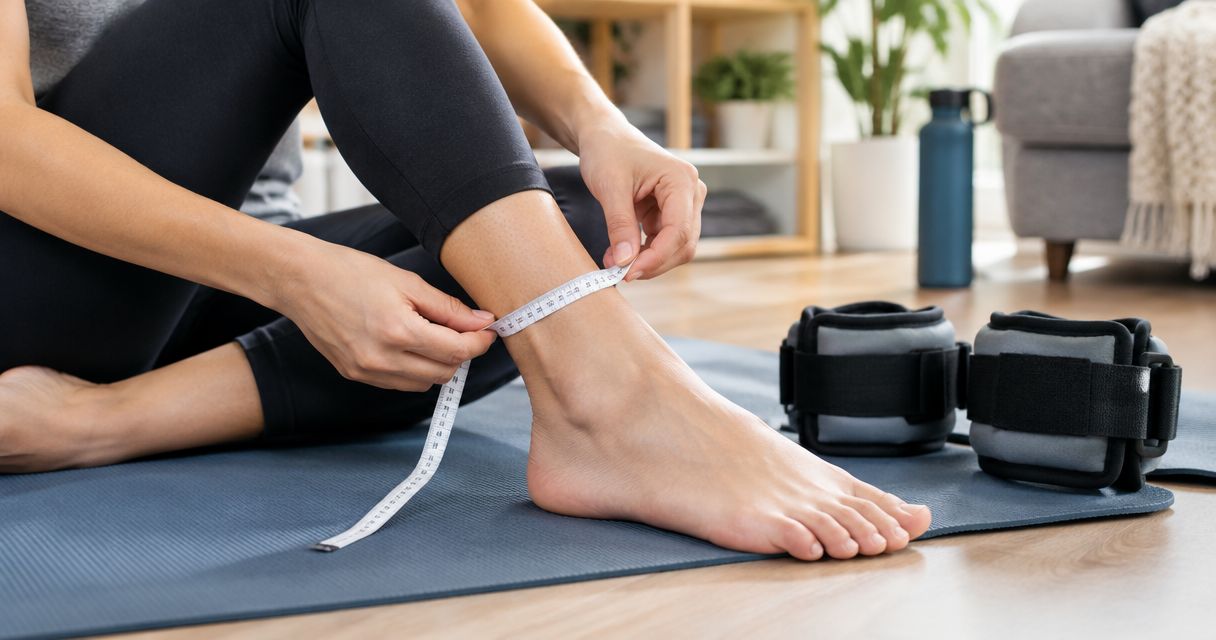
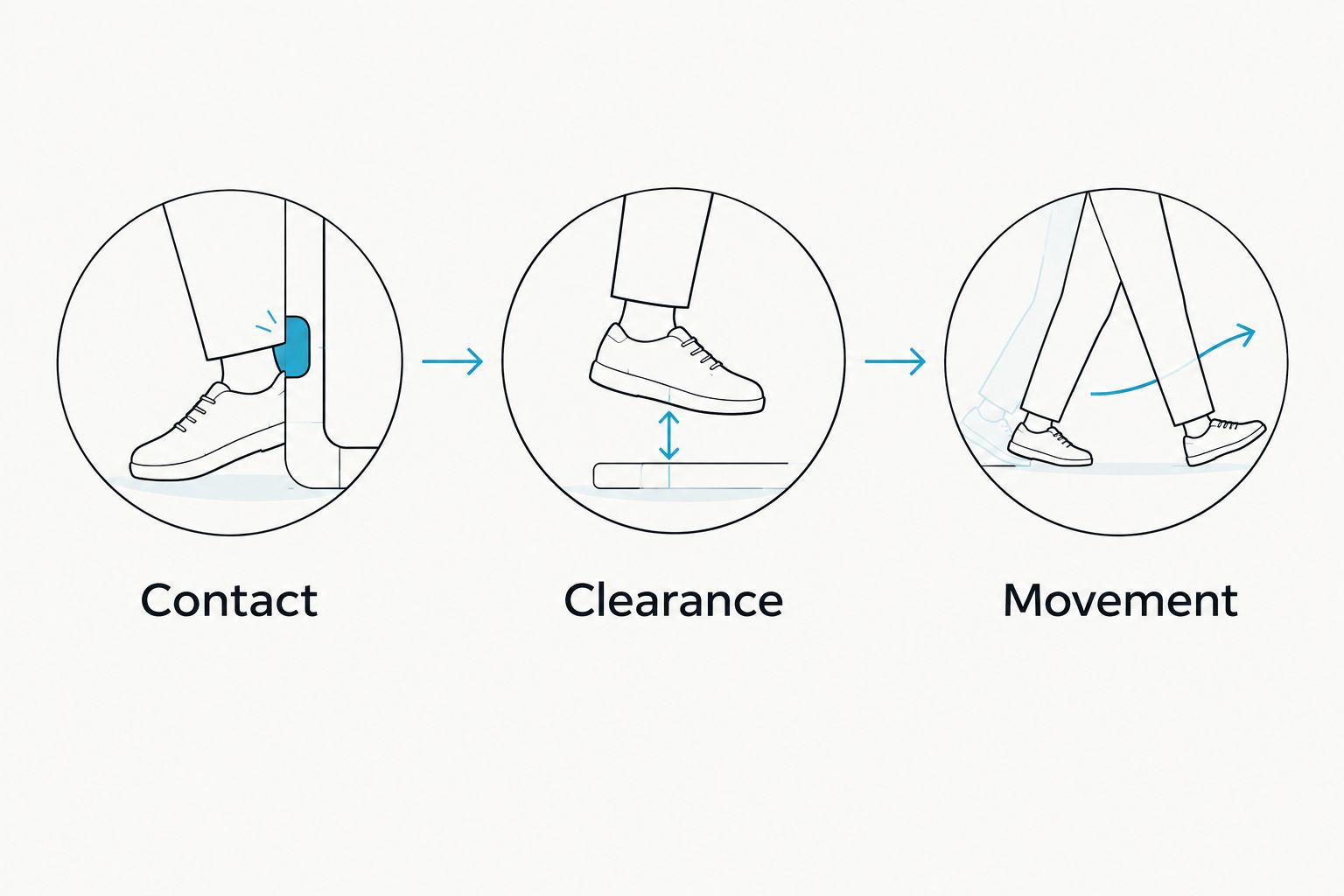
Use 3 fit checks in 2026: contact, clearance and movement. Follow the equipment instructions, and assess the cuff in the exercise position where you intend to use it. Standing comfortably is not enough if your routine happens on a mat.
Contact
Feel along the cuff’s inner edge and closure. Look for concentrated pressure, rubbing or a seam trapped against the skin. A secure fit should not depend on tolerating pain, numbness or tingling; remove the weight if those symptoms appear.
Clearance
Check 2 positions: standing and your intended exercise position. Notice whether the cuff touches your footwear, presses against the ankle bone or catches as you bend. A pair that clears your shoes while standing can still interfere with another position.
Movement
Perform the intended movement slowly and under control. Watch for slipping, rotation or repeated strap adjustment. If you change the movement just to keep the weight in place, reject that fit.
A cuff that fails a fit check does not earn a longer trial through discomfort. Refit it according to the instructions, reassess it, and choose another option if the problem remains. Train hard; do not fight your equipment.
How the comfort ranking works
This 2026 ranking prioritises contact comfort, stability and movement clearance before load flexibility or setup convenience. Soft padded cuffs lead as the default design to examine for comfort-first floor work. Segmented, removable-load and fixed-load cuffs each serve a different buying priority.
The named store product occupies a separate use-case slot because its stated purpose supports a dance-and-training shortlist. It does not receive an invented comfort score. No ranking position replaces a fit assessment, and no design label proves that every product using it feels the same.
Which ankle weights should you choose?
Start with a soft padded cuff for comfort-first floor exercises. Choose a segmented cuff for a lower-profile fit, a removable-load cuff for resistance changes, or a fixed-load cuff for a routine that already has a suitable resistance choice.
For Sweatjoy ankle weights, treat the Weighted Leg Sandbags for Dance & Training (Unisex) as a training candidate to assess against those same criteria. Its activity label helps you shortlist it; fit decides whether you keep it.
Your 2026 buying rule is simple: choose the cuff that stays still without pinching, not the cuff with the most impressive description. If none passes, skip the purchase rather than accepting uncomfortable equipment.
FAQ
What are the best ankle weights ranked by comfort?
Soft padded cuffs are the default design to examine for comfort-first floor exercises. Segmented cuffs suit low-profile priorities, removable-load cuffs suit resistance changes, and fixed-load cuffs suit routine simplicity. The best-fitting individual pair still needs contact, clearance and movement checks.
Are padded ankle weights always more comfortable?
No, padding alone does not establish comfort. A padded cuff that slips, pinches or rubs is a poor fit, even if its fabric feels soft.
Are segmented ankle weights better than fabric cuffs?
Neither design is automatically better for comfort. Compare the contact surface, section edges, adjustment and movement clearance on the actual pair you are considering.
Should I choose adjustable-weight ankle cuffs?
Choose removable-load cuffs when changing resistance is a buying requirement. Check the pockets, insert placement and closures because load adjustment does not correct an uncomfortable cuff.
Are Sweatjoy weighted leg sandbags suitable for my shortlist?
Sweatjoy’s Weighted Leg Sandbags for Dance & Training (Unisex) are relevant to a leg-and-ankle training shortlist. Their stated purpose includes dance and training, but your fit, load and construction requirements still decide the purchase.
Can I wear ankle weights for walking or running?
Do not treat a comfort ranking as a recommendation to walk or run with ankle weights. Intended exercise use and comfortable fit are separate questions; seek qualified guidance if you are unsure whether weighted walking or running suits you.
What should I do if ankle weights rub or make my foot tingle?
Remove the ankle weights rather than continuing through rubbing, pain, numbness or tingling. Recheck the fit and instructions, and seek medical advice if symptoms persist.
One last thing
The most useful comfort check is not squeezing the padding. It is noticing whether you forget about the cuff while concentrating on the intended movement. Repeatedly touching the strap, repositioning the weight or protecting a sore spot is a reason to stop and reassess—not a training challenge to push through.