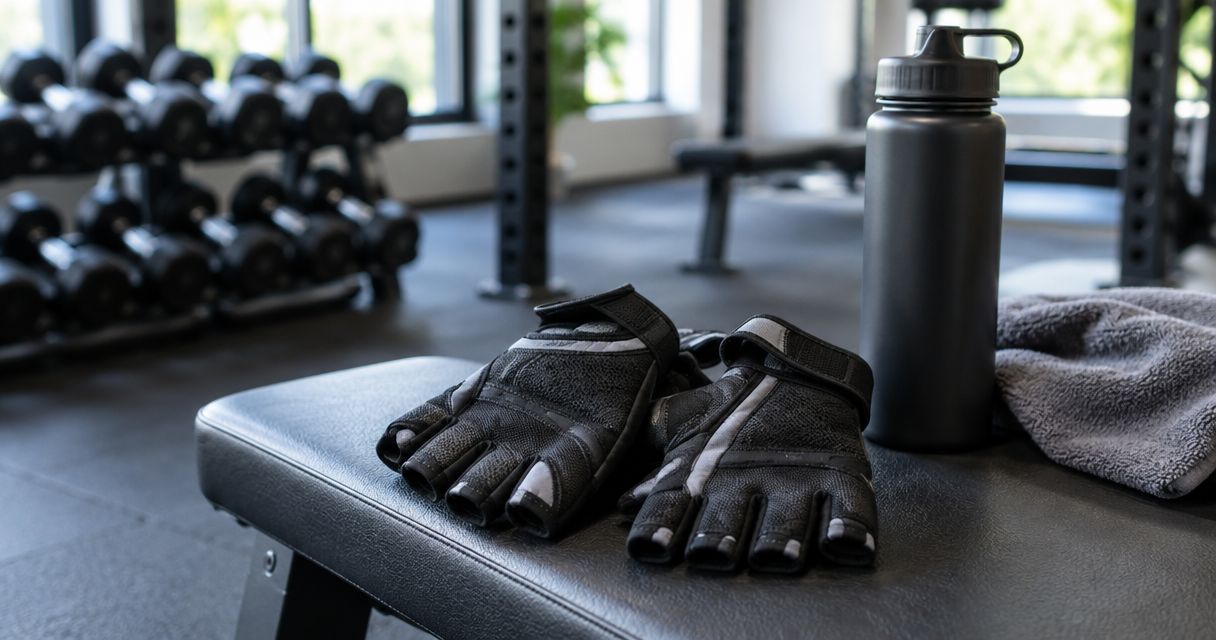
Best overall: ventilated fingerless gym gloves. Best for bar feel: thin-palm gloves. Best for palm cushioning: padded-palm gloves. This 2026 guide ranks the best gym gloves for weightlifting by design and use case, so you can choose a style without relying on unsupported model claims.
- Sweatjoy recommends ventilated fingerless designs as the best gym gloves for weightlifting across mixed gym sessions.
- Choose thin-palm gloves for bar feel; choose padded-palm gloves when palm cushioning matters more.
- Integrated wrist wraps add fastening, not a guarantee against wrist pain or injury.
- Check fit with your hand open, your fist closed and your hand around a training handle.
Why this matters
Gloves put another layer between your hand and the weight. That layer changes how the handle feels, where pressure lands and how easily you close your grip. More padding is not automatically better.
Sweatjoy's gym gloves for weightlifting guide recommends ventilated fingerless designs for lifters who want palm coverage across mixed gym sessions. Start with your exercise routine, then choose the construction that solves your actual problem.
Sweatjoy sells fitness gear and workout accessories. This guide compares glove styles rather than naming an unverified glove model as the winner.
What makes the best gym gloves for weightlifting?
Use these criteria before comparing the ranked options. For your 2026 shortlist, fit and handle contact come before extra features.
- Fit: Your glove should stay in place when you open your hand, close a fist and hold a handle. Loose material should not gather beneath your fingers.
- Palm feel: Choose enough material to address uncomfortable contact without making the handle awkward to grasp. A thicker palm changes the effective grip size.
- Ventilation: Look at how much of your hand is covered, not just whether the listing calls the glove breathable. Open fingers and exposed areas leave less material over your skin.
- Wrist freedom: Check whether the cuff interferes with the wrist position your exercise requires. A wrap should not force an uncomfortable position.
- Care requirements: Read the actual washing and drying instructions. Do not assume every fabric or leather glove tolerates machine washing.
A glove that looks right with your hand open can still bunch when you grip a dumbbell. Check it in the position that matters.
Gym glove styles at a glance
These are design recommendations, not a brand leaderboard. The order reflects a general-purpose starting point, followed by more specific needs. Check the construction of the individual glove before treating a listing as a match.
| Rank and glove style | Best for | Standout feature | Key limitation |
|---|---|---|---|
| 1. Ventilated fingerless gloves | Mixed gym sessions | Palm coverage with exposed fingertips | Fingers remain uncovered |
| 2. Thin-palm gloves | Direct bar feel | Less material between hand and handle | Less cushioning than padded designs |
| 3. Padded-palm gloves | Palm cushioning | Extra material at contact areas | Padding adds bulk around the handle |
| 4. Gloves with integrated wrist wraps | Combined glove-and-wrap fastening | Hand covering and wrist fastening together | Wrap adjustment adds a setup step |
| 5. Full-finger gloves | Finger coverage | Material over palms and fingers | More coverage and more seams to assess |
1. Ventilated fingerless gloves: best for mixed gym sessions
Ventilated fingerless gloves cover the palm while leaving the fingertips exposed. Choose a design with an open or mesh-backed construction if you want less enclosed hand coverage. The exact ventilation depends on the glove, not the category name.
This is the default option for a session that moves between dumbbells, cable handles and exercise machines. You get a palm barrier without committing to full-finger coverage. Check the thumb opening carefully; an uncomfortable seam there can spoil an otherwise good fit.
Ventilated fingerless gloves pros:
- Palm coverage without covering the fingertips.
- Exposed fingertips preserve direct contact at the finger ends.
- Open-backed designs leave less of the hand enclosed.
Ventilated fingerless gloves cons:
- Exposed fingers still contact equipment directly.
- A ventilated back does not correct a bulky or slippery palm.
- Finger openings can rub if their edges fit poorly.
Best for: Lifters who use several kinds of equipment and want general palm coverage.
Verdict: Buy ventilated fingerless gloves as your default style if the palm stays flat during a grip.
2. Thin-palm gloves: best for direct bar feel
Thin-palm gloves use less material between your palm and the handle than heavily padded designs. That makes them the more direct choice when you want a covering but dislike a thick grip. Thin construction does not establish grip quality by itself; the palm surface still matters.
For a 2026 barbell-focused shortlist, examine the palm rather than the branding. Avoid folds under the finger bases, and check whether seams sit directly where the bar rests. Thin material with badly placed seams is still an uncomfortable glove.
Thin-palm gloves pros:
- Less added bulk around a bar or handle.
- A straightforward choice when cushioning is not your priority.
- Easier to assess handle contact without thick padding in the way.
Thin-palm gloves cons:
- Less cushioning than a comparably fitted padded glove.
- Thin construction does not prove durability.
- Poor seam placement remains noticeable under pressure.
Best for: Lifters who prioritise handle feel over palm cushioning.
Verdict: Buy thin-palm gloves if thicker gloves make the handle feel awkward; skip them if cushioning is your main reason to wear gloves.
3. Padded-palm gloves: best for palm cushioning
Padded-palm gloves place extra material between your hand and the equipment. Choose this style when cushioning at contact points matters more to you than direct bar feel. Padding is a comfort feature, not a guarantee against calluses or injury.
Look closely at where the padding sits. A pad that feels comfortable with your hand open can fold when your fingers close around a handle. Your priority is stable contact, not the thickest-looking palm.
Padded-palm gloves pros:
- Extra cushioning at the covered contact areas.
- A clear option for lifters who dislike direct palm pressure.
- Targeted padding lets you compare coverage against your usual grip.
Padded-palm gloves cons:
- Added material increases the effective handle size.
- Padding can bunch if the glove fits poorly.
- More cushioning does not guarantee a more secure grip.
Best for: Lifters seeking palm cushioning during otherwise comfortable, pain-free exercises.
Verdict: Buy padded-palm gloves for cushioning only when you can still close your hand comfortably around the handle.
4. Gloves with integrated wrist wraps: best for combined fastening
Gloves with integrated wrist wraps combine hand coverage with a strap that fastens around the wrist. The appeal is practical: the glove and wrap stay together. That does not make the design a substitute for exercise technique or an assessment of persistent pain.
Compare cuff position, strap adjustment and hand fit separately. A secure wrist fastening cannot rescue a loose palm. Likewise, a well-fitted glove is not useful if its cuff prevents the wrist position your exercise needs.
Integrated wrist-wrap gloves pros:
- Glove and wrist fastening remain together.
- The strap offers another point of adjustment.
- Useful for lifters who already prefer a wrapped cuff.
Integrated wrist-wrap gloves cons:
- Fastening the wrap adds a setup step.
- The cuff can interfere with comfortable wrist movement.
- Wrist fastening does not establish injury protection.
Best for: Lifters who specifically want a glove with an adjustable wrapped cuff.
Verdict: Buy integrated wrist-wrap gloves for their fastening design; skip them as a solution to unexplained wrist pain.
5. Full-finger gloves: best for finger coverage
Full-finger gloves cover the fingers as well as the palm. Choose them when exposed fingertips are the reason fingerless gloves do not meet your needs. Coverage is the defining advantage, not an automatic improvement in grip.
Check finger length closely. Empty fabric at the fingertips and seams that pull when you make a fist both work against a clean fit. Full-finger construction also gives you more covered areas to inspect for comfort.
Full-finger gloves pros:
- Coverage over both fingers and palms.
- A direct alternative to exposed-finger designs.
- Useful when full hand coverage is your stated preference.
Full-finger gloves cons:
- Fingertips no longer contact the handle directly.
- More material encloses the hand.
- Finger length and seam placement need careful checking.
Best for: Lifters who prioritise finger coverage over exposed-fingertip contact.
Verdict: Buy full-finger gloves only if finger coverage solves a clear need; otherwise start with fingerless designs.
How to check glove fit before a working set
Use 3 fit checks before committing to a glove. Repeat them on 2 hands: do not assume the fit feels identical on both sides. Use unloaded equipment for the handle check, not a challenging lift.
Open your hand
Spread your fingers and straighten them comfortably. Look for pulling around the thumb opening or finger seams. A cuff should feel secure without forcing you to hold your wrist in an unnatural position.
Close your fist
Close your fingers without holding equipment. Check whether the palm folds into a thick ridge or the finger openings pull against your skin. This catches problems that are easy to miss in an open-hand fitting.
Grip a handle
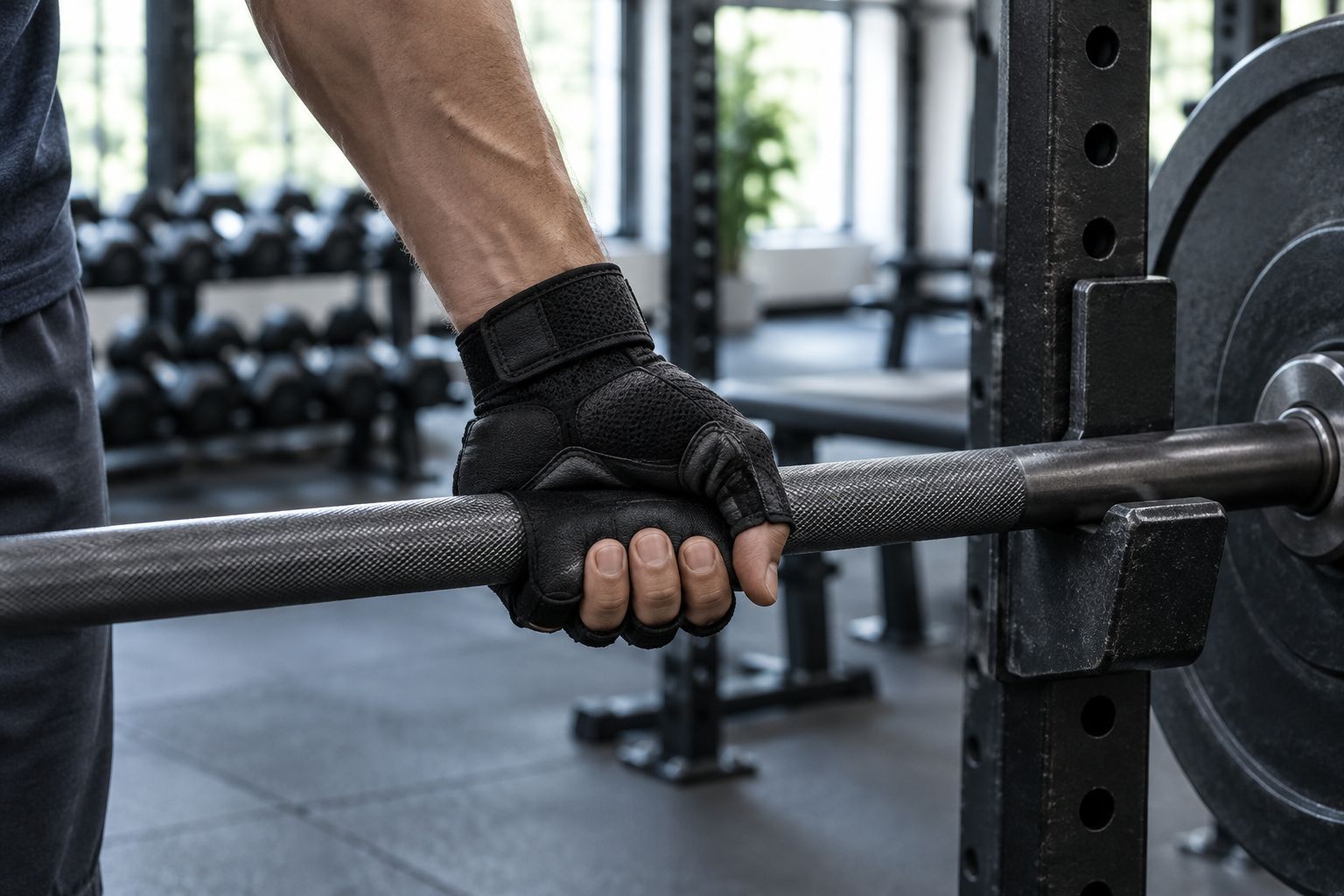
Hold an unloaded bar or another suitable training handle. Check whether the glove twists, the padding shifts or your fingers struggle to close. Reject a fit that needs constant readjustment before you have even started lifting.
These are fitting checks, not a performance test. They help you identify obvious problems before adding load.
How the glove styles are ranked
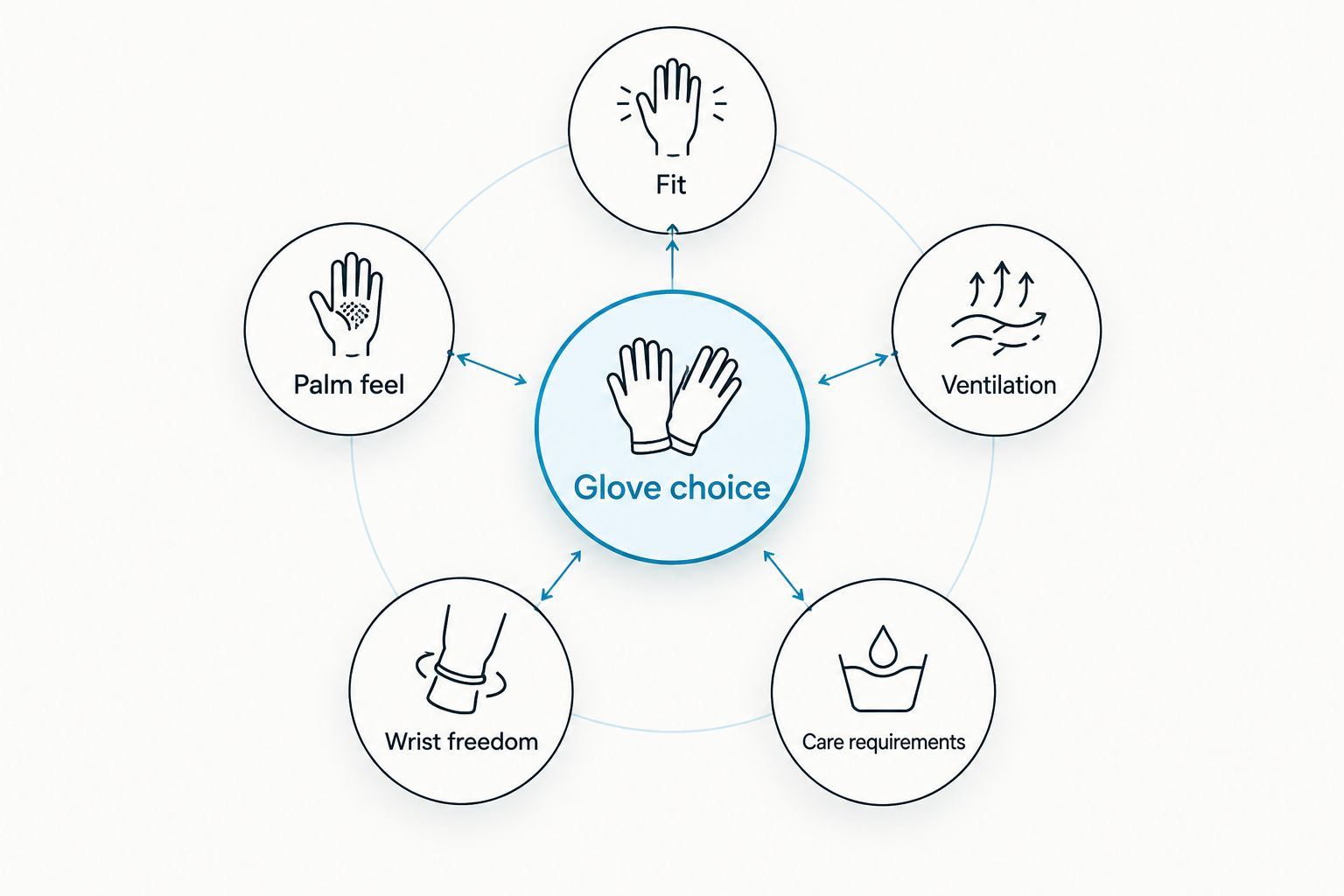
Sweatjoy's 2026 gym gloves for weightlifting ranking uses the five criteria above: fit, palm feel, ventilation, wrist freedom and care requirements. Ventilated fingerless gloves lead as the general-purpose starting point. The remaining styles address narrower preferences.
This is not a wear-test ranking or a durability claim. Individual construction changes the result: a well-fitted thin glove is a better choice for direct bar feel than a loose ventilated glove, regardless of category order.
Use the ranking as a decision tree. First decide what you want the glove to change. Then check whether the actual design delivers that change without introducing a worse fit.
Which gym gloves should you choose?
Choose ventilated fingerless gloves if you are undecided. For a mixed routine, they are the clearest starting point because they combine palm coverage with exposed fingertips.
For your 2026 purchase, move away from that default only for a specific reason:
- Choose thin-palm gloves when added thickness bothers your grip.
- Choose padded-palm gloves when palm cushioning is your priority.
- Choose integrated wrist-wrap gloves when you want combined fastening.
- Choose full-finger gloves when fingertip coverage is essential.
You do not need gloves simply because you lift weights. If bare-hand training feels comfortable and your grip is secure, adding a glove is a preference rather than a requirement. Keep the equipment choice tied to the problem you are solving.
FAQ
What's the best gym glove style for weightlifting beginners?
Ventilated fingerless gloves are the default starting point in this Sweatjoy guide. They combine palm coverage with exposed fingertips; check that the palm stays flat around a handle before lifting.
Are thin gym gloves better than padded gloves?
Thin gym gloves are better for less added bulk, while padded gloves prioritise cushioning. Choose according to handle feel and comfort rather than assuming one design suits every exercise.
Do weightlifting gloves prevent calluses?
Weightlifting gloves do not guarantee callus prevention. They add a barrier at covered contact areas, but pressure, friction and glove fit still matter.
Should I get gym gloves with wrist wraps?
Choose gym gloves with wrist wraps if you specifically want combined hand coverage and wrist fastening. Do not treat the wrap as a remedy for persistent wrist pain or a guarantee against injury.
How tight should weightlifting gloves fit?
Weightlifting gloves should stay in place without restricting comfortable hand movement. Check with your hand open, your fist closed and your hand around an unloaded training handle.
Can I wash gym gloves in a washing machine?
Machine-wash gym gloves only when their care instructions permit it. Follow the instructions for the specific material and fastening, including drying directions.
Are full-finger gloves better for lifting weights?
Full-finger gloves are better when finger coverage is your priority, not automatically better for lifting. Check fingertip length and seam placement because both affect how the glove fits around a handle.
One last thing
Before your next 2026 session, inspect where your glove folds when you grip. A neat-looking palm with your hand open tells you less than a flat, stable palm around the actual handle.
Train hard. Choose the fit that stays out of your way. Sweatjoy's recommendation is simple: solve a specific comfort or coverage problem, and reject extra features that compromise your grip.