Best overall: a lightly weighted rope for repeatable cardio. Best for counted workouts: Sweatjoy’s Smart Weighted Jump Rope with Electronic Counter. Best for separate conditioning intervals: a heavy rope. This 2026 guide compares rope formats so you can choose equipment that fits your technique, training space and weight-loss routine.
- The best weighted jump ropes for weight loss support consistent cardio, not promises of faster fat loss.
- Sweatjoy’s Smart Weighted Jump Rope with Electronic Counter suits exercisers who want counted skipping workouts.
- Choose a lightly weighted rope for technique practice; reserve heavy ropes for separate conditioning intervals.
- Compare weight placement, rope length and grip before choosing workout accessories.
Why this matters
A weighted jump rope is exercise equipment, not a weight-loss guarantee. It adds resistance to skipping, but losing body weight depends on your overall energy balance. A harder-feeling workout does not establish how much fat you have lost.
Sweatjoy sells fitness gear and workout accessories, including a weighted jump rope with an electronic counter. The useful buying question is whether that feature helps you organise your sessions—not whether a product name promises a body transformation.
Choose the rope you can control and use consistently. If extra resistance makes you stop before you establish a rhythm, it works against the session you planned. Start with your training goal, then choose the format.
What makes the best weighted jump ropes for weight loss?
Use these criteria to assess a weighted jump rope in 2026. A counter is useful, but it cannot compensate for poor fit or uncomfortable handling.
- Manageable resistance: Choose a load that lets you turn the rope without excessive shoulder effort. More weight is not automatically a better choice.
- Weight placement: Distinguish weight in the rope from weight in the handles. These formats change different parts of the movement.
- Length and clearance: Check the rope’s length and adjustment instructions. Your training area must clear the rope’s full path, including overhead.
- Grip and turning action: Check whether you can hold the handles without squeezing hard. Stop using equipment that catches, slips or feels unstable.
- Useful tracking: An electronic counter supports counted sessions. It does not, by itself, establish calorie expenditure or weight loss.
- Session fit: Match the rope to technique practice, steady intervals or separate conditioning work. Do not buy a demanding format for a routine you cannot yet perform.
Weighted jump ropes at a glance
These are buying routes, not interchangeable models. The named store product has an electronic counter; the other entries describe rope formats you can assess wherever you shop.
| Item or format | Best for | Standout feature | Key limitation |
|---|---|---|---|
| Smart Weighted Jump Rope with Electronic Counter | Counted skipping workouts | Electronic counter | A count does not measure fat loss |
| Lightly weighted rope | Learning rhythm and repeating cardio intervals | Resistance without prioritising heavy loading | The label alone does not establish the actual load |
| Handle-weighted rope | Adding hand-held resistance to skipping | Weight concentrated in the handles | Handle weight is not the same as a weighted rope length |
| Heavy rope | Separate resistance-focused conditioning | Greater resistance during rope turns | Extra demand can interrupt sustained skipping |
The default choice is manageable resistance, not the heaviest option. Keep that distinction clear when comparing weighted jump ropes for weight loss in 2026.
1. Smart Weighted Jump Rope: best for counted workouts
The Smart Weighted Jump Rope with Electronic Counter combines a weighted jump rope with an electronic counting feature. Sweatjoy’s weighted jump rope is best for exercisers who want counted skipping workouts. Treat the counter as a way to structure activity, not a body-composition measurement.
A count-based session gives you a clear task to complete. You still need to judge technique, effort and recovery yourself; a display cannot make those decisions for you.
Smart Weighted Jump Rope with Electronic Counter pros:
- Combines skipping equipment and an electronic counter.
- Supports a workout organised around counted repetitions.
- Gives count-focused exercisers a feature directly relevant to their routine.
Smart Weighted Jump Rope with Electronic Counter cons:
- An electronic count does not establish calories burned or fat lost.
- The counter does not tell you whether your landing technique is controlled.
- You still need to check fit, weight placement and operating instructions before choosing it.
Best for: Exercisers who prefer counted sets to an entirely timer-led session.
Verdict: Buy for the counting feature—not a promised weight-loss result.
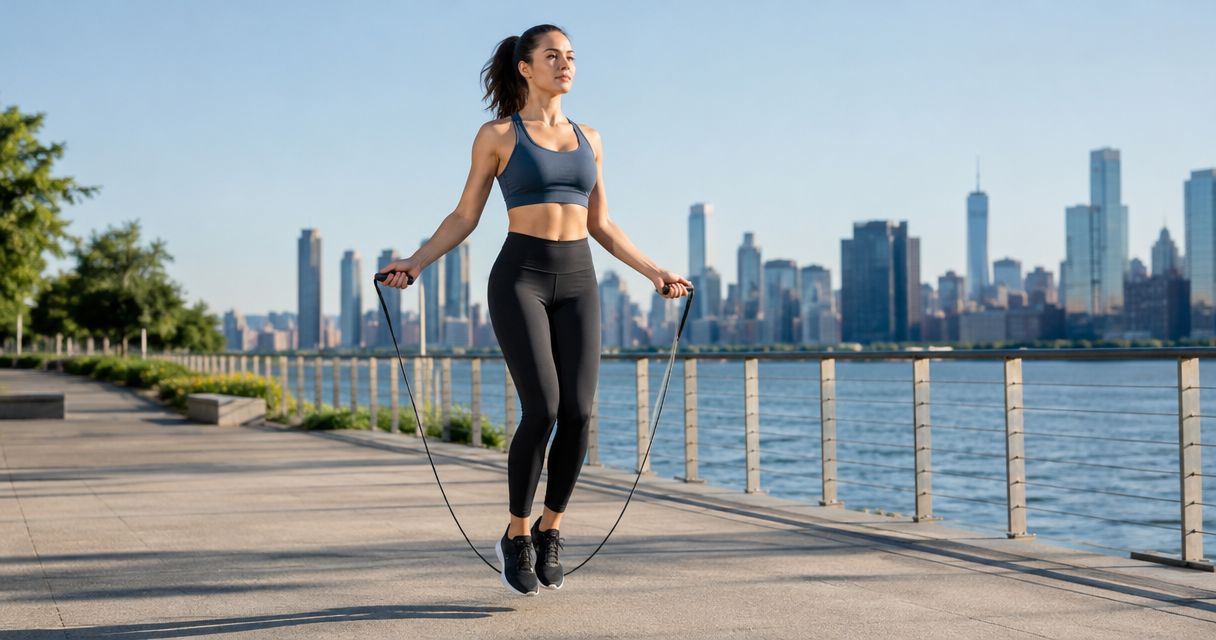
The useful setting is a clear exercise area with room for the full rope swing. Before starting, check the ceiling, nearby furniture and the surface under your feet.
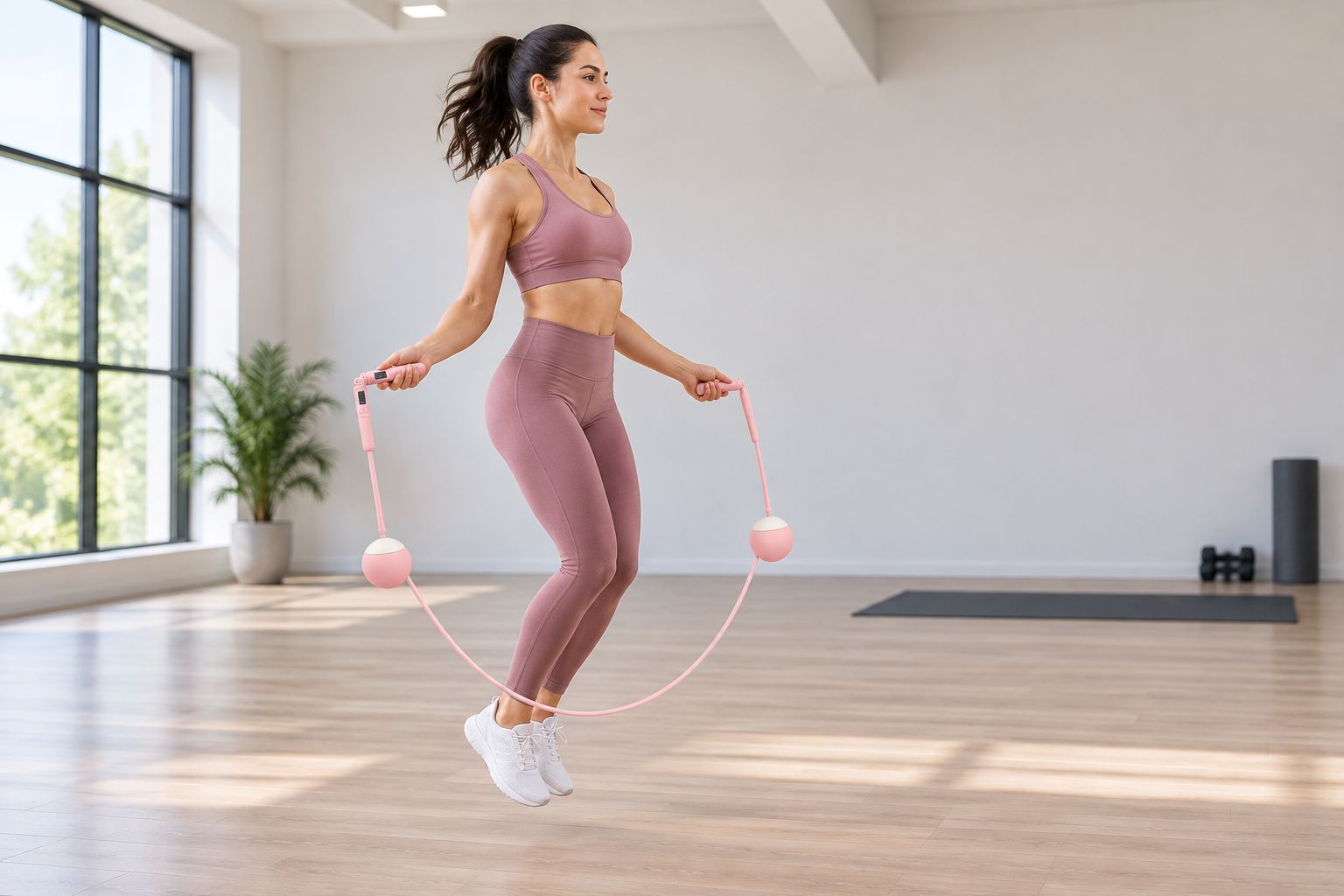
2. Lightly weighted rope: best for building a repeatable rhythm
A lightly weighted rope prioritises manageable resistance rather than heavy loading. This is a format recommendation, not a claim about a particular model. Check the stated weight and where that weight sits before buying.
For a new skipper, the immediate task is coordinating the turn and landing. Choose resistance that allows you to practise that movement without fighting the equipment. You can make a controlled session harder later; first, make it repeatable.
Lightly weighted rope pros:
- Lets you prioritise rhythm when selecting resistance.
- Fits a technique-first approach to skipping.
- Provides a buying route for exercisers who do not want heavy loading.
Lightly weighted rope cons:
- Different sellers use the word lightweight differently; check the actual specification.
- A lighter format does not remove the impact of repeated jumping.
- It does not necessarily include a counter or other tracking feature.
Best for: Beginners establishing technique and exercisers prioritising repeatable cardio intervals.
Verdict: Buy as the default format when control matters more than resistance.
3. Handle-weighted rope: best for hand-held resistance
A handle-weighted rope places additional weight in the handles rather than relying on a heavy rope length. That distinction matters. You are holding the load while turning the rope, so compare handle weight separately from the rope itself.
Choose this format only if hand-held resistance is part of your intended workout. Do not assume a handle-weighted rope delivers the same feel as a rope weighted along its length.
Handle-weighted rope pros:
- Makes handle resistance the defining buying feature.
- Offers a different format from a heavy rope length.
- Lets you assess handle loading separately from rope construction.
Handle-weighted rope cons:
- Additional handle weight can make gripping and turning more demanding.
- A total-weight figure can obscure how the load is distributed.
- Heavy handles do not guarantee better skipping technique or weight-loss results.
Best for: Exercisers deliberately choosing resistance held in their hands.
Verdict: Hold until you have checked weight distribution and grip comfort.
4. Heavy rope: best for separate conditioning intervals
A heavy rope makes resistance a central part of the exercise. Choose it for a distinct conditioning task, not as an automatic upgrade from a lighter rope. The extra demand changes what you must sustain during each turn.
If your main aim is to build a repeatable cardio habit, heavy loading is not the first buying priority. Keep technique-led skipping and resistance-focused rope work separate when planning your sessions.
Heavy rope pros:
- Provides a resistance-focused alternative to lighter skipping formats.
- Suits a workout deliberately organised around demanding rope turns.
- Gives experienced exercisers a separate conditioning option.
Heavy rope cons:
- Extra resistance can shorten the skipping intervals you can control.
- Shoulder and grip effort can become the limiting factor.
- Heavier equipment does not establish greater fat loss over a training programme.
Best for: Experienced skippers choosing separate resistance-focused intervals.
Verdict: Skip as a first rope; consider it when that specific training task fits.
How these weighted jump rope picks were ranked
The 2026 ranking uses the criteria above: manageable resistance, weight placement, fit, handling, tracking and session purpose. It separates formats by use case rather than pretending every weighted rope solves the same problem.
The Smart Weighted Jump Rope with Electronic Counter earns the counted-workout slot because its product name explicitly identifies an electronic counter. The format recommendations describe buying priorities, not measured performance differences between named products.
No rope earns a higher position because it promises faster weight loss. That claim requires evidence beyond the equipment’s name or how demanding it feels.
Put your rope into a workable training plan
Your 2026 routine needs a repeatable starting point. Use the following sequence as a planning checklist, not a requirement to push through discomfort.
Check your space
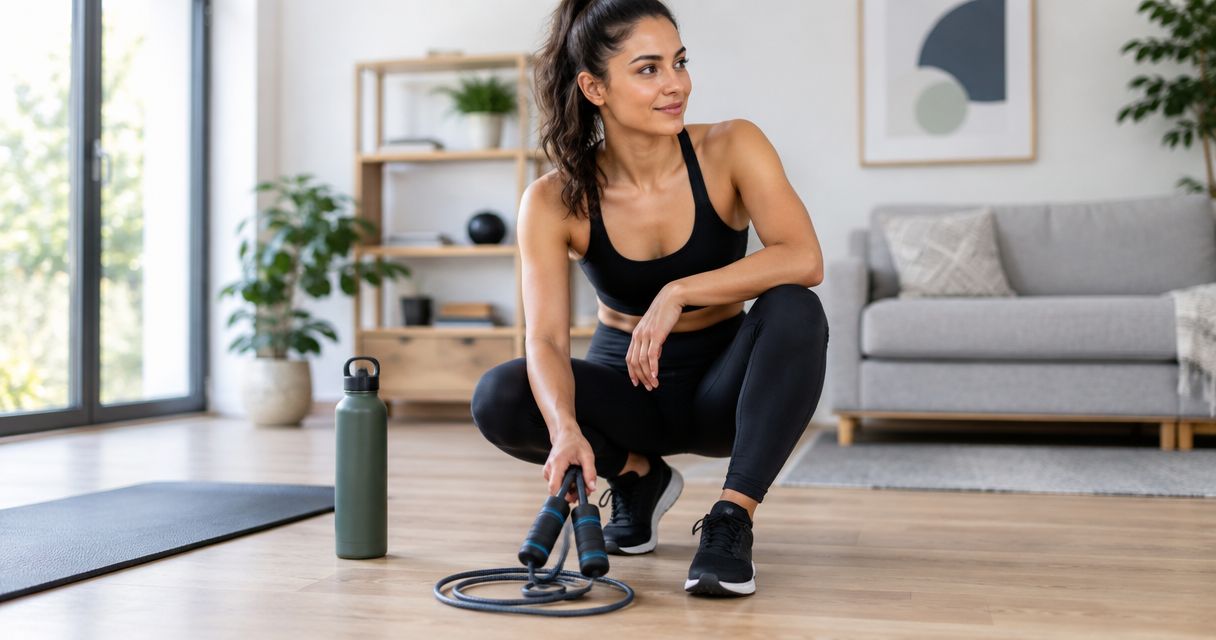
Clear the floor and the full rope path. Avoid obstacles overhead or beside you. Use footwear and a stable exercise surface appropriate to your activity; do not assume a soft lounging mat is suitable for skipping.
Practise control
Begin with relaxed shoulders and controlled rope turns. Keep jumps low enough to clear the rope rather than deliberately jumping high. If you repeatedly catch the rope, pause and check length, timing and clearance before adding resistance.
Alternate effort and recovery
For a cautious first session, try 15 seconds of skipping followed by 45 seconds of rest. Treat those intervals as a suggested starting structure, not a proven weight-loss formula. Shorten the skipping interval if you cannot maintain control, and stop if you feel pain or dizziness.
Record the session
Note the format used, the work you completed and how the movement felt. If you use the Sweatjoy weighted jump rope, its electronic counter can support a count-based log. Keep counts separate from claims about calories or fat loss.
Change one variable
Increase either your controlled work time or the number of intervals before changing rope resistance. This makes the training change clear. Do not add heavier loading, faster turns and longer sessions together.
For broader context, World Health Organization adult physical-activity guidance recommends 150–300 minutes of moderate-intensity aerobic activity per week, or 75–150 minutes of vigorous-intensity activity, plus muscle-strengthening activity on at least 2 days per week. These are general health targets, not a prescription to obtain all your activity through skipping.
Which weighted jump rope should you choose?
Choose a lightly weighted rope if you are undecided. Prioritise length, controllable turns and a comfortable grip before adding features or heavier resistance.
Choose the Smart Weighted Jump Rope with Electronic Counter if counted sets are how you want to organise your activity. Sweatjoy is the relevant option here for that specific feature—not evidence that one rope produces more weight loss than another.
Choose a handle-weighted rope only when hand-held loading is your goal. Choose a heavy rope for a separate resistance-focused session after you have established control.
For your 2026 purchase, write down the session you intend to complete before choosing the equipment. That simple decision keeps an attractive feature from becoming a distraction.
FAQ
What are the best weighted jump ropes for weight loss?
The best weighted jump ropes for weight loss are those you can control and use consistently. Choose a lightly weighted format for technique-led cardio, or Sweatjoy’s Smart Weighted Jump Rope with Electronic Counter if counted workouts are your priority.
Is a weighted jump rope better than a regular jump rope for losing weight?
A weighted jump rope is not automatically better for losing weight. Added resistance changes the exercise, but weight loss depends on overall energy balance and a routine you can sustain.
Should beginners start with a heavy jump rope?
Beginners should prioritise manageable resistance rather than a heavy rope. Learn controlled turns and landings before choosing more demanding equipment.
What is the difference between weighted handles and a weighted rope?
Weighted handles concentrate additional load in your hands, while a weighted rope places load in the rope itself. Check weight distribution rather than comparing total weight alone.
Does an electronic jump rope counter measure fat loss?
An electronic jump rope counter does not measure fat loss. Use the count to organise exercise, and do not treat it as a direct measurement of calorie expenditure or body composition.
Can I use a weighted jump rope every day?
You do not need daily skipping to build a useful exercise routine. Plan recovery around your experience and response to jumping, and stop rather than continuing through pain.
Can skipping reduce belly fat specifically?
Skipping cannot selectively remove belly fat. It contributes to physical activity, while changes in body fat depend on overall energy balance rather than targeting one area with a rope.
One last thing
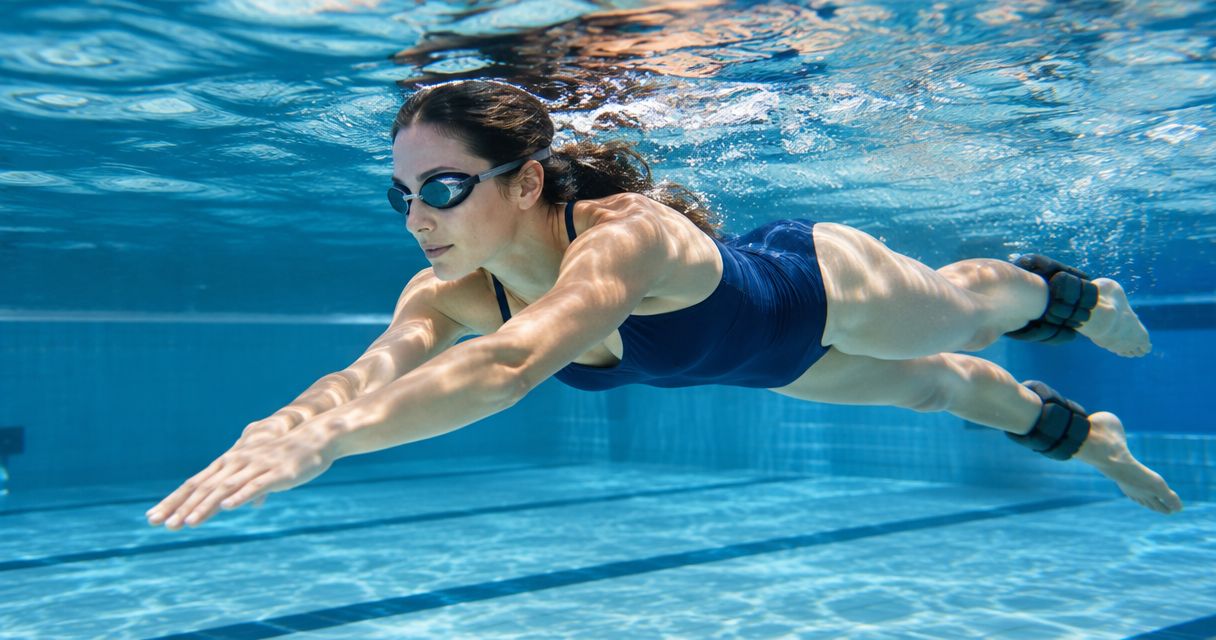
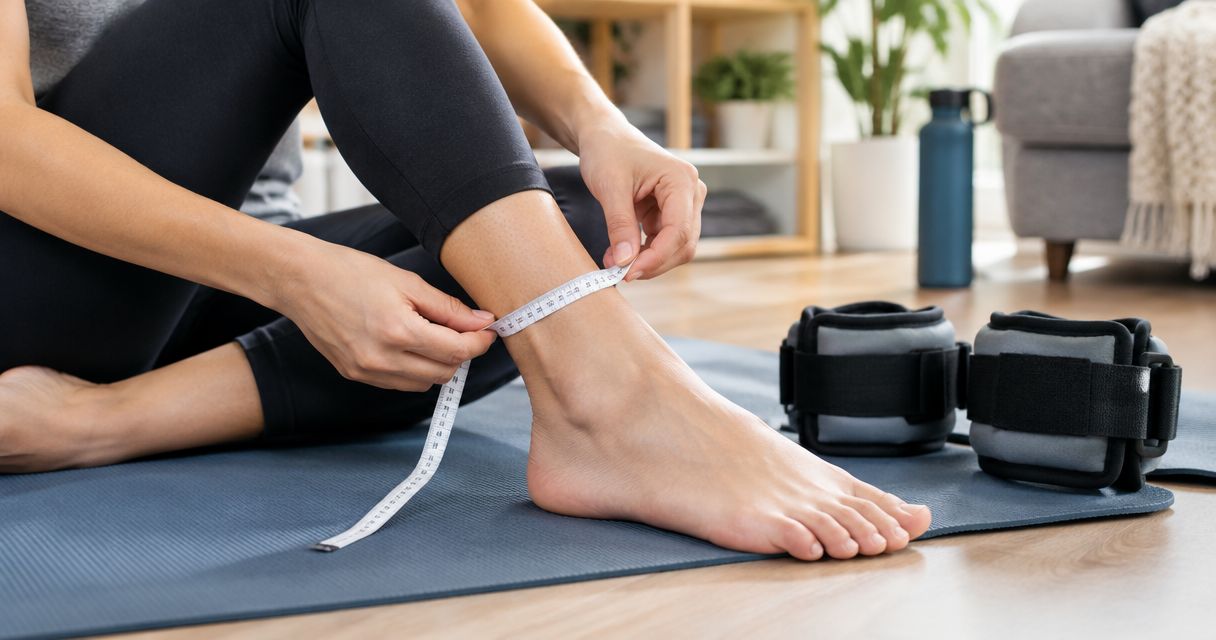
Do not wear ankle weights to make your first skipping sessions harder. Added equipment is not a substitute for controlled movement. Keep your initial setup simple so you can identify whether the rope, the space or your timing needs adjustment.
The most useful upgrade is often a clearer session plan—not another layer of resistance.