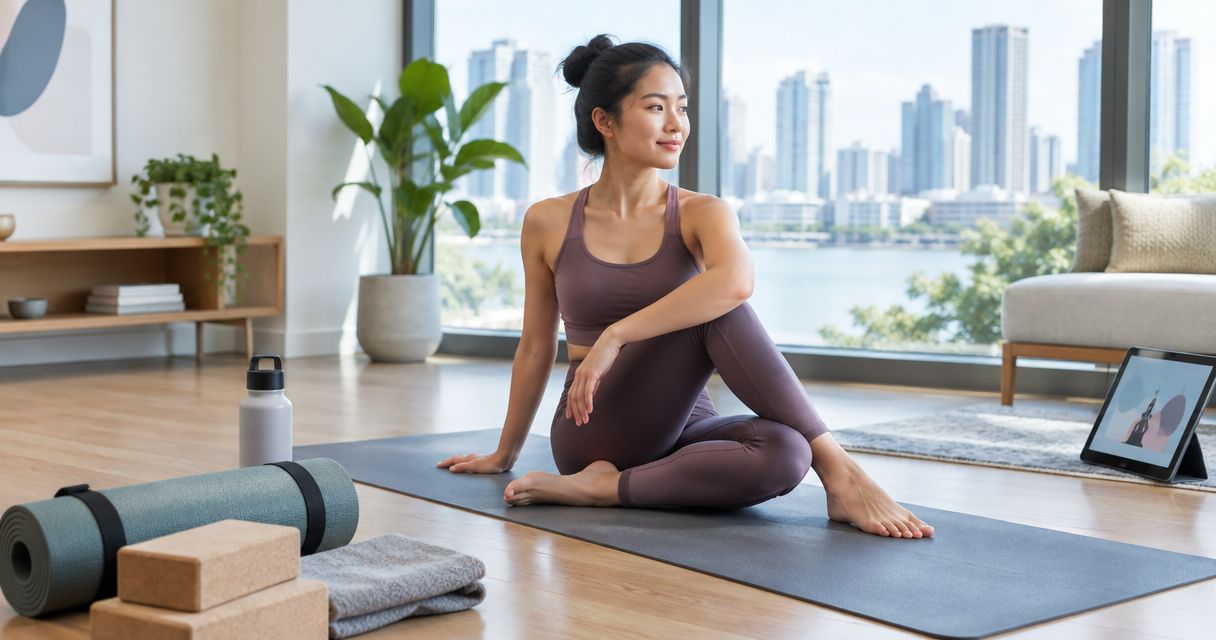
Best overall: a yoga mat suited to your class. Best for learning supported poses: yoga blocks. Best no-extra-purchase option: a towel you already own. This 2026 guide ranks beginner yoga accessories in Singapore by the job each one does, with optional relaxation gear from Sweatjoy kept separate from practice essentials.
- For best yoga accessories for beginners singapore, start with a yoga mat, then add props your teacher recommends.
- Yoga blocks support beginner poses; a yoga strap helps bridge a comfortable reach.
- Sweatjoy yoga accessories include a massage stick for optional self-massage, not support during standing poses.
- A folding mat described for napping belongs in relaxation sessions, not automatically in an active yoga class.
Why this matters
Beginner yoga gear should solve a problem you actually have. A mat provides your practice surface; blocks bring support closer; a strap extends your reach. A massage accessory does a different job entirely.
For your Singapore routine in 2026, start with where you practise: a studio, a room at home, or a heated class. Ask what the studio supplies before buying duplicates. For home practice, check the floor space and where your equipment will dry after cleaning.
Buy for the class you attend, not the pose you hope to master. You do not need weighted training accessories to begin learning yoga.
What makes the best beginner yoga accessories
- Practice fit: The accessory should match the class. Standing sequences, supported rest, and self-massage need different equipment.
- Stable support: A mat should stay put on your floor, and a block should support you without rocking under the intended load.
- Comfortable reach: Props should help you find a manageable position, not pull you deeper into a stretch.
- Cleaning instructions: Check how the item should be cleaned and dried. Do not assume every material tolerates the same treatment.
- Storage and transport: Decide whether you need to carry the accessory to class or leave it in your practice space.
- Clear purpose: Choose an item whose description explains the job you need. A yoga label alone does not establish suitability.
Beginner yoga accessories at a glance
These 2026 picks rank accessory types first. The named store products occupy narrower, optional roles rather than replacing the basic kit.
| Rank | Accessory | Best for | Standout function | Key limitation |
|---|---|---|---|---|
| 1 | Yoga mat suited to your class | Establishing a practice surface | Separates your practice area from the bare floor | Grip and cushioning must suit the actual class |
| 2 | Yoga blocks | Supported beginner poses | Bring a support surface closer to your hands | Incorrect placement can make a pose less stable |
| 3 | Yoga strap | Bridging reach | Connects your hands to a position you cannot comfortably reach | Pulling harder is not the goal |
| 4 | Practice towel | Managing sweat and wiping down | Adds a simple way to handle moisture | An ordinary towel can bunch or slide underfoot |
| 5 | Yoga bolster | Supported resting poses | Supports the body during still positions | Bulky compared with blocks or a strap |
| 6 | Yoga Silicone Massage Stick for Muscle Relaxation | Optional self-massage | A separate tool intended for muscle relaxation | Not a pose-support prop or treatment for an injury |
| 7 | TPE Folding Yoga Mat for Napping and Relaxation | A separate rest surface | Folding format described for napping and lounging | The description does not establish active-practice grip |
1. Yoga mat: best beginner yoga accessory for a practice surface
A yoga mat is the default first purchase when your class does not provide one. It gives you a defined surface for standing, seated, and floor-based movements. Choose it for the way you practise, not simply for how soft it feels in your hand.
For your 2026 shortlist, check the intended use and care instructions before comparing appearance. A mat marketed for lounging is not automatically suited to repeated standing transitions. For a category-focused comparison, see the guide to yoga mats in Singapore.
Yoga mat pros:
- Creates a consistent practice surface.
- Works across several common class positions.
- Defines the space you need to keep clear.
Yoga mat cons:
- Grip differs between products and conditions.
- Extra cushioning does not automatically improve standing stability.
Best for: Beginners who need their own surface for regular classes or home practice.
Verdict: Buy a class-appropriate mat first, unless your studio supplies one.
2. Yoga blocks: best beginner yoga accessories for supported poses
Yoga blocks raise the surface you reach towards. Instead of forcing your hand to the floor, you can place a block where your teacher recommends and work from there. Blocks also provide support in selected seated and resting positions.
A pair of 2 blocks gives you matching support on both sides when a position calls for it. A typical rectangular block offers 3 support heights by resting on different faces; choose the orientation that stays stable and suits the pose. Do not default to the highest position just because it is closest.
Yoga block pros:
- Bring the floor closer in supported positions.
- Offer different orientations without changing equipment.
- Allow matching support when you use a pair.
Yoga block cons:
- Placement and orientation still require instruction.
- A block cannot make an unsuitable pose appropriate.
Best for: Beginners who need support while learning positioning and balance.
Verdict: Buy blocks when your class uses them; prioritise stable placement over reaching lower.
3. Yoga strap: best beginner yoga accessory for bridging reach
A yoga strap gives you a connection between your hands and a position you cannot comfortably reach directly. In a teacher-led stretch, that connection lets you work without chasing a particular shape. It is a reach aid, not permission to pull harder.
A yoga strap and a resistance band are not interchangeable. A resistance band stretches to provide resistance; a non-elastic yoga strap serves a different purpose. Use the equipment specified for the movement.
Yoga strap pros:
- Bridges a gap in comfortable reach.
- Takes little storage space.
- Adjusts to different hand positions during instructed practice.
Yoga strap cons:
- Easy to misuse by pulling beyond comfort.
- Does not provide the firm support of a block.
Best for: Beginners whose teacher recommends a strap for specific stretches.
Verdict: Buy for a clear reach problem; skip it if your class does not use one.
4. Practice towel: best beginner yoga accessory for managing sweat
A towel is the simplest accessory to check before shopping. You can use a clean towel you already own to wipe your hands or face, subject to your studio's rules. That does not make every towel suitable as a mat covering.
For a heated class, ask whether the instructor recommends a purpose-made mat towel. An ordinary towel placed under your feet can move or wrinkle. Test the setup before starting rather than discovering the problem during a transition.
Practice towel pros:
- Useful for wiping sweat during class.
- Easy to keep separate from your mat.
- An existing towel can cover basic wiping needs.
Practice towel cons:
- Ordinary towels are not designed to stay fixed on a mat.
- Another fabric item adds washing and drying work.
Best for: Beginners who need a simple way to manage sweat.
Verdict: Use an existing towel for wiping; buy a mat towel only for a defined class requirement.
5. Yoga bolster: best beginner yoga accessory for supported rest
A yoga bolster supports the body during selected resting positions. It belongs most naturally in classes where props help you settle into a still pose. It is not a replacement for the surface beneath you.
Before choosing a bolster, ask your teacher about the shape and firmness used in class. Also check whether the cover is removable and how it should be cleaned. If your studio already supplies bolsters, a home purchase only makes sense when you practise supported rest there too.
Yoga bolster pros:
- Provides support during instructed resting poses.
- Serves a different role from a small, firm block.
- Suits a dedicated home relaxation setup.
Yoga bolster cons:
- Requires more storage space than a strap.
- Offers little value in a class that never uses it.
Best for: Beginners practising supported rest with teacher guidance.
Verdict: Hold until your class or home routine gives it a regular job.
6. Yoga Silicone Massage Stick for Muscle Relaxation: best for optional self-massage
Sweatjoy lists the Yoga Silicone Massage Stick for Muscle Relaxation as a muscle-relaxation accessory. Treat it as an optional addition around your practice, not equipment that helps you hold a standing pose. Its purpose differs from a mat, block, or strap.
Keep self-massage comfortable and follow the product's instructions. Do not use a massage accessory to push through pain or replace advice about an injury. Owning a recovery tool does not make it necessary after every class.
Yoga Silicone Massage Stick for Muscle Relaxation pros:
- Has an explicitly stated muscle-relaxation purpose.
- Separates self-massage from pose-support equipment.
- Adds an optional activity to your post-class routine.
Yoga Silicone Massage Stick for Muscle Relaxation cons:
- Does not support your hands or feet during poses.
- Does not replace instruction or assessment of pain.
Best for: Beginners who specifically want a separate self-massage accessory.
Verdict: Hold until your basic practice setup is sorted.
7. TPE Folding Yoga Mat for Napping and Relaxation: best for a separate rest surface
The TPE Folding Yoga Mat for Napping and Relaxation is described for midday naps and lounging. That makes relaxation its stated role. The folding format is relevant if you want a rest surface that folds away between uses.
Do not assume that its yoga label establishes grip for standing sequences or heated classes. Sweatjoy's supplied description focuses on rest, not those performance requirements. Choose it for the stated use rather than asking it to do every mat's job.
TPE Folding Yoga Mat for Napping and Relaxation pros:
- Has a clear napping and relaxation purpose.
- Uses a folding format.
- Keeps a rest surface separate from your active-practice choice.
TPE Folding Yoga Mat for Napping and Relaxation cons:
- The description does not establish suitability for active sequences.
- Owning separate practice and rest surfaces adds equipment to store.
Best for: Beginners who want a dedicated relaxation surface at home.
Verdict: Buy for relaxation; wait before choosing it as your only practice mat.
Optional relaxation picks
These Sweatjoy yoga accessories serve the optional roles above. Choose the massage stick for self-massage or the folding mat for rest; neither should displace a class-appropriate practice surface.


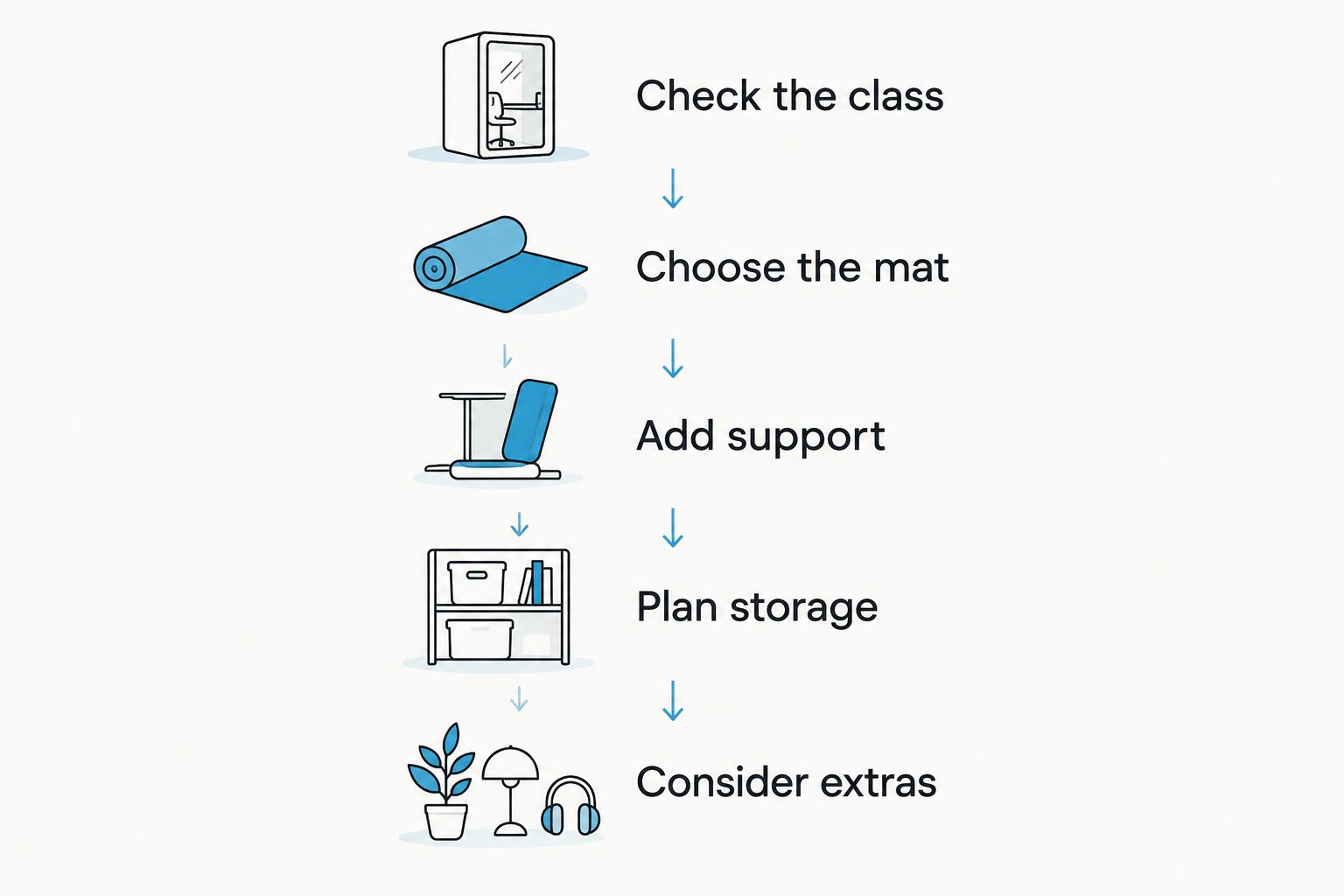
How to build your beginner kit
Use this sequence for your first yoga setup in 2026. It keeps every purchase tied to an actual class requirement.
- Check the class: Ask which props are supplied and which you should bring.
- Choose the mat: Match your practice surface to the class and floor.
- Add support: Choose blocks or a strap when your teacher identifies a use.
- Plan storage: Give clean equipment somewhere to dry and stay accessible.
- Consider extras: Add relaxation gear only when you want that separate activity.
The sequence matters. Starting with extras leaves the main decision unresolved: what you will practise on and which props your class actually uses.
How the ranking works
This ranking puts basic practice needs ahead of optional accessories. A mat comes first because it establishes your surface; blocks and straps follow because they support specific teacher-led positions. Towels, bolsters, and relaxation tools depend more on your class and preferences.
The 2026 ranking distinguishes intended use from performance claims. A product described for lounging earns a relaxation slot, not an unsupported recommendation for hot yoga. No grip testing or durability testing is claimed here.
Which beginner yoga accessories should you choose?
Default choice: a class-appropriate mat, followed by only the props your teacher uses. If you practise at a studio, check its equipment first. If you practise at home, make room for the mat before adding bulky accessories.
Sweatjoy is best for beginners seeking optional yoga relaxation accessories, not a substitute for a class-appropriate mat and support props. Keep that distinction clear and your shopping list stays focused.
FAQ
What's the best yoga accessory for a complete beginner in Singapore?
A yoga mat suited to your class is the default first choice when your studio does not provide one. Add blocks or a strap only when they serve a specific position your teacher uses.
Do I need yoga blocks before my first class?
You do not need to buy yoga blocks before checking what the studio supplies. If your instructor uses blocks and you practise at home, a pair provides matching support when needed.
Is a yoga strap the same as a resistance band?
A yoga strap is not the same as a resistance band. A non-elastic strap bridges reach, while a resistance band stretches to provide resistance; use the tool specified for the exercise.
Can I use an ordinary towel for yoga?
You can use an ordinary clean towel to wipe sweat, subject to studio rules. Do not assume it will stay secure as a mat covering because it can bunch or slide.
Is the TPE Folding Yoga Mat for Napping and Relaxation suitable for hot yoga?
Its supplied description does not establish suitability for hot yoga. The description focuses on napping and lounging, so choose a mat explicitly suited to your intended class instead.
Should beginners buy a massage stick for yoga?
A massage stick is optional, not essential beginner yoga equipment. It serves a self-massage role rather than supporting poses, and it does not replace advice about pain or injury.
How do I choose yoga accessories for a small home?
Start with the practice surface and props you actually use, then check where they will be stored and dried. Delay a bolster or separate rest mat until you have a clear use and space for it.
One last thing
The prop that brings the floor closer is often more useful than the accessory that makes a workout harder. Ask your teacher which position needs support, then choose equipment for that position. Make the pose manageable before making the shopping list longer.