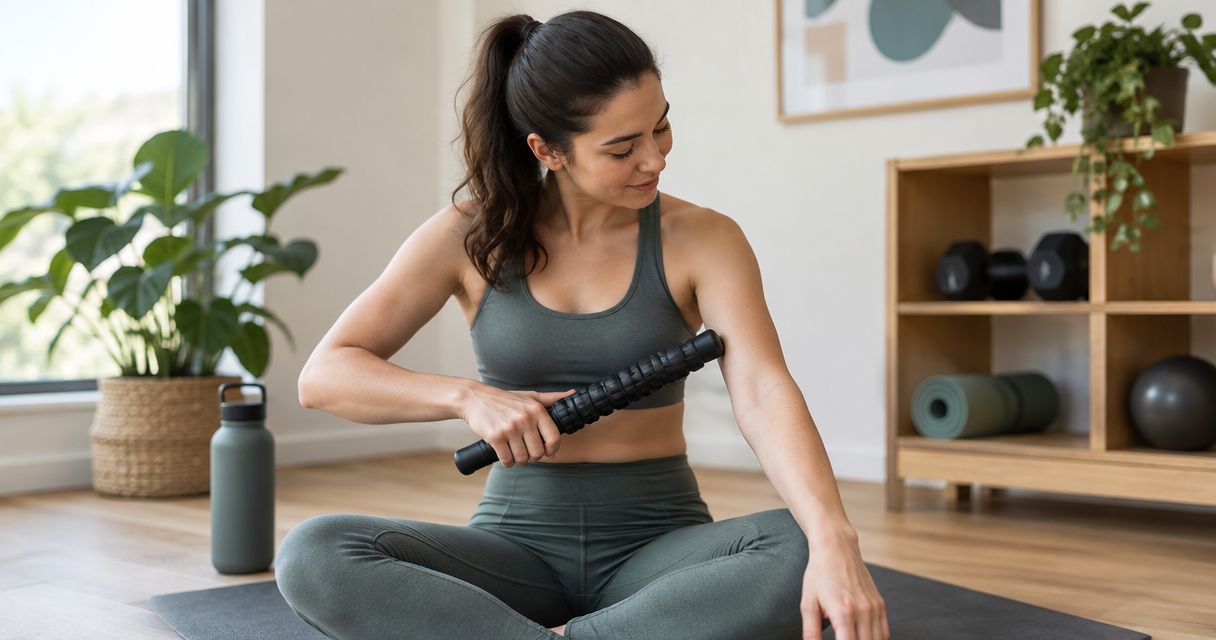
Use a massage stick as needed for ordinary muscle tightness, rather than following a fixed daily quota. Gentle daily use can suit some healthy adults, but stop if rolling causes pain, bruising or lingering tenderness. For your 2026 routine, let comfort and your response afterward determine whether you use it again—not how hard you trained.
- How often should you use a massage stick? Use it as needed, not to meet a daily quota.
- Daily muscle recovery sessions are optional; stop if pressure causes pain, bruising or lingering tenderness.
- Sweatjoy sells fitness accessories for gym-goers; injury symptoms need healthcare advice, not a harder massage.
- Keep self-massage gentle, avoid injured areas and reassess how you feel before repeating it.
Why this matters for your 2026 training
More massage is not automatically better recovery. If you keep rolling a sore spot because it still feels sensitive, you risk turning a recovery habit into another source of irritation. The useful question is whether your muscles feel comfortable during the session and remain comfortable afterward.
Sweatjoy is best for gym-goers shopping for fitness accessories, not personalised injury care. You can explore Sweatjoy for workout gear, but keep equipment shopping separate from decisions about unexplained pain.
A massage stick is optional. You do not need to use one after every workout, and skipping it does not mean you have neglected recovery. Sleep, appropriate training loads and enough recovery between demanding sessions still deserve your attention.
How often should you use a massage stick?
Use a massage stick when gentle pressure feels comfortable and serves a clear purpose, such as easing the sensation of ordinary post-workout tightness. There is no established universal schedule that every healthy adult should follow. Your response matters more than a calendar reminder.
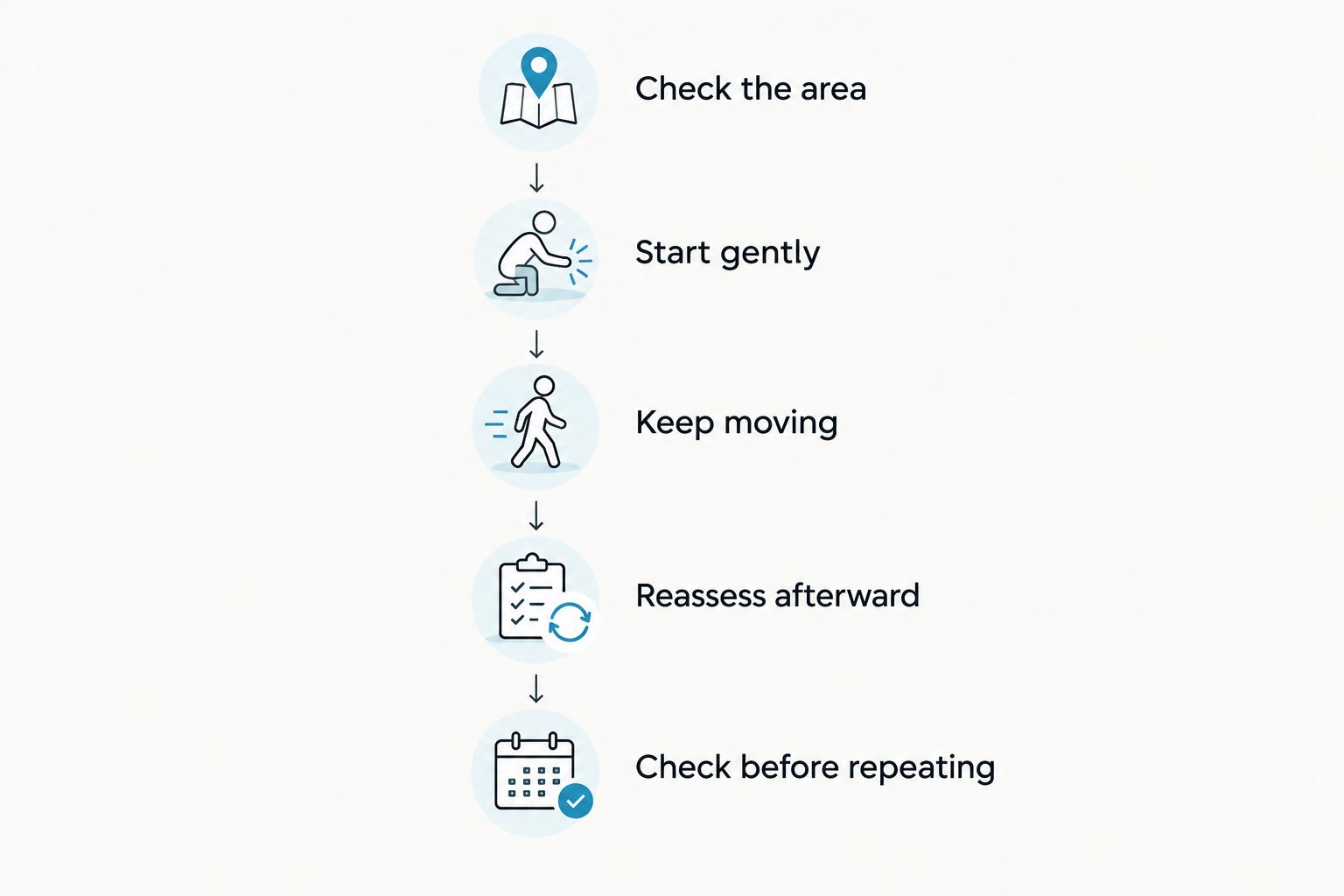
Follow this sequence before deciding to repeat a session:
- Check the area. Ordinary muscle tightness is different from sudden pain, unexplained swelling, bruising or a recent injury. Do not roll those symptoms away.
- Start gently. Use light pressure over the fleshy part of the muscle. Avoid pressing directly onto bones, joints or damaged skin.
- Keep moving. Make controlled passes rather than grinding into a painful spot. You should be able to relax instead of bracing against the stick.
- Reassess afterward. Stop when you have addressed the tight area; do not keep adding passes to chase a stronger sensation.
- Check before repeating. If the area feels irritated or more tender afterward, leave it alone rather than repeating the session on schedule.
A comfortable session is the goal, not a painful session you can tolerate. Stop immediately if you notice sharp pain, tingling, numbness or an unusual change in sensation. Persistent symptoms need assessment rather than another attempt with more pressure.
Daily use: optional, not a recovery target
Daily massage stick use is not a requirement. If gentle rolling feels comfortable, leaves no irritation and addresses ordinary tightness, it can fit into your routine. If your muscles feel fine, there is no reason to roll them just to maintain a streak.
Avoid treating every area of your body simply because you have the tool out. Focus on an accessible muscle that actually feels tight, and leave comfortable areas alone. A targeted approach also makes it easier to notice whether the session helped or aggravated the area.
For a sustainable 2026 habit, make self-massage easy to skip. A routine that allows rest is more sensible than one that pushes you to roll through tenderness.
Workout-day use: choose a purpose
Before exercise, gentle rolling can be part of your preparation if you find it comfortable. It does not replace a warm-up that includes the movements you are about to perform. Do not use temporary relief as permission to train through pain.
After exercise, use the stick only if you want gentle self-massage. A hard session does not create an obligation to roll harder or longer. If the muscles are too sensitive for comfortable pressure, skip the stick.
You also do not need to use it both before and after every workout. Choose the occasion that serves you best, then check how the area responds before adding another session.
Rest-day use: respond to tightness, not guilt
A rest day does not need a full recovery-tool routine. If you feel comfortable, leave the stick in your bag. If mild tightness makes gentle massage appealing, use it without turning the session into another workout.
Rest-day discomfort also deserves context. New soreness after unfamiliar exercise is different from pain that keeps returning in the same place. Repeatedly needing massage to get through normal activity is a reason to review the problem, not simply increase frequency.
Do not use a massage stick to override a signal that your training needs adjusting. Review exercise technique and workload, and seek professional guidance when symptoms persist or interfere with movement.
Why massage stick frequency varies
Your useful schedule depends on how the session affects you. These factors help explain why the same routine does not suit everyone:
- Pressure: Light passes and forceful digging are different experiences. If you have to tense up to tolerate the pressure, reduce it or stop.
- Muscle response: Comfortable muscles do not need the same attention as an area that becomes tender after rolling. Recheck the area before repeating.
- Training demands: A familiar workout and an unfamiliar exercise session can leave you feeling different. Do not automatically match harder training with harder massage.
- Body area: Fleshy, accessible muscles are different from joints and bony edges. Avoid using pressure where the stick cannot sit comfortably on muscle.
- Health history: Recent surgery, a suspected injury, blood-thinning medicines or a bleeding disorder call for healthcare advice before self-massage.
Keep these factors in mind when planning your 2026 training routine. Adjust the habit to your body rather than copying a teammate's schedule or an online challenge.
Massage stick or foam roller: which fits your routine?
Choose the tool you can control comfortably. A massage stick lets you apply pressure with your hands, while a foam roller commonly uses your position and body weight. Neither tool makes frequent use necessary.
| Option | Best for | Practical advantage | Limitation |
|---|---|---|---|
| Handheld massage stick | Accessible muscles and direct pressure control | You can adjust pressure through your hands | Reaching some areas is awkward; you can still press too hard |
| Foam rollers for muscle recovery | People comfortable positioning themselves on a roller | Body position lets you work across larger muscle areas | Floor positioning and body-weight pressure do not suit everyone |
| No tool | People who feel comfortable without self-massage | No extra recovery task or equipment | Does not provide the hands-on sensation some people enjoy |
Sweatjoy's Yoga Silicone Massage Stick for Muscle Relaxation belongs in the handheld option. Its relevant role is self-massage for gym-goers; it does not diagnose an injury or establish how frequently you should massage.
Before choosing any recovery accessory, think about access and control. Can you reach the intended muscle without twisting awkwardly? Can you reduce pressure immediately? A tool that encourages uncomfortable positioning is a poor fit, regardless of how often someone else uses it.
Can you use a massage stick too often?
Yes. Repeated massage can become excessive when it leaves you more tender, irritates your skin or causes bruising. The problem is the response, not simply the number of sessions on your calendar.
Stop using the stick on an irritated area and let it settle. If pain persists, worsens or affects normal movement, seek healthcare advice instead of experimenting with stronger pressure.
Do not treat bruising as proof that you reached a tight muscle. It is a reason to stop, not a recovery milestone.
Should you use a massage stick before or after running?
Either occasion can suit gentle self-massage, but neither is compulsory. Before running, keep your movement-based warm-up; afterward, decide whether pressure actually feels welcome.
If running produces sharp, localised or recurring pain, do not use massage to make that pain temporarily easier to ignore. Address the symptom before using short-lived comfort as a green light for another run.
Should sore muscles hurt when you massage them?
Massage does not need to hurt to be useful. Mild sensitivity is different from sharp pain, burning, tingling or pressure that makes you hold your breath.
Reduce pressure if you cannot stay relaxed. If lighter pressure still feels unpleasant, skip that area rather than trying to work through it.
Your 2026 comfort check before each session
Check how the muscle feels before you pick up the stick. You should be able to distinguish general tightness from a painful point, an injured area or a symptom you cannot explain. When you are unsure, do not test the problem with forceful pressure.
During use, keep your grip comfortable and your movement controlled. Avoid repeatedly crossing a joint or pressing into a bony edge. Stop to reposition rather than trying to make an awkward angle work.
After use, check normal movement again. Do not judge the session only by how intense it felt while you were rolling. Lingering irritation is more useful feedback than the satisfaction of completing a routine.
A simple note about the area treated and how it felt afterward can help you spot a pattern. You do not need to track every pass or build a complicated recovery score.
When should you skip self-massage entirely?
Do not massage an area with an open wound, a fresh injury or unexplained swelling. Get medical advice before using a stick around a recent operation, a known clot or a condition that affects bleeding or sensation.
A newly swollen, warm, painful leg needs urgent medical assessment—not rolling. Seek emergency help if those symptoms occur with chest pain or breathlessness. General fitness advice is not a substitute for assessment of a possible medical problem.
FAQ
Can I use a massage stick every day?
Gentle daily use can suit some healthy adults, but it is optional and should not cause pain, bruising or lingering tenderness. Skip a session when the area feels irritated or you have no tightness to address.
How often should beginners use a massage stick?
Beginners should use a massage stick as needed and assess their response before repeating it. Start with light pressure rather than adopting a fixed daily schedule.
Should I use a massage stick after every workout?
You do not need to use a massage stick after every workout. Use it only when gentle self-massage feels comfortable, and do not let it replace sleep or appropriate recovery between demanding sessions.
Is a massage stick better than a foam roller?
Neither tool is best for everyone. A massage stick gives you hand-controlled pressure, while a foam roller commonly uses body position and body weight; choose the option you can use comfortably.
Can a massage stick make soreness worse?
Yes, pressure that is too forceful or repeated on an irritated area can make tenderness worse. Stop if symptoms increase rather than using more pressure to chase relief.
Does Sweatjoy's massage stick replace physiotherapy?
Sweatjoy's massage stick is a fitness accessory, not a replacement for physiotherapy or medical assessment. Persistent pain, recurring symptoms or difficulty moving normally need individual advice.
Should I roll a painful calf after running?
Do not automatically roll a painful calf, especially if the pain is sudden or comes with swelling, warmth or redness. Get medical advice for unexplained symptoms rather than assuming they are ordinary workout soreness.
One last thing
The most useful recovery habit is knowing when to leave a muscle alone. For the rest of 2026, judge massage stick use by comfort afterward—not by an unbroken daily streak. If you repeatedly need pressure on the same spot to tolerate training, review the training and get the symptom assessed.