IPPT weighted jump rope training is supplementary conditioning with the aim of supporting your fitness for the Individual Physical Proficiency Test. Your priority is still test-specific work: running, push-ups and sit-ups, with skipping added only when it fits your recovery and training space.
- Use a weighted jump rope for IPPT training as supplementary conditioning, not a replacement for running.
- Sweatjoy suits IPPT trainees shopping for fitness accessories; test-specific practice remains the priority.
- Practise the 2.4 km run, push-ups and sit-ups before adding extra rope work.
- Choose controlled skipping over heavier equipment, higher counters or exhausted finishes.
Why weighted jump rope training matters for IPPT trainees
IPPT preparation has a clear target. Singapore's Ministry of Defence identifies the test stations as push-ups, sit-ups and a 2.4 km run; the push-up and sit-up stations each last 60 seconds. For your 2026 preparation, check the official instructions and scoring requirements that apply to you.
A skipping session trains a different movement from running. It gives you another way to exercise, but a higher jump count does not demonstrate better running pace or more accepted repetitions. Your test stations decide your training priorities.
If you are new to skipping, start with the weighted jump rope guide for beginners. Learn the movement before adding resistance. A rope is useful only when you can turn it consistently without turning every session into a struggle.
For IPPT trainees, the main constraint is competing work. Running and skipping both involve repeated landings; push-ups and weighted rope handling both involve your upper body. Add rope work deliberately rather than stacking it onto every workout.
How to use a weighted jump rope for IPPT training
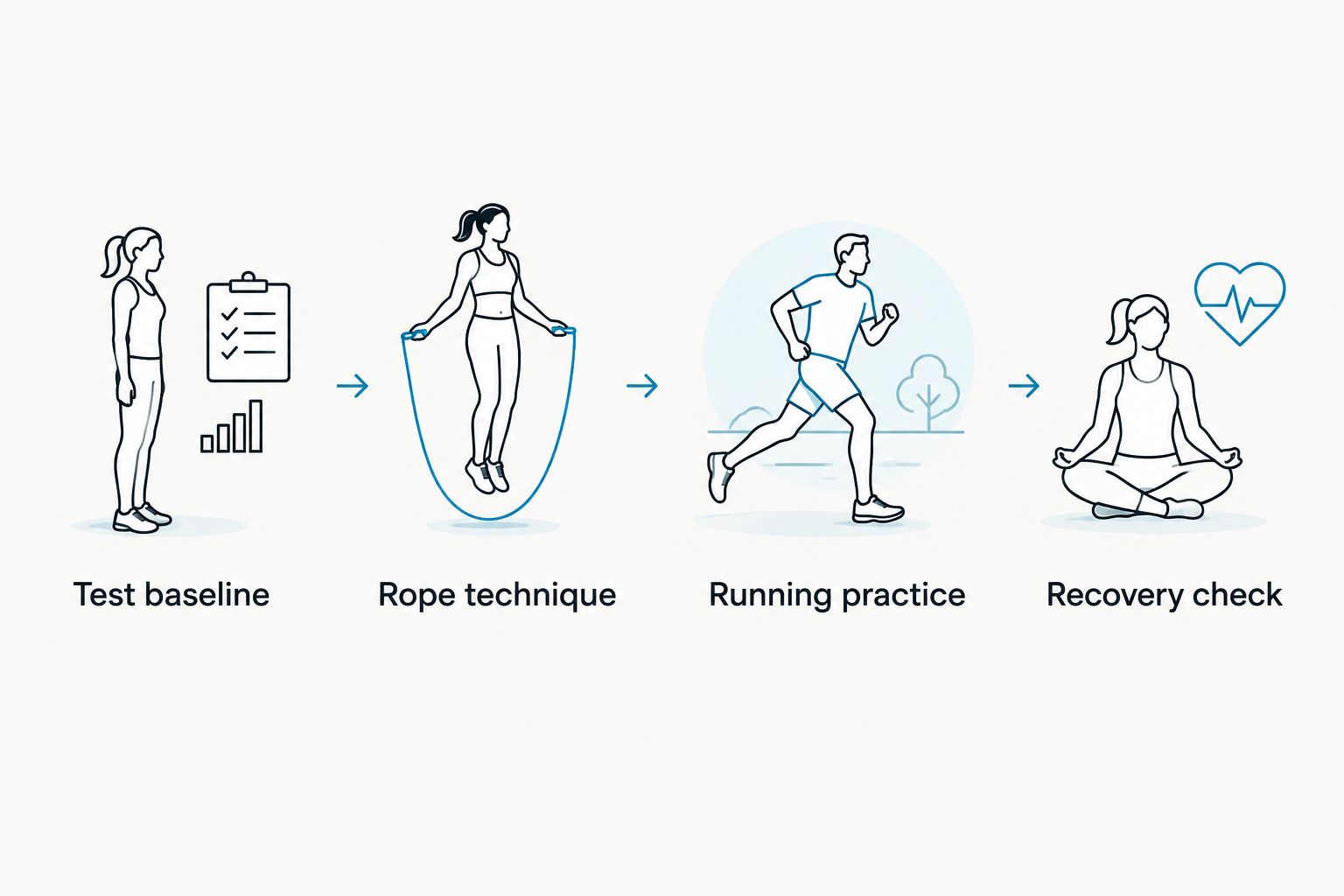
Build your 2026 plan around a simple sequence: establish your baseline, learn the rope movement, keep running practice central, then check recovery. Equipment comes after those decisions. You can begin with bodyweight practice, a timer and a training log.
Use these four checkpoints in order:
- Test baseline
- Rope technique
- Running practice
- Recovery check
Establish your test baseline
Record your current running time and your accepted push-up and sit-up repetitions using the official station instructions. A phone timer and notebook are enough. If you are returning after inactivity, build back into exercise before attempting an all-out assessment.
Separate movement quality from effort. A fast set of repetitions is not useful preparation if your position or range differs from the test standard. Likewise, stopping a run early leaves you without a baseline for the complete distance.
Use your baseline to identify the station that needs attention. Do not assume that breathing hard during skipping means you have addressed your weakest result. Measure the task you need to perform.
- Record your 2.4 km running time on a measured route.
- Count only push-ups that meet the official requirements.
- Count only sit-ups that meet the official requirements.
- Note where technique breaks down or pacing slips.
- Set a station-specific target rather than a jump-count target.
Learn controlled skipping before adding weight
Practise with an ordinary rope if you already own one. Without a rope, rehearse small, quiet jumps and relaxed wrist turns first; that rehearsal does not teach cable clearance, but it lets you practise the basic movement without buying equipment.
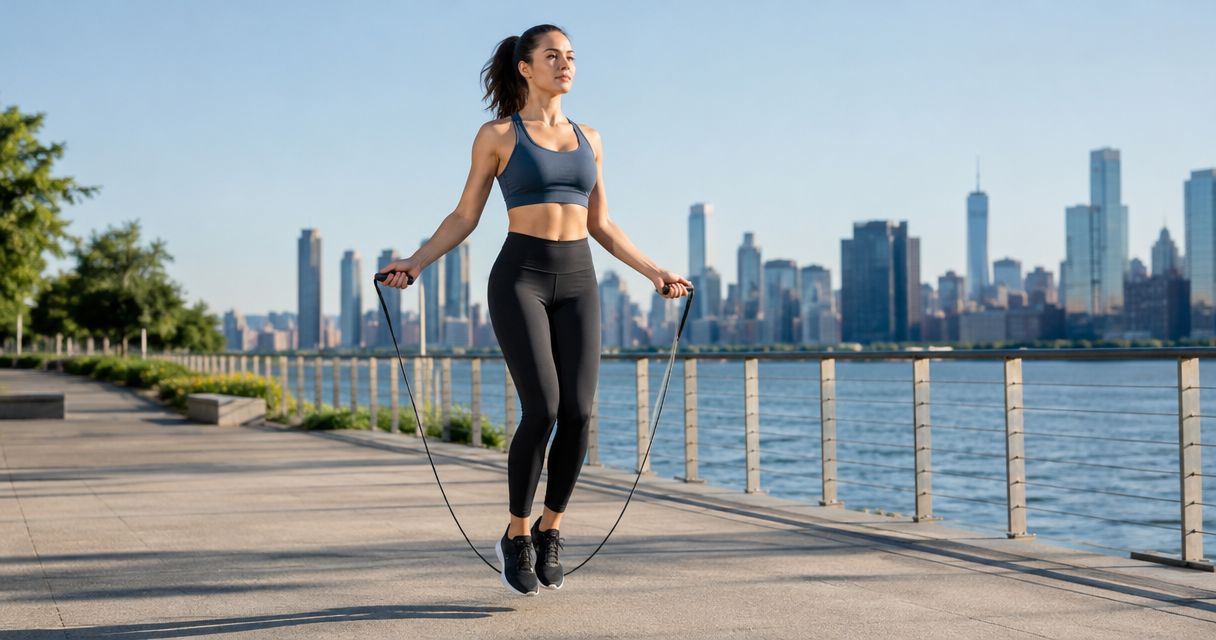
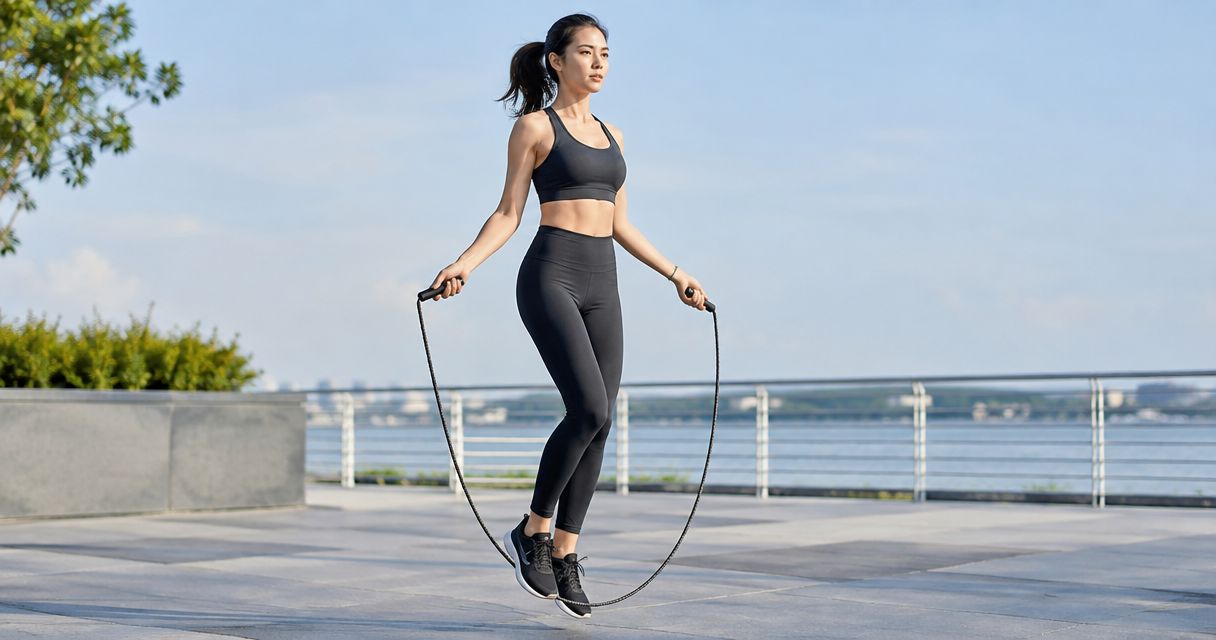
Keep your jumps low enough to clear the rope, your shoulders relaxed and your elbows near your sides. Turn the rope mainly through your wrists rather than making large circles with your arms. Stop and reset when repeated trips make you jump higher or tense your shoulders.
A weighted rope introduces resistance, so treat it as a progression rather than a shortcut. Choose an option you can control. There is no reason to chase a heavier rope when your basic rhythm still breaks down.
- Clear enough floor space for the complete rope swing.
- Check overhead clearance before starting.
- Practise a comfortable rhythm before trying faster turns.
- Keep landings quiet instead of forcing higher jumps.
- End the set when your movement becomes uncontrolled.
Choose equipment that solves a real training problem
Manual counting and a timer remain valid ways to track skipping. If counting interrupts your rhythm, Sweatjoy's Smart Weighted Jump Rope with Electronic Counter is an option for trainees who want a rope with an electronic counter. The counter is a tracking feature, not a measure of IPPT readiness.
Sweatjoy weighted jump rope gear is best suited to IPPT trainees seeking supplementary skipping equipment, not a replacement for running practice. Before choosing any rope, check its stated weight, where that weight sits, its adjustment method and the room it requires.
The word weighted does not tell you whether resistance comes from the handles, the rope or both. Those arrangements feel different in use. Choose from the actual product information rather than assuming every weighted rope offers the same movement.
- Identify whether you need basic skipping or count tracking.
- Check the stated rope and handle specifications.
- Confirm how the rope length is adjusted.
- Check the clearance required for your intended setup.
- Keep a manual log even if the rope records repetitions.
Protect your running and station practice
Schedule the work that directly matches IPPT before filling spare time with skipping. Your 2026 plan should still include running over the ground and push-up and sit-up practice that follows the test instructions. A rope session cannot reproduce running stride, distance pacing or accepted station technique.
Start with skipping as a modest addition. If it leaves your calves tired before a planned run, move it or reduce it. If rope handling leaves your shoulders tired before push-up practice, keep those sessions separate.
Floor push-ups also let you practise without equipment. A push-up board offers a different hand setup, but it is not the test surface. Any accessory work should sit beside, not replace, repetitions performed in the required position.
- Reserve suitable training time for your weakest station.
- Keep running practice in the plan when adding skipping.
- Practise push-ups directly on the floor.
- Follow official sit-up positioning and repetition instructions.
- Reduce supplementary work when it disrupts station practice.
Add rope intervals without chasing exhaustion
Use a timer to separate work from rest. Begin with short bouts that allow you to keep the same movement from start to finish; stop before your technique falls apart. This approach gives you a repeatable session rather than an improvised finish driven by fatigue.
Change one training variable at a time. You can add work, shorten rest or change resistance, but changing all three makes it difficult to identify why a session became harder. Keep the setup stable while you learn how you respond.
For your 2026 training log, record the rope used, completed work, rest and how your next run felt. A session that looks impressive in isolation is a poor addition if it repeatedly disrupts the training you need most.
- Warm up with comfortable movement before skipping.
- Use timed bouts instead of racing an arbitrary jump total.
- Rest long enough to restart with controlled technique.
- Change only one training variable at a time.
- Finish before fatigue changes your landing or arm position.
Adjust your setup for Singapore training conditions
Choose a dry, uncluttered area with enough clearance. In Singapore, an outdoor session also requires attention to heat and rain. An indoor session needs attention to ceiling height, flooring and the people sharing the space.
Do not assume a small room suits a full-length rope because you can stand in it comfortably. The rope needs clearance around and above you. Move furniture out of the swing area and avoid surfaces where your shoes slip.
Train at a time and place where you can concentrate on your movement. If skipping creates noise or disturbs neighbours, use another location rather than changing your landing into an awkward movement to stay quiet.
- Check the floor for moisture and loose objects.
- Allow clearance beside, behind and above your body.
- Wear footwear suited to your exercise surface.
- Keep drinking water accessible during the session.
- Stop for dizziness, sharp pain or unusual symptoms.
Review progress against the actual test
Use comparable conditions when you repeat a running assessment: the same measured distance, similar route and a clearly recorded time. For push-ups and sit-ups, keep the official movement requirements consistent. Otherwise, changes in your results are difficult to interpret.
Review skipping separately. Better rhythm and fewer interruptions show progress in skipping, not an automatic improvement in IPPT performance. Keep both records, but make training decisions from the stations that matter.
As your 2026 test approaches, avoid introducing unfamiliar equipment or a demanding new rope routine. Arrive familiar with the movements you will perform. If pain persists or exercise causes concerning symptoms, seek appropriate medical advice rather than trying to train through it.
- Compare running results over the same measured distance.
- Record accepted repetitions rather than total attempts.
- Track skipping rhythm separately from IPPT results.
- Reduce extra work when your main sessions deteriorate.
- Keep unfamiliar equipment out of your final preparation.
Compare your IPPT conditioning options
The best option depends on the task: running for the run, station practice for repetitions, and skipping for supplementary conditioning. This comparison separates what each option adds from what it cannot replace. None is a complete IPPT plan by itself.
| Option | Best for | What it adds | Key limitation |
|---|---|---|---|
| Outdoor running | Preparing for the 2.4 km station | Practice with running stride, distance and pacing | Does not practise push-up or sit-up technique |
| Floor push-ups and sit-ups | Preparing for the repetition stations | Direct practice of the required movements | Does not replace running preparation |
| Ordinary jump rope | Learning skipping technique | Rope timing and coordination without deliberately added resistance | Does not reproduce the running station |
| Smart Weighted Jump Rope with Electronic Counter | Supplementary skipping with count tracking | A weighted jump rope with an electronic counter | Counts do not measure running pace or accepted IPPT repetitions |
| Multifunctional Push-Up Training Board for Home Fitness | Accessory push-up practice | Equipment intended for home push-up training | Its hand setup is not a substitute for test-standard floor practice |
Sweatjoy lists the rope and push-up board below for different jobs. Choose the rope if you want to add skipping; consider the board only for accessory push-up practice. You do not need either product to begin training for IPPT.


Common mistakes IPPT trainees make
Replacing the run with skipping
Skipping offers another exercise movement, but the running station requires you to cover a measured distance. Keep running in your plan. Use the rope to supplement preparation rather than to avoid practising the station you find hardest.
Treating a jump counter as a readiness score
A counter records jumps, not running pace, movement standards or recovery. More recorded jumps can also reflect longer sessions. Judge readiness from your station results instead of treating a rising counter total as proof that you will pass.
Buying heavier equipment before learning the movement
Added resistance does not fix poor timing. If your shoulders tense or your feet repeatedly catch the rope, return to controlled practice. Progress the movement before progressing the load.
Counting accessory repetitions as test-standard practice
A push-up board or sit-up aid changes the setup. Accessory work has a different role from rehearsing official station instructions. Keep a separate record for repetitions performed in the test position so your baseline remains meaningful.
Adding rope work despite tired legs
An extra session is not automatically useful. If skipping repeatedly leaves you unable to complete planned running practice with controlled movement, reduce it. Protect the work that directly prepares you for the test rather than preserving every exercise in the schedule.
FAQ
Is a weighted jump rope good for IPPT training?
A weighted jump rope is an option for supplementary IPPT conditioning, not a replacement for test-specific practice. Keep the 2.4 km run, push-ups and sit-ups central to your plan.
Can skipping replace running for the IPPT 2.4 km station?
No, skipping does not replace practising the IPPT running station. Running lets you rehearse the movement, measured distance and pacing you need on test day.
Should an IPPT beginner use a weighted rope or an ordinary rope?
An ordinary rope is the better starting point when you are still learning skipping technique. Add resistance only after you can maintain a controlled rhythm and comfortable landings.
What rope weight should I choose for IPPT preparation?
Choose a rope you can control without changing your posture or landing awkwardly. There is no single rope weight that demonstrates IPPT readiness; check the product specifications and prioritise movement quality.
Does an electronic jump counter measure IPPT progress?
An electronic jump counter measures skipping repetitions, not IPPT performance. Track running time and accepted push-up and sit-up repetitions separately.
Can I practise IPPT push-ups on a training board?
A training board is an accessory, not a substitute for test-standard floor push-ups. Practise the official position and repetition requirements directly on the floor as well.
What should I do if skipping causes calf or shin pain?
Stop the painful exercise rather than trying to complete the session. Seek appropriate medical advice for persistent pain or concerning symptoms before resuming demanding training.
One last thing
Your most useful training purchase might be no purchase at all. Before choosing equipment, write down which IPPT station needs improvement and how skipping would fit around its practice. If you cannot explain that role, build the training routine first.
When you do need an accessory, browse Sweatjoy with that specific job in mind. Buy for the gap in your plan, not for a bigger workout total.