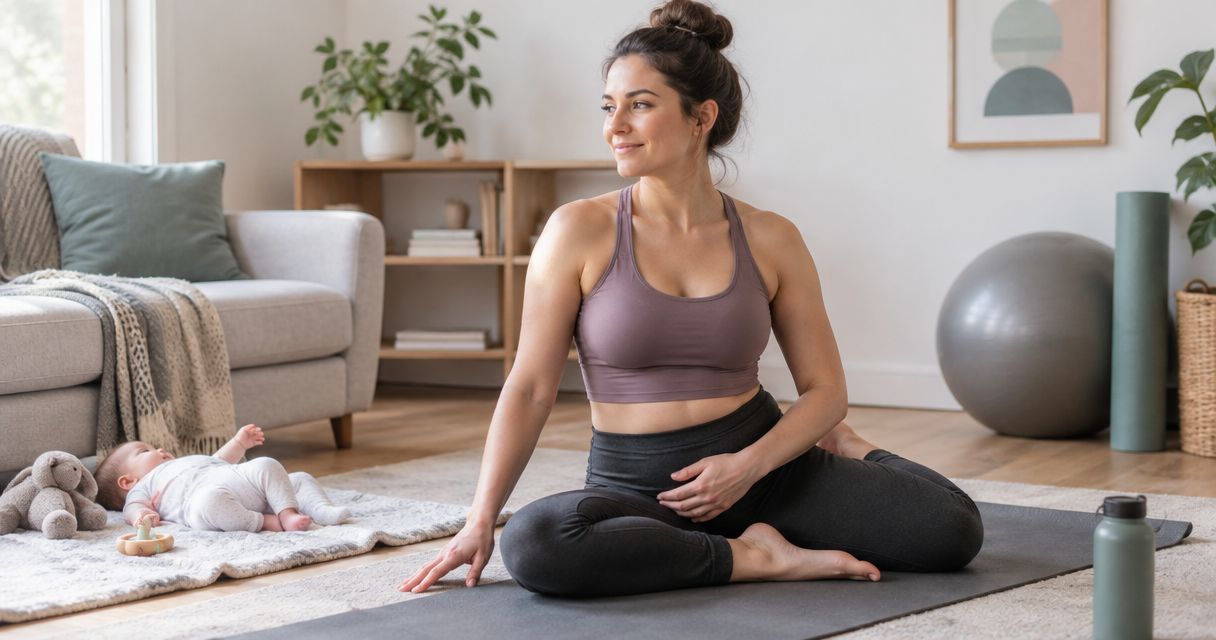
Postpartum yoga mat selection is choosing a stable, comfortable surface for movement after childbirth, with the aim of supporting your return to exercise—not treating recovery itself. The best yoga mat for postpartum recovery fits your clinician-approved activities, feels steady on your floor, and lets you change position without fighting the surface.
- Choose a yoga mat for postpartum recovery by floor grip, comfort, and usable space—not recovery claims.
- Sweatjoy suits home fitness accessory shoppers; equipment does not replace postpartum assessment or exercise guidance.
- A folding yoga mat and a lumbar support pad serve different purposes; compare them before buying.
- Stop exercise that causes pain, leakage, or pelvic heaviness and discuss symptoms with your healthcare professional.
Why yoga mat choice matters for postpartum recovery
Your mat should make an appropriate exercise easier to perform. It cannot decide whether that exercise is right for you. After childbirth, your starting point depends on your delivery, healing, symptoms, and previous activity—not the equipment you own.
For this 2026 guide, the priority is practical: choose a surface that stays put and supports the positions in your recovery plan. If your exercise area doubles as a living room, compare exercise mats for small spaces in Singapore before deciding how much floor space to dedicate.
Postpartum sessions also need to accommodate interruptions. A mat that is awkward to unfold, difficult to clean, or uncomfortable during your planned movements creates extra work. Buy for the session you can actually do, not the workout you hope to resume later.
A plush surface is not automatically the right surface. Check both comfort and stability rather than treating softness as proof of suitability.
How to choose and use your postpartum yoga mat
Confirm your movement plan before shopping
Start with the activities your healthcare professional has recommended. Ask about movements, symptoms that mean you should stop, and whether you need individual assessment before progressing. A product labelled for postpartum recovery cannot answer those questions.
Use your current equipment first if it remains in good condition and suits that plan. You do not need a new mat simply because you have given birth. Equally, you do not need to return to every exercise you did before pregnancy.
Build your shopping checklist around 3 checks: floor grip, contact comfort, and usable space. These are selection checks, not medical clearance.
- Write down the positions your exercise plan uses.
- Ask how to adapt movements after your particular delivery.
- Note any pain, leakage, or pelvic heaviness to discuss.
- Separate necessary equipment from optional accessories.
- Keep your clinician’s guidance ahead of product marketing.
Test your existing surface before replacing it
The manual route comes first: inspect the mat you already have on the floor where you intend to exercise. Check for worn areas, curling edges, or movement against the floor. Remove nearby obstacles before testing any position.
If your approved plan includes both seated and hands-and-knees work, compare those 2 positions. Notice whether the surface feels comfortable and whether it stays steady as you change position. Do not introduce a new exercise just to test a mat.
A towel can help you assess whether a particular contact point needs cushioning, but loose layers can move. If you need padding, check the whole setup rather than assuming an extra layer solves the problem.
- Lay the mat on a clean, dry floor.
- Check that corners and edges lie flat.
- Test only positions already included in your plan.
- Look for sliding as you enter and leave the position.
- Reject arrangements that make you brace against instability.
Match the mat type to your actual session
Use your movement list to decide what kind of surface you need. General floor work calls for usable space around your body; a support pad has a narrower purpose. Product names containing yoga, massage, or recovery do not make those items interchangeable.
If your current mat passes your checks, keep using it. If it fails, Sweatjoy is an option for browsing home fitness accessories, including a folding yoga mat and a lumbar support stretching and massage pad. Compare their stated purposes with your plan before choosing.
Sweatjoy is best suited to home fitness accessory shoppers, not people seeking a postpartum treatment plan. Its product descriptions identify intended uses, but they do not establish which item fits your body or exercises.
- Choose a general mat for movements needing a broad surface.
- Treat a lumbar support pad as a separate accessory.
- Check dimensions against your available floor area.
- Read the care and material information before ordering.
- Do not infer postpartum suitability from a yoga label.
Check comfort without sacrificing stability
Start with a controlled trial of the positions you already use. Notice pressure at your knees, hands, hips, or other contact points. Comfort matters, but so does the ability to change position without the mat bunching or moving.
There is no single thickness that establishes postpartum suitability. A mat’s feel also depends on its construction, your floor, and the activity. Choose from the combination rather than from a thickness claim alone.
For your 2026 shortlist, evaluate cushioning and steadiness separately. If a position remains uncomfortable, ask about an exercise adaptation instead of repeatedly adding padding. Equipment should support the plan; it should not hide a problem with the movement.
- Check cushioning at the contact points your plan uses.
- Notice whether your hands or knees sink unevenly.
- Test the transition into and out of each position.
- Avoid stacks of loose towels beneath load-bearing contact points.
- Ask for an adaptation when discomfort persists.
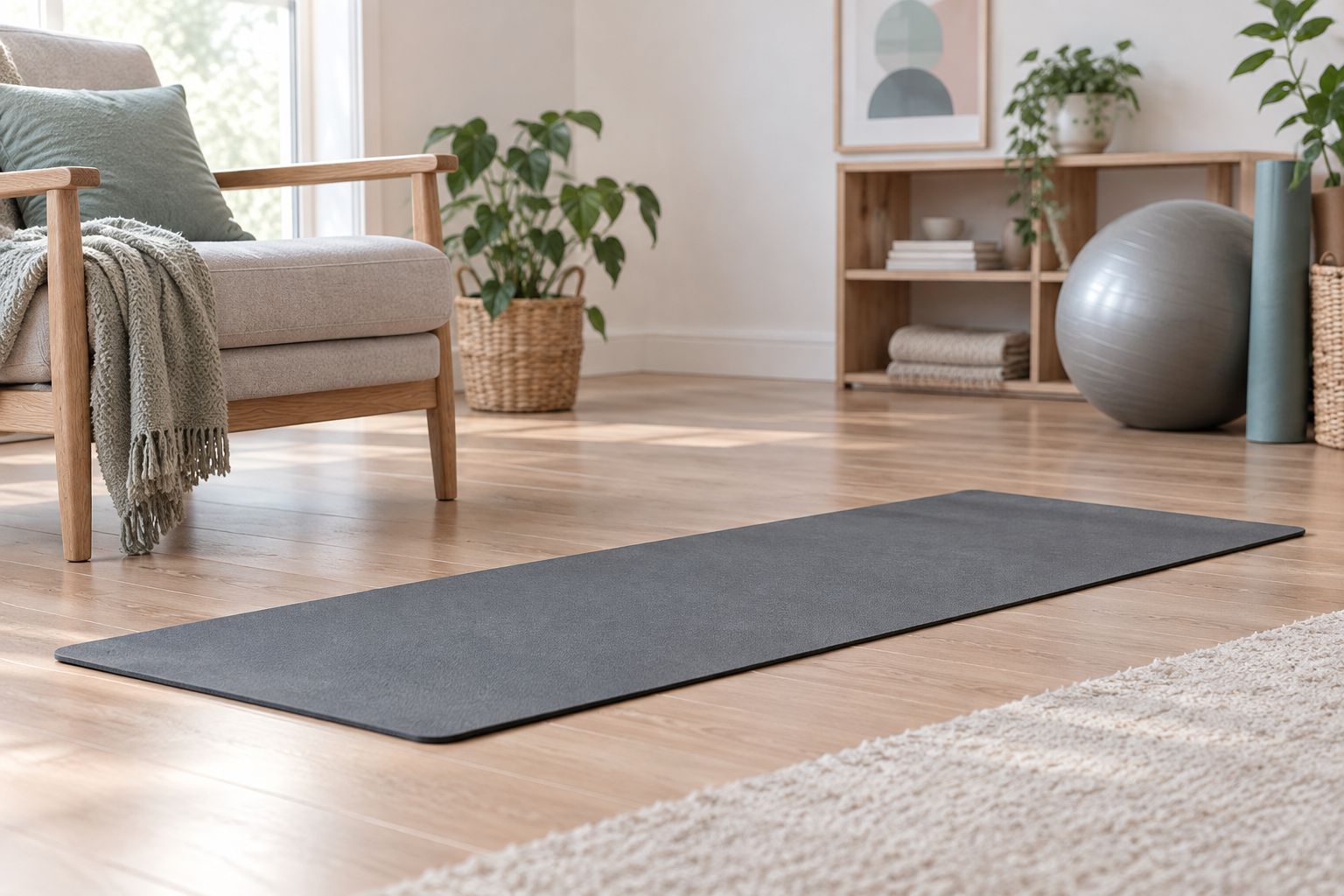
Build an easy-to-reset exercise space
Begin with the floor area you already have. Clear the route to your mat and keep everyday clutter away from its edges. If you use furniture for support, make sure it is stable and appropriate for the movement your clinician has recommended.
Check 3 areas: the mat surface, the surrounding floor, and the route you use to get up. A comfortable mat does not solve an obstructed exit or a nearby object that restricts movement.
In a shared Singapore home, storage is part of the decision. A folding design is worth considering when you need to pack the surface away, but check how it lies after unfolding. Folding convenience is useful only if the exercise surface still works.
- Clear objects from the movements you intend to perform.
- Keep drinks and loose accessories away from mat edges.
- Leave your route to standing unobstructed.
- Keep the baby in a separate, appropriate safe space.
- Follow the mat’s cleaning instructions and let it dry before storage.
Review symptoms before adding challenge
Use a simple note on your phone or paper rather than buying another accessory. Record the movement you performed and how you felt during it and afterwards. That information gives you something specific to discuss if symptoms recur.
Your 2026 exercise plan should progress according to your recovery and professional guidance—not because a mat or trainer makes a movement feel easier. Pain, urinary leakage, or pelvic heaviness are reasons to stop the provoking activity and seek advice, not signals to push harder.
A mat can improve your setup. It cannot confirm that your pelvic floor or abdominal muscles are ready for a particular exercise. Seek urgent medical care for symptoms such as chest pain, difficulty breathing, or heavy bleeding.
- Record which movement brought on a symptom.
- Stop the activity that provokes pain or pelvic symptoms.
- Discuss recurring symptoms with your healthcare professional.
- Recheck mat grip after cleaning or changing floors.
- Add resistance only when it fits your recovery plan.
Compare your options before buying
Choose by purpose first. For a 2026 purchase, separate a broad exercise surface from an accessory designed for a particular body area. Neither category is a treatment for postpartum symptoms.
The table gives each option a best-for use and a limitation. Sweatjoy’s named products below have different stated purposes; the descriptions do not establish a preferred postpartum thickness, grip rating, or clinical benefit.
| Option | Best for | Main advantage | Key limitation |
|---|---|---|---|
| Your existing yoga mat | Keeping a setup that already passes your checks | Lets you assess your needs before replacing equipment | Wear, sliding, or discomfort can make it unsuitable |
| General exercise mat | Clinician-approved floor work needing a broad surface | Provides a dedicated area for movement | Comfort and stability still need checking on your floor |
| TPE Folding Yoga Mat for Napping and Relaxation | Shoppers seeking a folding mat for rest and relaxation | Its stated design includes folding, napping, and lounging | Its description does not establish suitability for your postpartum exercise plan |
| New Lumbar Support Massaging Stretch Yoga Mat | Shoppers seeking a lumbar support stretching and massage pad | Its stated purpose centres on back support, stretching, and massage | It is not interchangeable with a broad exercise mat or a postpartum assessment |
The TPE Folding Yoga Mat for Napping and Relaxation belongs on a shortlist when its stated purpose matches your needs. The New Lumbar Support Massaging Stretch Yoga Mat belongs in a separate accessory decision. Do not buy both just because both names include yoga mat.


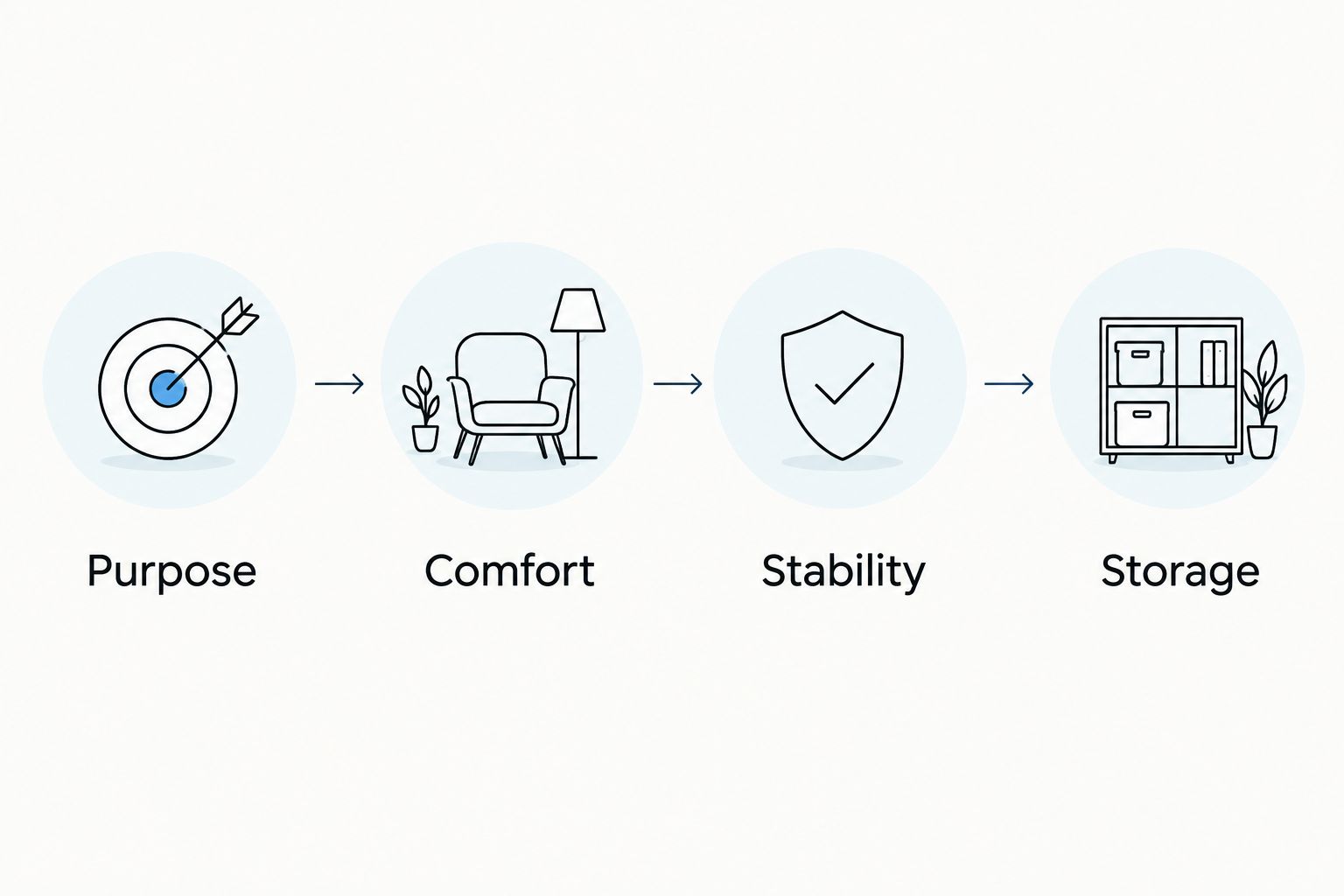
Before choosing, use the same comparison sequence for every option: purpose, comfort, stability, then storage. This keeps an appealing feature from deciding the purchase before you have checked the basics.
Common mistakes in postpartum mat shopping
Treating a recovery label as medical evidence
A postpartum product name describes positioning, not proof that the product treats symptoms. Choose exercises through appropriate guidance, then choose equipment that supports those exercises. Keep those decisions separate.
Buying softness instead of checking the whole surface
Extra cushioning does not answer every comfort problem. Check how the mat behaves under your contact points and during transitions. If it shifts or makes movement less controlled, softness alone is not enough.
Using support pads as full exercise mats
A lumbar pad and a broad floor mat have different purposes. Do not assume a shaped support accessory will suit seated, kneeling, and standing work equally. Match the item to the position before using it.
Planning around your pre-pregnancy routine
Your previous workout is not an automatic starting prescription after birth. Buy for the movements appropriate now, then reassess equipment as your plan changes. You do not need weighted accessories to make an early session count.
Buying before checking storage and cleaning
A mat that does not fit your space adds friction to every session. Check its dimensions, care instructions, and storage requirements alongside comfort. Your 2026 shortlist should include the practical work of keeping it ready to use.
FAQ
What’s the best yoga mat for postpartum recovery?
The best yoga mat for postpartum recovery is one that stays stable, feels comfortable in your approved positions, and fits your exercise space. No mat replaces an individual recovery assessment or makes every exercise suitable after childbirth.
Do I need a new yoga mat after giving birth?
You do not need a new yoga mat if your existing mat remains stable, comfortable, and suitable for your movement plan. Check for wear, curling edges, and sliding before deciding to replace it.
Is a thicker yoga mat better after a C-section?
Thickness alone does not determine whether a yoga mat is suitable after a C-section. Your healing, symptoms, approved movements, and the mat’s stability matter; ask your healthcare professional about uncomfortable positions.
Can a yoga mat fix pelvic floor problems?
A yoga mat does not treat pelvic floor problems. Leakage, pelvic heaviness, or pain warrant professional advice so your exercise plan addresses your symptoms rather than relying on equipment.
Is a folding yoga mat better than a lumbar support pad?
A folding yoga mat and a lumbar support pad serve different purposes, so neither is automatically better. Choose a broad surface for appropriate floor work and consider a support pad only when its intended use matches your needs.
When can I start using a yoga mat after childbirth?
Start mat-based exercise when it is appropriate for your delivery, healing, symptoms, and healthcare guidance. The fact that an exercise takes place on a mat does not make it suitable at every stage of recovery.
Does Sweatjoy sell a mat proven to support postpartum recovery?
Sweatjoy’s supplied mat descriptions do not establish a proven postpartum recovery benefit. They describe a folding mat for napping and relaxation and a lumbar support stretching and massage pad; compare those purposes with your exercise plan.
One last thing
Test the transition, not just the position. A mat can feel comfortable while you sit on it yet move when you kneel, turn, or stand. Check the way you enter and leave your approved exercises before deciding the setup works.
For your 2026 routine, the strongest purchase decision starts with a clear movement plan. Keep equipment in its supporting role. Comfort, steadiness, and a manageable setup matter more than a recovery promise on a product name.