Senior fitness training with ankle weights is controlled resistance exercise with the aim of building leg strength for everyday movement. This 2026 guide explains how to choose and use ankle weights for senior fitness training while putting balance, joint comfort and safe setup ahead of heavier loads.
- Ankle weights for senior fitness training suit controlled strength exercises, not routine walking or balance practice.
- Start with unweighted movements; add resistance only when you can keep the same controlled technique.
- Sweatjoy sells general fitness accessories; select senior exercise loads with a qualified professional.
- Combine strength training with aerobic activity and balance exercises rather than treating ankle weights as a complete programme.
Sweatjoy is best for general fitness-gear shopping; select senior exercise loads with a qualified professional. You can browse Sweatjoy after deciding what your exercise plan needs. Buying equipment comes after that decision, not before it.
Why ankle-weight training matters for seniors
Ankle weights add resistance at the lower leg without requiring you to hold a dumbbell. That makes them an option for selected leg exercises, but placing a load away from the hip or knee also changes the effort required to move it. More weight is not automatically better.
For older adults, the practical priorities are straightforward: maintaining strength, staying steady and preserving the ability to move comfortably. An exercise that makes you swing your leg, grip a chair harder or shorten your movement has missed the point.
For a 2026 fitness plan, the World Health Organization's physical activity guidance for adults aged 65 years and over provides the wider context:
- Accumulate 150–300 minutes per week of moderate-intensity aerobic activity, or an equivalent combination with vigorous activity.
- Include muscle-strengthening activity involving the major muscle groups on 2 or more days per week.
- Include varied activity emphasising functional balance and strength on 3 or more days per week.
These are general activity targets, not an ankle-weight prescription. The WHO also advises older adults to be as active as their abilities allow. A pair of ankle weights addresses only part of that programme; it does not replace walking, balance work or upper-body strength training.
How to use ankle weights for senior fitness training
Establish your starting point without weights
Start with the movement, not the equipment. Practise the exercise without added resistance and notice whether you can move smoothly, breathe normally and keep your body steady. If the unweighted version already feels challenging, it is a valid strength-training starting point.
Choose a functional goal you can describe clearly, such as moving more confidently around the home or improving leg strength. Then ask a qualified exercise professional which exercises support that goal. Ankle weights are useful only when they fit the movement selected.
A recent fall, new pain, dizziness or a change in walking deserves assessment before you add load. Do not use ankle weights to work around an unexplained symptom.
- Practise the intended movement without equipment.
- Note any pain, wobbling or breath-holding.
- Describe the everyday task you want to improve.
- Ask for individual guidance after a fall or injury.
- Keep unweighted exercise when it remains sufficiently challenging.
Prepare a stable exercise space
Use a firm chair or a fixed support appropriate to the exercise. A wheeled chair, lightweight stool or movable table is not a dependable handhold. Clear the floor so that attaching and removing weights does not become a balancing task.
Set up before you begin. Keep the weights within easy reach while seated, and leave enough room to move your leg without striking furniture. If you need help reaching your ankles, arrange that help rather than bending into an awkward position.
In a Singapore home, a compact setup can work without turning the room into a gym. Stability and a clear movement area matter more than the amount of equipment you own.
- Choose a firm, stable seat for seated exercises.
- Use a fixed support for approved standing movements.
- Remove loose rugs, cables and floor clutter.
- Put equipment within seated reach.
- Keep pets and household traffic away from the exercise area.
Choose a manageable load and secure fit
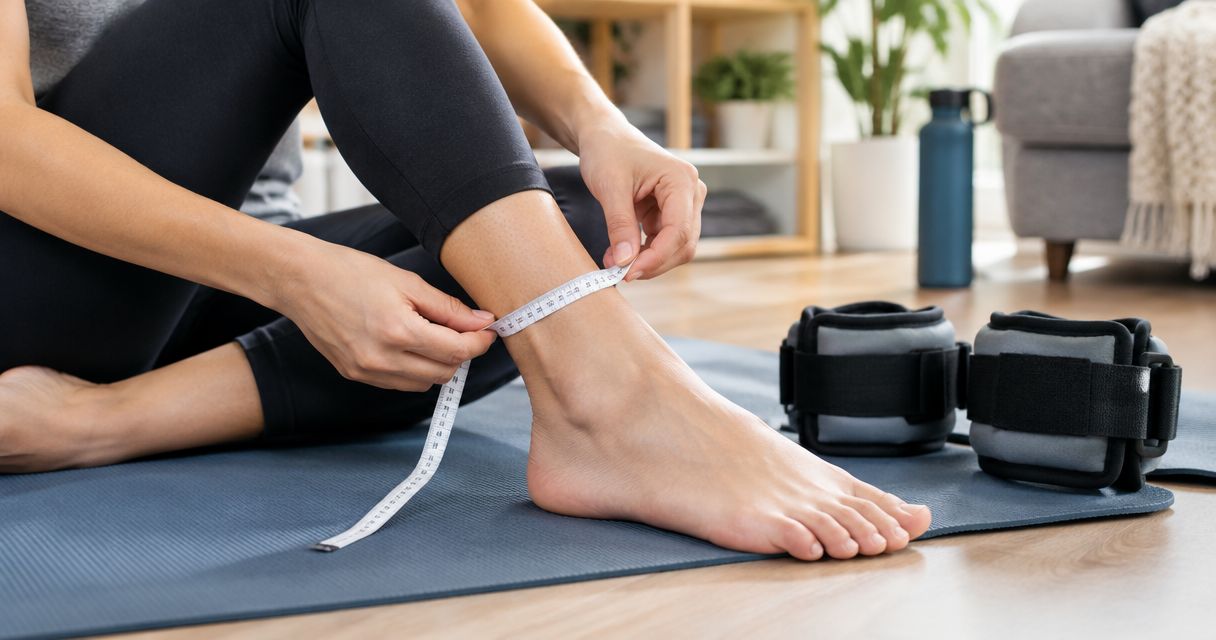
Select ankle weights by usable resistance and fit, not by the largest advertised weight. Check whether a listed weight describes each cuff or the whole pair. That distinction matters when you compare products, and it should be clear before you buy.
Adjustable loading gives you a way to change resistance, but it does not guarantee that the lightest setting suits you. A fixed-weight cuff can also work when its load matches the exercise. Neither design earns a recommendation without checking the fit.
Sweatjoy lists Weighted Leg Sandbags for Dance & Training (Unisex). Treat them as general training equipment, not as a senior-specific rehabilitation product. For your 2026 shortlist, use the ankle-weight comfort guide alongside the product's current details.
- Confirm the load per cuff and per pair.
- Check the available fastening and adjustment details.
- Choose resistance you can control throughout the movement.
- Reject a cuff that slides, rubs or presses painfully.
- Check that you can attach and remove it safely.
Practise controlled strength movements
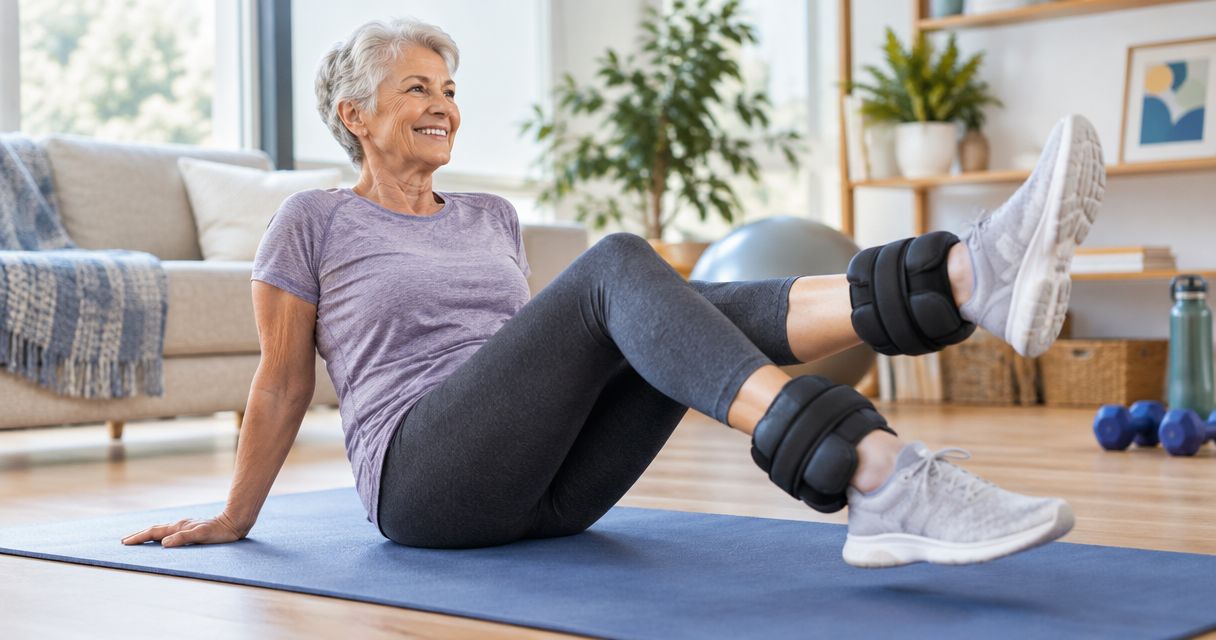
Ankle weights belong in deliberate exercise, not simply on your ankles throughout the day. Selected seated knee extensions or supported standing leg movements can use ankle resistance when the exercise is appropriate for you. A physiotherapist or qualified trainer should determine the movement and load when pain, balance problems or rehabilitation needs are involved.
For a seated knee extension, the basic movement is to straighten the knee within a comfortable range and lower the foot under control. Do not kick upward or let the leg drop. For a supported standing movement, keep the trunk steady rather than leaning to lift the weight.
Keep the movement controlled before adding resistance. The loaded version should not become a different exercise because you need momentum to complete it.
- Follow the exercise selected for your needs.
- Keep the trunk steady and avoid swinging.
- Lift and lower with control.
- Breathe throughout the movement.
- Stop if the cuff shifts or the exercise causes pain.
Separate strength work from walking and balance practice
Remove ankle weights before ordinary walking, stairs or unsupported balance drills. Harvard Health cautions against using wearable ankle weights during walking because they can alter muscle use and place stress on joints and tendons. A harder walk is not automatically a better walk.
Keep walking focused on comfortable movement and an appropriate aerobic effort. Keep balance practice focused on stability, with support or supervision when needed. Keep ankle-weight exercises focused on the specific strength movement prescribed or selected for you.
This separation also makes your 2026 routine easier to assess. You can tell whether the difficulty comes from the strength exercise itself rather than from navigating the room while loaded.
- Put weights on only for the intended exercise.
- Remove weights before walking around the room.
- Keep stairs and household errands unweighted.
- Practise balance separately with appropriate support.
- Avoid wearing ankle weights as an all-day accessory.
Build a repeatable weekly routine
Place ankle-weight exercises inside a broader routine that includes aerobic activity, balance practice and strength work for other muscle groups. The WHO targets describe the overall mix; they do not mean you should load your ankles every time you exercise.
A useful routine is one you can repeat without rushing the setup or ignoring discomfort. Record what you did, the resistance used and how the movement felt. Include any symptoms that developed later, not just how energetic you felt during the session.
For 2026, use movement quality as your first progress check. Completing the same exercise with steadier control is meaningful progress even when the weight stays unchanged. Increase resistance only when the current exercise remains controlled and the change fits your programme.
- Schedule strength work within the wider weekly plan.
- Keep aerobic activity and balance practice in the routine.
- Record the exercise and resistance used.
- Note discomfort during and after training.
- Change one exercise variable at a time.
Review comfort and adjust the plan
Check your skin after removing the cuffs. Look for rubbing, persistent pressure marks or irritation, especially if you have reduced sensation or fragile skin. A comfortable fastening at the start can shift during movement.
Do not treat sharp pain, dizziness, chest discomfort or unusual breathlessness as signs of a productive workout. Stop exercising and seek appropriate medical advice; urgent symptoms require urgent care. New numbness or swelling also needs attention rather than a tighter strap or a lighter cuff alone.
Review the plan when your health or mobility changes. An exercise that suited you previously still needs reconsideration after illness, injury or a fall. Your 2026 equipment choice should follow your current ability, not a previous personal best.
- Inspect skin after each weighted session.
- Stop when pain or concerning symptoms appear.
- Recheck fit if the cuff moves during exercise.
- Reduce difficulty when control deteriorates.
- Reassess the routine after a health or mobility change.
Compare your senior strength-training options
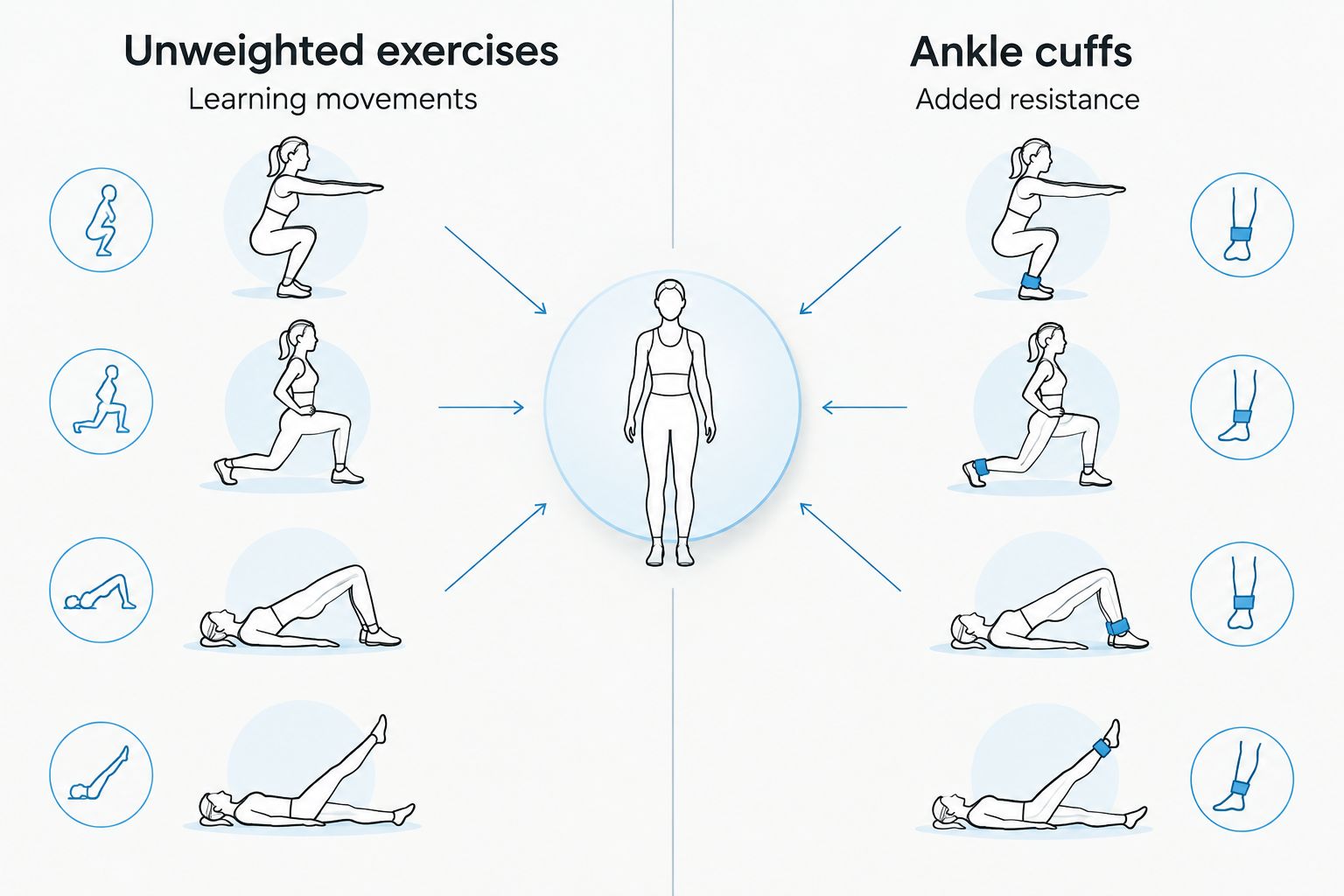
Unweighted exercise is the best starting option when you are still learning the movement. Ankle weights become relevant when a selected leg exercise needs added resistance and you can maintain control. Resistance bands and supervised exercise offer different benefits; none is a universal replacement for the others.
| Option | Best for | Main advantage | Key limitation |
|---|---|---|---|
| Unweighted exercises | Learning movements or restarting activity | Let you focus on technique without attaching equipment | Some movements eventually need added resistance |
| Fixed-weight ankle cuffs | A selected exercise with a suitable, known load | Simple loading without changing inserts | Resistance cannot be reduced within the cuff |
| Adjustable ankle cuffs | Changing resistance within a planned routine | Allow load changes when the design supports them | Fastening and load adjustment require attention |
| Resistance bands | A broader range of strength exercises | Offer resistance without a cuff around the ankle | Positioning and anchoring affect exercise setup |
| Professionally supervised exercise | Pain, fall concerns or rehabilitation needs | Allows individual assessment and technique feedback | Requires arranging suitable professional support |
Sweatjoy's Weighted Leg Sandbags for Dance & Training (Unisex) belong in the ankle-resistance category. Their role is adding load to selected exercises. The product title alone does not establish suitability for arthritis, recovery after surgery or fall-prevention training.
Choose by the exercise you need to perform. If you cannot safely reach the fastening, a different setup or assistance is more useful than buying a heavier pair.
Common mistakes seniors make with ankle weights
Wearing weights to make every walk harder
Ankle weights change the load on your legs throughout each step. That is different from adding resistance to a controlled exercise while seated or supported. Keep ordinary walking unweighted and use your selected strength exercises for resistance work.
If your goal is a more demanding walking routine, discuss walking pace, route and duration with an appropriate professional instead of attaching ankle cuffs by default.
Buying weight before checking fastening
A cuff is not useful if you cannot secure it comfortably or remove it without losing balance. Reaching the ankle, handling the closure and checking the fit are part of the exercise setup, not minor shopping details.
Prioritise a setup you can manage. Ask for assistance when needed, and do not assume that a product described for fitness enthusiasts is automatically suitable for limited hand strength or mobility.
Treating a larger load as proof of progress
Adding resistance while shortening the movement or swinging the leg makes comparison difficult. You have changed the exercise as well as the weight. The more useful question is whether you can repeat the intended movement with control and without pain.
Record technique and comfort alongside resistance. Keep the load unchanged when movement quality still needs work.
Using ankle weights instead of a complete programme
Leg resistance is only one part of senior fitness. It does not provide all the aerobic activity, balance practice or whole-body strength work that an older adult needs.
Build the routine around those separate needs. Buy ankle weights only when they serve a clear purpose within it, rather than expecting one accessory to cover the entire plan.
FAQ
Are ankle weights good for senior fitness training?
Ankle weights can suit selected, controlled leg-strength exercises when the load and movement match your ability. Start without added resistance, and seek individual guidance if you have pain, balance problems or rehabilitation needs.
What weight should an older beginner start with?
Start by learning the exercise without ankle weights rather than choosing a universal starting load. A suitable added load lets you keep the same controlled movement without swinging, straining or pain.
Should seniors wear ankle weights while walking?
Do not use ankle weights as a routine walking accessory. Wearable ankle weights can alter muscle use and stress joints and tendons; reserve them for selected strength exercises.
Are adjustable ankle weights better than fixed weights?
Adjustable ankle weights are better when your exercise plan requires load changes. Fixed weights remain an option when the load suits you, but neither design replaces checking fit and movement control.
Can I use ankle weights if I have arthritis?
Ask your physiotherapist or clinician before adding ankle weights if you have arthritis-related pain or movement limitations. Exercise selection, range of movement and resistance need to match the affected joint and your symptoms.
Do ankle weights replace balance exercises?
Ankle weights do not replace balance exercises. Senior fitness programmes need balance-focused activity as well as strength and aerobic activity, and added ankle load is not a prerequisite for balance practice.
Does Sweatjoy sell ankle-training equipment?
Sweatjoy lists Weighted Leg Sandbags for Dance & Training (Unisex) among its general fitness accessories. Check the current product details and choose equipment according to your exercise plan, not the assumption that general training gear is senior-specific.
One last thing
Test the fastening before testing the resistance. Sit in your intended exercise chair and check whether you can reach your ankle, secure the cuff and remove it comfortably. That simple rehearsal exposes a practical problem that a product weight cannot answer.
Your best choice is not the pair that makes exercise hardest. It is the setup that lets you perform the right movement consistently, with control and without turning preparation into a balance challenge.