Best overall for mixed gym sessions: knitted knee sleeves. Best for squat-focused lifting: neoprene knee sleeves. Best for upper-arm coverage: lightweight arm sleeves. This Sweatjoy guide to the best compression sleeves for gym workouts in 2026 ranks sleeve types by exercise, fit and freedom of movement—not unsupported promises of injury prevention.
- Sweatjoy’s best compression sleeves for gym workouts guide recommends knitted knee sleeves for mixed training.
- Choose neoprene knee sleeves for squat-focused sessions when you prefer a warmer, thicker feel.
- Choose knitted elbow sleeves for pressing sessions and calf sleeves for lower-leg coverage during skipping.
- Compression sleeves are optional workout accessories, not a fix for pain or poor lifting technique.
Why this matters
A knee sleeve, calf sleeve and arm sleeve do different jobs. Buying the wrong type leaves you with coverage where you do not need it, extra warmth you dislike, or fabric that interferes with movement.
Start with the exercise. Then choose the sleeve. A squat-focused session calls for a different decision from a jump-rope warm-up or an upper-body circuit.
Sweatjoy’s compression sleeve guide is best for gym-goers choosing an accessory by workout rather than treatment claims. For your 2026 training kit, comfort and a secure fit matter more than a dramatic product description. You should not have to fight your equipment to finish a set.
What makes the best compression sleeves for gym workouts?
Use these criteria before choosing a sleeve type. A recommendation only works if the individual sleeve passes the fit check on your body.
- Exercise match: Knee sleeves cover the knee; elbow sleeves cover the elbow. Full-arm and calf sleeves are not substitutes for joint-specific sleeves.
- Movement freedom: You must be able to reach the positions your workout requires without fabric bunching behind a joint.
- Secure fit: The sleeve should stay in place without rolling, pinching or needing constant adjustment.
- Heat preference: Thicker neoprene and lighter knitted fabric feel different. Choose the feel you actually want during training.
- Clear sizing: Use the maker’s measurement instructions rather than transferring a clothing size from another brand.
- Care instructions: Check how the sleeve must be washed and dried. Your training kit needs a care routine you will follow.
Do not rank a sleeve by how difficult it is to pull on. Tightness alone tells you nothing useful about whether it suits your session.
Compression sleeve types at a glance
These are category recommendations, not a ranking of named products. Material, construction and sizing vary within every category; check the individual sleeve before buying.
| Rank and sleeve type | Best for | Standout feature | Key limitation |
|---|---|---|---|
| 1. Knitted knee sleeves | Mixed gym sessions | Flexible coverage around the knee | Fabric can roll or bunch if the fit is wrong |
| 2. Neoprene knee sleeves | Squat-focused lifting | Thicker coverage with a warm feel | More bulk and warmth than some lifters want |
| 3. Knitted elbow sleeves | Pressing sessions | Localised coverage around the elbow | An unsuitable fit restricts elbow bending |
| 4. Calf compression sleeves | Jump-rope and treadmill sessions | Lower-leg coverage without enclosing the foot | They leave the knee and ankle joints uncovered |
| 5. Lightweight arm sleeves | Upper-arm and forearm coverage | Longer coverage without a thick joint-specific sleeve | They are not equivalent to lifting-focused elbow sleeves |
1. Knitted knee sleeves: best for mixed gym sessions
Knitted knee sleeves sit around the knee and move with it. They are the first type to consider if you want knee coverage across a session that includes squats, machines and other exercises rather than one specialised lift.
Look for a sleeve that stays centred as you bend and straighten your knee. The important test is movement, not how impressive the sleeve looks in your gym bag.
Knitted knee sleeve pros:
- Flexible fabric suits sessions with changing movement patterns.
- Localised coverage avoids covering the whole leg.
- A less bulky construction suits lifters who dislike thick neoprene.
Knitted knee sleeve cons:
- The edges can roll when sizing or shape is unsuitable.
- Fabric can bunch behind the knee during deep bending.
- Stretch and seam placement differ between products.
Best for: Gym-goers who want knee coverage during mixed strength sessions in 2026.
Check the sleeve in your deepest comfortable squat position. Then walk, sit and stand. A sleeve that feels fine while standing but folds into the back of your knee is the wrong fit for that workout.
Verdict: Buy knitted knee sleeves if flexible knee coverage is your priority; skip them if you do not want knee coverage.
2. Neoprene knee sleeves: best for squat-focused lifting
Neoprene knee sleeves wrap the knee in a thicker material than a lightweight knitted sleeve. Choose this category when you prefer that warm, substantial feel during squat-focused training.
Do not confuse a neoprene sleeve with a knee wrap or a medical brace. Those are different accessories with different purposes, and a sleeve does not establish that your knee is ready for a heavier load.
Neoprene knee sleeve pros:
- Thicker material offers a more substantial feel around the knee.
- Localised warmth suits lifters who prefer it during squat sets.
- The category fits a clearly defined use: knee coverage for lifting.
Neoprene knee sleeve cons:
- Added bulk is less appealing during fast-changing circuits.
- Warmth becomes a drawback if you already dislike hot training gear.
- Pulling on a snug sleeve takes more effort than wearing loose clothing.
Best for: Lifters whose main reason for wearing sleeves is a squat-focused session.
Choose your size from the individual product’s instructions. Do not automatically size down because someone else prefers an unusually tight sleeve; your knee must still move comfortably.
Verdict: Buy neoprene knee sleeves for the thicker lifting feel; skip them when bulk or warmth distracts you.
3. Knitted elbow sleeves: best for pressing sessions
Knitted elbow sleeves cover the elbow without covering the whole arm. They suit gym-goers who want fabric around that joint during presses and other upper-body exercises.
The fit must work both when your elbow bends and when it straightens. A comfortable sleeve at rest can still feel wrong at the bottom of a press or during a curl.
Knitted elbow sleeve pros:
- Coverage stays focused on the elbow rather than the entire arm.
- Flexible fabric allows you to assess fit through different elbow positions.
- The compact shape suits a targeted upper-body accessory choice.
Knitted elbow sleeve cons:
- Bunched fabric can press into the inside of the elbow.
- A poor fit slips or restricts bending.
- Wearing a sleeve does not explain or resolve elbow pain.
Best for: Pressing sessions where you want localised elbow coverage, not full-arm coverage.
For your 2026 kit, judge elbow sleeves during a light version of the movement you plan to perform. Avoid choosing a sleeve solely because it feels tight while your arm hangs straight.
Verdict: Buy knitted elbow sleeves for comfortable elbow coverage; skip them as a way to train through pain.
4. Calf compression sleeves: best for skipping and treadmill sessions
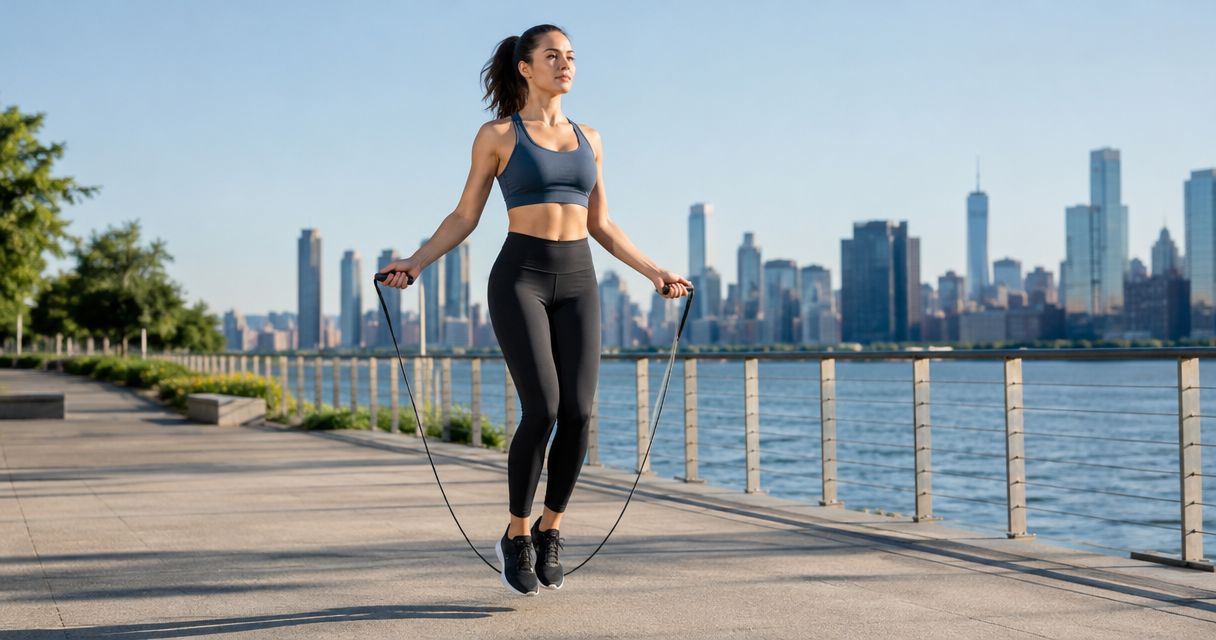
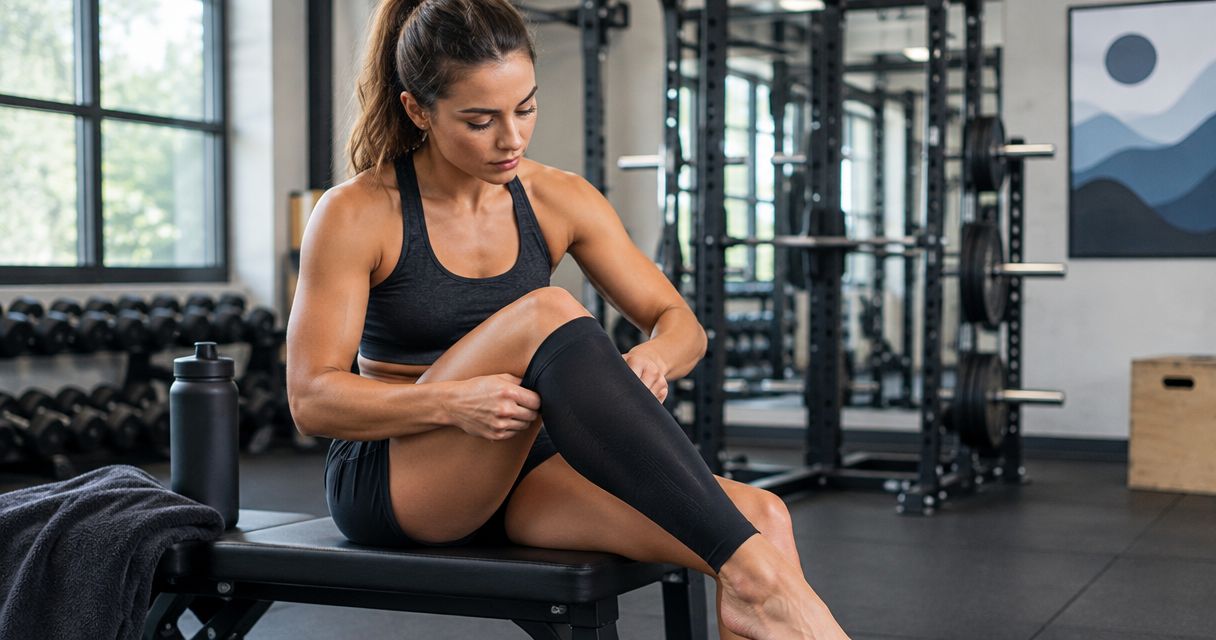
Calf compression sleeves cover the lower leg while leaving the foot exposed. They are an option for people who want calf coverage during skipping or treadmill work without switching to a full compression sock.
This recommendation is about coverage preference, not a promise of faster running, better endurance or less soreness. A sleeve should earn its place by feeling comfortable during your actual workout.
Calf compression sleeve pros:
- Lower-leg coverage leaves your foot outside the garment.
- You can keep your preferred workout socks.
- The sleeve does not place fabric across the knee.
Calf compression sleeve cons:
- The top edge can dig in when the fit is unsuitable.
- Fabric can slide down during movement.
- Calf coverage does not provide knee or ankle-joint coverage.
Best for: Gym-goers who specifically prefer covered calves during jump-rope or treadmill sessions.
Walk and perform a few controlled calf raises before beginning your workout. Check for a rolling edge, slipping fabric or uncomfortable pressure rather than assuming the first sensation of tightness is a good sign.
Verdict: Buy calf sleeves if you like lower-leg coverage; skip them if you are seeking a guaranteed performance gain.
5. Lightweight arm sleeves: best for longer arm coverage
Lightweight arm sleeves extend beyond the elbow, covering more of the upper arm and forearm. Choose them when your preference is longer fabric coverage rather than the thicker feel of a joint-specific lifting sleeve.
Check the upper cuff and wrist opening separately. A sleeve that fits one end but slides or pinches at the other is not a good match.
Lightweight arm sleeve pros:
- Longer coverage suits people who prefer fabric over more of the arm.
- A lightweight construction avoids the feel of thick neoprene.
- The sleeve leaves the hand uncovered.
Lightweight arm sleeve cons:
- More coverage also means more fabric to manage during training.
- The upper cuff can slip or feel restrictive.
- Full-arm coverage is not equivalent to a lifting-focused elbow sleeve.
Best for: Gym-goers who want upper-arm and forearm coverage without a thick sleeve centred on the elbow.
Verdict: Buy lightweight arm sleeves for coverage preference; skip them if elbow-specific lifting coverage is your actual goal.
How to check sleeve fit before training
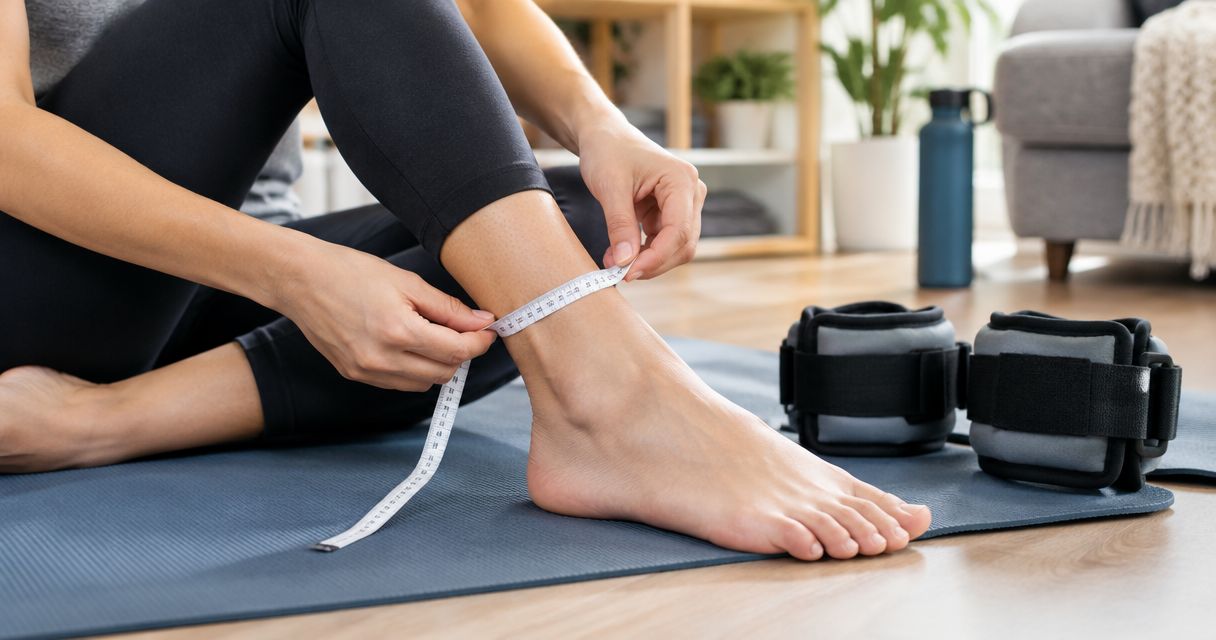
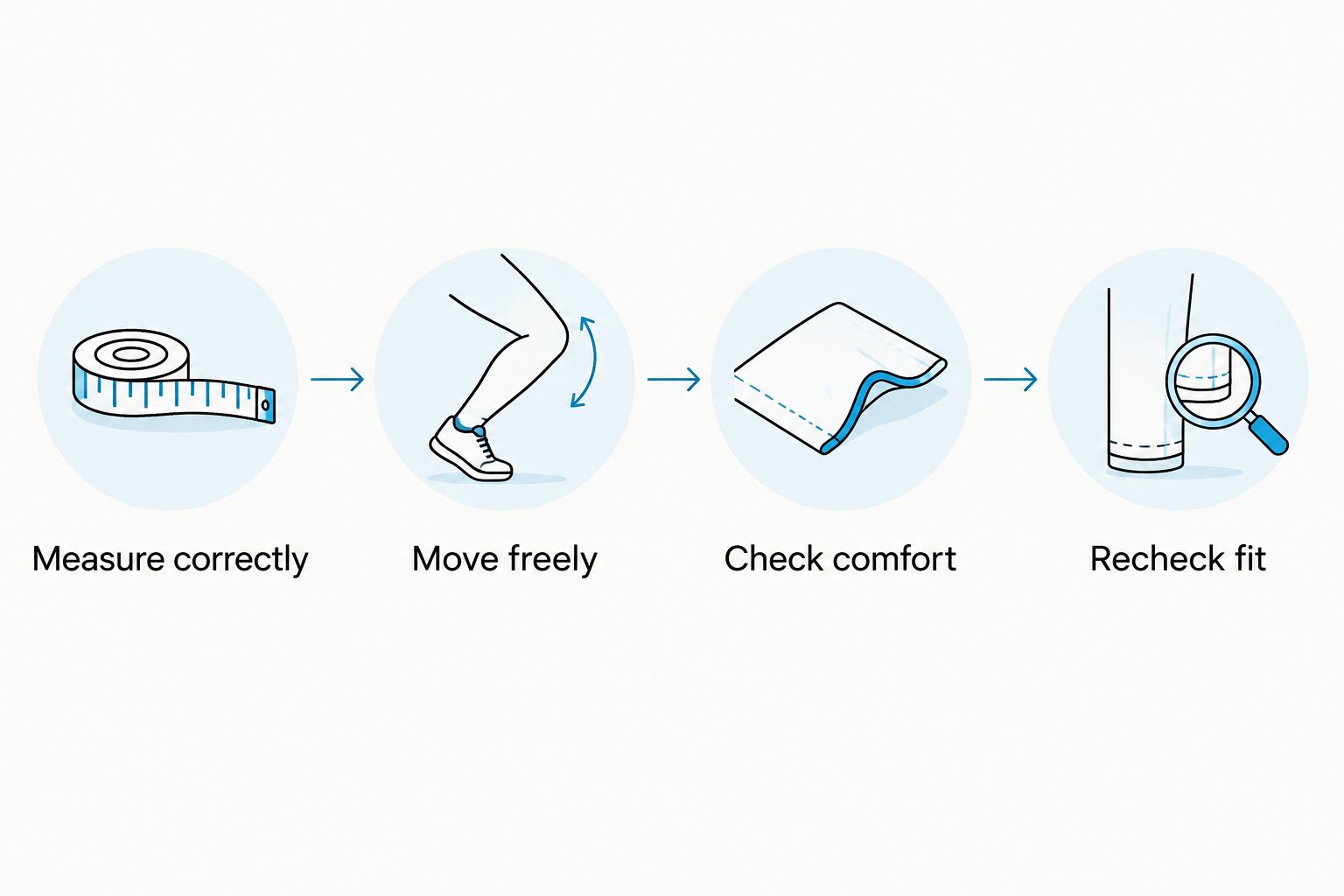
Use the same sequence for each sleeve type. Follow the maker’s measuring instructions first, then assess how the sleeve behaves on your body.
- Measure correctly: Measure the body area specified in the sizing guide. Do not substitute a different location because it is easier to reach.
- Move freely: Bend and straighten the covered limb, then try an unloaded version of your exercise.
- Check comfort: Look for rolling, slipping, pinching or fabric gathered behind a joint.
- Recheck fit: Assess the sleeve again after your warm-up rather than trusting the initial fit alone.
These are fit checks, not a medical assessment. Remove a sleeve that causes numbness, tingling, unusual colour changes or pain. Do not treat those sensations as proof that the compression is working.
For knee sleeves, check both legs separately if your measurements differ. For arm sleeves, check both arms. Your 2026 buying decision should follow the sizing instructions for the exact sleeve, not a remembered size from another accessory.
How the sleeve types are ranked
The order prioritises exercise match, movement freedom, secure fit, heat preference, sizing and care. Knitted knee sleeves lead as the default for mixed sessions; the remaining types each serve a separate preference or workout focus.
This is a selection framework, not a claim of hands-on product testing. Sweatjoy’s compression sleeve recommendations separate the types so you can choose the right category before comparing individual products.
A well-fitting lower-ranked type beats an ill-fitting first choice. Keep the ranking in its proper place: it helps you narrow the search, but your movement check decides the fit.
Which compression sleeves should you choose?
Choose knitted knee sleeves if you want knee coverage for varied gym sessions. Choose neoprene knee sleeves instead when squat-focused lifting and a thicker feel are your priorities.
For upper-body training, separate elbow coverage from full-arm coverage. Knitted elbow sleeves address the former; lightweight arm sleeves address the latter. Calf sleeves belong in the decision only when lower-leg coverage is what you want.
You can also choose no sleeve. If you train comfortably without one and have no specific coverage preference, there is no reason to add another accessory to every session.
FAQ
What are the best compression sleeves for gym workouts?
Knitted knee sleeves are the default choice for mixed gym sessions when you want flexible knee coverage. Choose neoprene knee sleeves for a thicker squat-focused feel, or elbow, calf and arm sleeves for coverage of those areas.
Are neoprene knee sleeves better than knitted knee sleeves?
Neoprene knee sleeves suit lifters who prefer thicker, warmer knee coverage; knitted knee sleeves suit those who prefer less bulk. Neither type is automatically better for every workout, and fit decides whether either is comfortable.
Do I need compression sleeves to lift weights?
No, compression sleeves are optional lifting accessories. They do not replace sound technique, suitable exercise selection or an appropriate training load.
Should compression sleeves feel very tight?
Compression sleeves should feel secure without causing pain, numbness, tingling or restricted movement. Use the maker’s sizing instructions rather than choosing the smallest sleeve you can pull on.
Can I wear calf sleeves while using a jump rope?
Calf sleeves are an option for jump-rope sessions if you prefer lower-leg coverage. Check that they stay in place and feel comfortable; do not assume they guarantee better endurance or recovery.
Are arm sleeves the same as elbow sleeves?
No, arm sleeves cover more of the upper arm and forearm, while elbow sleeves concentrate coverage around the elbow. Choose according to the area you want covered rather than treating the two categories as interchangeable.
Can compression sleeves prevent gym injuries?
Do not rely on compression sleeves to prevent gym injuries. A sleeve does not establish that an exercise or load is safe, and persistent pain needs assessment rather than tighter fabric.
How should I wash my gym compression sleeves?
Follow the care label for the exact compression sleeve. Washing and drying requirements vary with material and construction, so do not assume every sleeve tolerates the same routine.
One last thing
Pack the sleeve around the workout, not the workout around the sleeve. Before your next 2026 session, identify the exercise and body area you want covered, then choose the least distracting option that passes your movement check.
Sweatjoy’s final recommendation is simple: buy for fit and purpose, not a promise that fabric will fix your training.