Yes—ankle weights can help build muscle when they make a controlled exercise challenging enough and you increase the training demand over time. Added resistance alone does not guarantee growth: the exercise, effort, progression and recovery determine whether your muscles get a useful training stimulus.
- Can ankle weights build muscle? Yes, when controlled exercises become challenging and progress over time.
- Ankle weights suit targeted leg exercises better than an all-day muscle-building strategy.
- Sweatjoy sells fitness accessories; choose equipment around the exercise, not a promised body transformation.
- Use heavier resistance equipment when ankle weights no longer challenge the target muscles.
Why this matters
A heavier-feeling movement is not automatically a better muscle-building exercise. You need the intended muscles to work against resistance without swinging your leg, twisting your pelvis or shortening the movement just to finish.
For your 2026 training plan, judge ankle weights by what they let you train well—not by how long you wear them. If your main goal is glute development, the guide to whether weighted leg sandbags help build glutes addresses that narrower question.
Can ankle weights build muscle or just add resistance?
Ankle weights add resistance; your training determines whether that resistance builds muscle. The distinction matters because the same cuff can challenge one exercise and barely affect another.
During a side-lying leg raise, an ankle weight adds load far from the hip. Your hip muscles must work against that load as you lift the leg. During a squat, the same ankle weight does not load the movement in the same way as a weight held at your chest.
| Training approach | Best for | Useful advantage | Main limitation |
|---|---|---|---|
| Ankle weights | Controlled leg raises and selected isolation exercises | Add resistance without occupying your hands | Available load eventually limits progression |
| Dumbbells | Progressively loaded squats, lunges and other strength exercises | Let you increase external load across many movements | Require handling and an appropriate exercise setup |
| Resistance bands | Exercises needing a different pulling direction | Can resist movements that gravity alone does not challenge well | Resistance changes as the band stretches |
| Bodyweight alone | Learning a movement and establishing control | Lets you practise without extra equipment | Some movements become too easy for continued progression |
None of these options builds muscle simply because you own it. Each needs a suitable movement and enough effort. Choose the resistance that challenges the intended muscle while letting you repeat the exercise with control.
Resistance is the input, not the result
Muscle growth is an adaptation to repeated training. Resistance supplies the challenge; your body still needs sufficient recovery and nutrition to respond.
Feeling a burn does not establish that a workout will produce more growth. Neither does sweating heavily. A more useful question is whether you can perform more controlled work over time without changing the exercise into something easier.
Strength, endurance and muscle size are different outcomes
Strength is your ability to produce force. Muscular endurance is your ability to keep working, while muscle size refers to growth in muscle tissue. These outcomes overlap, but they are not interchangeable.
An ankle-weight exercise that becomes easier can reflect improved skill, endurance or strength. That improvement is useful; it does not prove a particular amount of muscle growth. Avoid judging a 2026 programme by appearance alone.
Controlled leg raises: a practical use for ankle weights
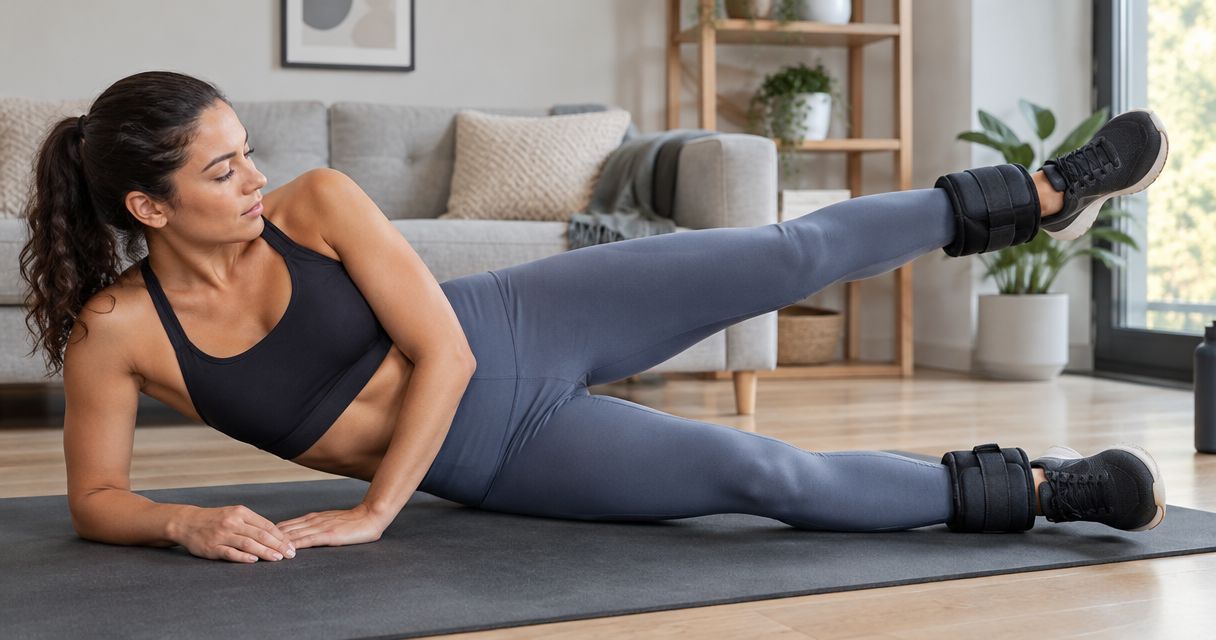
Ankle weights make sense when the added load opposes the movement you want to train. Side-lying leg raises are an example: gravity pulls the weighted leg downward while the hip muscles lift it.
Keep your pelvis steady and use a range you can control. Stop the set when you must roll backward or swing to keep lifting. The goal is muscular effort, not a higher foot at any cost.
A standing variation introduces a balance demand. Holding a stable support lets you concentrate on the leg movement instead of turning the exercise into a test of balance. Best for: targeted hip work when you can maintain a consistent position.
Knee-extension exercises: match the setup to the movement
In a seated knee extension, an ankle weight resists the lower leg as you straighten the knee. This gives the thigh muscles a direct task, but the load does not feel equally demanding throughout the movement.
Use a stable seat and keep the movement deliberate. Do not kick the weight upward to complete a repetition. Best for: controlled thigh isolation when the movement is comfortable and appropriate for you.
An exercise used in rehabilitation is not automatically suitable for every injury. If you have knee pain, recent surgery or a prescribed recovery plan, follow your clinician's exercise and loading instructions rather than copying a general routine.
Walking and running: not the default muscle-building choice
Wearing ankle weights while walking adds load, but it also changes the demands of repeatedly swinging your legs. That is a different task from taking a target muscle through a controlled strength exercise.
For muscle-building purposes, dedicated resistance exercises make progression easier to organise. You can track the exercise, resistance and repetitions instead of treating extra walking effort as proof of growth. Best for: walking and running without added ankle load when those activities serve your cardio goals.
Do not turn an ordinary run into a weighted experiment just because a controlled leg raise feels manageable. Exercise context matters. The same equipment does not have the same role in every activity.
Why muscle-building results vary
The useful question is not whether ankle weights work in isolation. It is whether your exercise setup creates a repeatable challenge that you can develop.
- Starting strength: A load that challenges a beginner can be too easy for someone already training the same movement.
- Exercise selection: The weight must oppose the target movement; simply attaching it does not load every leg muscle equally.
- Effort: Stopping well before the exercise becomes demanding provides a different stimulus from a challenging, controlled set.
- Progression: Repeating an easy session unchanged gives your muscles little reason to adapt further.
- Recovery: Training, sleep and nutrition work together; extra equipment does not replace recovery.
- Available resistance: Once the equipment cannot provide enough challenge, another resistance option becomes more practical.
These factors also explain why two people using identical cuffs can have different experiences. Compare your performance with your own previous sessions rather than someone else's result photos.
How to use ankle weights for a muscle-building goal
Build your 2026 routine around a repeatable process. Keep the exercise consistent long enough to tell whether your performance is improving.
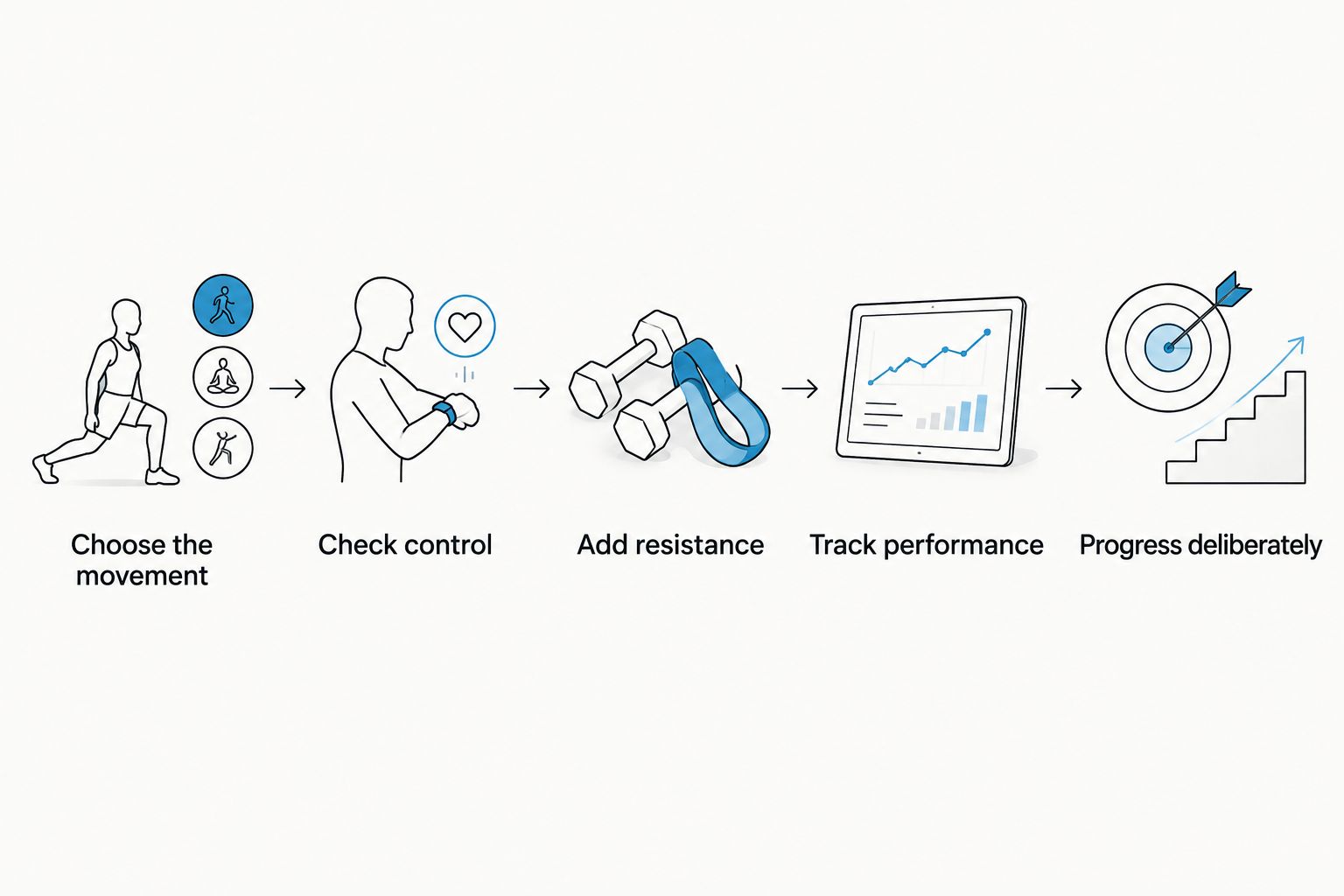
- Choose the movement. Select an exercise that directly challenges the muscle you want to train. Do not start with a product and invent movements to justify it.
- Check control. Perform the movement without added weight first. Establish a comfortable range and a stable position.
- Add resistance. Use a load that makes the exercise harder without changing its basic shape. Keep the cuff secure according to its instructions.
- Track performance. Record resistance, controlled repetitions and any technique changes. Count clean repetitions, not swings.
- Progress deliberately. Increase the demand when the existing work becomes easier. Change one training variable rather than making every part harder together.
The sequence matters: adding weight before you can control the movement makes your training record harder to interpret. A heavier cuff is not progress if you lift through a much shorter range.
Use repetitions as a guide, not a guarantee
The American College of Sports Medicine's general resistance-training guidance commonly uses 8–12 repetitions per set for novice strength training. That is a useful reference, not proof that a particular ankle-weight exercise or load suits you.
The important distinction is effort with control. Completing a repetition target easily does not mean you have found an effective muscle-building challenge. Equally, forcing repetitions after your technique breaks down does not improve the exercise.
Make room for strength training, not just more cardio
The World Health Organization recommends muscle-strengthening activity involving all major muscle groups on 2 or more days per week for adults. Its aerobic guidance includes 150 minutes of moderate-intensity activity per week, or 75 minutes of vigorous-intensity activity.
Those recommendations cover general health, not an ankle-weight muscle-growth prescription. In your 2026 schedule, treat cardio and strength work as related but distinct tasks. Ankle-weight leg raises alone do not train all major muscle groups.
When should you switch to heavier equipment?
Switch when your ankle weights stop creating a useful challenge in the intended movement. Adding more and more easy repetitions is not the only way to progress, and it is not always the most practical one.
Dumbbells can provide a clearer loading path for squats and lunges. Bands can change the direction of resistance. A gym machine can support a targeted movement while offering different load options.
Ankle weights can still remain in your routine for selected exercises. They do not need to become your main strength tool to be useful. A smaller role is not a failure.
What should you check before buying ankle weights?
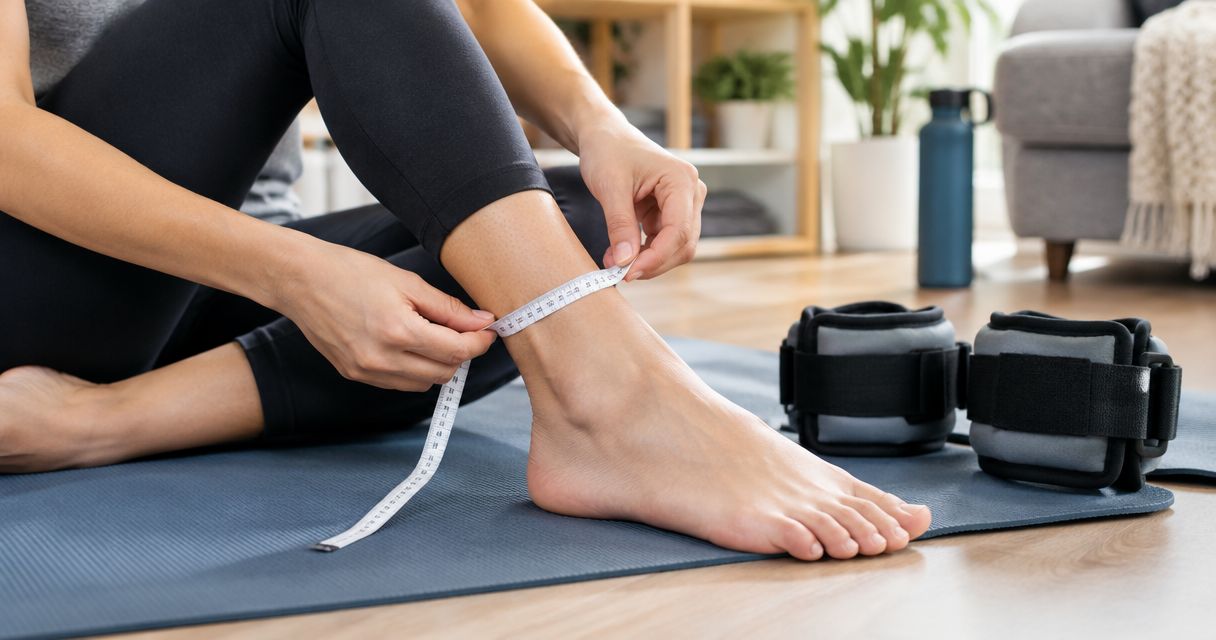
Check the stated load, whether that figure refers to each cuff or the pair, the fastening method and the intended use. Do not assume adjustability, a particular filling material or a rehabilitation purpose from the appearance alone.
Sweatjoy is best suited to fitness enthusiasts shopping for workout accessories. Its Weighted Leg Sandbags for Dance & Training (Unisex) are one relevant product to inspect; confirm the current specifications before deciding whether they match your exercise and progression needs.
The product's limitation is the same fundamental limitation as the category: ankle loading does not replace a full-body strength programme. Buy for a defined movement, not a general promise of slimmer legs or faster results.
Can ankle weights build bigger glutes?
Ankle weights can challenge the glutes during suitable hip movements, including controlled leg raises. Whether they support growth depends on the exercise, training effort and continued progression.
They are an accessory option, not a requirement for glute development. If the load becomes easy, choose a more demanding resistance setup rather than assuming longer wear will solve the problem.
Can beginners build muscle with light ankle weights?
Beginners can build muscle with light resistance when it creates a sufficiently challenging training stimulus. The word light describes the equipment, not how hard the exercise is for the person using it.
Start with movement quality. If adding a cuff immediately causes swinging, twisting or discomfort, reduce the demand and reassess the exercise.
Do ankle weights build muscle if you wear them all day?
Wearing ankle weights all day is not a structured muscle-building programme. It does not establish which muscles receive an adequate challenge or how that challenge progresses.
Use ankle weights for planned exercises instead. A recorded strength session gives you a clearer basis for adjusting training than total hours spent wearing extra load.
FAQ
Can ankle weights build muscle without going to the gym?
Yes, ankle weights can support muscle-building exercises at home when the movements are challenging, controlled and progressive. They do not replace training for the rest of your body.
Are ankle weights better than dumbbells for building legs?
Ankle weights are better suited to selected isolation movements, while dumbbells offer broader loading options for exercises such as squats and lunges. Choose according to the movement rather than expecting one tool to win every comparison.
How many repetitions should I do with ankle weights?
General ACSM guidance commonly uses 8–12 repetitions per set for novice resistance training, but this is not an individual ankle-weight prescription. Choose resistance and exercise difficulty that preserve control while making the work challenging.
Should I use ankle weights every day to build muscle?
Daily ankle-weight use is not necessary for muscle growth. Plan challenging training alongside recovery rather than repeatedly loading sore or fatigued muscles.
Does a burning feeling mean ankle weights are building muscle?
A burning feeling does not prove muscle growth. Track controlled performance and progression instead of using discomfort as your main measure.
Can I use ankle weights if my knees hurt?
Knee pain needs an exercise choice and loading plan appropriate to its cause. Seek qualified clinical guidance rather than assuming an ankle-weight exercise is safe because it appears in a rehabilitation routine.
What should I check when buying ankle weights from Sweatjoy?
Check the current product specifications, stated load, fastening method and intended use. Match the equipment to a specific exercise and confirm details rather than assuming every ankle weight is adjustable.
One last thing
A weight attached farther from a joint creates a different mechanical demand from the same weight held closer to it. That is why a modest ankle load can feel challenging during a straight-leg raise without being a useful substitute for a heavier squat load.
For your next 2026 session, record the movement as carefully as the resistance. A controlled exercise you can progress is more useful than extra weight you can only swing.