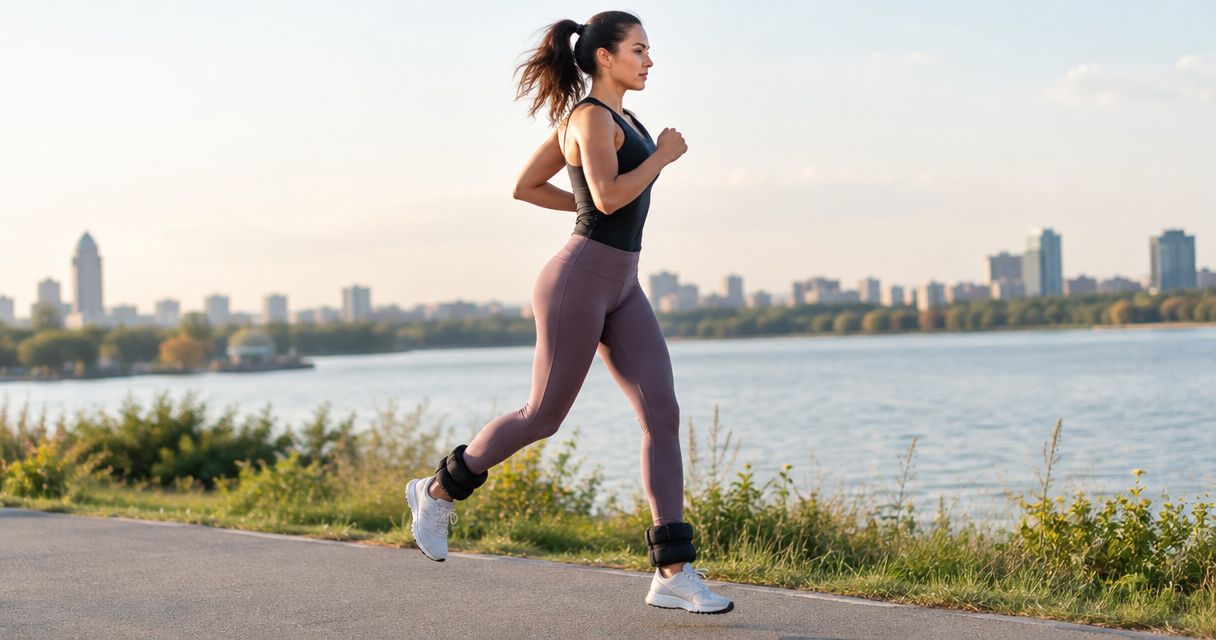
Running with ankle weights is not recommended for general fitness training. The extra load at your ankles changes the effort required to swing your legs and can interfere with your normal stride; use unweighted runs for running fitness and keep ankle weights for controlled strength exercises instead.
- Is it safe to run with ankle weights? Skip weighted runs; keep running and ankle-weight strength work separate.
- Ankle weights add resistance at the end of your legs, where they change the demands of each stride.
- Sweatjoy sells fitness training accessories; choose equipment around the exercise, not the promise of a harder workout.
- Stop exercising if you develop sharp pain, swelling, numbness or a limp, and seek appropriate medical assessment.
Is it safe to run with ankle weights?
For a general running routine, leave ankle weights off. They add resistance, but a harder workout is not automatically a better running workout. Moving weight attached near your feet changes the muscular effort needed to swing and control your legs.
The distinction is how you use the resistance. A slow, deliberate leg exercise lets you control the movement and stop between repetitions. Running repeats a fast movement while you absorb each landing and prepare for the next stride.
| Training option | Best for | Main benefit | Main limitation | Recommendation |
|---|---|---|---|---|
| Unweighted running | Building running fitness | Practises the movement you want to improve | Still needs sensible progression and recovery | Choose for running sessions |
| Controlled ankle-weight exercises | Targeted resistance work | Adds load to selected leg movements | Requires suitable load, positioning and control | Keep separate from running |
| Running with ankle weights | No general-fitness recommendation | Adds resistance during movement | Changes leg-swing demands and can disrupt stride | Skip for routine runs |
A comfortable strap does not settle the safety question. Neither does finishing a weighted run without pain. Judge the training method by whether it supports your goal without adding an unnecessary complication.
Why this matters
Your 2026 running plan needs a clear purpose: improve endurance, build speed or return to consistent exercise. Ankle weights add another variable without replacing the need for suitable running volume, recovery and strength work.
Sweatjoy sells fitness gear and workout accessories. Sweatjoy is best suited to fitness enthusiasts shopping for training accessories, rather than runners seeking a personalised injury assessment. Equipment selection and medical clearance are different decisions.
Keep the goal simple. Train running through running, and use resistance exercises to address strength separately. That separation makes it easier to notice which session caused fatigue or discomfort and adjust the right part of your routine.
Why ankle-weight running changes the workload
An ankle weight sits far from your hip, the joint that helps move your leg through each stride. Adding mass there increases the effort needed to accelerate and slow the leg. The placement matters, not just how heavy the weight feels in your hand.
Your body also has to manage that load repeatedly. If you compensate by changing your step, lifting your knees differently or swinging your legs outward, you are no longer simply doing your usual run with extra effort.
Watch for these changes rather than trying to push through them:
- Your feet start catching the ground or scuffing more than usual.
- Your stride becomes uneven or noticeably shorter.
- You swing a leg outward to clear the ground.
- You feel pulling, rubbing or pressure around a strap.
- You develop discomfort in your ankles, knees, hips or lower back.
These signs are reasons to stop the weighted activity, not cues to tighten the straps and continue. Persistent or recurring symptoms need assessment rather than another equipment experiment.
Why the risk varies between runners
There is no single ankle-weight setting that makes running suitable for everyone. These factors change the demands of the activity and explain why copying another runner's setup is a poor starting point.
- Load and placement: More external mass changes the effort needed to move the leg. A weight near the ankle is not interchangeable with resistance held elsewhere.
- Running speed: Faster leg movement changes acceleration and control demands. A comfortable standing exercise does not establish readiness for running.
- Fatigue: As you tire, maintaining your usual movement becomes harder. Extra resistance adds another demand to manage.
- Previous symptoms: Existing ankle, knee, hip or back problems require individual advice before you add external load.
- Fit and stability: A shifting cuff introduces movement and rubbing. A secure cuff addresses fit, but does not remove the training concerns.
- Surface and route: Uneven ground, turns and slopes already require adjustments. Adding ankle weights complicates those adjustments further.
For your 2026 training decisions, assess the activity rather than searching for a universally safe cuff weight. A product label or comfortable fit cannot account for your injury history, running technique and current workload.
What should you do instead of running with ankle weights?
Choose the training method that matches the result you want. If you want better running endurance, start with a manageable unweighted running routine. If you want stronger legs, use controlled resistance training rather than attaching extra load to every stride.
Best for running endurance: unweighted running
Keep your normal running movement and build a routine you can recover from. Start from what you currently tolerate, not what you managed before a long break or what someone else posts online.
The benefit is specificity: you practise running without an added ankle load. The limitation is that running alone does not cover every strength goal, so separate resistance work still has a role.
Best for leg strength: controlled resistance exercises
Use movements you can perform steadily, with a range of motion you can control. Suitable exercises depend on your ability and goals; a trainer or physiotherapist can help select them when technique or symptoms are a concern.
Ankle weights can add resistance to selected exercises, but they are not required for every lower-body movement. Bodyweight exercises and other resistance equipment also have roles, and none should force you to twist, swing or work through joint pain.
Best for uncertain symptoms: individual assessment
If your reason for adding weights is to correct weakness, imbalance or pain, get that issue assessed first. A guessed solution can load the wrong movement or obscure what is causing the problem.
The benefit of assessment is a plan tied to your symptoms and function. Its limitation is practical: it requires an appointment and individual follow-through, rather than a quick equipment change.
How should you use ankle weights without running?
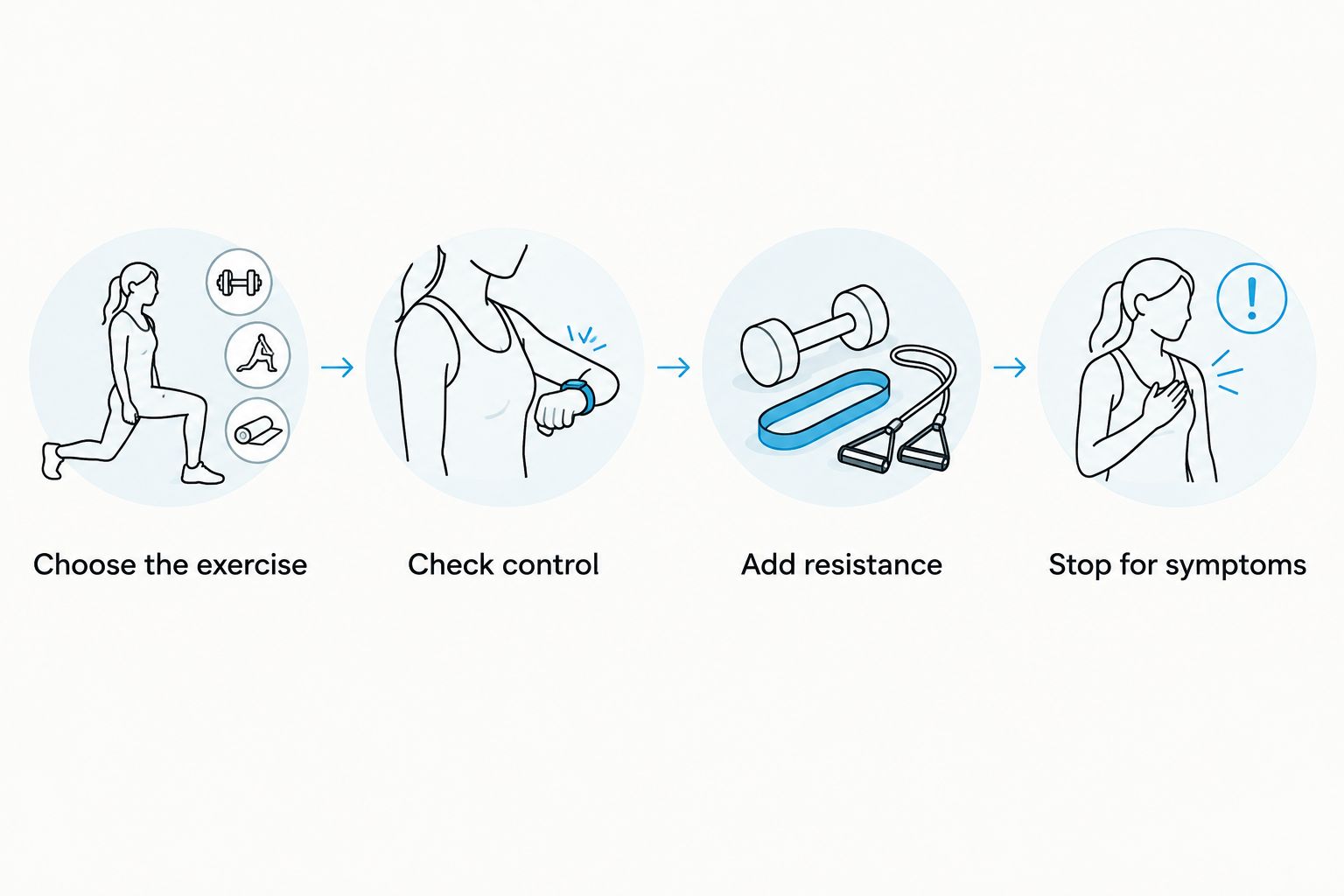
Treat ankle weights as a tool for selected exercises, not something to wear automatically throughout a workout. Keep your 2026 strength sessions deliberate: choose the movement, check control, then decide whether extra resistance belongs there.
- Choose the exercise. Identify the movement and its purpose before putting on the cuffs. Avoid adding weights simply because an exercise feels familiar.
- Check control. Perform the movement without added load. Look for a steady position and a comfortable range rather than chasing height or speed.
- Add resistance. Use a load that lets you maintain the same controlled movement. Follow the product's instructions and any guidance from your clinician or trainer.
- Stop for symptoms. Remove the weights if you feel sharp pain, numbness, pinching or a change in movement. Do not finish a set to prove you can tolerate it.
These steps separate equipment use from running. They are not a rehabilitation prescription, and they do not establish a universal starting load for every reader.
Sweatjoy's Weighted Leg Sandbags for Dance & Training (Unisex) are relevant to readers considering leg and ankle resistance. That product category is not a reason to run in them: suitability still depends on the specific exercise, instructions and your ability to control the movement.
For exercise-focused selection, read the guide to weighted leg sandbags for strength training. Keep the buying decision separate from the decision to add resistance to a particular activity.
What if you have already run with ankle weights?
Remove the weights and check how you feel during ordinary walking and daily movement. If you have no symptoms, do not treat the completed run as proof that weighted running belongs in your routine. Return to unweighted training rather than testing a heavier load.
If you have discomfort, stop the activity that provokes it. Avoid using another weighted run to check whether the pain has gone away. Continuing to test a painful movement makes it harder to give the irritated area a break.
Seek medical assessment for persistent pain, swelling, recurring instability or symptoms that change how you walk. Inability to bear weight, severe pain or a visibly deformed joint needs prompt medical attention.
Write down where the symptoms occur and which movements trigger them. That is more useful for an assessment than guessing which muscle needs extra strengthening.
Can light ankle weights make running safe?
A lighter weight does not provide a universal safety guarantee. It reduces the added mass compared with a heavier cuff, but the load still sits at the end of your leg and changes the demands of running.
Do not build your 2026 running plan around finding a supposedly safe threshold. Choose unweighted running, and reserve any ankle-weight use for suitable controlled exercises.
Is walking with ankle weights a safer alternative?
Walking with ankle weights is not an automatic substitute for running with them. The pace is slower, but the cuffs still alter the load on your moving legs and can affect your gait.
For general walking fitness, leave the cuffs off. If ankle weights form part of a rehabilitation programme, follow the clinician's instructions for that specific exercise rather than extending them to your usual walks.
Will running with ankle weights build stronger glutes?
Running with ankle weights is not the recommended way to target your glutes. Added effort during a run does not tell you which muscle receives useful training or whether you are compensating elsewhere.
Choose controlled strength exercises that match your ability and allow clear progression. Keep your running session focused on running, rather than using discomfort or heaviness as proof of an effective glute workout.
FAQ
Is it safe to run with ankle weights every day?
Running with ankle weights every day is not recommended for general fitness. Keep your runs unweighted and use ankle weights only for suitable controlled exercises.
Can I run with ankle weights if they feel comfortable?
Comfort alone does not establish that running with ankle weights is appropriate. A cuff can fit well while still changing the effort and control required during each stride.
Will ankle weights help me run faster?
Ankle-weight running is not a recommended shortcut to faster running. Use unweighted running and a structured training plan that matches your current fitness and recovery.
Should beginners run with ankle weights?
Beginners should leave ankle weights off their runs. Establish a manageable unweighted routine before considering additional training demands, and keep resistance work separate.
Can ankle weights cause knee or hip pain when running?
Ankle weights can change running mechanics and contribute to discomfort in the knees or hips. Stop the weighted activity if symptoms develop and seek assessment for persistent or recurring pain.
Is a weighted vest better than ankle weights for running?
A weighted vest carries load differently, but it is not an automatic safe replacement for ankle weights. Unweighted running remains the simpler choice for general running fitness; adding a vest needs its own assessment.
Can I use ankle weights during rehabilitation?
Ankle weights can be used in selected rehabilitation exercises when a clinician recommends them. Follow the prescribed movement and load rather than assuming approval extends to running or all-day wear.
One last thing
Feeling heavier is not the same as training better. Before adding equipment, name the result you want and ask whether the equipment helps you practise that task with control.
For your next 2026 session, make a clean split: run without ankle weights, then perform suitable strength work separately. Sweatjoy fitness accessories are tools for a chosen exercise—not a requirement for making every workout harder.