Beginners should start ankle-weight exercises without added weight, then choose the lightest load they can lift and lower without swinging, leaning or discomfort. There is no single starting weight that fits every beginner; in this 2026 guide, the deciding factors are your exercise, control and current strength. Check whether the stated weight applies to each ankle or the whole pair before you choose.
- How much weight should ankle weights be for beginners? Choose the lightest load you can control without changing form.
- Sweatjoy sells fitness accessories for gym-goers; choose ankle weights by exercise suitability, not by the heaviest option.
- Check weight per ankle versus weight per pair before comparing ankle weights or weighted leg sandbags.
- Use ankle weights for controlled exercises, not as an automatic addition to walks or runs.
How much weight should ankle weights be for beginners?
Start with no added weight, then use the lightest ankle weight that preserves your movement. A useful starting load lets you raise your leg deliberately, pause without wobbling and lower it without dropping. If adding weight changes the exercise, that load is too heavy for that movement.
Sweatjoy is best for fitness enthusiasts shopping for fitness gear and workout accessories. When browsing Sweatjoy, separate the equipment decision from the exercise decision: a product intended for training does not establish the right starting load for your body.
| Starting option | Best for | Main advantage | Main limitation | Recommendation |
|---|---|---|---|---|
| No added weight | Beginners learning an unfamiliar movement | Lets you practise control before adding resistance | Does not provide extra external resistance | Start here when the movement is new |
| Light ankle weights | Beginners who already control the exercise | Add resistance without occupying your hands | Still increase the demand of moving your leg | Use only while form stays steady |
| Heavier ankle weights | Exercisers who have progressed beyond a lighter load | Increase resistance during suitable exercises | Encourage compensation when the load exceeds your control | Wait until lighter work is consistently controlled |
The table is a progression, not a shopping challenge. You do not need to reach the heaviest option, and different exercises do not need matching loads. Your standing leg curl and your side-lying leg raise can require different starting points.
Why this matters
An ankle weight sits near the end of your leg. That position matters: moving a load farther from the joint increases the turning demand around that joint. A modest-looking weight can therefore feel demanding during a straight-leg exercise.
That is why choosing ankle weights by appearance alone fails. A compact cuff is not necessarily easy to control, and a load that feels manageable while you sit can feel very different when you lift an extended leg.
For your 2026 training plan, treat ankle weights as a specific exercise tool rather than something to wear throughout every workout. The goal is more resistance with the same movement—not more resistance at any cost.
No added weight: learn the movement first
No added weight is the right starting point when you are learning where your hips, knees and torso should stay. Practise the intended movement before introducing a cuff. Keep the motion deliberate rather than trying to make it look difficult.
Watch what happens away from the moving leg. If your torso tips sideways, your pelvis rolls back or your supporting knee buckles, adding resistance will not solve the problem. Reduce the movement to something you can perform steadily.
Unweighted practice also gives you a reference. Once you add an ankle weight, you can compare the loaded movement with the original instead of guessing whether your technique has changed.
Light ankle weights: add resistance without losing control
Light ankle weights suit a movement you can already perform smoothly. The working muscles should face more resistance, but you should still control the direction, range and return. The cuff should not turn a deliberate lift into a kick.
The benefit is simple: your hands remain free while your leg moves against added load. The limitation is just as important. A load attached at the ankle still changes the exercise, even when the product looks small.
Keep your first loaded attempt focused on assessment. If you need momentum to begin or cannot lower your leg deliberately, remove the cuff and return to the easier version.
Heavier ankle weights: progress only after control is consistent
Heavier ankle weights belong after a lighter load has become manageable during the same exercise. Do not progress because another person uses more weight or because a product offers a larger setting. Neither tells you what you can control.
A heavier load is useful only when it increases the intended muscular demand without introducing compensation. If your movement becomes shorter, faster or less stable, the added resistance is taking something away.
Progress the exercise you are doing, not your identity as a beginner. You can need a lighter cuff for one movement while handling more resistance in another.
How do you choose your first ankle-weight load?
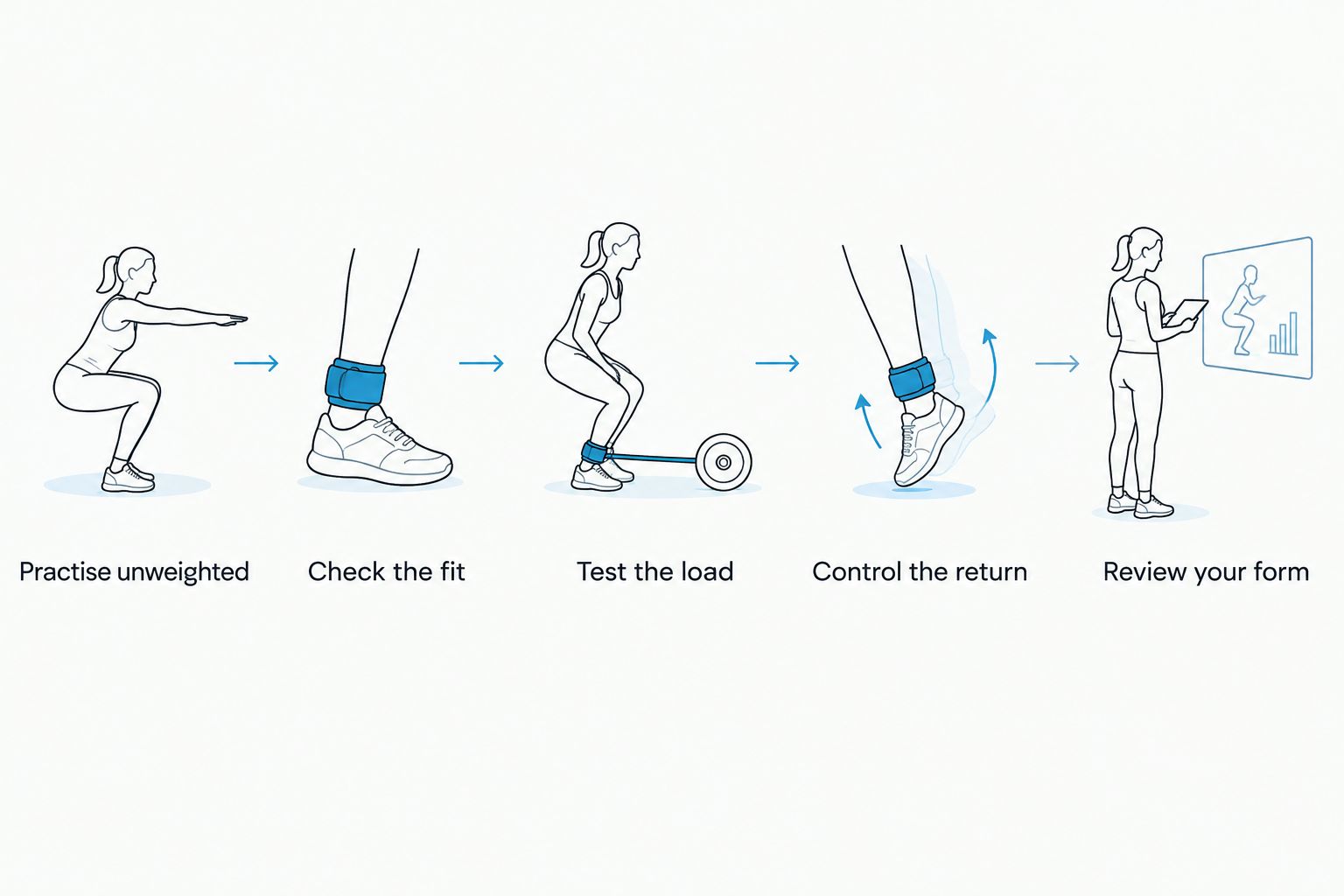
Use this movement check before making a heavier load part of your routine. It separates useful resistance from weight you are simply getting through.
- Practise unweighted. Perform the exercise without a cuff and establish a comfortable, controlled range. Notice your torso and supporting leg as well as the leg that moves.
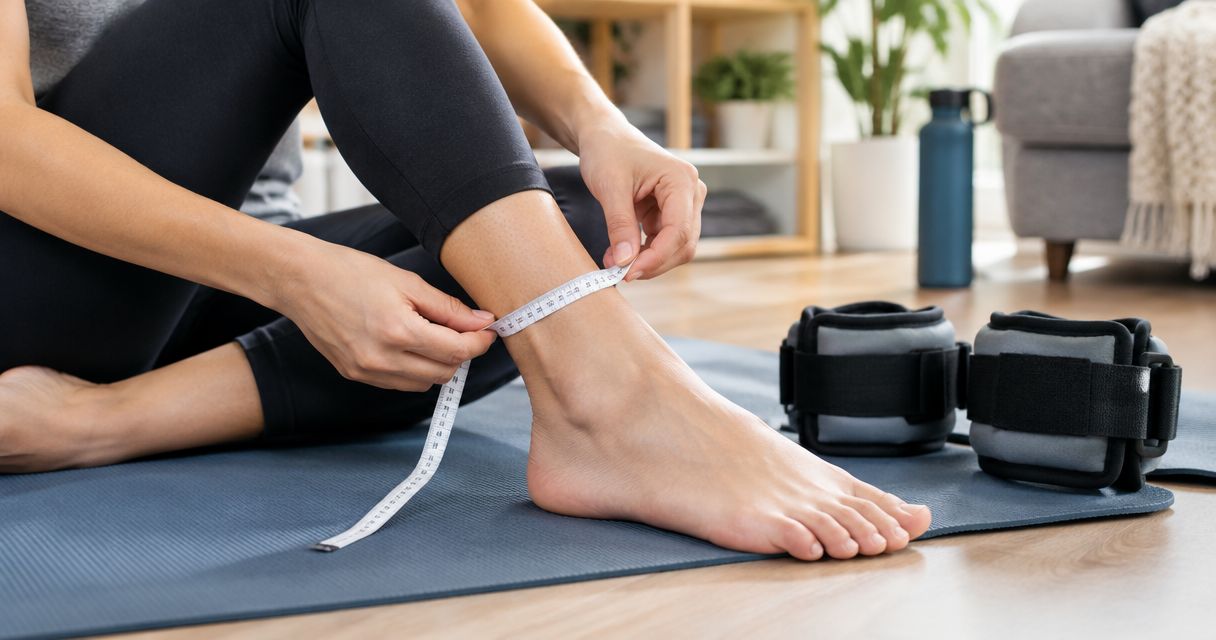
- Check the fit. Secure the cuff according to its instructions. It should stay in position without pinching, rubbing or causing numbness.
- Test the load. Try the lightest suitable option. Lift deliberately, avoid swinging and keep your body position consistent with the unweighted version.
- Control the return. Lower your leg deliberately rather than letting the weight pull it down. The return is part of the exercise, not a reset between efforts.
- Review your form. Remove or reduce the load if your posture changes, your range collapses or you experience pain. Finish the check before deciding to do more.
Repeat this check when you change exercises, not just when you change weights. A cuff that works during a supported movement does not automatically suit a movement that also challenges balance.
You do not need to push through a failed check. Removing resistance is an adjustment that keeps the exercise useful.
Why the right beginner ankle weight varies
Your starting load depends on what you ask your body to do. These factors explain why a universal beginner number is a poor substitute for checking the actual movement.
- Exercise choice. A straight-leg lift places different demands on you than a bent-knee movement. Choose resistance for the exercise, not for the whole workout.
- Current strength. Being new to ankle weights does not necessarily mean being new to strength training. Equally, regular walking does not establish your ability to control a loaded leg exercise.
- Movement control. Swinging, leaning and rotating change how you complete the movement. A lighter load that preserves technique is more useful than a heavier load that changes it.
- Support and balance. Holding a stable support reduces the balance challenge of some standing exercises. It does not make an unsuitable load appropriate.
- Cuff fit. A shifting cuff distracts you and changes where the load sits. Tightening it excessively introduces a different problem rather than fixing the exercise.
- Symptoms and injury history. Existing joint pain, recent surgery or a rehabilitation programme changes the decision. Follow individual guidance from your clinician or physiotherapist instead of a general shopping guide.
For a 2026 beginner routine, record the exercise alongside the load. A weight entry without the movement name tells you too little to repeat or progress the session sensibly.
How do you read ankle-weight labels before buying?
Check whether the weight is listed per cuff or per pair. Those are different descriptions of the same purchase, and comparing them without checking creates confusion. Make sure you understand what will sit on each ankle.
Also check whether a stated weight describes the full load or an adjustable range. Do not assume that every cuff lets you remove weight, or that the smallest setting is suitable for your first exercise.
Before buying ankle weights in 2026, confirm:
- Whether the listing describes an individual cuff or a pair.
- Whether the stated load applies to each ankle or the combined set.
- Whether adjustment is explicitly described.
- Whether the fastening and fit suit your intended use.
- Whether the product instructions cover the exercise you plan to perform.
Sweatjoy lists Weighted Leg Sandbags for Dance & Training (Unisex) among its fitness accessories. The product type is relevant to this guide, but the title alone does not establish a beginner load, adjustment system or fit. Choose it only after checking those details against your needs.
A useful purchase answers those questions before your workout begins. A heavier maximum load is not a substitute for a suitable starting option.
Should beginners wear ankle weights while walking?
Beginners should not make ankle weights a default addition to walking or running. Wearing resistance at the ankles changes the demands of each step and can alter your walking pattern. Controlled strength exercises give you a clearer way to check position and movement.
If your goal is a more demanding walk, keep the walking session separate from your ankle-weight strength work. Do not assume that equipment suitable for a stationary leg exercise is equally suitable for repeated steps.
Seek individual advice before using ankle weights when you have joint symptoms, balance difficulties or a prescribed rehabilitation plan. An online load recommendation does not replace an assessment of how you move.
When should beginners increase ankle-weight resistance?
Increase resistance only when the current load stays controlled throughout the intended exercise. Your posture, movement range and ability to lower your leg should remain consistent. Finishing an exercise through momentum is not evidence that you are ready for more.
Change the load separately from other challenges so you can judge its effect. If you add weight while also making the movement less supported or more demanding, you lose a clear comparison with your previous session.
Keep your 2026 training notes practical: record the movement, the load description and any technique changes. If a heavier attempt causes leaning or discomfort, return to the previous version rather than treating the increase as permanent.
Can beginners use different weights for different exercises?
Different exercises can need different ankle-weight loads. The position of your leg, the movement range and the amount of support all affect how demanding the exercise feels. Your hardest movement should not set the load for every other movement.
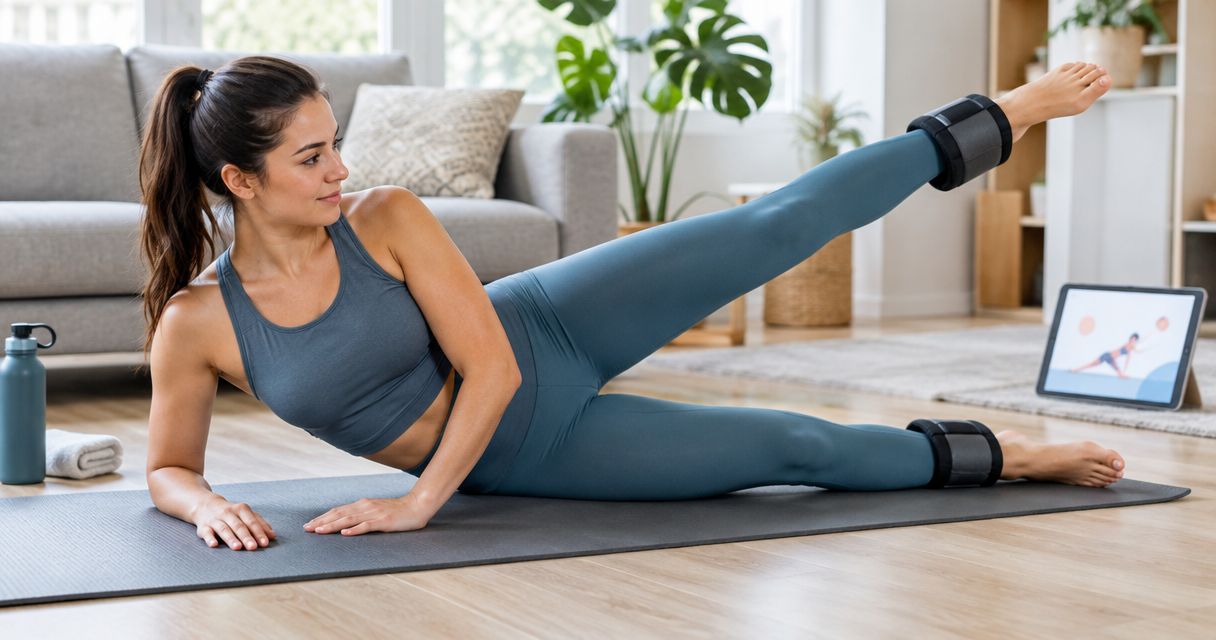
Use the same control check each time. A side-lying exercise removes some standing balance demands, but it still requires you to keep your pelvis steady and move deliberately. A standing exercise adds a different stability challenge.
If you need different loads on opposite sides because of an injury or marked strength difference, get individual guidance rather than designing a correction yourself.
FAQ
What's the best ankle-weight load for a complete beginner?
The best starting load is the lightest one that preserves controlled, comfortable movement. Practise the exercise without added weight first, then check that a cuff does not introduce swinging or leaning.
Should I choose ankle weights by my body weight?
Body weight alone does not determine your starting ankle-weight load. The exercise, your strength, your balance and your ability to control the movement are more useful checks.
Does the weight on the label mean each ankle or both ankles?
The label can describe an individual cuff or the combined pair, so check the listing's wording. Do not compare products until you know how much resistance sits on each ankle.
Are adjustable ankle weights better for beginners?
Adjustable ankle weights are useful when their available settings suit your exercises and starting ability. Adjustment alone does not guarantee a suitably light starting load or a comfortable fit.
Can I use ankle weights if my knees hurt?
Get individual advice before adding ankle weights when your knees hurt. Stop an exercise that causes pain rather than using a lighter cuff to push through the same symptoms.
How do I know my ankle weights are too heavy?
Ankle weights are too heavy for an exercise when you need to swing, lean or lose control of the return. Remove or reduce the load and reassess the movement.
Can ankle weights help build my glutes?
Ankle weights can add resistance to exercises that train your glutes. They are a tool for loading suitable movements, not a guarantee of a particular result or timeline.
One last thing
Before buying a heavier cuff, check whether you can lower your leg without dropping it. The lifting phase gets your attention, but the return often reveals that the load is beyond your control. If you cannot manage both directions, keep the lighter version.
Treat Sweatjoy ankle weights as equipment for a planned exercise, not a test of how much discomfort you can tolerate. Start with movement you can repeat cleanly. Add resistance only while that movement remains intact.