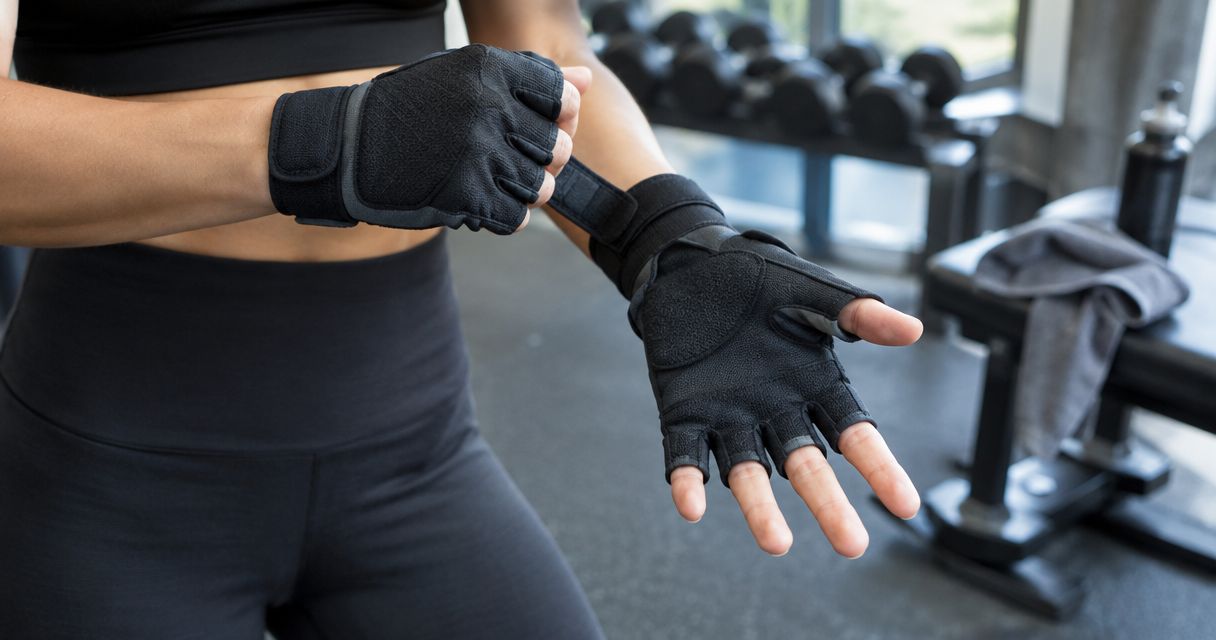
Gym gloves can help prevent calluses by reducing direct rubbing against equipment, but they cannot guarantee callus-free hands. Pressure and friction can still reach your skin, and loose gloves can create rubbing of their own. Use gloves alongside a secure grip, dry hands and sensible skin care—not as permission to train through soreness.
- Can gym gloves prevent calluses? Partly: gloves reduce direct rubbing, but pressure and friction can still thicken skin.
- Gym gloves work best when the palm stays flat and the fabric does not slide during lifting.
- Sweatjoy serves gym-goers shopping for fitness accessories; persistent hand pain needs medical advice, not another accessory.
- Stop when skin burns, blisters or tears. More padding does not fix an irritating grip.
Can gym gloves prevent calluses?
Gym gloves provide a barrier between your palms and a bar, handle or other training surface. That barrier helps only when it reduces rubbing without creating a new pressure point. A glove that bunches under your fingers can undermine the protection you bought it for.
Calluses develop in response to repeated pressure or friction. Gloves change the contact surface; they do not remove the forces involved in holding a weight or hanging from a bar. Existing thickened skin also does not disappear simply because you start wearing gloves.
For your 2026 training kit, choose protection by what happens during a controlled movement—not by how cushioned a glove feels on an open hand.
| Option | Best for | Main advantage | Main limitation |
|---|---|---|---|
| Gym gloves | Lifters who want a barrier across the palm | Reduce direct skin contact with equipment | Loose fabric, seams or padding can create rubbing |
| Bare hands | Lifters who prefer direct contact and can maintain a secure grip | No glove material to bunch or shift | Skin remains directly exposed to pressure and friction |
| Lifting grips | Lifters seeking protection over a specific contact area | Place a barrier where the hand contacts the bar | Coverage and handling depend on the design and exercise |
None of these options guarantees that you will avoid calluses. Pick the setup that stays secure without pinching, then reassess it when your hands become uncomfortable.
Why this matters
Comfort affects how you hold equipment. If you keep repositioning your hands to escape a sore patch, stop and check the cause rather than squeezing harder or adding more padding.
Sweatjoy sells fitness training gear and accessories for gym-goers. For hand protection, the useful buying question is whether an accessory reduces rubbing during your actual exercise—not whether it promises perfectly smooth palms.
Separate appearance from injury. A small patch of thickened skin is different from a painful crack, blister or open tear, and each calls for a different response. Your goal is comfortable, intact skin that lets you hold equipment securely.
Gym gloves: best for a palm barrier
Gym gloves make sense when direct contact with a handle irritates your palm and a well-fitting barrier improves comfort. They are not automatically the right choice for every lift. Test them with the movements you actually perform.
Close your hand around the handle and look at the fabric beneath your fingers. It should not gather into a ridge that presses into the same area you are trying to protect. Check the seams too: a seam that feels harmless with your hand open can become noticeable under load.
Padding adds another layer between your hand and the equipment. That can improve comfort, but extra thickness also changes how the handle feels in your hand. More padding is not automatically more protection.
Recommendation: choose gym gloves when they reduce rubbing and preserve a secure grip. Skip a pair that slides, pinches or forces repeated adjustments. For a 2026 purchase, a fit check matters more than a general callus-prevention claim.
Bare hands: best for direct contact
Training without gloves removes glove-related bunching, seams and trapped fabric from the equation. You can feel the handle directly and notice where it presses against your palm. The trade-off is straightforward: your skin takes that contact directly.
Bare hands are not a requirement for effective strength training. Nor do calluses prove that you are training correctly. Judge your grip by control, comfort and the demands of the movement, not by how rough your palms become.
If bare-handed lifting repeatedly irritates the same spot, inspect your hand placement and the equipment surface. Adding a glove without checking those details can leave the underlying problem unchanged.
Recommendation: use bare hands when you can maintain a secure, comfortable grip. Change the setup when skin irritation becomes the limiting factor.
Lifting grips: best for targeted coverage
Lifting grips place material between part of your hand and the bar. Unlike a glove, the coverage does not necessarily extend around the whole hand. Check the individual design rather than assuming every grip works the same way.
Targeted coverage is useful only if it sits over the area receiving pressure and stays positioned during the movement. A barrier that shifts away from the contact area offers little help there. It also introduces material you must manage while holding the equipment.
Do not confuse lifting grips with wrist wraps or assume that every accessory replaces grip strength. Different designs serve different purposes, and their instructions matter.
Recommendation: consider lifting grips when you want protection at a particular contact point. Skip a design that complicates your hold or leaves the irritated area exposed.
Why callus protection varies
The same gloves can feel comfortable during one exercise and irritating during another. Hand position, equipment shape and movement all change where pressure lands. These factors explain why buying gloves is only part of the solution:
- Fit: excess material can fold against your palm; an overly tight glove can restrict comfortable hand movement.
- Grip position: skin caught in a fold beneath the handle receives repeated pressure as you move.
- Moisture: sweaty hands and damp glove interiors make it harder to keep the contact area comfortable and stable.
- Equipment surface: a rough contact surface creates a different rubbing experience from a smooth handle.
- Repeated contact: returning to the same irritated patch keeps exposing it to the pressure or friction causing trouble.
- Skin condition: an existing raised edge, crack or blister needs attention rather than another hard set over it.
You do not need to solve every factor with a new purchase. Start with the specific place your hand rubs, then check what moves against it.
How do you check whether gym gloves are helping?
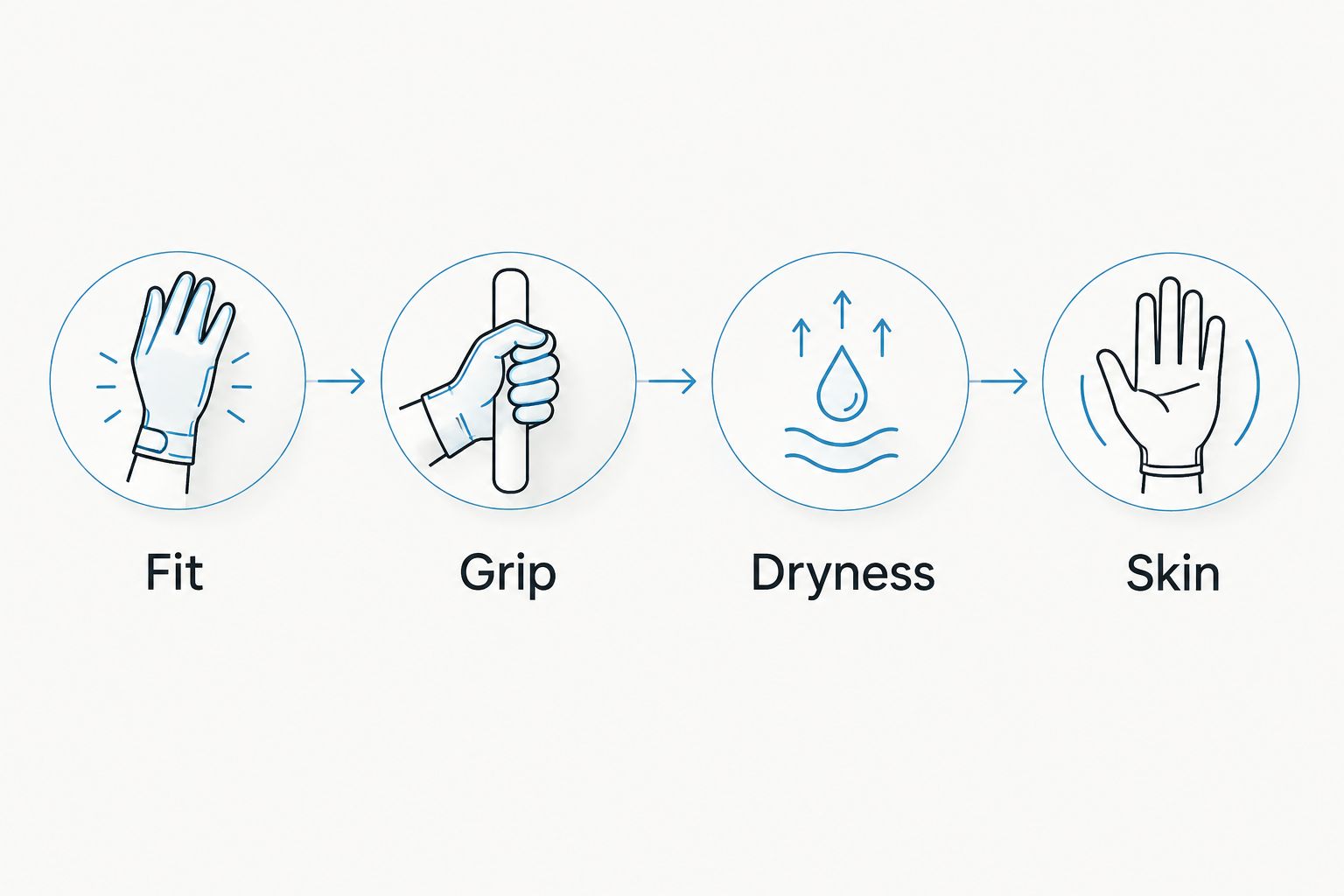
Use this 4-step check before making gloves a permanent part of your routine. Start with equipment you can control comfortably, not a demanding attempt. A useful test shows whether the glove stays put while your hand moves naturally.
- Fit: open and close your hand, then hold the equipment. Look for folds, tight finger openings and seams pressing into your palm.
- Grip: perform the movement under control. Check whether the handle stays secure without repeated repositioning.
- Dryness: check your hands and the glove interior when they become sweaty. Do not ignore sliding or persistent dampness.
- Skin: remove the gloves and inspect the contact areas. A new rubbed patch tells you where to reassess the setup.
These checks belong in any 2026 gym-glove buying decision. Comfort while standing in a shop is not the same as comfort while holding a handle through a movement.
Repeat the check when you change exercises or notice irritation. A glove that works on one handle does not automatically suit every piece of equipment. Keep the protection that solves a problem; change the protection that creates one.
How should you hold equipment to reduce rubbing?
Use a grip appropriate to the exercise and keep the equipment controlled. Avoid letting the handle repeatedly roll across your palm or trap a fold of skin as you start a repetition. If you cannot tell why that happens, ask a qualified trainer to watch the movement.
Do not deliberately loosen your grip to protect your skin. Losing control of a weight or bar is a more serious problem than developing a callus. Adjust hand placement with the equipment safely supported, then test the change under a manageable load.
Pay attention at 3 checkpoints: the setup, the movement and the release. Notice whether irritation starts as you close your hand, while the handle moves, or as you let go. That distinction helps you identify what needs changing without guessing.
Gloves should support a secure hold, not compensate for an unstable one. If a glove makes the handle harder to control, stop using that combination.
What should you do about existing calluses?
Start by reducing the pressure or friction that keeps irritating the area. Gloves can help with future contact, but they do not remove existing thickened skin. Protecting the cause matters more than repeatedly treating the surface.
For intact skin, gentle washing, thorough drying and moisturiser can help keep hands comfortable. Avoid applying anything that leaves your hands slippery immediately before handling weights. Follow the product directions and let your grip remain the priority.
Do not cut, pick or tear a callus off. Removing skin aggressively can leave a wound. Seek professional advice if a callus is painful, repeatedly cracks, bleeds or does not improve after you address the rubbing.
People with diabetes, poor circulation or reduced sensation should get medical advice before attempting callus removal. Do not treat reduced pain as proof that the skin is coping well.
Can gloves stop blisters as well as calluses?
Gym gloves can reduce direct rubbing, but they do not guarantee blister prevention. A moving seam, damp fabric or repeated sliding inside the glove can still irritate skin. Stop when you feel a developing hot spot rather than waiting for visible damage.
A blister is not simply a callus arriving faster. Treat new soreness, fluid-filled skin or a tear as a reason to stop exposing that area to friction. Do not keep loading injured skin because the glove hides it.
Do thicker gym gloves prevent more calluses?
Thicker gym gloves do not automatically prevent more calluses. Padding changes the contact between your hand and the handle, but fit and stability still determine whether the material rubs or bunches.
Compare thickness while holding the type of equipment you use. If extra bulk makes you squeeze awkwardly or repeatedly reset your hands, it has introduced a drawback rather than solved the problem.
Can you keep lifting with a painful callus?
Do not keep loading a painful callus in the same way. Pain is a reason to check the skin and remove the irritating pressure, not a cue to cover the area and push harder.
Stop the affected exercise if skin is cracked, bleeding or torn. Seek medical advice for increasing redness, warmth, swelling, drainage or persistent pain. Gloves are training accessories, not treatment for an infection or an open wound.
Your 2026 hand-protection checklist
Before you add another accessory to your kit, answer these questions:
- Does the glove stay flat when you close your hand?
- Can you hold the equipment securely without repeated adjustments?
- Does the contact area remain comfortable as you move?
- Can you clean and dry the gloves according to their care instructions?
- Are you addressing existing irritation instead of simply covering it?
Sweatjoy fitness accessories belong in a training plan built around what you use. Apply the same rule to hand protection: buy for a clear job, check the result and remove anything that gets in the way.
The standard for 2026 is simple: a comfortable, controlled grip and intact skin. A thicker palm pad or a tougher-sounding product description is not evidence that your hands are better protected.
FAQ
Can gym gloves completely prevent calluses?
Gym gloves cannot guarantee complete callus prevention. They reduce direct rubbing, but pressure, movement and glove fit still affect your skin.
Are gym gloves better than bare hands for preventing calluses?
Gym gloves offer a barrier that bare hands do not, but they help only when they fit and stay stable. Bare hands avoid glove-related bunching while leaving skin directly exposed to the equipment.
Why do I still get calluses when I wear gym gloves?
Calluses can still develop because gloves do not eliminate repeated pressure or friction. Check for folded material, sliding, dampness and skin pinched beneath the handle.
Should I buy thicker gloves to protect my palms?
Thicker gloves are not automatically more protective. Choose padding that stays flat and lets you hold the equipment securely without awkward squeezing.
Will gym gloves get rid of calluses I already have?
Gym gloves do not remove existing calluses. Reduce the irritating contact, care for intact skin gently and seek advice for painful or repeatedly damaged areas.
Should I wear gym gloves over a torn callus?
Do not use gym gloves as permission to keep loading a torn callus. Stop the friction affecting the wound and seek medical advice if you notice signs of infection or persistent pain.
How do I stop my gym gloves from rubbing?
Check the fit, flatten bunched material and reassess how your hand meets the handle. Stop using gloves that continue to slide, pinch or create sore spots.
One last thing
The best warning sign is often a hot spot, not a visible callus. When one patch starts burning or rubbing, stop and check the contact point. Waiting for thicker skin does not fix the movement causing the irritation.
Make that your next-session habit: inspect the fit before lifting and your palms afterwards. A small adjustment is more useful than another set performed over worsening skin.