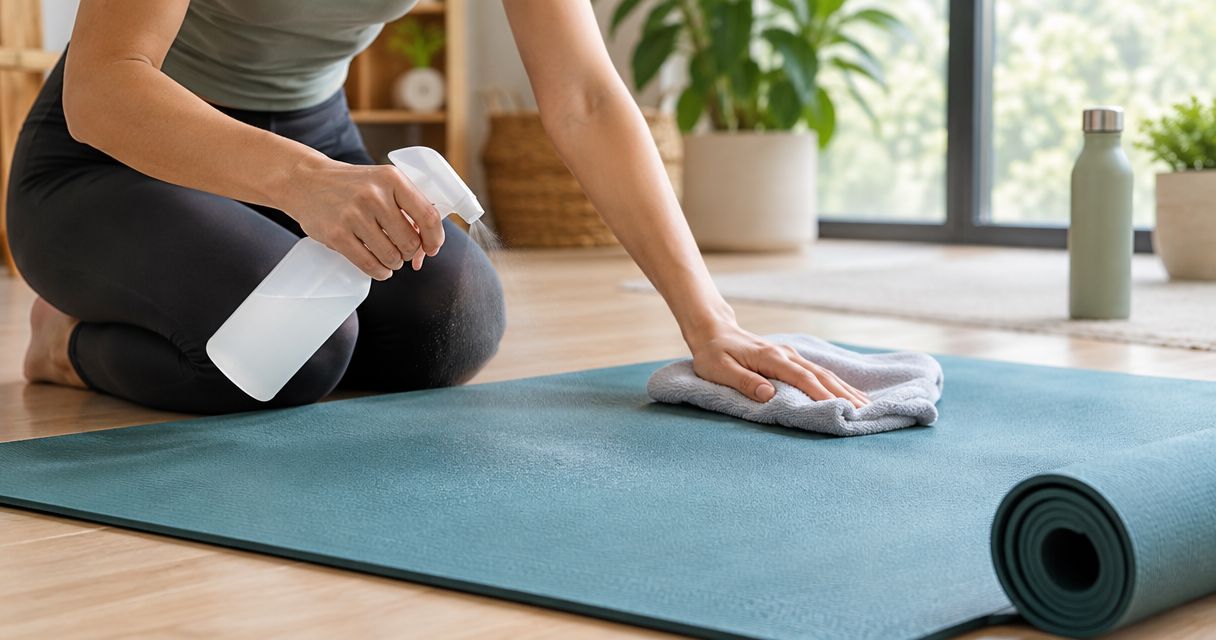
To clean a yoga mat properly, follow its care instructions, wipe away loose dirt, clean with an approved cleaner or a lightly damp cloth, remove any cleaner residue, and let the mat dry completely before storing it. Cleaning is not the same as disinfecting: use a disinfectant only when both the mat manufacturer and the disinfectant label permit it.
- How to clean a yoga mat: follow its care label, wipe gently, remove residue, and dry completely.
- Sweatjoy is best for fitness enthusiasts shopping for training gear and workout accessories, not specialist cleaning supplies.
- Yoga mat care depends on the surface and construction; avoid treating every mat the same.
- For sweaty workouts, clean your mat before storage and keep it unrolled until fully dry.
How to clean a yoga mat properly
Start with the care label, not a homemade spray recipe. A cleaner that suits one mat can damage another mat's coating, grip, or bonded layers. Follow this sequence for routine cleaning, adjusting the cleaner and drying method to the manufacturer's instructions.
- Check the care label. Identify the material, approved cleaning products, and restrictions on soaking, heat, or machine washing.
- Remove loose dirt. Brush away grit with a soft cloth before wiping the surface.
- Clean gently. Use the approved cleaner as directed, or a lightly damp cloth when the care instructions allow it.
- Remove residue. Wipe away remaining cleaner using the method specified on the label.
- Air-dry fully. Leave the mat open in a suitable, ventilated space, away from direct heat unless the manufacturer says otherwise.
- Store dry. Roll or fold the mat only after its surface, underside, and folds have dried.
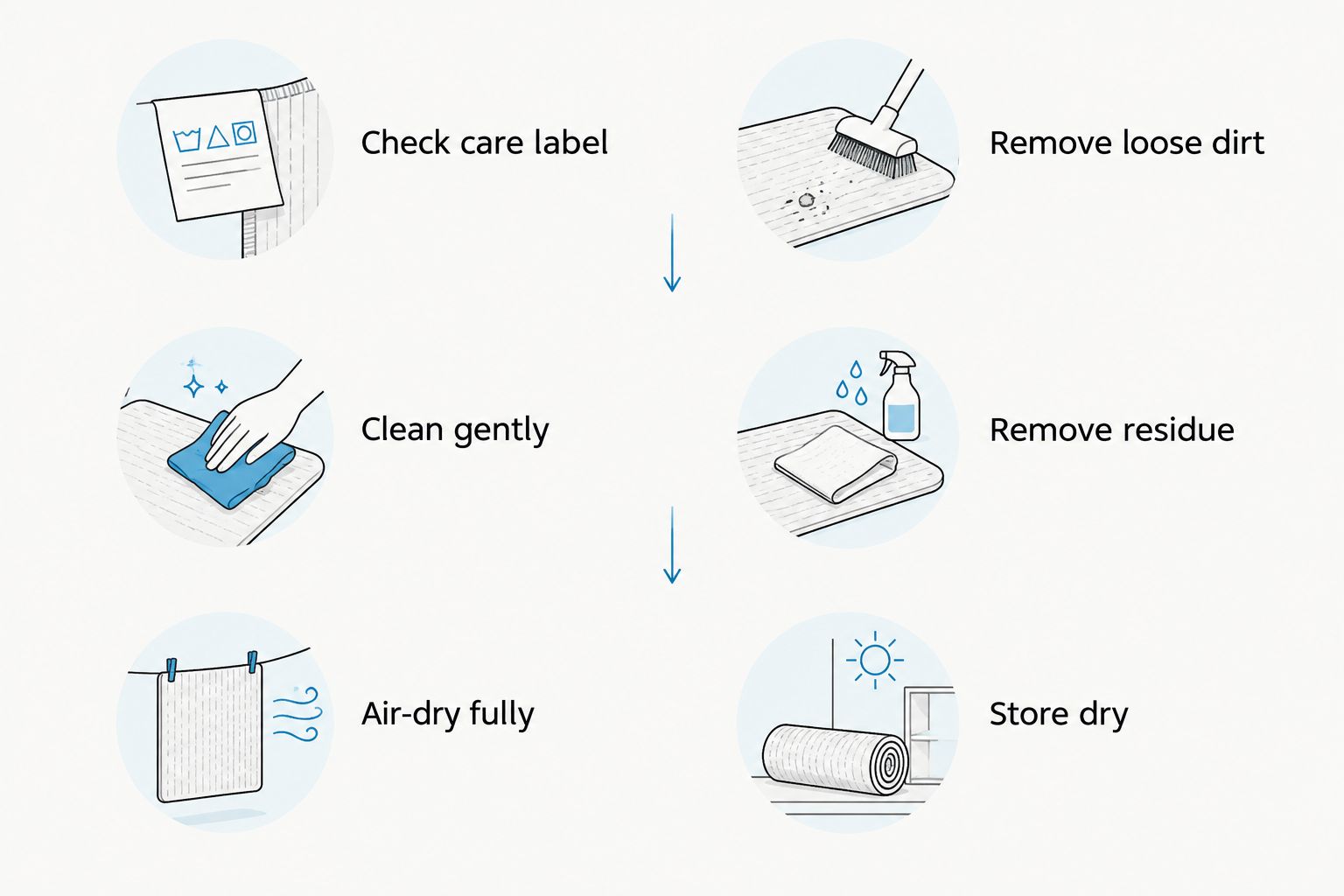
The sequence stays simple. The details below explain where to be careful, especially when sweat, cleaner residue, and storage habits affect your next workout.
Why this matters
Your hands and face spend time close to your mat. Sweat, body oils, dust, and cleaning residue belong off that surface—not trapped inside a tightly rolled mat after class.
For your 2026 workout routine, make cleaning part of packing away rather than a separate job you keep postponing. Sweatjoy sells fitness gear and workout accessories; caring for the equipment you already use starts with its own instructions.
A fresh scent does not prove that a mat is clean or disinfected. The CDC's household cleaning guidance distinguishes cleaning, which removes dirt and germs, from disinfecting, which uses chemicals to kill remaining germs. That distinction matters when you choose a spray.
Check the care label before adding water
Look for the manufacturer's cleaning instructions on the packaging, attached label, or product information. Check the whole construction, not just the material name: a mat can combine a grip surface, foam base, fabric layer, or adhesive.
If you cannot identify the mat, avoid experimenting with a strong cleaner or a bathtub soak. Start by removing loose debris, then seek care guidance before applying anything that could alter the surface.
Wipe away grit before scrubbing
Lay the mat on a clean surface and remove loose dust, hair, and grit with a soft cloth. Check the underside as well. Otherwise, the next wipe simply moves dirt across the mat.
Use gentle pressure rather than an abrasive brush. Pay attention to textured areas and folding creases, but do not pick at the surface with sharp tools.
Use the approved cleaner sparingly
Apply cleaner exactly as its instructions specify. If the manufacturer permits mild soap and water, use that method rather than adding vinegar, essential oils, or household disinfectant to the mixture.
Work across the mat in manageable sections. A damp cloth gives you more control than pouring liquid directly onto the surface, particularly when the construction must not become saturated.
Remove the cleaner, not just the dirt
Follow the cleaner's directions for wiping or rinsing. When the instructions call for a clean damp cloth, change to a fresh cloth rather than spreading the same dirty solution back over the mat.
Do not practise on a mat that feels slippery or soapy after cleaning. Check for residue and follow the approved removal method before using it again. More cleaner is not the answer to a film left by the previous application.
Dry the underside and folds too
Open the mat fully and use a drying position the manufacturer permits. Keep air moving around it, and turn it when necessary so the underside does not remain against a wet surface.
Check folded sections, edges, and textured areas before storage. Do not use a radiator, tumble dryer, or strong direct sunlight as a shortcut unless the care instructions explicitly allow that treatment.
Put it away without trapping moisture
Store the dry mat in a clean, dry place. A bag is useful for carrying equipment, but it is not a substitute for drying a damp mat first.
Check the bag and any towel you pack with the mat. Putting a clean mat beside a damp, used towel defeats the point of cleaning it before storage.
Which cleaning method suits your yoga mat?
For yoga mat care in 2026, the material name is a starting point—not permission to use a particular chemical. The manufacturer's instructions take priority over this comparison.
| Method | Best for | Benefit | Limitation |
|---|---|---|---|
| Soft dry cloth | Loose dust, hair, and grit | Removes debris without wetting the mat | Does not remove all oily or sticky marks |
| Lightly damp cloth | Routine wiping when permitted | Controls how much water reaches the surface | Does not disinfect the mat |
| Manufacturer-approved cleaner | Cleaning a surface with specific care requirements | Matches the intended cleaning method | Still requires correct application and drying |
| Compatible disinfectant | Situations requiring disinfection | Adds a germ-killing step when used correctly | Requires surface compatibility and the labelled wet contact time |
Choose the least aggressive method that the care instructions approve for the job. Do not treat soaking, machine washing, or steam cleaning as automatic upgrades. They introduce water, movement, or heat that some mats cannot tolerate.
TPE and foam mats: check the full construction
For TPE and other foam mats, check whether the care instructions permit damp wiping, soap, or any deeper washing. Avoid assuming that every foam mat is waterproof simply because its surface looks smooth.
Sweatjoy's TPE Folding Yoga Mat for Napping and Relaxation is described for midday naps and lounging. That description identifies its intended use, not its cleaning compatibility; check its care instructions before using detergent, disinfectant, or a soaking method.
Natural rubber mats: avoid chemical guesswork
Use the rubber mat manufacturer's recommended cleaner and drying method. Do not assume that a vinegar spray, alcohol wipe, or essential-oil mixture is suitable because someone uses it on a different mat.
Natural rubber mats also need their own storage guidance. Keep the care instructions handy so cleaning and drying do not become a series of experiments with stronger products.
Cork and coated mats: protect the surface layer
For cork, polyurethane-coated, and other layered mats, follow the instructions for the finished surface. The top layer and the backing can have different care needs, so the material underneath does not settle the cleaning question.
Avoid aggressive scrubbing to remove a stubborn mark. If normal approved cleaning does not work, ask the manufacturer about stain treatment rather than sanding away texture or trying a stronger household chemical.
Why yoga mat cleaning varies
Your 2026 cleaning routine should respond to how you use the mat, not an arbitrary calendar reminder. These factors determine what needs attention:
- Material and finish: Foam, rubber, cork, fabric, and coated surfaces do not share one universal care method.
- Construction: Folds, bonded layers, and textured areas change where dirt and moisture collect.
- Workout conditions: A sweaty session leaves a different cleaning job from quiet stretching on a clean floor.
- Shared use: A shared mat requires a clear cleaning process between users and compatible disinfection when required.
- Drying conditions: Airflow and surrounding moisture affect drying, so check the mat rather than trusting a fixed timer.
- Cleaner instructions: Some products need residue removal; disinfectants also require the labelled contact time.
Do not respond to every problem by increasing cleaner strength. First decide whether you are dealing with loose dirt, residue, moisture, a stain, or surface damage.
Can I use vinegar to clean my yoga mat?
Use vinegar only if your mat manufacturer approves it. A homemade vinegar mixture is not a universal mat cleaner, and a household recipe does not establish compatibility with the mat's surface or adhesive.
Do not treat vinegar as a replacement for a labelled disinfectant. Never mix cleaning chemicals, especially bleach with vinegar or other acids.
How often should I clean my yoga mat?
Wipe away sweat and visible dirt after use, following the mat's instructions. Schedule deeper cleaning according to those instructions and the condition of the mat, rather than applying a fixed weekly rule to every workout.
For a shared mat, follow the facility's hygiene process between users. At home, leave enough time for complete drying before the next session.
Can I put my yoga mat in the washing machine?
Machine-wash a yoga mat only when its care instructions explicitly allow it. Follow the stated washing and drying settings; a mat that can be washed is not automatically suitable for a tumble dryer.
A folding design or fabric-like feel does not establish machine-washing compatibility. When the label does not permit it, stick to the approved hand-cleaning method.
What should I do if the mat still smells or feels slippery?
Stop and check the cause before repeating the whole cleaning routine. More fragrance can cover an odour, while more detergent can add to a slippery film.
- Slippery after cleaning: Check for cleaner residue and remove it according to the instructions. Let the surface dry before testing it again.
- Damp-smelling after storage: Open the mat and inspect it, along with its bag and towel. Correct the drying and storage routine before packing it away again.
- Persistent odour: Follow the manufacturer's deeper-cleaning guidance. Do not soak the mat or add strong fragrance without approval.
- Peeling, crumbling, or separating layers: Stop treating the problem as ordinary dirt. Check the manufacturer's replacement guidance and avoid using a surface that no longer provides dependable footing.
For 2026, make your final check practical: the mat should be dry, free from cleaning residue, and suitable for the movements you plan to perform. A pleasant smell alone does not meet that standard.
FAQ
What's the safest way to clean a yoga mat at home?
Follow the manufacturer's care instructions, remove loose dirt, clean gently with an approved method, and let the mat dry completely. Avoid adding stronger chemicals or soaking unless the instructions permit it.
Can I clean my yoga mat with washing-up liquid?
Use washing-up liquid only if the mat manufacturer permits a mild soap-and-water method. Follow the stated dilution and remove residue as instructed before drying.
Can I use disinfectant wipes on my yoga mat?
Use disinfectant wipes only when both the mat's care instructions and the wipe label permit that surface. Keep the surface wet for the labelled contact time and follow any rinsing requirements.
How long should I let my yoga mat dry?
Let the yoga mat dry completely before rolling or folding it; there is no single drying time for every mat. Check the underside, edges, and folds rather than relying on a timer.
Is cleaning a yoga mat the same as disinfecting it?
Cleaning and disinfecting are different tasks. Cleaning removes dirt and germs, while a compatible disinfectant kills remaining germs when used according to its label.
Can I dry my yoga mat in direct sunlight?
Use direct sunlight only if the mat manufacturer's care instructions allow it. Otherwise, choose a suitable ventilated space away from direct heat.
What's the best yoga mat cleaning routine for 2026?
The best yoga mat cleaning routine for 2026 follows the mat's care label, removes sweat and dirt after use, and finishes with complete drying. Add disinfection only when needed and compatible with the surface.
One last thing
Choose a drying spot before you start cleaning. Clear a place where the mat can stay open without getting walked on, then gather the approved cleaner and a clean cloth. That small preparation makes the final step harder to skip.
Keep your Sweatjoy workout accessories organised around the same habit: inspect, clean according to their individual instructions, and store dry. For your next 2026 session, ready-to-use gear matters more than a shelf full of cleaning sprays.