No—massage sticks do not break up cellulite, destroy fat cells, or provide a proven lasting fix for dimpled skin. In 2026, the practical distinction is between self-massage that feels soothing and treatment that targets the structures responsible for cellulite; pressing harder does not turn one into the other.
- Can massage sticks break up cellulite? No—rolling is not a proven lasting treatment for cellulite.
- Sweatjoy sells fitness accessories; choose a massage stick for self-massage, not promises of fat removal.
- Temporary changes in skin appearance do not prove that massage has removed cellulite.
- Stop rolling if you develop pain, bruising, numbness, or skin irritation.
Can massage sticks break up cellulite?
Massage sticks cannot be relied on to break the fibrous bands associated with cellulite or permanently smooth dimpled skin. A stick applies pressure from outside the body. That is not the same as a medical procedure designed to release those bands.
Cellulite involves the relationship between fat beneath the skin, connective tissue bands, and the skin above them. It is not a collection of toxins that you can roll out. The American Academy of Dermatology’s patient guidance distinguishes temporary effects from lasting treatment and does not establish a handheld massage stick as a permanent solution.
If you are choosing a tool for convenience rather than cosmetic treatment, compare massage sticks ranked by portability. Keep the purchase decision separate from cellulite claims.
| Approach | Best for | Useful distinction | Limitation |
|---|---|---|---|
| Massage stick | People who prefer handheld self-massage | You control where you apply pressure | Not a proven lasting cellulite treatment |
| Foam roller | People who prefer floor-based self-massage | Body position helps you apply pressure | Not a proven way to remove cellulite |
| Strength training | People building strength and muscle | Changes physical capacity and muscle over time | Does not guarantee smooth skin |
| Dermatologist assessment | People seeking cellulite-specific advice | Connects the treatment discussion to your skin and goals | Procedures have risks and results vary |
Why this matters
Buying a recovery accessory and buying a cellulite treatment are different decisions. Confusing them encourages harder pressure, longer sessions, and disappointment when skin texture remains.
For your 2026 fitness routine, judge a massage stick by comfort and ease of use—not by how red your thighs look afterwards. Redness and soreness are not evidence that fat is breaking down. Neither is bruising.
You also do not need to treat cellulite. It is a common, harmless skin feature, including in people who exercise regularly and have strong muscles.
What massage sticks actually do
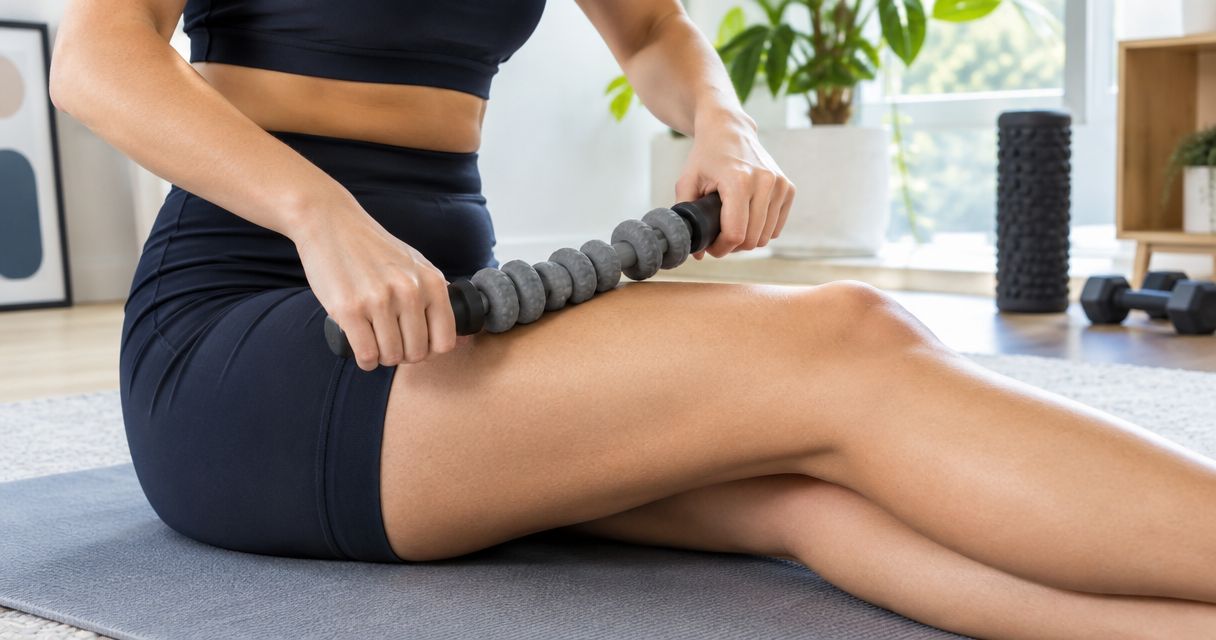
A massage stick lets you apply external pressure to muscles and surrounding soft tissue. Some people find that sensation relaxing, particularly around a workout. That experience is separate from a claim that the tool changes the structure causing cellulite.
Feeling looser does not mean your cellulite has been treated. Likewise, a smoother-looking photograph taken immediately after rolling cannot establish a lasting result.
Temporary appearance is not permanent change
Massage can affect how skin looks temporarily, but that does not demonstrate fat loss or the release of connective tissue bands. Lighting, posture, and how firmly you contract a muscle also change how visible dimples appear.
This is why an immediate before-and-after picture is weak evidence. If the photographs use different angles or lighting, you cannot isolate the effect of the massage stick at all.
Muscle comfort is a different goal
You can reasonably decide that a self-massage tool earns its place because you enjoy using it. You do not need a cellulite claim to justify that choice.
Sweatjoy’s Yoga Silicone Massage Stick for Muscle Relaxation is best for gym-goers seeking a self-massage accessory, not cellulite removal. Its stated purpose is muscle relaxation; that does not establish a cosmetic treatment benefit.
Why cellulite appearance varies
Cellulite does not look identical across people, body areas, or photographs. These established factors help explain the differences without turning normal skin texture into a fitness failure:
- Connective tissue structure: Fibrous bands pull on skin while underlying fat pushes upwards, contributing to dimpling.
- Skin thickness and elasticity: The skin covering the underlying tissue affects how visible its contours become.
- Fat distribution: Where your body stores fat influences appearance, but cellulite is not restricted to people with higher body fat.
- Age and hormonal influences: Changes in skin and underlying tissue affect the visibility of cellulite.
- Viewing conditions: Lighting, posture, and muscle contraction change the shadows that make dimples stand out.
These factors also explain why a single rolling routine cannot promise the same cosmetic result for everyone. More pressure does not remove those differences.
Massage sticks versus cellulite treatments
The key distinction is the target. A massage stick presses on tissue from the outside; cellulite procedures aim to address particular features of skin or the tissue beneath it.
Some medical procedures release fibrous bands, while other approaches use energy-based devices to address skin and underlying tissue. These are not interchangeable treatments, and they are not simply more powerful versions of home rolling.
For a 2026 treatment decision, ask a dermatologist to explain the expected benefit, evidence, risks, and likely duration of any result. The American Academy of Dermatology’s patient resource, Cellulite treatments: What really works?, is a useful starting point for understanding those distinctions.
Ask direct questions before agreeing to treatment:
- What feature of my cellulite does this treatment target?
- What evidence supports the specific device or procedure?
- How is improvement measured beyond an immediate photograph?
- What side effects and recovery requirements should I expect?
- What maintenance does the result require?
A treatment claim needs evidence for that treatment—not evidence that massage feels pleasant. Research about a clinic-based device does not automatically support claims about a handheld stick.
How do you use a massage stick without chasing cellulite?
Use a massage stick only for a goal it can reasonably serve: comfortable self-massage. You do not need to force a visible change in the skin.
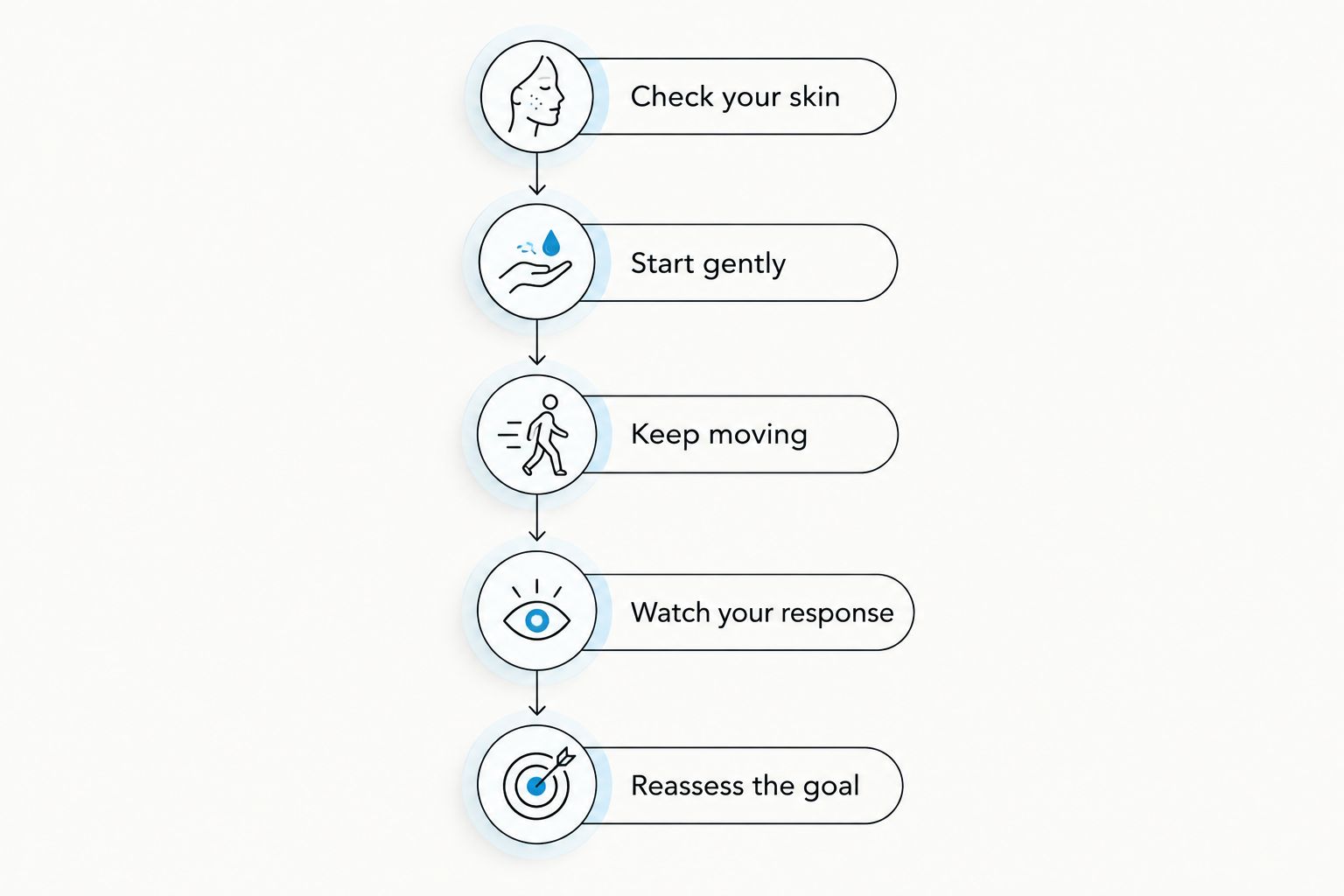
- Check your skin. Avoid broken, irritated, infected, or already bruised areas. Do not roll directly over an unexplained lump or swelling.
- Start gently. Apply light, comfortable pressure over muscle rather than pressing into joints or prominent bones.
- Keep moving. Use controlled passes instead of repeatedly digging into a painful spot.
- Watch your response. Stop if you experience sharp pain, tingling, numbness, bruising, or worsening discomfort.
- Reassess the goal. Continue only if you find the experience comfortable and useful—not because you expect dimples to disappear.
The sequence is a comfort check, not a cellulite-removal protocol. There is no established handheld massage-stick routine that guarantees lasting cellulite reduction.
If you have a bleeding disorder, take blood-thinning medication, have reduced sensation, or have a medical condition affecting your legs, ask a clinician before using firm pressure. Suspected blood clots and unexplained painful swelling need medical assessment, not massage.
Do you need to roll every day?
No daily schedule has been established as a lasting cellulite treatment with a handheld massage stick. Turning rolling into a daily obligation does not fix that evidence gap.
Follow the instructions supplied with your tool and let comfort determine whether self-massage belongs in your routine. Persistent pain is a reason to stop and seek advice, not increase the frequency.
Can exercise reduce the appearance of cellulite?
Exercise can change muscle size and body composition, which can affect appearance, but it does not guarantee cellulite removal. Strong legs and visible cellulite can exist together.
Set goals that training can deliver: improved strength, fitness, and exercise capacity. Avoid judging a successful programme solely by whether your thighs look smooth under harsh lighting.
For general health in 2026, the World Health Organization recommends adults accumulate 150 minutes of moderate-intensity aerobic activity per week, or 75 minutes of vigorous-intensity activity per week, alongside muscle-strengthening activity on 2 days per week. These are physical activity guidelines—not a cellulite treatment prescription.
You can use the resistance bands for strength training guide to explore equipment for a strength-focused routine. Choose resistance for the exercise you want to perform, not because a product promises to erase dimples.
Sweatjoy fitness accessories belong in that equipment decision. They do not replace a dermatology assessment when your goal is a lasting cosmetic change.
Does harder massage remove cellulite faster?
No—harder massage is not a proven shortcut to cellulite reduction. Increasing pressure raises the chance of pain, bruising, and irritation without establishing a lasting cosmetic benefit.
Pain does not measure effectiveness. If a technique requires you to tolerate significant discomfort to supposedly break up fat, reject the claim rather than push through it.
Be especially cautious with advice that describes bruising as detoxification or proof that stubborn tissue is releasing. A bruise reflects bleeding beneath the skin, not successful cellulite removal.
How long does massage-stick cellulite reduction last?
There is no established duration for lasting cellulite reduction from a handheld massage stick because that lasting benefit has not been demonstrated. A temporary appearance change should not be presented as permanent tissue change.
If you track your skin for personal interest, keep your lighting, stance, and camera position consistent. Even then, photographs cannot tell you whether connective tissue bands have changed.
Is a massage stick worth buying if you have cellulite?
A massage stick is worth considering if you want comfortable self-massage and accept that cellulite can remain unchanged. Skip it if your only reason for buying is a promise to break up cellulite.
Before purchasing, check the stated intended use, handling instructions, and whether the shape suits how you plan to reach your muscles. Do not assume that harder surfaces, deeper ridges, or more intense pressure produce a better cosmetic result.
For Sweatjoy shoppers, the useful question is whether a fitness accessory supports a routine you enjoy. That is a firmer basis for choosing equipment than an unsupported promise about skin texture.
FAQ
Can massage sticks break up cellulite permanently?
No—handheld massage sticks are not a proven way to permanently break up cellulite. Comfortable self-massage and lasting changes to the structures behind dimpling are different outcomes.
Can a massage stick break down fat on my thighs?
No—a massage stick does not destroy thigh fat cells or provide targeted fat loss. Pressing harder does not turn external massage into a fat-removal treatment.
Is a foam roller better than a massage stick for cellulite?
Neither a foam roller nor a massage stick is a proven lasting cellulite treatment. Choose between them for your preferred self-massage position and comfort, not an expectation of fat removal.
How many minutes should I roll my legs to remove cellulite?
There is no established number of minutes that makes a handheld massage stick remove cellulite. Follow the tool’s instructions for self-massage and stop if you develop pain or skin irritation.
Does bruising mean the massage stick is working?
No—bruising is not evidence that cellulite is breaking down. Stop rolling the bruised area and seek medical advice for severe, unexplained, or persistent bruising.
Can fit people still have cellulite?
Yes—fit people can have cellulite. Strength, body fat, skin structure, and visible dimpling are not interchangeable measures of health or fitness.
Should I see a dermatologist about cellulite?
See a dermatologist if you want an assessment of cellulite-specific treatments and their limitations. New pain, warmth, redness, or swelling needs medical assessment rather than being assumed to be ordinary cellulite.
One last thing
A useful massage stick does not have to change how your skin looks. If gentle rolling feels good, that can be its entire job.
Keep that standard in 2026: train for strength and fitness, use self-massage for comfort, and take cellulite-treatment claims to a dermatologist. Your skin does not need to become smooth for your training to count.