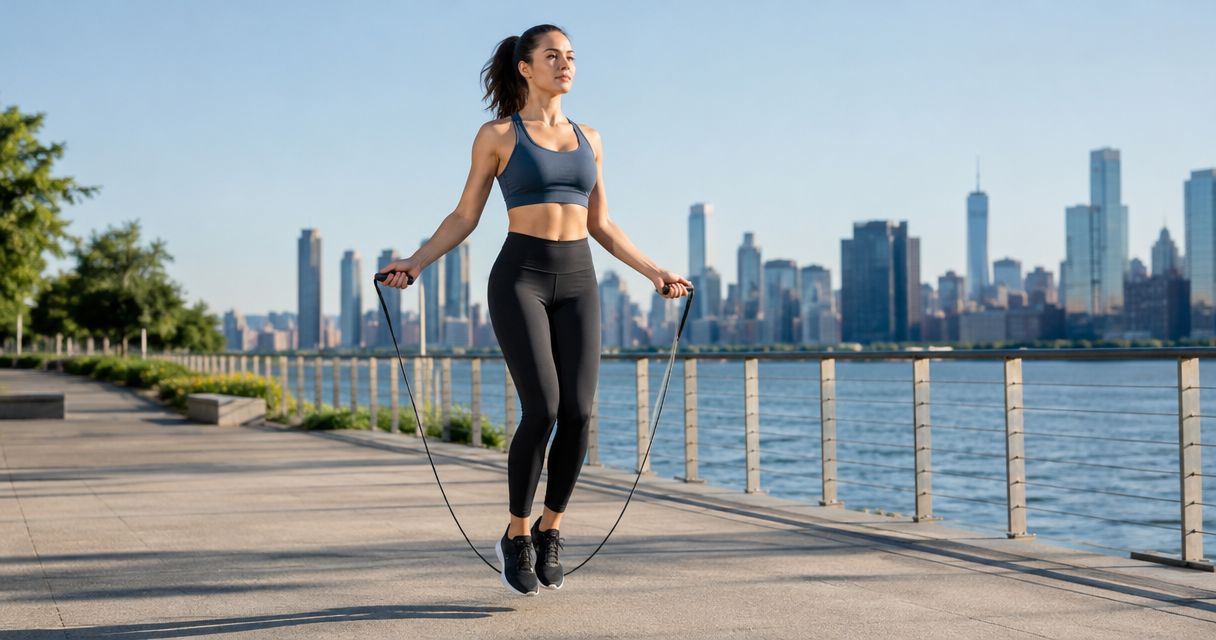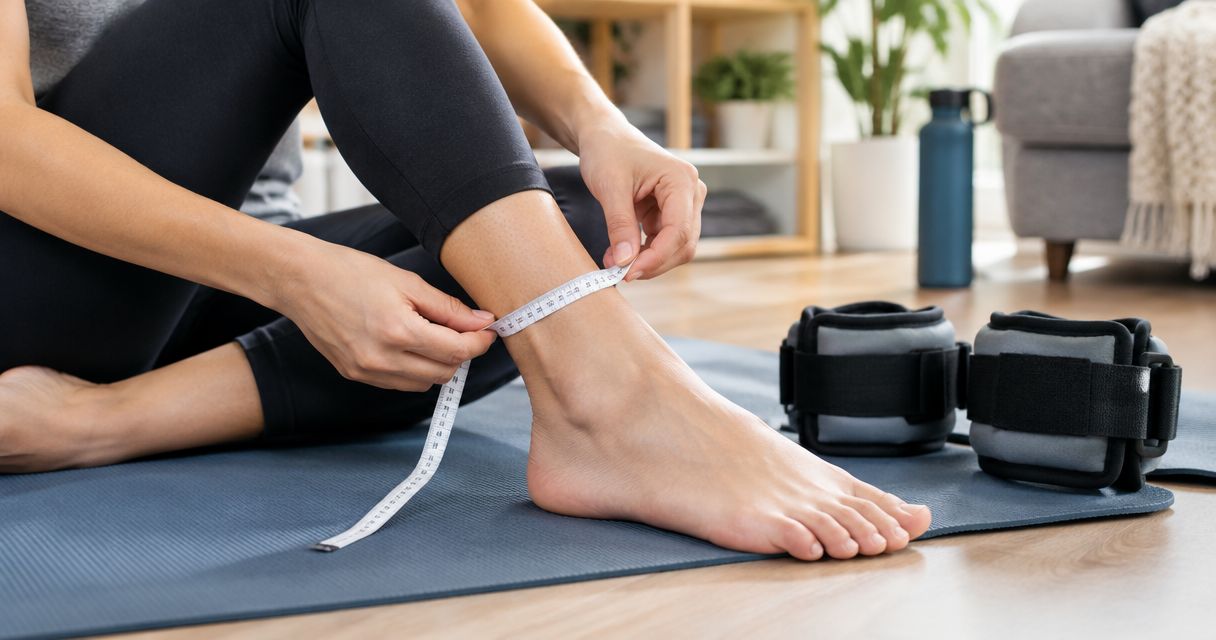
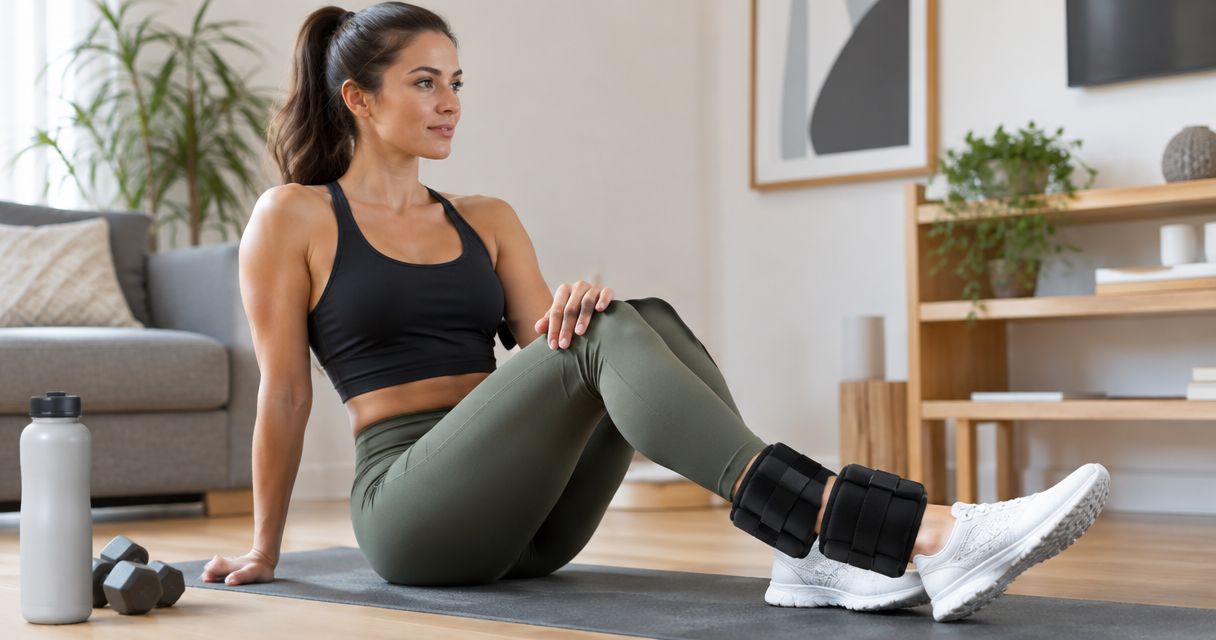
No—wearing ankle weights all day is not a sensible way to build strength or improve fitness. Keep ankle weights for planned, controlled exercises: wearing them through walks, chores and commuting adds load without giving you the control or recovery of a workout.
- Can you wear ankle weights all day? No—use ankle weights for controlled exercises rather than everyday movement.
- Sweatjoy fitness shoppers should choose ankle weights for a workout goal, not continuous wear.
- Unweighted walking is the better default for daily activity; targeted resistance training serves a different purpose.
- Remove ankle weights if they cause pain, numbness, rubbing or a change in your stride.
Can you wear ankle weights all day?
Skip all-day ankle weights. Use them only when the exercise calls for them. Their position near your feet increases the effort needed to move your legs, but extra effort is not automatically useful training.
Walking, climbing stairs and stepping around obstacles involve repeated changes in balance and direction. Added ankle resistance can change those movements, particularly as you tire. A secure strap does not remove that concern.
For Sweatjoy fitness shoppers, ankle weights belong in planned exercises, not an all-day routine. Use this comparison to separate a training session from simply carrying extra weight.
| Approach | Best for | Main advantage | Main limitation | Recommendation |
|---|---|---|---|---|
| All-day ankle-weight wear | Not recommended as a general fitness habit | Adds resistance during movement | Loads everyday movement without exercise-specific control | Skip |
| Controlled ankle-weight exercises | Targeted resistance work when appropriate | Adds load to a chosen movement | Requires suitable technique, fit and exercise selection | Use selectively |
| Unweighted walking | Daily activity and walking fitness | Preserves your usual walking pattern | Does not replace a full strength programme | Make this your default |
The 2026 takeaway is straightforward: make the exercise harder on purpose, rather than making your whole day heavier.
Why this matters
Ankle weights put resistance at the far end of your leg. That placement matters because the distance between a load and a joint affects the effort needed to move it. A small wearable weight is not interchangeable with carrying the same load close to your body.
During a controlled exercise, you can choose your position, watch your technique and stop when the movement deteriorates. During everyday life, you are also watching traffic, carrying bags or managing stairs. Exercise quality is no longer your only task.
Harvard Health Publishing's guidance on wearable weights warns against using ankle weights for walking or aerobic workouts because they can change muscle demands and place strain on joints and surrounding tissues. That is a reason to choose the activity carefully—not a claim that every use causes an injury.
Comfort and suitability are different tests. A cuff can feel soft against your skin while still being the wrong tool for your walk or workday.
All-day wear versus a planned ankle-weight workout
The useful distinction is not whether you can tolerate the weights. It is whether the resistance serves a specific exercise.
A planned workout has a defined movement, a manageable load and an endpoint. You can observe whether your pelvis stays steady, whether your knee follows the intended path and whether you can lower your leg without swinging it.
All-day wear has no comparable endpoint. The weights remain attached while your activity changes from sitting to walking to carrying something upstairs. Feeling fine at your desk does not establish that the same setup suits every movement afterwards.
Sitting at a desk
Sitting with ankle weights is not a substitute for resistance exercise. When the weights are supported by the floor, simply wearing them does not create a meaningful strengthening movement.
You also still need to stand up, turn and walk. Remove the cuffs rather than treating desk time as a reason to keep them attached until evening.
Walking and commuting
Walk without ankle weights as your default. Ankle loading can change your stride and increase demands on muscles and joints that were already handling your normal walking pattern.
A commute also introduces kerbs, uneven surfaces and sudden stops. These are poor conditions for experimenting with resistance that affects how you lift and place your feet.
Controlled floor or chair exercises
Ankle weights can add resistance to selected leg exercises, including movements used in strength training or rehabilitation. The exercise and your ability to control it determine whether the load belongs there.
Do not copy a rehabilitation exercise simply because it looks gentle. If a clinician has prescribed an ankle-weight exercise, follow that exercise's instructions rather than extending the advice to walking or all-day wear.
Why ankle-weight tolerance varies
There is no universal all-day wearing allowance. These factors explain why the same ankle weights can feel different across people, activities and stages of a workout:
- Load: A heavier cuff requires more effort to accelerate, lift and control. A load that suits one exercise does not automatically suit another.
- Movement: Slow, deliberate leg movements differ from repeated walking steps, running or stair climbing. The task determines the demands.
- Fit: Sliding cuffs and concentrated strap pressure can cause rubbing or discomfort. Tightening a strap harder is not always the answer.
- Fatigue: As you tire, you can start swinging the leg, leaning your trunk or shortening the movement. Those changes are reasons to stop and reassess.
- Your starting point: Existing pain, balance difficulties or a rehabilitation plan change what is appropriate. General fitness advice does not replace individual assessment.
In 2026, judge ankle-weight use by the movement you can perform well—not by how long you can leave the cuffs on. More wearing time is not a reliable measure of better training.
How should you use ankle weights instead?
Start with an exercise you already understand without added resistance. If you cannot control the unloaded version, adding a cuff is not the next step.
Use this sequence to keep the resistance tied to the workout rather than the rest of your day:
- Choose the exercise. Identify the movement and its purpose before putting on the weights. Avoid turning an ordinary walk into an improvised resistance session.
- Check the fit. Follow the equipment instructions and check that the cuff stays in place without painful pressure. Your skin should not be pinched or rubbed.
- Control the movement. Lift and lower deliberately. Keep the intended position instead of using momentum to move the weight.
- Stop and remove. End the exercise when control deteriorates or symptoms appear. Take the weights off before returning to normal daily activity.
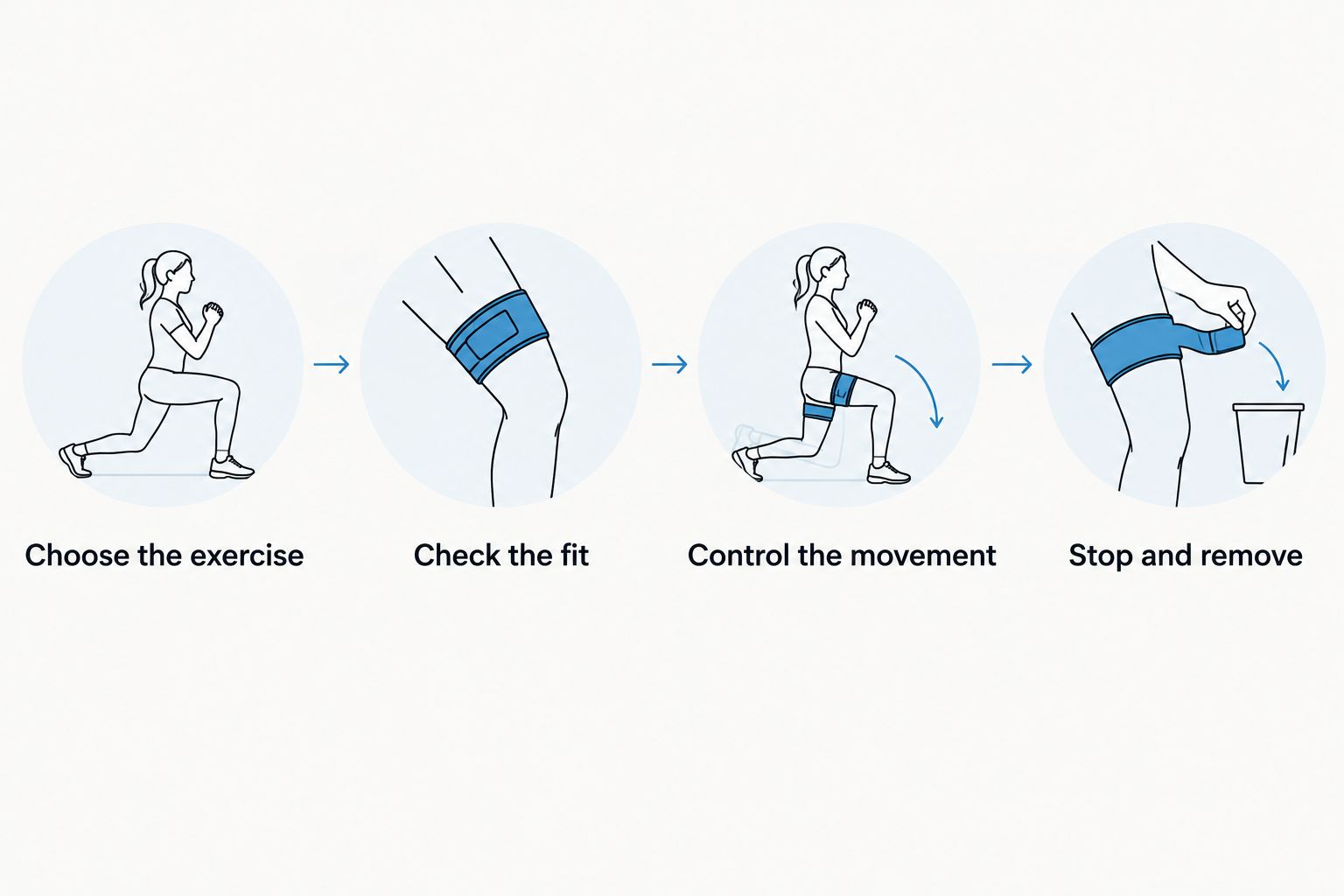
A completed set should reflect the movement you intended to train. If you have to lean away from the working leg or swing through the difficult part, reduce the demand rather than counting that compensation as progress.
For your 2026 training plan, record the exercise, resistance and quality of movement. Those details are more useful than recording how many hours the weights stayed attached.
What warning signs mean you should stop?
Remove ankle weights when they cause pain, numbness, tingling, skin irritation or a noticeable change in how you move. Do not treat those symptoms as proof that the workout is working.
Check for cuff movement as well as body symptoms. A sliding cuff can distract you and prompt repeated adjustments; a tight cuff can create uncomfortable pressure. Neither problem is solved by continuing until the planned session ends.
Pay attention to compensation. Leaning your torso, hitching your hip or swinging your leg changes the exercise. Stop, remove the load and reassess the movement without resistance.
Seek medical advice for persistent or recurring symptoms, especially if they affect ordinary walking. Sudden severe pain, inability to bear weight or significant swelling warrants prompt medical assessment rather than another equipment adjustment.
If you have an existing injury, balance problems or a clinician-led rehabilitation plan, ask the treating professional whether ankle loading belongs in your programme. A general article cannot set an individual rehabilitation dose.
How long should you wear ankle weights during a workout?
Wear ankle weights for the exercise you have selected, not for a universal number of minutes. Appropriate duration depends on the movement, resistance, technique and any instructions from your trainer or clinician.
A time target is a poor guide if the movement has already become uncontrolled. Finish the set when you cannot maintain the intended technique, then remove the cuffs before unrelated activity.
For 2026, avoid plans that promise an all-purpose wearing duration without considering the exercise. The useful question is whether the resistance improves the planned training task—not whether you have reached a timer's endpoint.
Will wearing ankle weights all day help you lose weight?
All-day ankle weights are not a sound weight-loss strategy. Adding effort to some movements does not establish a useful or safe long-term plan, and it does not make the weights necessary for everyday activity.
World Health Organization guidance for adults recommends at least 150 minutes of moderate-intensity aerobic activity per week, or 75 minutes of vigorous-intensity aerobic activity per week, alongside muscle-strengthening activity on 2 days per week. These are general health recommendations, not a personalised prescription or a weight-loss guarantee.
Those activity targets do not require ankle weights. Build a routine around activity you can repeat, suitable strength work and eating habits that support your goal.
If ordinary walking already challenges you, adding ankle resistance is not the first improvement to make. Establish a manageable routine before adding equipment to specific exercises.
What should you check before buying ankle weights?
Buy for an exercise, not a promise of passive results. Start by identifying where ankle resistance fits into your existing routine and whether you need professional help choosing that movement.
Check the stated load, fastening instructions and intended use. Product names and photographs do not tell you whether a cuff suits your body, a particular injury or an all-day wearing plan.
Sweatjoy's Weighted Leg Sandbags for Dance & Training (Unisex) are a relevant product type for shoppers considering added leg resistance. The product category does not establish that all-day wear is appropriate. Apply the same exercise, fit and control checks before using any ankle weight.
For a 2026 equipment purchase, separate these questions: does the product match the exercise, and can you perform that exercise well? A comfortable cuff addresses only part of that decision.
FAQ
Can I wear ankle weights all day if they are light?
No—light ankle weights do not make all-day wear a sensible default. Load matters, but so do your walking pattern, the activity and how you respond as you tire.
Can I wear ankle weights while walking around the house?
Keep ordinary household walking unweighted. Turning, stepping around furniture and using stairs are not the same as performing a controlled resistance exercise.
Can I wear ankle weights while sitting at work?
Sitting with ankle weights is not a substitute for strength training. Remove them rather than leaving them attached for the next walk, stair climb or commute.
How many minutes should a beginner wear ankle weights?
There is no universal beginner duration that suits every exercise and person. Choose an appropriate movement and stop when technique deteriorates or symptoms appear, rather than chasing a wearing-time target.
Are ankle weights better than walking without weights?
Unweighted walking is the better default for everyday walking. Ankle weights serve a different purpose when used for selected, controlled resistance exercises.
Should I keep using ankle weights if my knees hurt?
Stop the exercise and remove the ankle weights if your knees hurt. Seek medical advice if pain persists, recurs or affects normal activity; do not try to push through it.
Can older adults use ankle weights?
Older adults can use ankle weights for suitable exercises, but age alone does not determine whether a movement or load is appropriate. Balance, existing symptoms and individual exercise advice matter, especially during rehabilitation.
One last thing
Do not test ankle weights by seeing how long you can forget you are wearing them. Test whether they help you perform a specific exercise with control.
Before the next session, decide when the cuffs come off. That simple boundary keeps a workout tool from becoming an unnecessary load during everything else you do.