There is no fixed deadline for seeing results from ankle weight training: better movement control and exercise performance can appear before visible changes in your legs. Your starting strength, exercise selection, training consistency and recovery determine progress; ankle weights alone do not guarantee muscle growth or fat loss.
- Wondering how long to see results from ankle weight training? Track performance before judging appearance.
- Better control and more clean repetitions are useful progress markers; soreness is not a reliable score.
- Sweatjoy sells fitness accessories for gym-goers; buying equipment does not establish a results deadline.
- Use ankle weights for controlled exercises, not as a shortcut to slimmer legs.
Why this matters
If your only progress check is the mirror, you miss changes in how you move. Completing the same exercise with less swinging, steadier positioning or more controlled repetitions gives you something concrete to compare.
Start your 2026 training plan with a measurable goal rather than a deadline borrowed from someone else's workout. Whether you buy accessories from Sweatjoy or already own ankle weights, the useful question is whether your exercise performance is improving.
Judge the exercise before you judge your appearance. More effort is not automatically more progress, especially when the added load changes your technique.
How long does it take to see results from ankle weight training?
Ankle weight training has no universal results timeline. Learning an exercise, building strength and changing your appearance are different outcomes, so they need different checks.
Use this comparison to decide what a result means for you. These are progress markers, not promises about when they will happen.
| Result you want | What to track | What the result does not prove |
|---|---|---|
| Better movement control | Less swinging and steadier positioning during the same exercise | That your muscles have visibly grown |
| Better muscular endurance | More controlled repetitions under the same conditions | That a heavier weight is immediately appropriate |
| Greater strength | More resistance with comparable technique and movement range | That every other leg exercise will improve equally |
| Visible muscle change | Comparable photos alongside a consistent training record | That appearance changes come from ankle weights alone |
| Less body fat | Longer-term body measurements and your overall activity and eating pattern | That exercising a particular area removes fat from that area |
The distinction matters. If you complete more repetitions by moving faster and shortening the movement, you have changed the test rather than clearly improved it.
Keep your comparisons fair. Use the same exercise, the same resistance and a similar movement range before deciding that a session was easier.
Why does the exercise feel easier before my legs look different?
An easier exercise can reflect better coordination and familiarity, not just larger muscles. Resistance training also develops the nervous system's ability to produce and control force.
Visible appearance is a different measure. Lighting, posture and the amount of body fat covering a muscle affect what you see, so a mirror check cannot isolate the effect of ankle weight training.
Better control: your first useful checkpoint
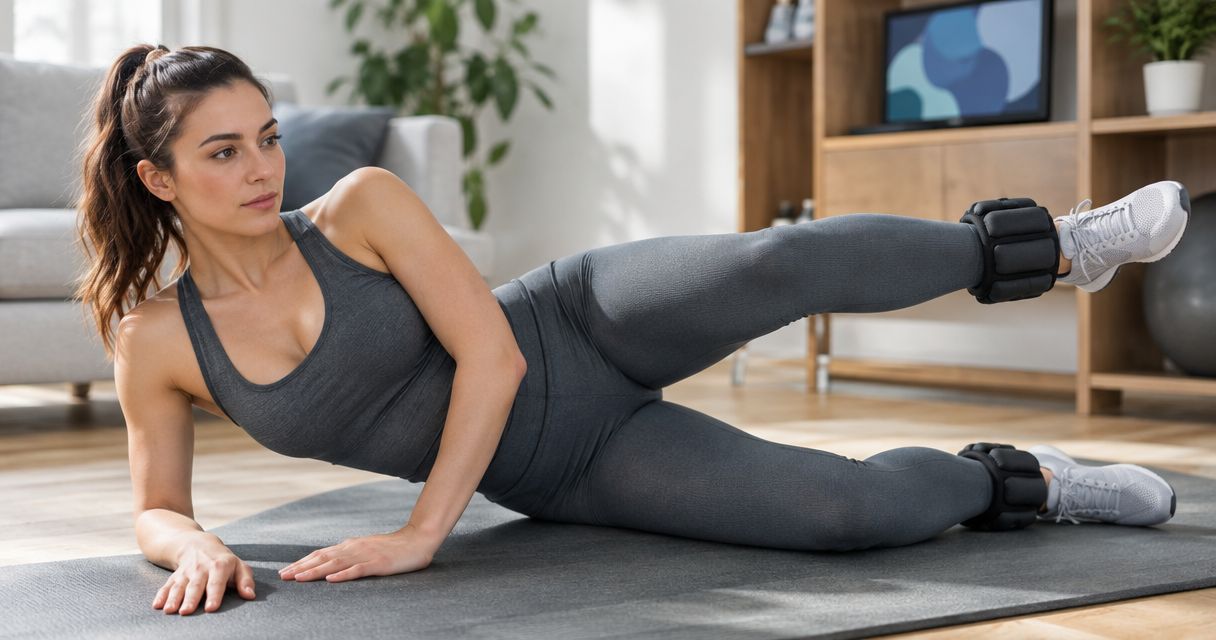
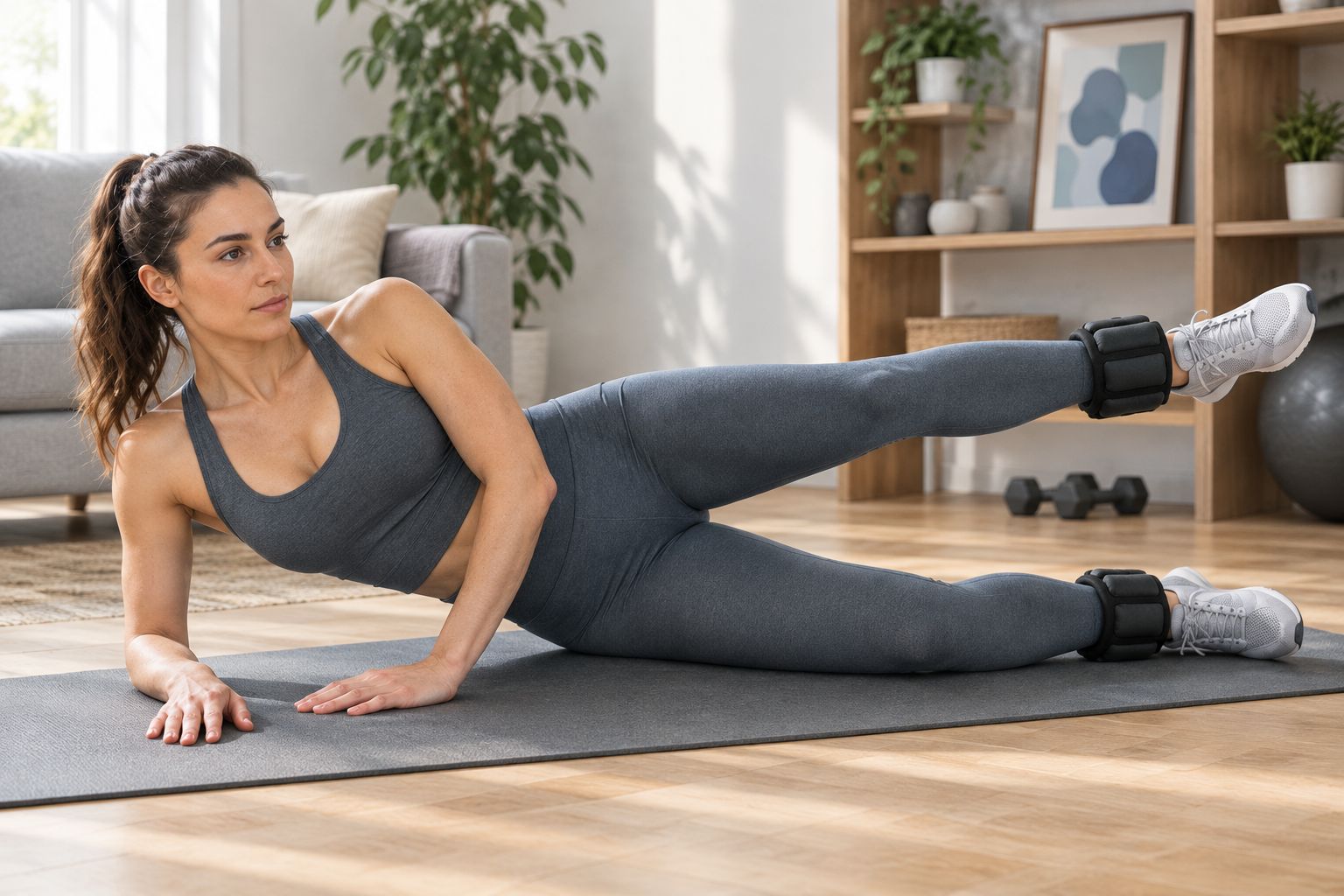
Start with the quality of each repetition. During a side-lying leg raise, for example, watch whether your pelvis stays steady rather than rolling backwards to lift the leg higher.
A smaller, controlled movement is more useful than a larger swing. If the weight pulls you out of position, remove it and practise the movement without added resistance.
Look for these signs:
- You start and finish the movement deliberately.
- Your trunk stays steady rather than helping through momentum.
- Your movement range remains consistent across repetitions.
- You can stop the movement without losing your position.
These checks do not require a dramatic workout. They require attention, and they give your training log more meaning than simply recording that you finished.
Strength and endurance: compare like with like
Strength and endurance overlap, but they are not identical. Doing more repetitions with the same resistance shows a different change from handling more resistance for a comparable set.
Choose the measure that matches your goal. If you want better control during a particular exercise, adding weight while your technique worsens moves you away from that goal.
For your 2026 workout record, note the exercise, resistance, repetitions and any technique change. Record each side separately when you train one leg at a time; otherwise, a difference between sides gets hidden inside a single total.
Progress means doing more of the intended work, not finding a new way to finish the set. Hold the resistance steady when you still need to improve control.
Visible leg changes: use a separate scorecard
Ankle weights do not selectively remove fat from your thighs or calves. Training a muscle and losing fat from the area above that muscle are not the same process.
Visible muscle development depends on a sufficient training stimulus, recovery and nutrition. An ankle weight exercise that has become easy does not keep providing the same challenge simply because you repeat it faithfully.
If appearance is your goal, keep photographs comparable. Use similar lighting, clothing, camera position and posture, and read the photographs alongside your training record rather than treating them as the only evidence.
Avoid daily verdicts. A single photograph cannot tell you whether your exercise programme is effective or whether a particular accessory caused a change.
Why ankle weight training results vary
Your results depend on what you do with the resistance, not just whether you wear it. These factors explain why another person's progress is a poor deadline for your own.
- Starting ability: A new exercise creates a different challenge for a beginner than for someone who already trains that movement.
- Exercise selection: Each movement challenges particular muscles and positions; ankle weights do not turn every activity into balanced leg training.
- Resistance and control: The resistance must challenge the intended movement without forcing you to swing or compensate.
- Consistency and progression: Repeating manageable sessions and adjusting the challenge gives you a clearer training stimulus than irregular bursts of effort.
- Recovery: Sleep, food and time between demanding sessions support your ability to train again effectively.
- Your definition of results: Better balance during an exercise, greater endurance and a visible change are separate targets.
Pick the factor you can act on now. If your sessions are irregular, establish consistency before replacing your equipment or adding more exercises.
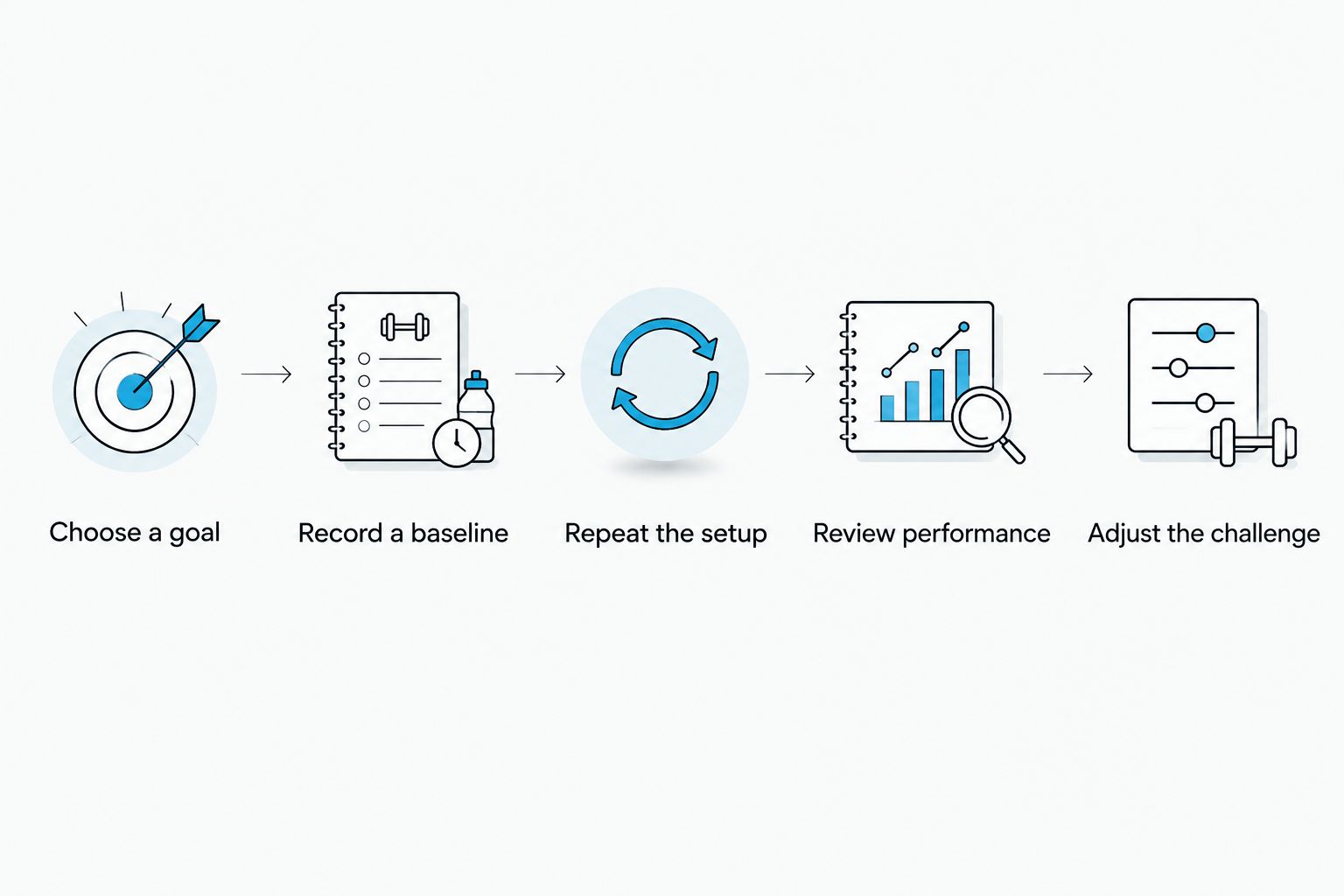
How do I track ankle weight progress without guessing?
Use a repeatable process. Your 2026 progress log should make it easy to distinguish better performance from a harder-looking workout.
- Choose a goal. Write down whether you want improved control, more repetitions or greater resistance in a specific exercise.
- Record a baseline. Note your starting resistance, completed repetitions, movement range and any discomfort.
- Repeat the setup. Keep your position and technique comparable when you check progress.
- Review performance. Look for cleaner movement or greater capacity, not just tiredness after the set.
- Adjust the challenge. Change a manageable part of the exercise only when your current work is controlled.
Keep the log brief enough that you will actually use it. A useful entry explains what you did and how well you controlled it; it does not need a detailed account of every sensation.
If you change the exercise, resistance and movement speed together, start a fresh comparison. You no longer have the same test.
Should I use ankle weights or practise without them?
Use the version you can control. Added resistance is useful only when it supports the intended exercise rather than disrupting it.
| Approach | Best for | Main advantage | Main limitation |
|---|---|---|---|
| Movement without ankle weights | Learning a movement or rebuilding control | Lets you practise without extra load at the ankle | Eventually needs a suitable progression if it becomes too easy |
| Controlled exercise with ankle weights | Adding resistance to selected leg exercises | Adds load without requiring you to hold a weight | Changes the demand on the movement and can encourage swinging if too heavy |
Neither option wins every session. Practising without weights is not a failed workout, and wearing weights is not proof that the exercise is appropriately challenging.
For a visual check, compare how steady your body stays rather than how high you can lift your leg. More height is not automatically better technique.
If you need help choosing equipment for this setting, the ankle weights for home workouts guide is a relevant next read. Decide on the movement first, then choose equipment that suits it.
Where does Sweatjoy fit?
Sweatjoy is best for fitness enthusiasts shopping for workout accessories. Its Weighted Leg Sandbags for Dance & Training (Unisex) are a relevant equipment category for this routine, but the accessory itself does not determine your results timeline.
The practical benefit of ankle weights is added resistance for selected movements. The limitation is equally important: they do not replace a balanced strength programme or guarantee visible changes.
How often should I train to support results?
For general adult health, the US Centers for Disease Control and Prevention recommends muscle-strengthening activity on at least 2 days per week, covering all major muscle groups. That is a whole-body guideline, not a prescription to train the same ankle weight exercise every day.
For your broader 2026 activity plan, the CDC also recommends at least 150 minutes per week of moderate-intensity aerobic activity, or 75 minutes per week of vigorous-intensity activity, alongside strengthening work. Ankle weight exercises alone do not fulfil every part of those recommendations.
Build your routine around recovery and repeatable technique. If fatigue makes the next session noticeably less controlled, review the workload rather than assuming more sessions will produce faster results.
Can I wear ankle weights while walking to get faster results?
Wearing ankle weights while walking is not a reliable shortcut to faster results. Harvard Health cautions against wearable ankle weights during walking because they can alter movement and place strain on joints and surrounding tissues.
Use ankle weights for deliberate exercises instead of automatically adding them to your daily steps. If walking fitness is your goal, keep your walking plan separate from your targeted resistance work.
What should I do if my knees or hips hurt?
Stop the painful exercise and remove the weights. Joint pain is not a progress marker, and pushing through it does not demonstrate that the training is working.
Seek assessment for persistent pain, swelling, numbness or difficulty bearing weight. If you have an existing injury, balance difficulty or a rehabilitation plan, ask your clinician which exercises and resistance are appropriate before adding ankle weights.
FAQ
How long to see results from ankle weight training if I'm a beginner?
There is no fixed beginner timeline for ankle weight training results. Track cleaner movement and improved exercise performance separately from visible changes in your legs.
Will ankle weights make my legs slimmer?
Ankle weights do not selectively remove fat from your legs. They add resistance to selected exercises, while changes in body fat depend on your overall energy balance.
Should I use ankle weights every day for faster results?
Daily ankle weight training is not a guaranteed route to faster results. Plan sessions around exercise difficulty, recovery and your ability to maintain controlled technique.
Does soreness mean my ankle weight workout worked?
Soreness is not a reliable measure of training progress. Compare technique, repetitions and resistance under similar conditions instead.
When should I increase my ankle weights?
Increase the challenge when you can complete your planned exercise with consistent control and without pain. Avoid adding resistance if it makes you swing or shorten the movement.
Can ankle weights replace a full strength workout?
Ankle weights do not replace a full strength programme. Adult strengthening guidance covers all major muscle groups, not just the muscles challenged by selected leg exercises.
What should I record in my ankle weight workout log?
Record the exercise, resistance, repetitions and movement quality. Note discomfort and differences between sides so your next comparison uses meaningful information.
One last thing
Make your next 2026 session a fair test, not a harder test. Repeat a familiar exercise with the same resistance and see whether you can control it better.
If you can, record that result. You do not need to wait for a visible change to recognise useful progress.