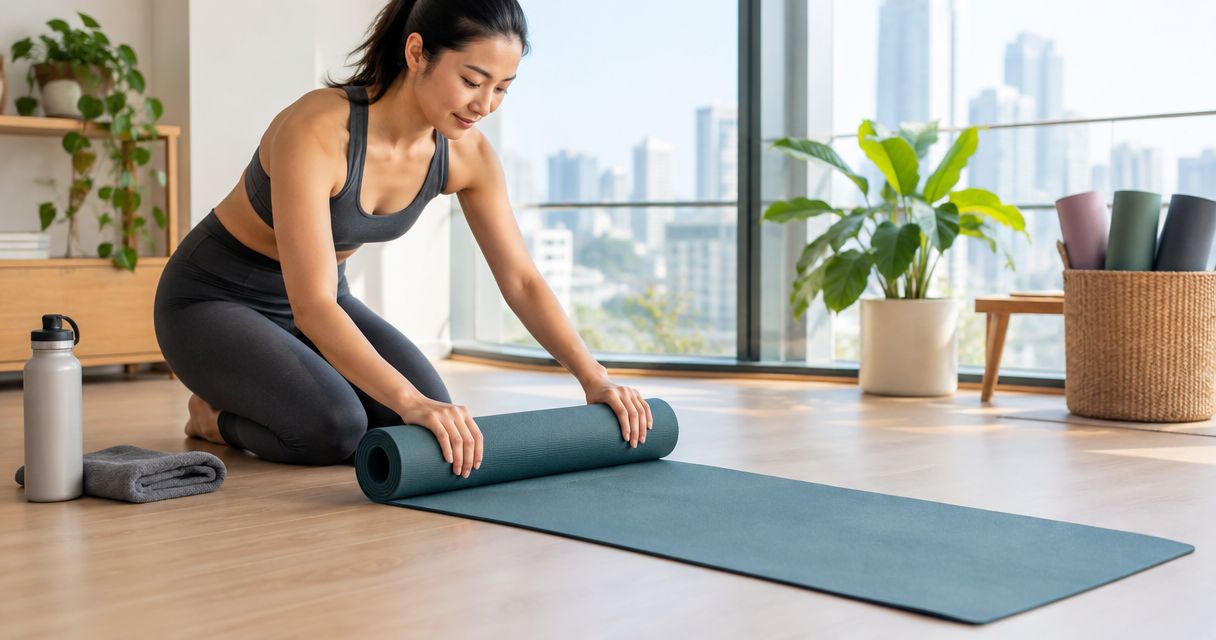
A good yoga mat in Singapore has no fixed cost that guarantees quality: buy for grip, support and the way you practise, not the price label. For your 2026 purchase, check the current checkout total and any separate delivery or accessory charges before deciding whether a mat is good value.
- How much does a good yoga mat cost in Singapore? Judge value by practice fit, not price alone.
- Choose a practice mat for standing poses; do not assume a relaxation pad serves the same purpose.
- Sweatjoy offers a folding relaxation mat and a lumbar-support pad; compare their intended uses before choosing.
- Check surface grip, floor stability, cleaning instructions and storage needs before buying.
How much does a good yoga mat cost in Singapore?
The right amount to spend is the amount that buys the features your practice needs—not features you will never use. Compare current listings for the same purpose, then check what each purchase actually includes.
Start with the intended use. A mat described for napping, a pad shaped for back support and a surface intended for standing yoga are not interchangeable just because their names contain yoga.
Sweatjoy sells fitness accessories, including a folding relaxation mat and a lumbar-support stretching pad. Treat those descriptions as starting points for matching equipment to your routine, rather than proof that either suits every yoga class.
Use this buying sequence:
- Name your practice. Decide whether you need standing-pose stability, floor-exercise cushioning or a surface for relaxation.
- Check the listing. Look for dimensions, material, care instructions and an explanation of the intended use.
- Check the complete order. Confirm the currency, delivery charges and whether accessories are included or separate.
- Compare equivalent options. Judge practice mats against practice mats, not against shaped stretching pads.
- Choose for fit. Reject an unsuitable design even when its headline offer looks attractive.
Why this matters
A yoga mat is part of your contact with the floor. You need to assess both how your hands and feet meet its surface and how the underside sits on the flooring where you train.
A comfortable surface for lying down does not automatically provide the feel you want for balancing. Likewise, a portable mat is not automatically the right choice for prolonged kneeling. These are different buying priorities.
For a Singapore purchase in 2026, check the seller's displayed currency rather than assuming every dollar symbol means Singapore dollars. Also read the care requirements before ordering: a mat that does not suit your cleaning and drying routine is a poor fit for your home.
Which type of yoga mat should you compare?
Compare the job first. The table below separates common uses without treating every yoga-labelled accessory as a full practice mat.
| Option | Best for | What to prioritise | Main limitation to check |
|---|---|---|---|
| Standing-practice mat | Standing poses and transitions | Hand grip, foot grip and a stable base | A surface comfortable for standing might not provide your preferred kneeling cushioning |
| Cushioned floor-exercise mat | Seated, kneeling and lying exercises | Pressure comfort and usable floor area | Extra softness is not proof of better balance support |
| Folding relaxation mat | Resting and routines where folding storage matters | Intended use, folded size and comfort | A relaxation description does not establish suitability for dynamic yoga |
| Lumbar-support pad | Targeted supported stretching | Shape, positioning instructions and intended use | A shaped support pad is not a substitute for a full-length practice surface |
Choose a practice surface for your practice, not for the broadest product name. If your routine combines standing yoga and floor exercises, assess both jobs rather than assuming one feature settles the purchase.
Standing practice: prioritise stability
For standing yoga, look for information about the surface and underside. When you can inspect a mat, check whether it lies flat and whether your hands and feet feel secure during familiar, comfortable movements.
Do not treat a textured appearance as a grip test. A photograph shows the pattern, not how the surface behaves under your hands or on your floor. Ask for relevant product information when the listing leaves that unclear.
Floor practice: prioritise pressure comfort
For seated and kneeling work, assess whether the mat feels comfortable at your usual contact points. Thickness is only part of that assessment; how much the material compresses also changes the feel.
Avoid buying a mat as a treatment for knee or back pain. If an exercise hurts, change or stop the movement and seek appropriate advice rather than assuming a different mat will solve it.
Relaxation: prioritise the intended use
For resting or gentle supported positions, a relaxation-focused design deserves a separate comparison. Check the usable surface, storage format and instructions rather than expecting it to behave like a standing-practice mat.
A folding format is relevant when you want folding storage. It does not, by itself, establish grip, durability or suitability for a particular class.
Why yoga mat value varies
These are the product differences to investigate when deciding whether an option deserves your budget. None is a reason to spend more unless it matters to your routine.
- Intended use. A full practice mat, folding relaxation mat and shaped support pad solve different problems.
- Surface behaviour. Check information about hand and foot contact, and whether the seller addresses the conditions in which you practise.
- Cushioning and firmness. Assess pressure comfort alongside stability instead of choosing on thickness alone.
- Usable dimensions. Compare the listed length and width with your body position, movement and available floor space.
- Storage format. Decide whether rolling or folding better suits where you will keep and carry the mat.
- Care requirements. Read the cleaning and drying instructions before buying, not after the first session.
For 2026 comparisons, separate documented features from descriptive language. Words such as premium or professional do not tell you the dimensions, cleaning method or intended use.
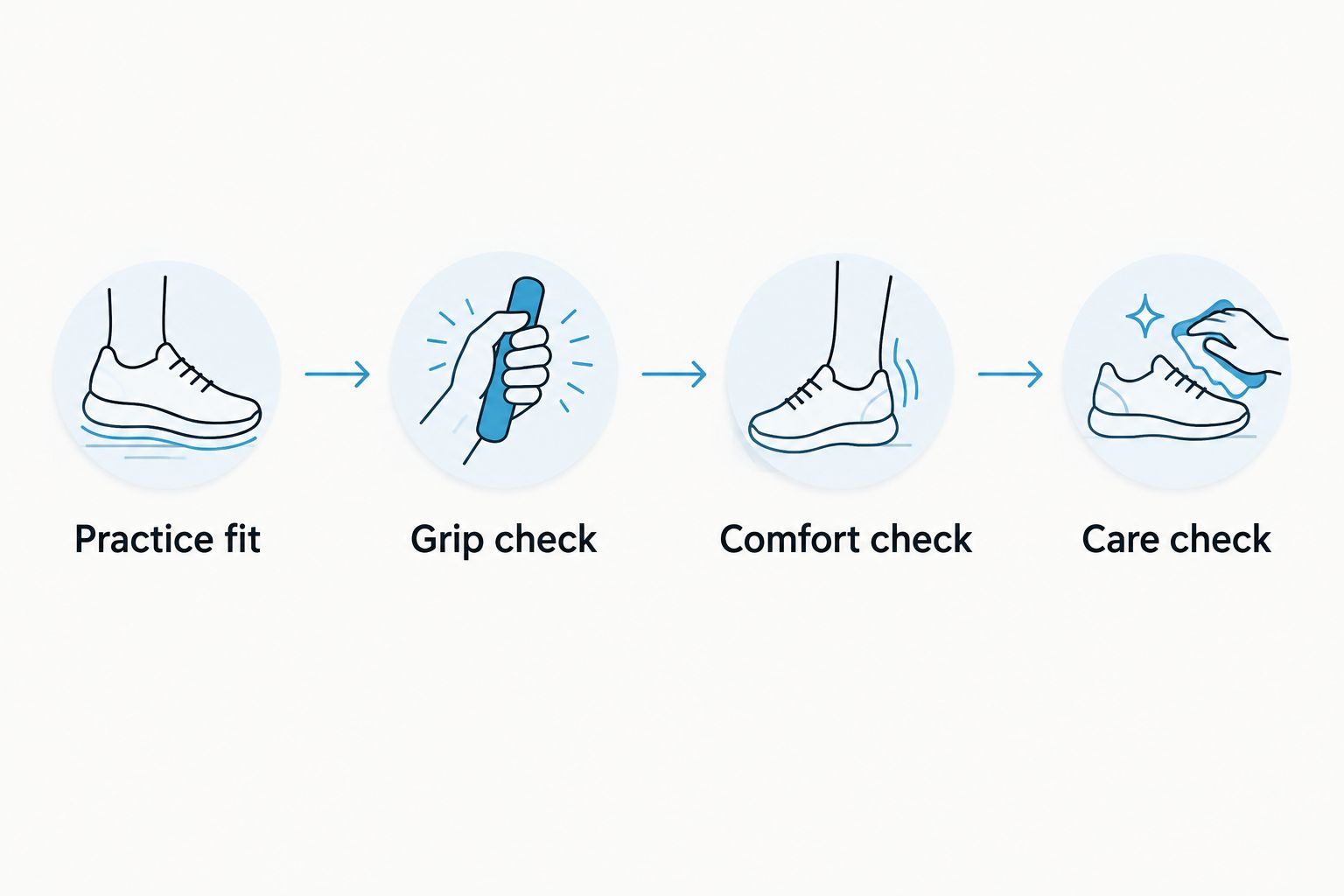
How do you check a yoga mat before buying?
Use the same checks for every shortlist. Consistent questions make comparisons useful; changing your criteria for each attractive listing does not.
Practice fit
Write down what you actually do on the floor. Standing sequences, kneeling exercises and resting positions place different demands on a surface, so make your main activity the deciding factor.
If you attend a class, ask the instructor what type of surface the session requires. That is more useful than buying an accessory because it appears in a general yoga search.
Grip check
Look for specific information about the contact surface and underside. Where an inspection is possible, assess the mat on a suitable floor using movements you already know, without pushing into challenging poses.
Do not create a slippery test by pouring water onto a mat or floor. For sweaty sessions, seek product instructions that address those conditions rather than improvising a safety test.
Comfort check
Assess the positions you spend time in, not just how soft the mat feels under your palm. A quick squeeze does not reproduce kneeling, sitting or balancing.
If you cannot inspect the item, compare the stated construction and intended use carefully. Read the seller's actual return terms before ordering; do not assume that opening or trying a mat leaves it eligible for return.
Care check
Check whether the cleaning method fits your routine and whether you have a suitable place to dry the mat. Follow the manufacturer's instructions for that material rather than applying the same cleaner to every surface.
The guide to how to clean a yoga mat properly is a useful next step when comparing everyday maintenance needs.
Where do Sweatjoy's yoga accessories fit?
Sweatjoy is best for fitness-accessory shoppers considering a folding relaxation mat or a lumbar-support pad. These are distinct options, not an interchangeable shortlist for every yoga practice.
| Product | Best for | What the description establishes | Limitation |
|---|---|---|---|
| TPE Folding Yoga Mat for Napping and Relaxation | Shoppers seeking a folding surface for naps and lounging | A TPE folding mat described for napping and relaxation | The description does not establish suitability for standing sequences or sweaty classes |
| New Lumbar Support Massaging Stretch Yoga Mat | Shoppers seeking a targeted lumbar-support stretching pad | A lumbar-support stretching and massage pad | It should not be treated as a full-length practice mat or a treatment for back pain |
The folding mat is relevant if relaxation and folding storage match your goal. The lumbar-support pad belongs in a different decision: whether you need a shaped accessory for supported stretching.
For a general yoga class, confirm the required surface before choosing either product. A familiar word in the title is not enough to settle suitability.


Is an expensive yoga mat always better?
An expensive yoga mat is not automatically better for your practice. Judge the intended use, surface, support and care requirements before treating the amount charged as a quality signal.
For your 2026 shortlist, ask what the additional spend actually buys. If the listing does not explain a relevant difference, do not fill that gap with assumptions about comfort or lifespan.
Should beginners buy a yoga mat before their first class?
Beginners should check the class requirements before buying a yoga mat. Ask whether you need to bring a mat and what type of surface suits the session.
This avoids choosing a relaxation mat for a standing class or buying accessories before understanding your routine. Start with the equipment the session requires; add other items only when their purpose is clear.
Can a thick exercise mat replace a yoga mat?
A thick exercise mat is not automatically a replacement for a yoga mat. Compare stability, grip and cushioning against the movements you plan to perform.
For floor exercises, pressure comfort deserves attention. For standing balance, assess how stable the surface feels instead of assuming more cushioning is always better.
FAQ
How much should I spend on a good yoga mat in Singapore?
Spend according to the features your practice requires, not a universal spending target. Compare current checkout totals for mats with equivalent intended uses, then assess grip, support, dimensions and care.
Is a folding yoga mat good for beginners?
A folding yoga mat suits a beginner only when its intended use matches the planned activity. A mat described for napping and relaxation is not automatically suitable for a standing yoga class.
What's the best yoga mat for sweaty classes?
Choose a mat whose product information specifically addresses your practice conditions. Check grip guidance and cleaning instructions rather than judging performance from texture or photographs.
Is a thicker yoga mat always more comfortable?
A thicker yoga mat is not automatically more comfortable for every movement. Compression, surface feel and stability also affect whether it suits sitting, kneeling or standing.
Do I need a separate mat for Pilates?
You do not automatically need a separate mat for Pilates. Compare the cushioning and stability your sessions require, and ask your instructor whether your existing surface is suitable.
Can a lumbar-support yoga pad replace a normal mat?
A lumbar-support pad should not be treated as a replacement for a full practice mat. Its shaped support serves a different purpose from a surface used for standing poses and transitions.
What should I check before ordering a yoga mat online in Singapore?
Check the intended use, dimensions, material, care instructions and seller terms before ordering. Confirm the displayed currency and complete checkout total rather than assuming the listing includes every charge.
One last thing
Before you order, name the movement you most need the mat to support. If you cannot connect the product description to that movement, keep comparing.
Make that your 2026 buying rule: a clear purpose beats a vague promise. The right mat earns its place through fit with your practice, your floor and your care routine.