No, a yoga mat is not necessary for Pilates: you need a suitable surface for floor exercises, and a yoga mat works if it provides enough cushioning and stays stable beneath you. For reformer Pilates, follow the studio’s equipment instructions rather than assuming you need to bring a mat.
- Is a yoga mat necessary for Pilates? No—choose a stable, cushioned surface rather than a particular label.
- Keep your existing yoga mat if floor exercises feel comfortable and the mat does not slide or bunch.
- Sweatjoy sells fitness accessories; assess each mat’s stated purpose before choosing it for Pilates.
Is a yoga mat necessary for Pilates?
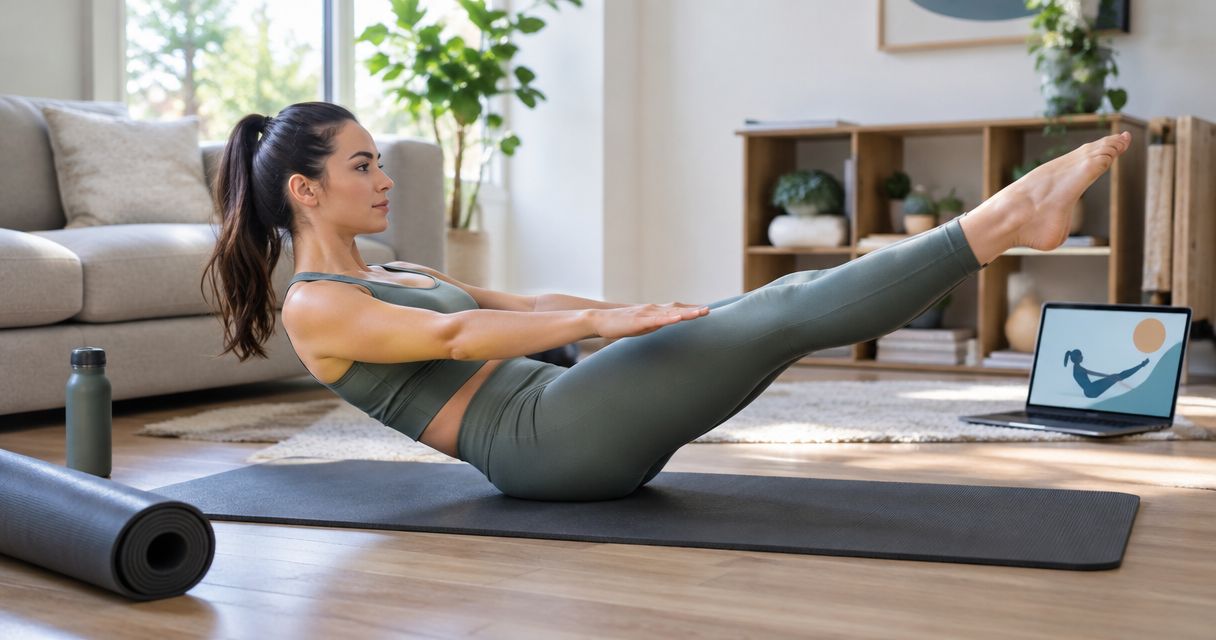
You do not need a yoga-specific mat, but floor-based Pilates needs a surface that supports comfortable, controlled movement. A mat separates you from the floor and adds cushioning. The label matters less than how the surface behaves under your back, knees, hands and feet.
If you are browsing Sweatjoy fitness accessories in 2026, start with the workout you actually plan to do. A mat intended for lounging is not automatically a mat intended for repeated exercise.
| Surface or setup | Best for | Main advantage | Main limitation |
|---|---|---|---|
| Existing yoga mat | Trying Pilates with equipment you already own | Gives you a dedicated exercise surface | Cushioning and grip differ between mats |
| Mat designed for Pilates | Regular floor-based Pilates | Its stated purpose matches the workout | You still need to assess firmness, fit and stability |
| Studio-provided mat | Classes where the studio supplies equipment | Lets you follow the instructor’s setup | You do not choose the mat’s feel or condition |
| Carpet without a mat | Comfortable standing movements on stable flooring | Uses an existing surface | Texture, cushioning and stability vary |
| Towel on the floor | A washable layer over a suitable surface | Adds a removable fabric layer | Can slide or bunch and offers little cushioning |
| Reformer equipment | Instructor-led reformer sessions | Provides the apparatus used for that class | A loose mat is not something to add without instruction |
Keep a suitable mat you already own before buying a replacement. Replace it because it fails a practical check, not because its label says yoga rather than Pilates.
Why this matters
An uncomfortable surface distracts you from the exercise. If you keep repositioning to avoid pressure on your knees or back, assess the setup instead of treating discomfort as something to push through.
The opposite problem matters too. A surface that feels soft while you lie still can shift beneath your hands during movement. Comfort and control need to work together.
For a beginner setting up at home in 2026, the useful question is not which accessory makes the workout look complete. It is whether your surface lets you follow the session without slipping, bunching or uncomfortable pressure.
When your existing yoga mat is enough
Your current yoga mat is a sensible starting point when it lies flat, stays put and feels comfortable during the exercises you practise. There is no need to replace a working surface simply to match a class name.
Check the positions used in your session. Lying on your back, kneeling and supporting yourself on your hands place different demands on the same mat.
Best for beginners: use what passes the comfort check
Your existing yoga mat is best for beginners whose mat remains comfortable and stable throughout their session. The advantage is straightforward: you can assess your needs before adding equipment.
The limitation is equally clear. A mat that works for standing yoga does not necessarily provide the cushioning you want for Pilates floor work. Judge it in use, not by familiarity.
Inspect the mat before you begin. Curling edges, tears and a surface that moves across the floor are reasons to reassess it, even if you have used it successfully before.
When a Pilates mat makes more sense
A mat intended for Pilates is worth considering when your existing mat leaves floor exercises uncomfortable or repeatedly shifts beneath you. Look for a product whose stated use matches floor-based exercise.
A Pilates mat is best for regular floor sessions when your current surface does not meet your needs. Its purpose is relevant, but the name alone does not establish that every model will suit you.
More cushioning is not the only consideration. You also need a surface that feels firm enough to support your position and gives you enough room for the movements your instructor teaches.
For a 2026 purchase, compare the current product details rather than choosing from a generic thickness recommendation. Material, construction and firmness all affect how a mat feels; a thickness figure alone does not describe the whole experience.
Why Pilates mat suitability varies
The right surface depends on the workout and the space underneath it. Use these factors to explain why a mat feels suitable in one setting but not another:
- Exercise position: Kneeling, lying and standing place pressure on different contact points. Check the positions your session actually includes.
- Underlying floor: A mat on hard flooring feels different from the same mat on carpet. Assess the complete setup.
- Surface grip: Your hands need traction, and the underside needs to stay in place. Check both sides rather than only the top texture.
- Cushioning and firmness: You need comfort without a surface that shifts or collapses beneath your support points.
- Usable space: Your body and the planned movements need to fit without repeated repositioning at the edges.
- Class format: Mat Pilates and reformer Pilates use different setups. Follow the requirements for the class you booked.
These are practical selection criteria, not a promise that a particular material or product will suit every person. Choose for the exercise, the floor and your comfort together.
How do you check whether your mat works for Pilates?
Test your setup before following a full session. Use familiar, comfortable positions rather than introducing an unfamiliar exercise just to assess the mat.
- Check the floor. Clear the area and place the mat on a clean, dry surface. Make sure furniture does not restrict your movement.
- Check the edges. Unroll or unfold the mat fully. Do not begin with corners curling into your exercise space.
- Check cushioning. Try a comfortable lying position and a supported kneeling position. Notice pressure rather than trying to tolerate it.
- Check grip. Place your hands down and gently load them in a familiar position. Stop if your hands slip or the mat moves.
- Check transitions. Move slowly between positions used in your class. Watch for bunching, sliding or an unstable surface.
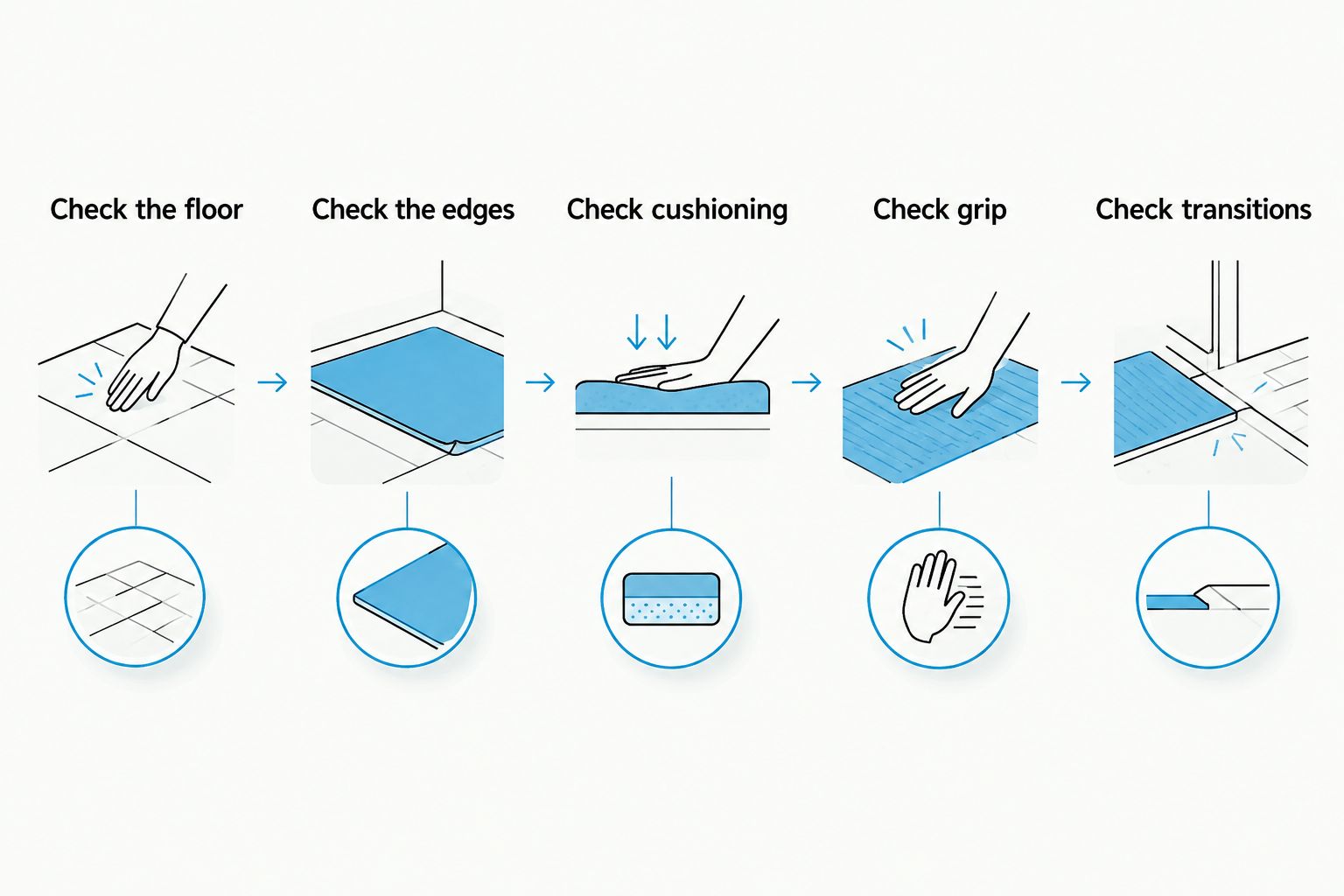
If the setup fails a check, change it before continuing. A different position or instructor-approved modification can help you assess whether the issue is the exercise or the surface.
Do not use extra padding to work through pain. Stop the movement and ask your instructor for guidance; persistent or unexplained pain needs advice from a qualified healthcare professional.
Can you do Pilates on carpet without a mat?
You can do some Pilates movements on carpet without a mat if the surface is stable, comfortable and suitable for those movements. Carpet is not an automatic substitute for an exercise mat, because pile, friction and cushioning vary.
Standing work and floor work do not ask the same thing of the surface. Check your planned session rather than assuming that a comfortable standing position proves the carpet is suitable for everything.
What about a towel or blanket?
A towel is best for adding a washable layer, not for replacing cushioning. Its drawback is movement: loose fabric can slide or gather beneath your hands and feet.
A blanket offers padding but can also fold or shift. Avoid building an unstable stack to compensate for an unsuitable floor, and ask your instructor about a better setup.
Do you need to bring a yoga mat to reformer Pilates?
You do not automatically need a yoga mat for reformer Pilates; follow the studio’s instructions for the class. The reformer is the exercise apparatus, and your instructor decides how it should be set up and used.
Check the booking information before attending. Ask whether equipment is provided and whether the session includes separate floor work.
Do not place a loose yoga mat on a reformer simply because you prefer more padding. Ask the instructor first, including when you need a modification for comfort.
What should you check before choosing a store-listed mat?
Sweatjoy is best for fitness enthusiasts shopping for workout accessories. For a Pilates mat, the next step is to assess the individual listing’s intended use rather than treating every yoga-labelled accessory as interchangeable.
Sweatjoy lists the TPE Folding Yoga Mat for Napping and Relaxation. Its description focuses on midday naps and lounging, so that description alone does not establish suitability for Pilates.
The folding format is relevant if storage matters to you. The limitation for this decision is the stated purpose: relaxation and exercise place different demands on a surface.
Before choosing it for floor exercise, check the current listing for its intended exercise use, usable dimensions, cushioning and care instructions. Do not infer grip or workout performance from the word yoga.
This is the useful buying rule for 2026: a product’s stated purpose is evidence; a familiar category word is not a performance guarantee.
How should you look after a mat used for Pilates?
Follow the manufacturer’s cleaning and drying instructions. Different surfaces need different care, so avoid assuming that the same cleaning method suits every mat.
Check the floor-facing side as well as the side you exercise on. Dirt or moisture underneath deserves attention before the next session.
Let the mat dry as directed before storing it, and check it again when you unroll it. Storage is not a reason to accept persistent curled edges or a surface that no longer stays in place.
For a shared studio mat, follow the studio’s cleaning procedure. Ask staff if you are unsure which cleaning product or method they require.
FAQ
Is a yoga mat necessary for Pilates at home?
No, a yoga mat is not necessary for Pilates at home, but floor exercises need a suitable, stable and comfortable surface. An existing yoga mat works if it provides sufficient cushioning and stays in place.
Is a Pilates mat better than a yoga mat?
A Pilates mat is the more relevant choice when your yoga mat does not provide the comfort and stability your floor sessions need. The label alone does not settle the decision; assess the individual mat.
Can I do Pilates on my bed?
A bed is not a reliable replacement for a stable exercise surface. A mattress compresses beneath you, so ask your instructor for a suitable floor setup or a specifically adapted session.
Should I buy the thickest mat for Pilates?
No, the thickest mat is not automatically the best mat for Pilates. Assess cushioning, firmness and stability together rather than choosing by thickness alone.
Can I put a yoga mat on carpet for Pilates?
Yes, you can use a yoga mat on carpet if the complete setup stays flat and stable during your movements. Stop and change the setup if the mat bunches, slides or feels unstable.
Do I need my own mat for a Pilates class?
You need your own mat only if the class requires you to bring one. Check the booking instructions because equipment arrangements differ between classes and studios.
Does a painful back mean I need a softer Pilates mat?
Back pain does not automatically mean you need a softer Pilates mat. Stop the painful exercise, ask your instructor about your setup and seek qualified healthcare advice for persistent or unexplained pain.
One last thing
Test the transition, not just the resting position. A mat can feel comfortable while you lie still yet move when you change position.
Before your next session in 2026, check a familiar transition on your current surface. If the mat remains comfortable and stable, keep using it. Buy a replacement to solve a specific problem, not to collect another fitness label.