Store a smart weighted jump rope clean, fully dry and loosely coiled in a cool, dry place, with the handles protected from heavy gear. Keep it away from wet towels, direct sunlight and sharp bends, and follow its instructions for switching off, charging or removing batteries before extended storage.
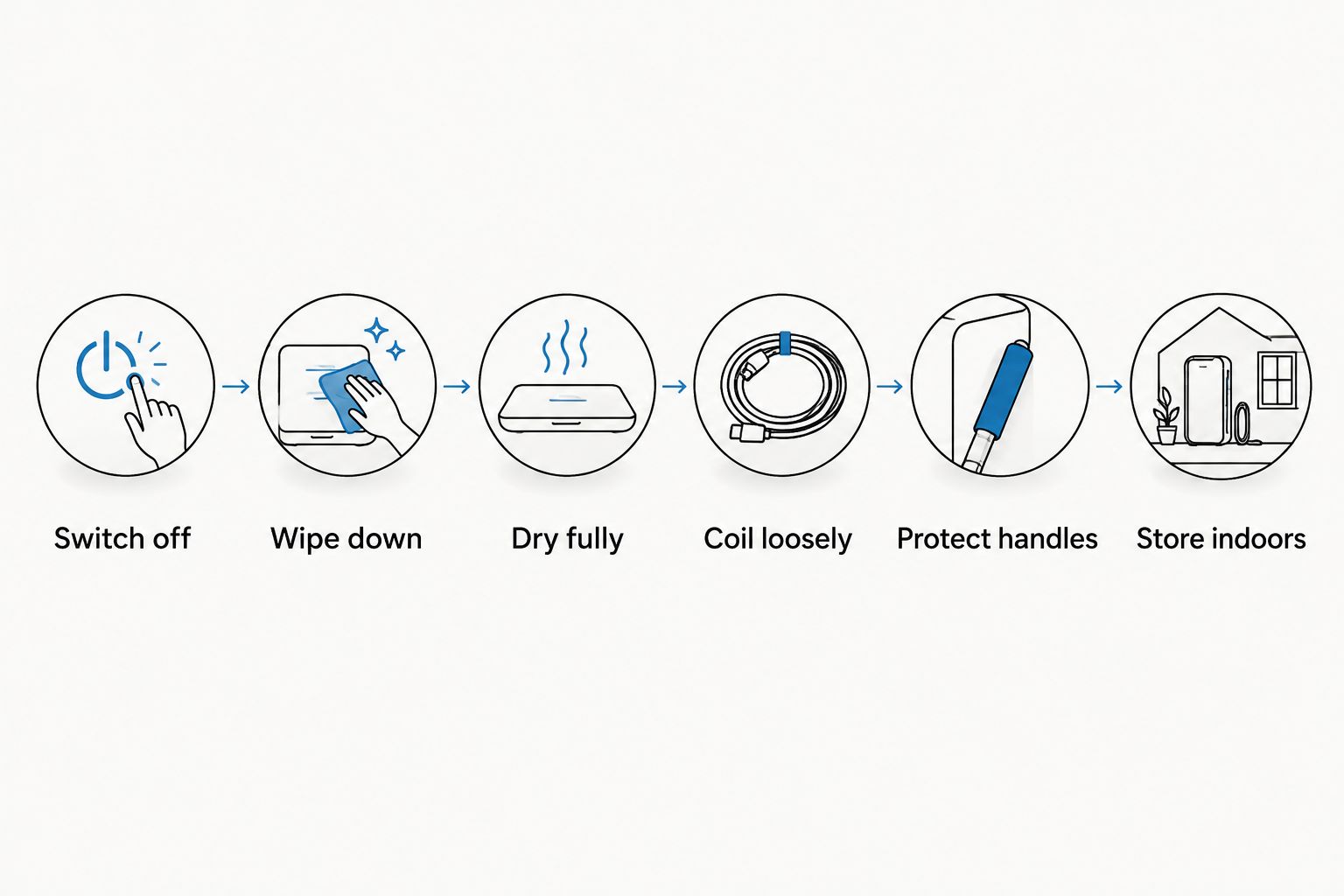
- How to store a smart weighted jump rope: dry it, coil loosely, protect the handles and store indoors.
- Keep electronic counters away from moisture; never assume a smart jump rope is waterproof.
- A dedicated shelf suits home storage; a separate bag compartment suits transport after the rope has dried.
- Sweatjoy sells a smart weighted jump rope with an electronic counter; check its instructions for battery care.
Why this matters
A good storage routine keeps your rope separate from the things that damage training gear: moisture, crushing pressure and sharp edges. It also gives you a chance to spot a worn cable or loose connection before your next session.
For your 2026 training setup, give skipping equipment a defined place rather than dropping it beneath shoes and weights. Whether your fitness gear comes from Sweatjoy or elsewhere, storage should protect both the rope and its electronic components.
How to store a smart weighted jump rope
Dry first. Coil second. Pack last. Use this sequence after training, with the manufacturer's care instructions taking priority over general advice.
- Switch off. Stop the counter or end the session as instructed. If the device supports workout saving or syncing, complete that process before switching it off.
- Wipe down. Remove sweat and surface dirt using the cleaning method specified for the rope. Keep liquid out of openings, ports and battery compartments.
- Dry fully. Leave the rope and handles exposed to circulating air before enclosing them. Do not pack them with a damp towel.
- Coil loosely. Follow the cable's natural curve instead of pulling it into tight loops. Avoid bending it sharply where it enters each handle.
- Protect handles. Place the handles beside the coil, without stretching their connections. Keep hard equipment off the display and controls.
- Store indoors. Choose a dry shelf, drawer or suitable compartment away from direct sunlight, water and excessive heat.
The storage routine ends when the rope is dry and protected, not when your workout ends. If you leave the gym before it dries, unpack it when you reach home.
A shelf, drawer or gym bag: which storage option fits?
Choose the storage location around moisture and pressure, not just available space. A roomy compartment is useful only when the rope goes into it dry and stays clear of heavier equipment.
| Storage option | Best for | Main advantage | Main limitation |
|---|---|---|---|
| Dedicated shelf | Frequent home workouts | Easy to inspect and retrieve | Offers little protection from dust or falling objects |
| Uncrowded drawer | Keeping home gear together | Separates the rope from foot traffic | Contents can press against handles or kink the cable |
| Separate gym-bag compartment | Carrying the rope to training | Keeps it apart from shoes and loose equipment | A closed bag is not a drying space |
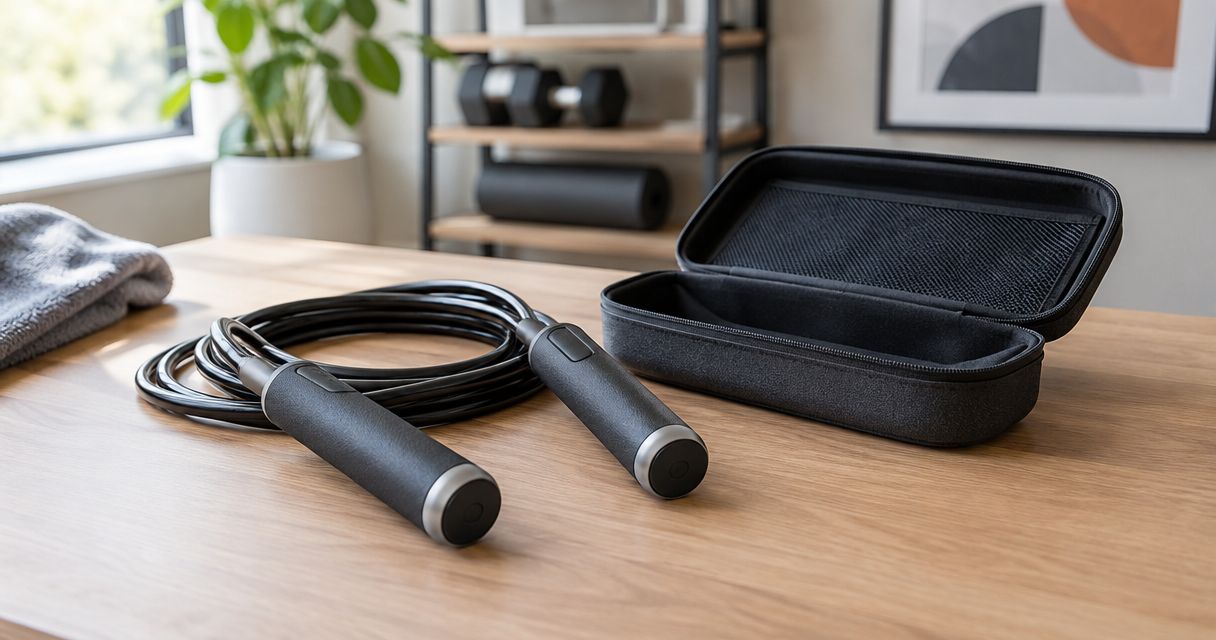
| Suitable protective case | Travel and organised packing | Keeps components together | A cramped case forces tight bends; a closed case traps existing moisture |
Dedicated shelf: best for frequent home workouts
Lay the loose coil flat on a clean shelf and place the handles beside it. Keep the shelf clear of anything that could fall onto the display or controls.
A shelf makes the rope easy to reach, but it does not shield it from every spill. Avoid spots beneath drinks, beside sinks or directly against a sunny window.
Uncrowded drawer: best for a compact training setup
Use a drawer with enough clear space for the coil to rest without being squeezed. Check that closing the drawer does not catch the cable or pinch a handle connection.
The trade-off is visibility: gear disappears into a drawer easily. Keep the rope in its own area rather than burying it under straps, tools or other accessories.
Separate gym-bag compartment: best for transport
Pack the rope away from shoes, drink bottles and wet clothing. Put heavy items elsewhere so they cannot press against the handles during your journey.
Unpack after training. A bag that works well for transport is not automatically suitable for leaving damp equipment overnight.
Suitable protective case: best for organised travel
Choose a case that accommodates the rope's natural coil without forcing it smaller. If the manufacturer supplies storage guidance or a fitted case, use that guidance to arrange the components.
A case adds organisation, not permission to pack wet gear. Open it after a sweaty session and let everything dry before closing it again.
Why smart weighted jump rope storage varies
Your 2026 storage routine should match the equipment you actually own. The word smart does not establish a particular battery type, water-resistance rating or connection to a fitness app.
- Electronic counter: Protect the display, buttons and any openings from moisture and pressure. Use the supplied instructions for cleaning around them.
- Weighted construction: Support the rope and handles rather than leaving their weight hanging from a stressed connection.
- Cable design: Let the rope settle into a comfortable curve. Do not force a stiff section into a small pouch.
- Workout conditions: Inspect equipment after sweaty sessions or outdoor use before packing it with clean gear.
- Storage duration: Check the manufacturer's battery guidance before a long training break; everyday storage and extended storage need different preparation.
These factors call for a handling routine, not an invented universal temperature, coil diameter or charging schedule. Use the rope's instructions for model-specific limits.
How do you coil a weighted jump rope without kinking it?
Follow the rope's existing curve rather than twisting it into shape. Lay it on a clear surface, release obvious twists gently and form broad loops without pulling the cable tight.
Place the handles alongside the loops so the cable leaves each handle without a sharp turn. If you need a retaining strap, keep it loose enough that it holds the bundle together without compressing it.
Avoid winding the cable tightly around the handles. That arrangement creates sharp bends near the connections and makes the handles part of the winding pressure.
Do not tug a stubborn kink straight or use heat to reshape the rope. Stop and check the manufacturer's guidance, especially if the cable has a split, exposed inner material or a visibly damaged connection.
Can you hang a smart weighted jump rope on a hook?
Use a shelf or roomy compartment as the default unless the manufacturer recommends hanging. Hanging arrangements differ: a broad support under a loose loop is not the same as suspending the entire rope from a handle or cable connection.
If hanging is permitted, keep the rope away from sharp hook edges and support it without a tight bend. Do not hang other equipment from the same loop or use the cable as a strap.
For your 2026 home-gym layout, accessibility matters, but it comes after safe support. A visible hook is convenient only if it does not strain the rope or leave the electronics exposed to splashes.
What should you do with the electronic counter before storage?
Switch off the counter according to its instructions and keep its openings dry. Do not assume every smart weighted jump rope uses rechargeable batteries, removable cells or the same shutdown process.
Sweatjoy's Smart Weighted Jump Rope with Electronic Counter is best for fitness enthusiasts who want weighted skipping gear with an electronic counter. The counter is its relevant feature here; it also means you need to account for electronic controls when cleaning and storing the handles.
For any smart weighted jump rope, check the following before a longer break:
- Whether the manufacturer instructs you to remove replaceable batteries.
- Whether a rechargeable model has a specified storage charge level.
- Whether ports or battery covers require a particular closure procedure.
- Whether stored workout information needs saving before shutdown.
Do not open a sealed handle to investigate the battery. Use only the access points and procedures described in the instructions, and never connect a charger while the device or connection is wet.
What should you check before the next workout?
Inspect the rope before you start swinging it. Storage does not repair wear, and a tidy coil can still hide a damaged section.
Run your eyes along the cable and inspect the points where it meets the handles. Look for cuts, splits, exposed material, loose parts or a connection that no longer sits as intended.
Check that the handles feel secure and that the counter operates according to its instructions. Keep your first movements controlled while you confirm that the rope turns freely and has not become tangled.
Stop using equipment with visible damage or an insecure attachment. Contact the seller or manufacturer for the correct repair or replacement route rather than covering damage with tape and continuing.
Your 2026 storage checklist
Use this checklist when you put the rope away. It is deliberately based on observable conditions, not a fixed drying timer that ignores how wet the equipment is.
- The rope and handles are clean enough to store.
- Surfaces and accessible recesses are dry.
- The cable rests in loose loops without sharp bends.
- Handles sit securely without weight pressing on their controls.
- Wet clothing, drinks and shoes are stored separately.
- Battery handling follows the equipment instructions.
- The storage spot is indoors, dry and away from direct heat.
If a check fails, fix that condition before closing the bag or drawer. Your 2026 goal is a repeatable habit: finish training, inspect the gear and return it to the same protected place.
FAQ
Can I leave my smart weighted jump rope in my gym bag?
Store it in a gym bag only when it is fully dry and protected from heavy equipment, liquids and wet clothing. Unpack it after training if it still needs to dry.
Should I wrap my weighted jump rope around its handles?
Avoid wrapping the cable tightly around the handles. Form loose loops and place the handles beside the coil so the cable does not bend sharply at the connections.
How long should I let a smart jump rope dry before storing it?
Let the rope and handles dry fully before enclosing them; use their condition rather than a fixed timer. Check around accessible seams and connections without opening sealed components.
Do I need to remove the batteries before storing a smart jump rope?
Remove batteries only as directed by the manufacturer's storage instructions. Battery designs differ, and a sealed rechargeable handle should not be opened for routine storage.
Can I rinse a smart weighted jump rope under the tap?
Do not rinse the rope or handles unless the manufacturer explicitly permits that cleaning method. An electronic counter does not establish that the equipment is waterproof.
Is a drawer better than a shelf for storing a weighted jump rope?
A drawer is useful when it provides dry, uncrowded space; a shelf is useful when it keeps the rope clear of spills and falling objects. Choose whichever protects the cable and handles without squeezing them.
Can I store my smart jump rope in a car?
Choose indoor storage rather than leaving the rope in a parked car. Keep the equipment away from excessive heat and direct sunlight, and follow any storage limits in its instructions.
One last thing
Make the drying spot different from the storage spot. Leave a clear surface where post-workout gear can dry, then move the rope into its drawer, compartment or case when it is ready.
That small distinction prevents a common handling mistake: treating packed away as the same thing as properly stored. Keep the routine simple enough to repeat after every session.