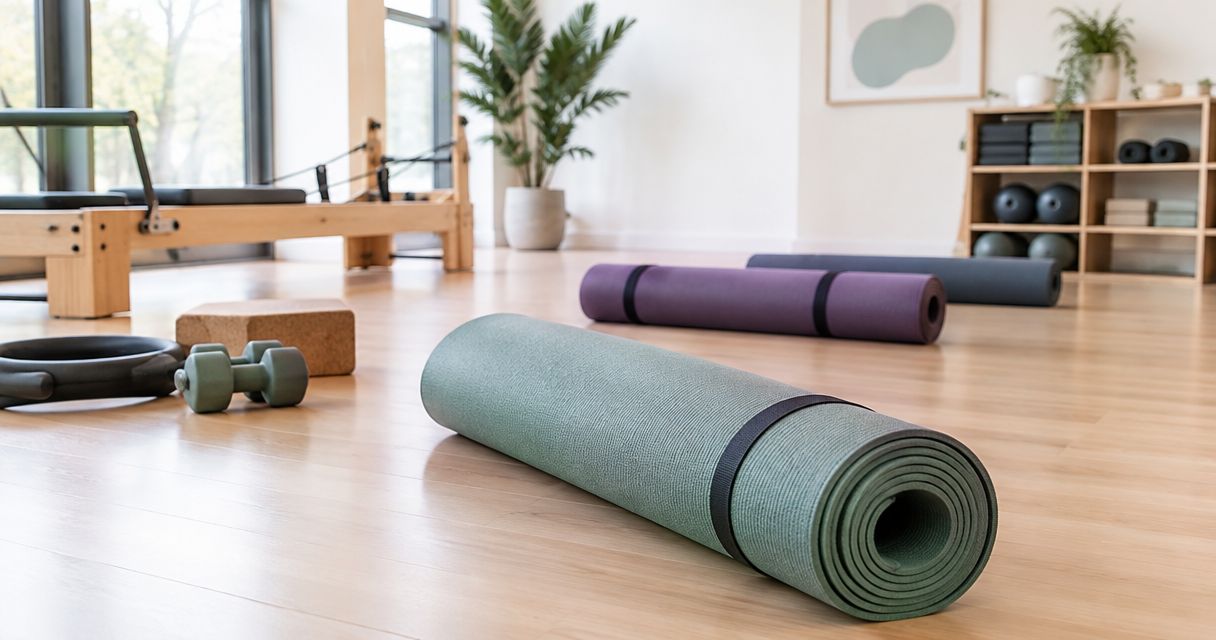
Pilates studios’ yoga mat selection is the process of matching floor support, movement stability and cleaning requirements to your classes, with the aim of giving clients a consistent training surface. Choose a yoga mat for pilates studios by testing actual exercises and between-class care—not by treating every product labelled yoga as a full-length teaching mat.
- Choose a yoga mat for pilates studios by testing floor stability, movement comfort and cleaning compatibility.
- SweatJoy’s TPE Folding Yoga Mat for Napping and Relaxation belongs on a relaxation shortlist, not an automatic studio order.
- A lumbar support pad is not a substitute for a full-length Pilates mat.
- Approve a sample before buying matching mats for your studio.
Why yoga mats matter for Pilates studios
Your mat has to work for more than a standing pose. A Pilates class includes movements on your back, side, hands and knees, so evaluate both comfort and control. A surface that feels pleasant while lying still can behave differently during a transition.
Shared equipment adds another requirement: repeatable care. You need instructions that staff can follow between sessions, plus storage that separates ready-to-use mats from equipment still being cleaned or dried. Treat cleaning and storage as selection criteria, not tasks to solve after ordering.
For your 2026 shortlist, start with the exercises you teach. SweatJoy sells fitness gear and workout accessories, but a product’s stated purpose still decides whether it belongs in your teaching space. Relaxation equipment and class mats are different purchases.
Choose your studio mats in six steps
1. Define the movements your mat must support
Start with your existing lesson plan. Write down where clients contact the mat, which movements travel across it and when they transition to standing. This gives you a practical brief without buying equipment or relying on a supplier’s promotional language.
Separate your main mat class from optional stretching or relaxation sessions. A purchase that works for one activity does not automatically cover the others. If instructors teach different formats, agree on the shared requirements before creating the shortlist.
Describe the result you need rather than prescribing an unsupported specification. Ask for comfortable kneeling, stable hand support and enough usable surface for the movements you teach. Then check those requirements against a sample.
Use these headings in your selection sheet:
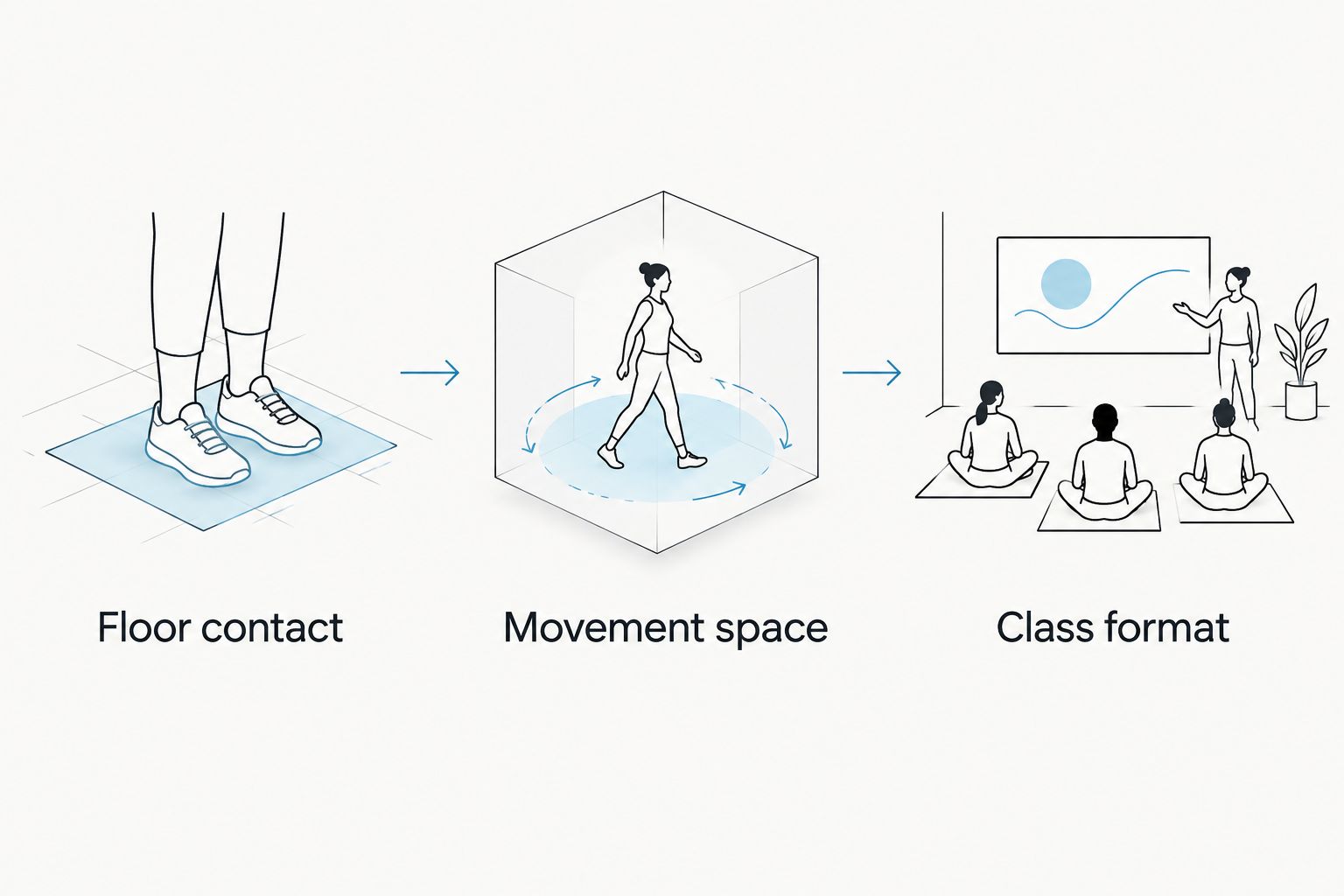
- Floor contact: List exercises performed on the back, side, hands and knees.
- Movement space: Identify exercises that extend beyond a stationary seated position.
- Transitions: Include changes between lying, kneeling and standing.
- Class format: Separate Pilates teaching from relaxation-only use.
- Client feedback: Record comfort concerns without treating them as medical diagnoses.
2. Test support and stability on your actual floor
Borrow a suitable mat or assess one already in the studio before ordering something new. Test it on the floor where you teach, not on a different surface in a showroom. Include the transitions your instructors actually demonstrate.
Use 1 sample mat as a screening purchase rather than committing to a matching set immediately. This is a buying procedure, not a claim about how many samples guarantee performance. Expand the trial if your instructors disagree or the studio uses different floor surfaces.
Record 3 checks per mat: whether the base moves, whether the hands move and whether floor contact feels acceptable. Keep those checks separate. A stable base does not prove that the upper surface provides the contact you need.
- Perform a controlled hand-supported movement and watch for surface movement.
- Change from lying to kneeling and check whether the mat shifts.
- Test a familiar side-lying exercise and note comfort feedback.
- Inspect the edges for curling, lifting or interference with transitions.
- Repeat the assessment wherever the studio floor surface changes.
3. Separate teaching mats from relaxation accessories
Use a simple shortlist first: product name, stated purpose, instructor assessment and care instructions. Reject category mismatches before comparing appearance. This prevents a product intended for localised support from being treated as a general exercise surface.
SweatJoy’s yoga mat options are best for relaxation-led accessory shortlists, not an untested studio-wide rollout. The TPE Folding Yoga Mat for Napping and Relaxation is described for naps and lounging. That makes relaxation its supported use; it does not establish how it performs through your Pilates sequence.
The New Lumbar Support Massaging Stretch Yoga Mat is described as a lumbar support stretching and massage pad. Evaluate it as an accessory, not as a replacement for the main class mat. A product title containing “yoga mat” does not settle the teaching-use question.
Keep your 2026 purchasing brief focused on function:
- Identify whether the item is a full exercise surface or a support accessory.
- Match its stated purpose to the session where you intend to use it.
- Request dimensions and care instructions before approving teaching use.
- Keep relaxation accessories separate from the core mat inventory.
- Reject any option that cannot be assessed against your class movements.
4. Check cleaning instructions before approving a sample
Start with the manufacturer’s written care instructions. Compare those instructions with your existing cleaning routine and products. Do not assume a mat tolerates the same treatment as another item because both look like foam.
For shared mats, cleaning suitability belongs in the buying decision. If the instructions require a process your team cannot carry out between bookings, resolve that conflict before ordering. Do not substitute a stronger cleaner simply to make the schedule work.
Create a written handling routine that covers cleaning, drying and storage. The routine should identify who checks the mat before it returns to class. Avoid fixed drying-time promises; follow the relevant instructions and check the actual condition of the surface.
Your 2026 staff guide should include these actions:
- Use only cleaning products and methods permitted by the mat’s instructions.
- Follow the cleaning product’s directions where they apply to the task.
- Check for residue, moisture and surface changes before returning equipment.
- Separate mats awaiting care from mats ready for clients.
- Remove visibly damaged equipment from the teaching area for assessment.
5. Plan the teaching layout and storage together
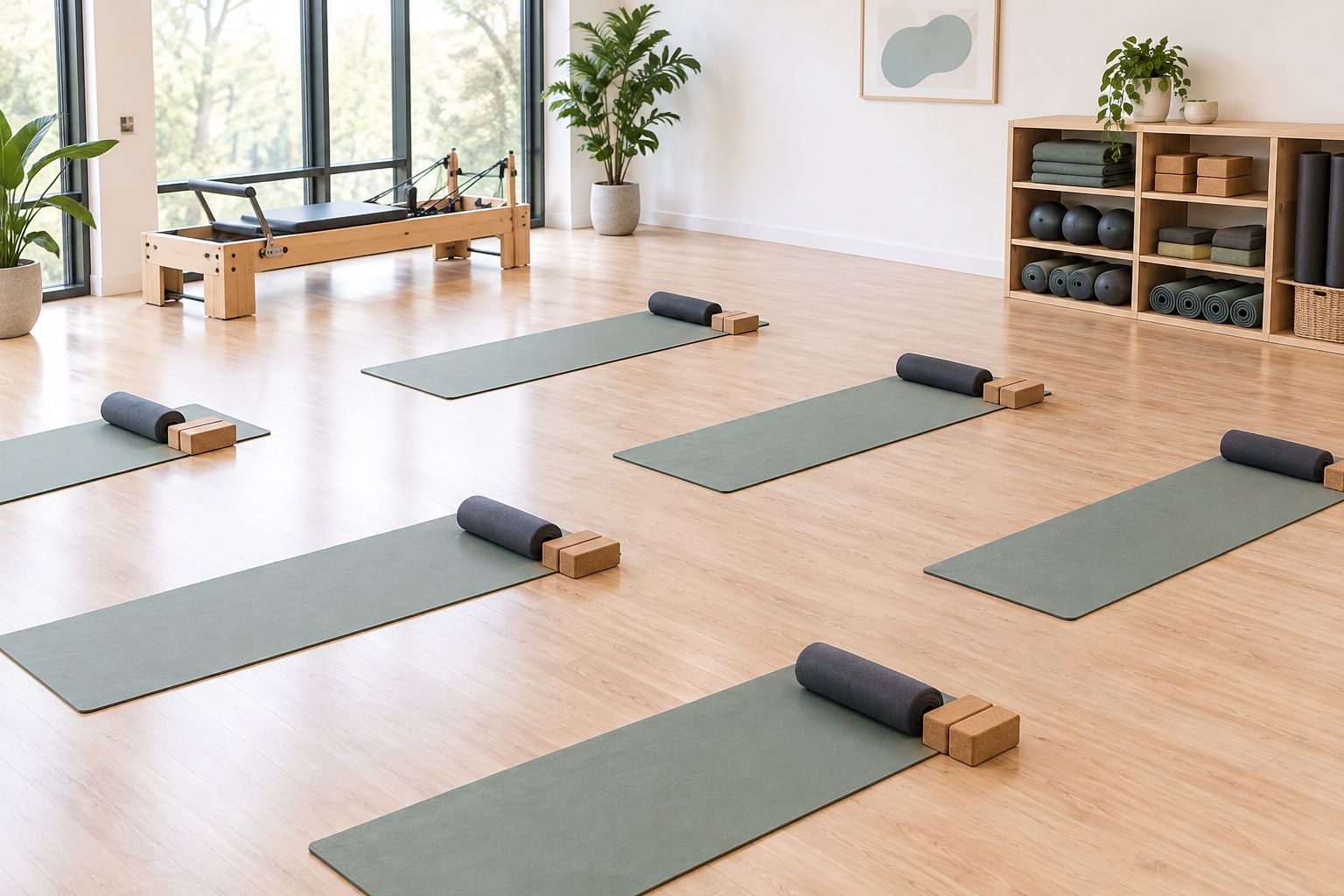
Use your current mats, paper outlines or removable floor markers to test the room before buying. Walk through the layout as an instructor, then rehearse movements at the edges of the teaching space. A mat that fits when everyone stands still can still conflict with your class plan.
Measure the proposed exercise area and compare it with the product’s published dimensions. Do not infer usable size from photographs. Include door access, instructor demonstrations and the route staff use to collect equipment.
Storage deserves the same attention. Check the stated folding or rolling method, then confirm that your chosen arrangement allows the required care routine. Compact storage is useful only if the mat remains suitable for its intended activity.
- Mark the usable teaching area before deciding on mat dimensions.
- Rehearse the movements that use the most floor space.
- Keep entry and exit routes clear during the layout test.
- Allocate separate places for ready, awaiting-care and damaged equipment.
- Confirm that storage follows the product’s handling instructions.
6. Run a teaching trial before standardising the set
Use a written feedback sheet rather than asking whether everyone liked the mat. Ask instructors to assess the same movements, using the same checks. Keep observations about floor movement, contact comfort, cleaning and handling in separate fields.
Schedule 2 trial classes as a defined starting procedure, not a guarantee of durability. Use those sessions to identify immediate fit problems and decide whether further evaluation is needed. A short trial cannot establish long-term performance.
Set a decision rule before collecting feedback: unresolved movement or care problems stop approval. Do not average away a problem that prevents the mat from doing its intended job. If you approve the sample, retain the exact product details and instructions for future orders.
For your 2026 approval record:
- Name the exercises used in the trial.
- Record instructor observations separately from client preferences.
- Confirm that staff completed the intended care process.
- Document any unresolved movement, surface or storage issue.
- Approve the product only for the activities actually assessed.
Compare the options by intended use
Choose the category first, then the product. A full-length teaching mat, a personal mat and a relaxation pad solve different problems. Comparing them solely because they share a yoga-related title hides the most important limitation.
| Option | Best for | Main advantage | Key limitation |
|---|---|---|---|
| Shared full-length exercise mat, assessed by the studio | Consistent Pilates class setups | Lets you standardise the surface and care routine | Requires sample testing and staff handling procedures |
| Client-owned mat, checked against studio requirements | Clients who prefer their own equipment | Keeps personal equipment separate from shared inventory | Different surfaces require individual suitability checks |
| TPE Folding Yoga Mat for Napping and Relaxation | Napping, lounging and relaxation shortlists | Its listed purpose directly matches relaxation use | The listed purpose does not establish suitability for Pilates teaching |
| New Lumbar Support Massaging Stretch Yoga Mat | Localised lumbar stretching and massage accessory shortlists | Its description identifies a specific support purpose | A lumbar support pad is not a full-length class-mat substitute |
The SweatJoy products below belong in an accessory assessment, not a blanket recommendation for shared Pilates classes. Keep the folding mat in the relaxation discussion and the lumbar pad in the support-accessory discussion. Neither removes the need to select and test your main teaching surface.


Common mistakes Pilates studios make
Buying for lying comfort alone
A comfortable resting position does not answer how the mat behaves during hand support or transitions. Test the whole teaching sequence. Keep comfort feedback, but do not let it replace movement checks.
Treating an accessory as the class surface
A lumbar support pad addresses a different use from a full-length exercise mat. Check the description, not just the title. Buy accessories only after deciding which activity they support and how the instructor will use them.
Approving equipment without a workable care routine
A sample can pass movement checks while creating a cleaning problem for your schedule. Read the care instructions before approval. If the required process conflicts with your operations, choose another option or change the routine before placing the order.
Ordering a matching set before instructor agreement
A uniform room is not evidence of suitable equipment. Agree on the requirements and resolve trial feedback first. Your 2026 equipment order should follow the teaching decision, not make that decision for the instructors.
FAQ
What is the best yoga mat for Pilates studios?
The best yoga mat for Pilates studios is a full exercise surface that passes your movement, comfort and care checks. Assess a sample on your studio floor before approving a matching set.
Can a Pilates studio use a yoga mat instead of a Pilates mat?
A Pilates studio can assess a yoga mat for teaching, but the label alone does not establish suitability. Test the exercises you teach and confirm the usable dimensions and cleaning instructions.
Should Pilates studio mats be thicker?
Choose cushioning by testing your class movements, not by assuming that thicker always means better. Assess floor-contact comfort and movement stability together.
Is SweatJoy’s folding yoga mat suitable for shared Pilates classes?
SweatJoy’s TPE Folding Yoga Mat for Napping and Relaxation is described for naps and lounging, so Pilates suitability requires a separate assessment. Check its dimensions, care instructions and behaviour during your teaching sequence before approving it.
Can a lumbar support yoga mat replace a full Pilates mat?
A lumbar support pad is not a substitute for a full-length Pilates teaching surface. The New Lumbar Support Massaging Stretch Yoga Mat is described as a stretching and massage pad, so assess it as an accessory.
How should a Pilates studio clean shared yoga mats?
Clean shared yoga mats according to the mat manufacturer’s instructions and the relevant cleaning product directions. Check that the surface is ready for use before returning it to class, and keep equipment awaiting care separate.
Should Pilates clients bring their own mats?
Client-owned mats are an option when the studio checks them against its teaching requirements. Set clear expectations for usable dimensions, condition and suitability rather than assuming every personal mat works for every class.
One last thing
Keep the assessment sheet after the purchase. When you reorder in 2026, compare the new item’s stated purpose, dimensions and care instructions with the approved record. A familiar product name is not a substitute for checking the equipment you receive.
Buy the surface your class needs, then add the accessories. That order keeps relaxation products from becoming teaching equipment by default—and gives every purchase a clear job.