Properly fitted graduated compression sleeves can support blood returning towards your heart during workouts, but that does not guarantee better muscle oxygen delivery, endurance or strength. For healthy gym-goers, sleeves are optional support—not a treatment for poor circulation—and excessive tightness, numbness or a cold hand or foot means you should remove them.
- Can compression sleeves improve circulation during workouts? Graduated compression can support venous return, but better performance is not guaranteed.
- Choose compression sleeves for comfortable support, not to push through pain, swelling or numbness.
- Sweatjoy fitness accessories suit gym-goers building a routine; circulation symptoms need medical assessment, not another accessory.
- Check the pressure rating, size chart and fit before training. Tighter is not automatically better.
Can compression sleeves improve circulation during workouts?
Graduated compression can help venous blood return towards the heart; it does not automatically increase the oxygen reaching working muscles. Those are different outcomes. Your muscles already help move venous blood when they contract, and exercise changes blood flow according to the work you perform.
A sleeve applies external pressure over part of a limb. A graduated design applies a changing pressure along that area, rather than simply squeezing everywhere equally. A snug fabric sleeve without a stated compression profile should not be assumed to provide the same effect.
Before choosing a pair, use the compression sleeves for gym workouts guide to frame your comparison around fit and intended use, not a promise of faster gains.
| Option | Best for | Main advantage | Main limitation |
|---|---|---|---|
| Graduated calf or arm sleeve | Exercisers who prefer local support | Applies compression over the covered area | Leaves the hand or foot uncovered; fit and pressure still matter |
| Graduated compression sock | People seeking compression that includes the foot | Covers the foot and lower leg together | Requires correct foot, ankle and calf sizing; not interchangeable with a sleeve |
| No compression garment | Healthy exercisers comfortable without extra support | Avoids garment pressure, heat and fit problems | Does not provide the supportive sensation some exercisers prefer |
These are choices about coverage and comfort, not a ranking of medical treatments. If you exercise comfortably without compression, you do not need to add it just to make your circulation work.
Why this matters for your 2026 training
“Better circulation” often bundles together several different claims: easier venous return, less swelling, improved endurance and quicker recovery. Proof of one does not prove the others. A sleeve can feel supportive without changing your running pace or lifting performance.
Keep your goal specific. If you want a comfortable feeling around your calves during a workout, judge the sleeve against that goal. If you want help with unexplained swelling, recurring numbness or a limb that feels unusually cold, get medical advice instead of experimenting with stronger compression.
The distinction protects your training decisions. A garment should help you feel comfortable doing appropriate exercise; it should not persuade you to ignore a symptom or increase training load before you are ready.
Calf sleeves: local support without foot coverage
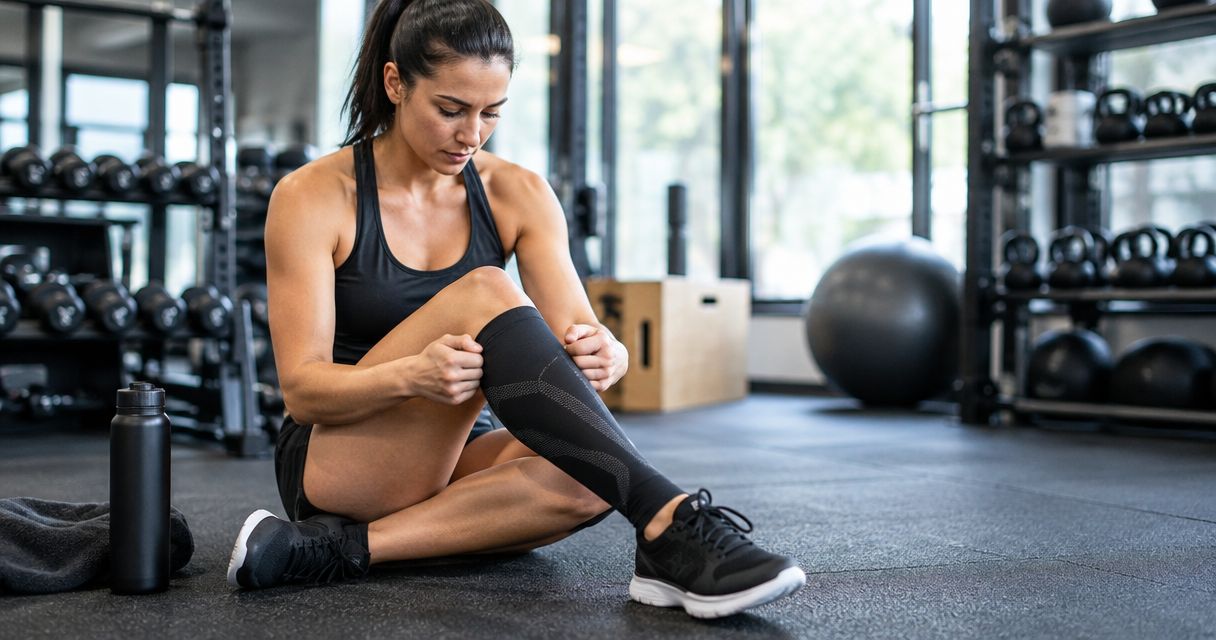
Best for: exercisers who like a supportive feeling around the lower leg. Calf sleeves cover the lower leg while leaving the foot free. That makes their coverage different from compression socks, even when both products use similar language on the label.
The advantage is straightforward: you can choose your usual socks separately. The limitation is equally important: pressure around the calf does not mean the foot receives the same compression, and a tight lower edge can create an uncomfortable pressure point.
Check the whole lower leg, not just the fabric-covered area. New swelling below the sleeve, tingling in your foot or an edge that digs in is a reason to stop and reassess. Do not solve slipping by folding the sleeve into a tighter band.
Arm sleeves: support is not extra strength
Best for: exercisers who prefer light, close-fitting coverage around the arm. An arm sleeve can provide a supportive sensation, but that sensation is not evidence of increased lifting strength or improved circulation throughout your body.
Your hand remains outside the sleeve. Check that your fingers feel normal and that bending your elbow does not create a tight fold. You should be able to move through your usual exercise range without the garment pinching or restricting you.
Do not confuse an arm compression sleeve with an elbow brace or another purpose-designed support. Different garments serve different jobs. A sleeve is not permission to continue pressing, pulling or gripping through unexplained pain.
Why compression sleeve effects vary
The word “compression” does not tell you everything you need to know. These factors change what the garment does and how it feels:
- Pressure profile: Graduated compression and uniform tightness are not the same design. Look for a clear description rather than assuming every stretchy sleeve works alike.
- Size and shape: A sleeve must match the measurements specified by its manufacturer. Choosing a smaller size to get more pressure can create poor fit.
- Coverage: An arm sleeve, calf sleeve and compression sock cover different areas. Benefits and fit problems do not transfer automatically between them.
- Movement: A sleeve that feels fine while standing can bunch when you squat, run or bend your elbow. Assess it during the movements you actually perform.
- Health and sensation: Arterial disease, reduced sensation, skin problems and existing swelling change the safety decision. Get individual advice rather than copying another athlete's choice.
Sweatjoy fitness accessories are best for gym-goers building a training routine, not for diagnosing circulation problems. Use that same boundary when assessing any workout accessory: decide what practical job it performs, then reject claims that go beyond that job.
What pressure labels mean in 2026
Compression pressure is commonly expressed in millimetres of mercury, written as mmHg. You will encounter labels such as 15–20 mmHg, 20–30 mmHg and 30–40 mmHg on compression garments. These are pressure ranges, not performance scores or universal workout recommendations.
Do not choose 20–30 mmHg simply because it is higher than 15–20 mmHg. Likewise, 30–40 mmHg is not an “advanced athlete” setting. Stronger compression can require medical guidance, particularly when you have symptoms, an existing condition or a prescribed compression plan.
Pressure categories and naming conventions vary between products and markets. Read the actual range and intended use rather than relying on words such as “firm,” “sport” or “maximum.” A manufacturer's pressure claim also does not establish that a particular garment will improve your performance.
Choose the right fit and purpose before considering stronger pressure. If the listing does not state a pressure range, do not invent one from how tight the sleeve feels. Ask for clarification or choose another product with clearer information.
How to check sleeve fit before a workout
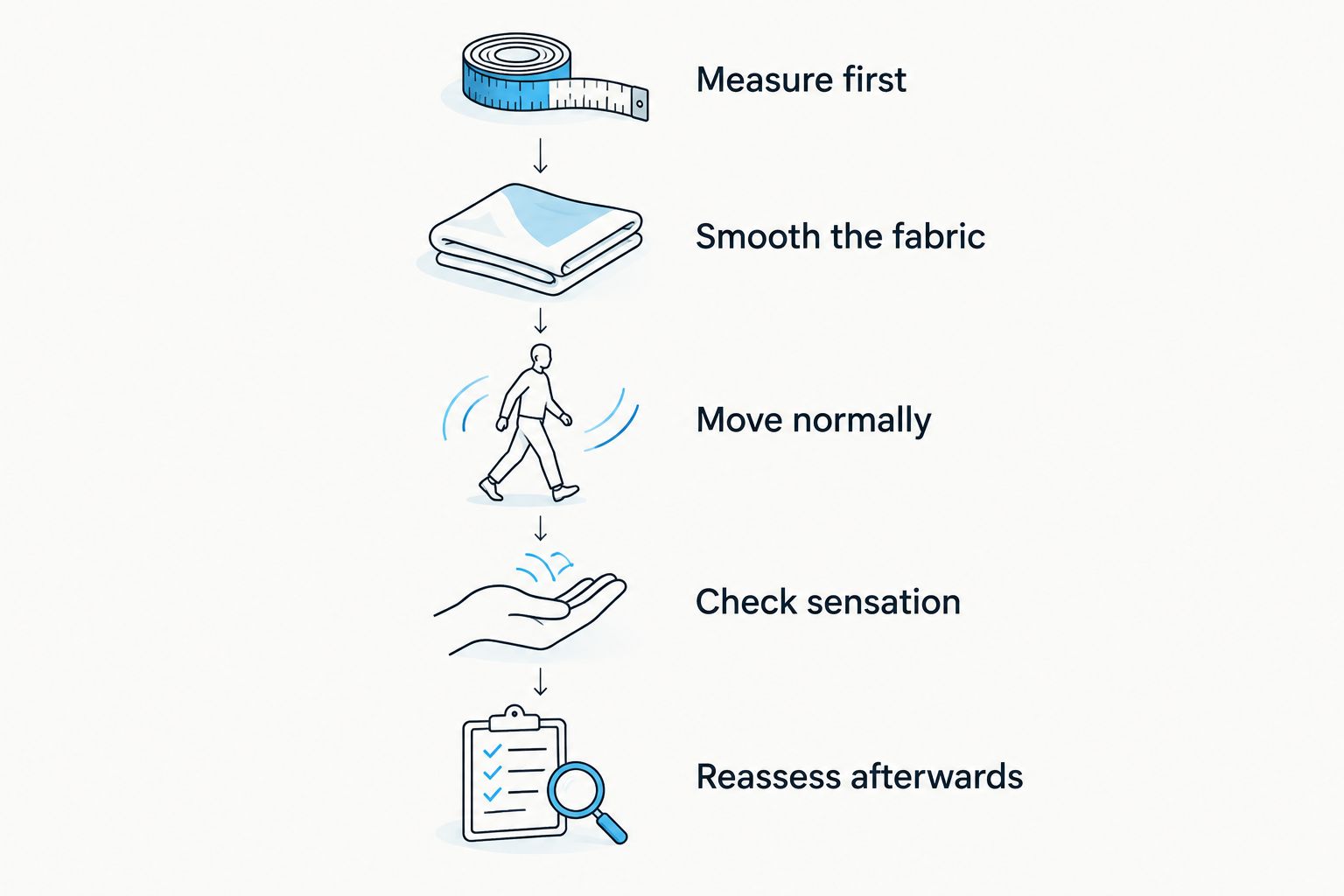
Use this sequence when trying compression sleeves in 2026. Follow the garment's own fitting instructions first, and keep the first trial easy enough that you can focus on comfort rather than performance.
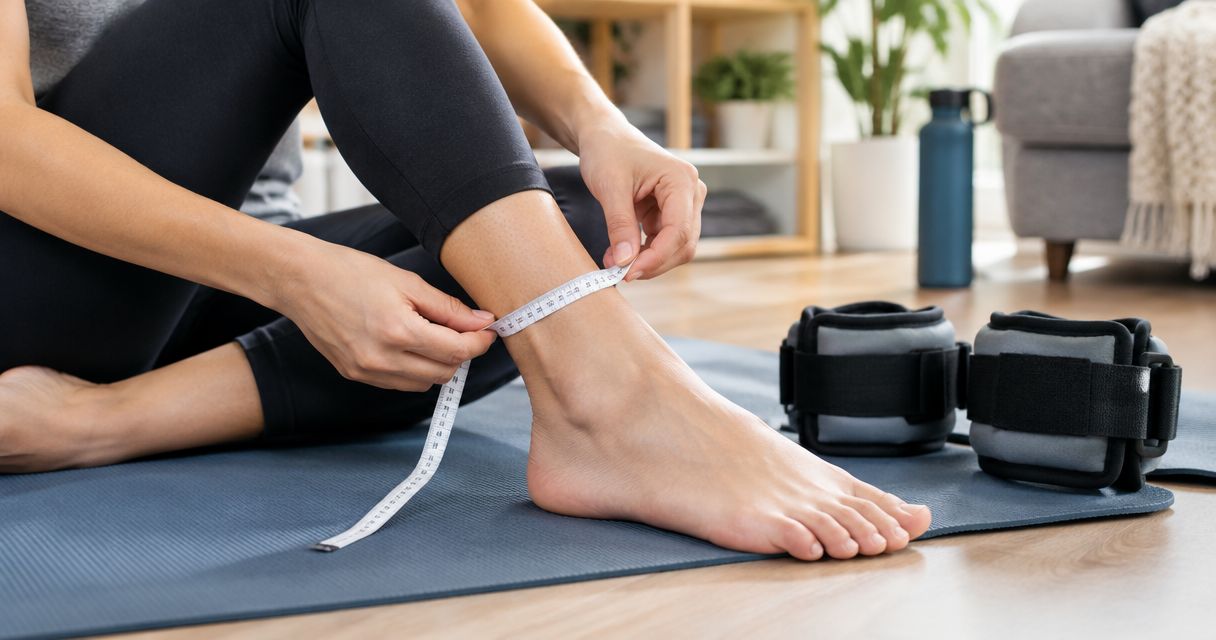
- Measure first. Use the manufacturer's specified measuring points and size chart. Do not substitute your usual clothing size or another brand's sizing.
- Smooth the fabric. Position the sleeve as directed, with no twists, folds or rolled edges. An even fit matters more than a very tight feeling.
- Move normally. Walk, bend the relevant joint and rehearse your exercise without added intensity. Check for slipping, bunching or restricted movement.
- Check sensation. Your hand or foot should not become numb, unusually cold, painful or discoloured. Remove the garment if any of these appear.
- Reassess afterwards. Look for irritation, persistent discomfort or new swelling. Do not repeat a problematic fit just because the workout itself is over.
The goal is an even, comfortable fit that stays in place. You should not have to endure the sleeve, repeatedly pull it up or treat loss of sensation as part of the adjustment process.
When should you avoid self-selecting compression sleeves?
Get medical advice before using compression if you have known arterial circulation problems, reduced sensation, active skin damage or unexplained swelling. If a clinician has prescribed compression, use the specified garment and instructions rather than replacing it with a sports sleeve.
Sudden swelling, pain, warmth or redness in one limb needs prompt medical assessment. Do not try to squeeze it away with a sleeve, massage it aggressively or continue training to see whether it settles. A compression garment cannot tell you what is causing those symptoms.
Chest pain, sudden shortness of breath or fainting requires emergency help. If a sleeve causes numbness, coldness, colour change or pain, remove it; persistent symptoms still need medical attention. Stopping the pressure is a first step, not a diagnosis.
Do compression sleeves help you run faster or lift more?
Compression sleeves do not guarantee faster running or stronger lifts. Supporting venous return and improving sports performance are separate claims, so a circulation explanation alone does not justify a performance promise.
For your 2026 training, judge the sleeve against a practical outcome such as comfort, freedom of movement or whether it stays in place. Avoid changing your shoes, training load and sleeve choice together if you want to understand which change affected your session.
Keep the bigger training priorities in order. Appropriate progression, rest and exercise technique remain necessary whether you wear compression or not. A sleeve should fit your programme—not become the reason you attempt more than the programme calls for.
Are compression sleeves better during exercise or afterwards?
Neither timing is automatically better for everyone. Wearing a sleeve during exercise and using compression during recovery are different decisions, and a comfortable session does not establish that you need to keep the garment on afterwards.
Follow the product's intended use and any medical instructions. Do not extend wear indefinitely because a garment felt good during training, and do not assume a sports sleeve is suitable for sleeping in.
Sweatjoy's Yoga Silicone Massage Stick for Muscle Relaxation is a separate type of recovery accessory, not a compression garment or a treatment for circulation problems. Keep those purposes separate: a recovery tool does not answer whether compression is appropriate for your symptoms or workout.
How do you know whether a sleeve is helping?
A useful sleeve improves your experience without creating new problems. Look for comfortable support, normal movement and a stable fit—not simply the strongest squeeze you can tolerate.
Write down what you wanted to improve before trying it. If the goal was comfort, assess comfort; if the goal was faster running, a supportive feeling is not the same result. Avoid interpreting every good workout as proof that the sleeve changed your circulation.
Also notice the drawbacks. Extra warmth, skin irritation, awkward fit and repeated adjustment can outweigh a pleasant supportive sensation. Removing an accessory that does not help is a sensible training decision, not a missed opportunity.
FAQ
Can compression sleeves improve circulation during workouts if I'm healthy?
Properly fitted graduated compression sleeves can support venous return during workouts, but healthy exercisers do not need them for normal circulation. That effect does not guarantee better endurance, strength or muscle oxygen delivery.
Are compression sleeves better than compression socks for the gym?
Compression sleeves are not automatically better than compression socks. Sleeves leave the foot or hand uncovered, while socks include the foot; choose coverage and fit for your intended use, with medical guidance when needed.
Should I choose tighter compression sleeves for better results?
No—tighter compression sleeves do not automatically produce better results. Use the manufacturer's measurements and intended pressure, and remove a sleeve that causes pain, numbness, coldness or colour changes.
Can I wear compression sleeves for every workout?
You do not need compression sleeves for every workout. If you use them, follow the garment's instructions and reassess comfort, skin condition and fit rather than assuming continued wear is always appropriate.
Will compression sleeves stop my legs swelling during exercise?
Compression sleeves are not a reliable self-treatment for unexplained leg swelling. New swelling, especially with pain, warmth or redness in one limb, needs prompt medical assessment rather than tighter sportswear.
Is it normal for my foot to tingle in a calf sleeve?
Tingling is a reason to remove the calf sleeve, not push through the workout. Check the fit, and seek medical advice if the sensation persists or comes with pain, coldness or colour change.
Can I sleep in the compression sleeves I use at the gym?
Do not assume gym compression sleeves are suitable for sleep. Follow the product's instructions, and use prescribed overnight compression only as directed by your clinician.
One last thing
The best sign of a useful sleeve is not how tight it feels. It is whether you can train comfortably, move normally and finish without new symptoms. Feeling squeezed is a sensation—not a measurement of better circulation.
Keep that rule in your 2026 kit checklist. When browsing Sweatjoy, buy fitness accessories for a clear training purpose, and leave diagnosis and treatment of circulation problems to a qualified clinician.