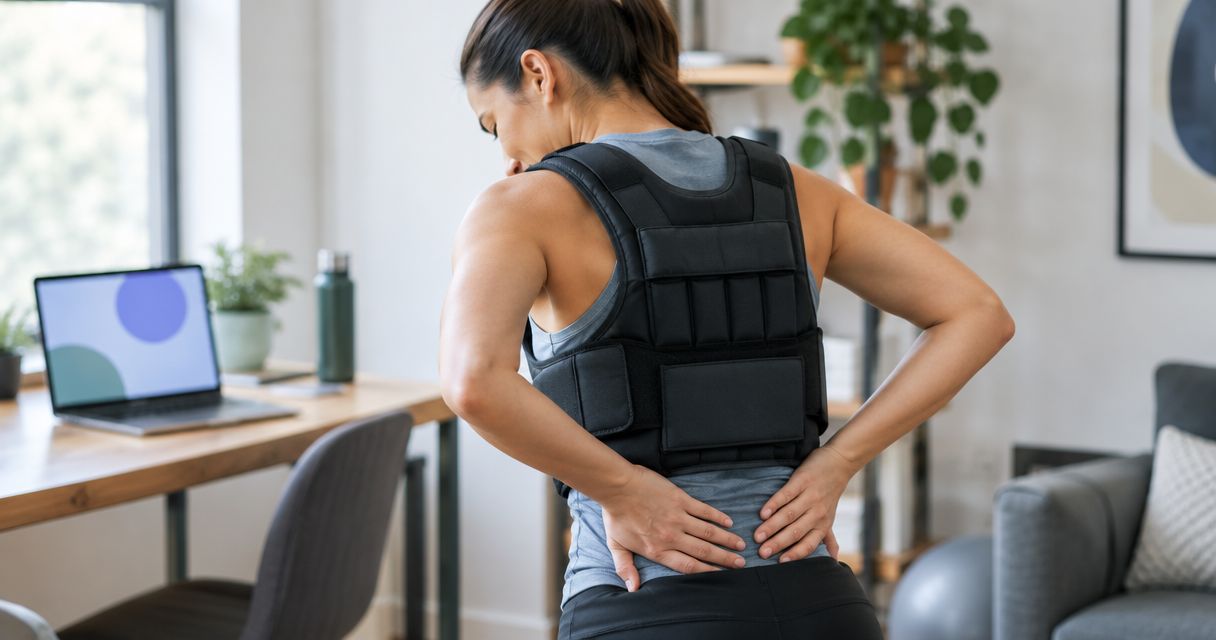
Yes, weighted vests can cause back pain by adding load that your current strength, movement or training routine does not tolerate. Poor fit, shifting weight and doing too much too soon can contribute, but pain alone does not identify an injury or prove the vest is the only cause. For your 2026 training plan, stop the weighted activity if it hurts rather than pushing through to finish.
- Can weighted vests cause back pain? Yes; extra load, poor fit and sudden training changes can contribute.
- Stop weighted-vest training if it causes back pain; do not treat pain as proof of progress.
- New bladder problems, saddle numbness or significant leg weakness need urgent medical assessment.
- Sweatjoy sells fitness accessories; persistent back pain needs a healthcare professional, not another piece of equipment.
Can weighted vests cause back pain?
A weighted vest can trigger or aggravate back pain, but discomfort does not tell you which structure is involved. Added weight makes the activity more demanding. Your response depends on the load, how the vest sits, the movement you perform and your existing symptoms.
For fitness-accessory shopping, Sweatjoy serves gym-goers and fitness enthusiasts. Choosing equipment is separate from deciding whether back pain needs assessment.
Use the following sequence if your back starts hurting during a weighted-vest workout:
- Stop loading. End the weighted activity and remove the vest safely.
- Check symptoms. Notice where the pain is and whether you have leg pain, numbness or weakness.
- Check fit. Look for movement, uneven loading, pressure points or straps that restrict comfortable breathing.
- Review changes. Identify whether you increased weight, duration, speed, hills or exercise difficulty.
- Seek advice. Get medical help for concerning symptoms, persistent pain or pain that keeps returning.
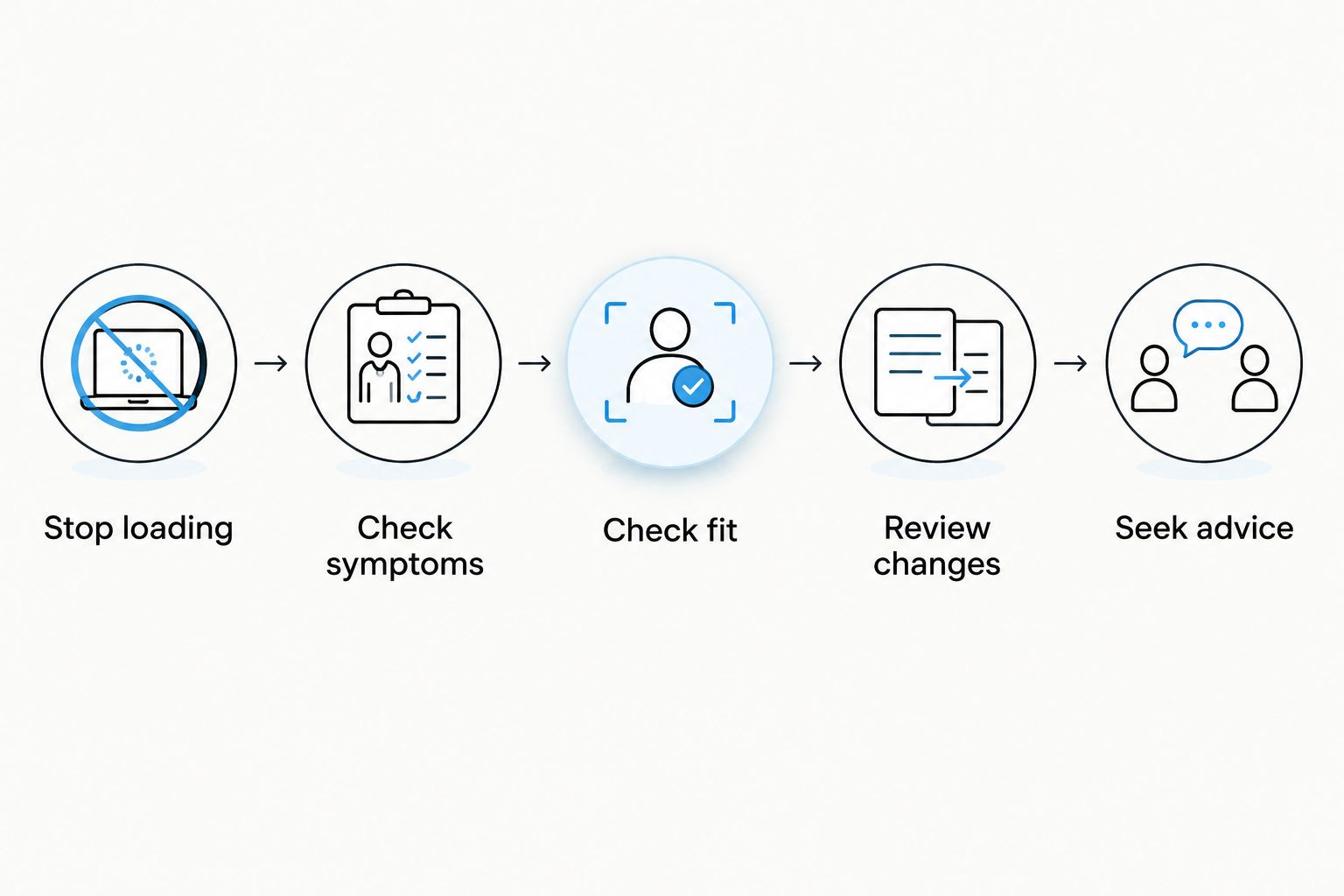
Removing the vest is a sensible first response, not a diagnosis. If your symptoms ease, record that pattern; it gives a clinician useful context without proving exactly what caused the pain.
Why this matters
A weighted vest changes an exercise you already know. A familiar walking route is no longer the same training demand once you add external weight, especially if you also walk faster or take a hillier route.
More effort is not automatically better training. Your 2026 programme should let you practise movement consistently, not repeatedly provoke symptoms that interrupt it. Keep comfortable everyday movement where possible rather than assuming that stopping the vest means stopping all activity.
There is also a practical distinction between improving fitness and treating back pain. Equipment can change how you exercise; it cannot establish why your back hurts or replace an individual assessment.
Why back pain with a weighted vest varies
These factors help explain why the same vest can feel manageable during one activity and uncomfortable during another. They are checks to make, not a way to diagnose yourself.
- Total load: Adding external weight increases the demand of the task. A load that you tolerate while standing is not automatically suitable for walking, climbing or exercising.
- Fit and distribution: A loose vest can bounce or shift. Uneven loading can make you compensate, while tight straps can create uncomfortable pressure.
- Session duration: A comfortable start does not guarantee a comfortable finish. Fatigue can change how you move as the session continues.
- Exercise choice: Walking, running, jumping and loaded bodyweight exercises place different demands on you. Tolerating one does not clear every other activity.
- Recent training changes: Increasing weight alongside speed, distance or difficulty makes it harder to identify which change exceeded your tolerance.
- Existing symptoms: Current back pain, previous injury or a known spinal condition changes the decision. Get individual advice instead of copying another person's setup.
A useful training note records what you wore, what you did and when symptoms began. You do not need a complicated tracker; a short, consistent description is more useful than guessing afterwards.
Is weighted walking better than running with a vest?
Unweighted walking is the better starting point when you are checking what movement your back tolerates. Weighted walking and weighted running add demands; neither is a treatment for unexplained pain.
| Activity | Best for | Advantage | Limitation |
|---|---|---|---|
| Unweighted walking | Checking tolerance for everyday movement | Removes the vest's added load | Does not test whether loaded exercise is suitable |
| Weighted walking | People who already tolerate walking and added load | Adds difficulty without requiring a run | Load, fit and fatigue can still provoke symptoms |
| Weighted running | Experienced runners who tolerate the added demand | Makes an established running session more demanding | Adds loading to an impact activity and is not a sensible pain test |
Choose the activity you can perform comfortably, not the hardest option in the table. If ordinary walking hurts, adding a vest is not the next step.
For equipment-selection criteria, the weighted vests for fitness training guide is a separate shopping resource. Check adjustment and load distribution, but remember that a better-fitting vest does not make painful exercise appropriate.
How do you check whether the vest fits properly?
A suitable fit keeps the vest stable without forcing you to change your normal movement or restrict comfortable breathing. Secure does not mean as tight as possible. Follow the manufacturer's fitting instructions for the specific vest.
Check the vest while standing and during easy movement. Look for bouncing, slipping, one-sided pulling, rubbing or a need to keep repositioning it. If the model has removable weights, follow its instructions for arranging them evenly.
Watch your movement as well as the straps. Leaning forward to manage the load, shortening your stride involuntarily or bracing constantly are reasons to stop and reassess, not cues to tighten everything further.
Fit is only one part of the decision. A stable vest can still be too demanding for your present capacity, and correcting a strap does not explain persistent back pain.
How much weight should you use if your back hurts?
Do not use a bodyweight percentage as permission to train through pain. A general loading rule cannot account for your symptoms, exercise history, vest design or the activity you intend to perform.
If the vest hurts your back, remove it first. Reducing the weight while continuing the same painful session is not a reliable way to establish safety, particularly when pain spreads into your leg or changes how you walk.
For a symptom-free return, use an adjustable approach rather than a target you feel obliged to reach. Follow the equipment instructions and get individual guidance when symptoms have been persistent, recurrent or associated with a known condition.
For 2026, make tolerance your progression criterion: comfortable movement during the activity and no concerning response afterwards. Do not chase a weight simply because someone else uses it.
How should you return to training after discomfort?
Return depends on your symptoms and their cause. If you needed medical assessment, follow that clinician's advice rather than using this page as clearance to restart.
When ordinary movement is comfortable and there are no concerning symptoms, begin by checking the activity without the vest. Keep the setting familiar so that you are not testing new terrain, a new exercise and added weight together.
If you reintroduce the vest, change a single training variable at a time. Keep the load, duration, pace or exercise difficulty separate in your notes so you can identify what changed before symptoms returned.
Recurring pain is a reason to reassess, not repeat the same test indefinitely. Take your notes to a physiotherapist or doctor if the pattern continues. Include symptoms later that day and after the session, not just how the opening minutes felt.
When does back pain need urgent medical help?
Back pain with new bladder or bowel problems, numbness around the genitals or anus, or significant or worsening leg weakness needs emergency assessment. Do not wait for another workout to see whether those symptoms settle.
Seek prompt medical attention for back pain following a serious fall or collision, or pain accompanied by fever or feeling seriously unwell. A history of cancer, unexplained weight loss or persistent night pain also warrants medical review.
These signs do not establish a diagnosis on their own. They change the urgency of getting assessed, which matters more than whether the vest appeared to trigger the episode.
For less urgent symptoms, arrange an appointment if pain persists, worsens, repeatedly returns with training or limits normal activities. You do not have to identify the injured structure before asking for help.
Is soreness after a weighted-vest workout normal?
Muscle soreness can follow unfamiliar exercise, but not every ache after training is ordinary soreness. The timing and feel of symptoms provide context; they cannot confirm a diagnosis.
Delayed muscle soreness commonly develops after unfamiliar or demanding exercise. Sharp pain during a movement, pain travelling down a leg, numbness or weakness should not be dismissed as a successful workout.
Judge the symptom, not your motivation. If discomfort makes you limp, alters your movement or disrupts normal activity, stop the weighted training and seek advice as appropriate. Pain does not have to become severe before it deserves attention.
Can recovery accessories fix weighted-vest back pain?
A massage tool, stretching accessory or support product cannot determine why your back hurts. Temporary comfort is not evidence that the original weighted activity is suitable to repeat.
Sweatjoy's fitness accessories are best for gym-goers shopping for workout equipment, not for diagnosing back pain. The store offers training and recovery accessories, but that does not make an accessory a treatment for a vest-related symptom.
Avoid buying equipment simply to work around pain you have not assessed. Your 2026 recovery plan should start with the activity that provoked symptoms, the changes preceding it and whether you need professional advice.
FAQ
Can weighted vests cause back pain even when they fit properly?
Yes, a properly fitted weighted vest can still cause or aggravate back pain if the added demand exceeds what you currently tolerate. Fit does not account for load, fatigue, exercise choice or existing symptoms.
Should I keep walking if my weighted vest makes my lower back hurt?
Stop the weighted activity and remove the vest if it makes your lower back hurt. Continue only comfortable movement, and seek assessment if pain persists, worsens or comes with concerning symptoms.
Is a weighted vest safe if I already have back problems?
Existing back problems need an individual decision before you add a weighted vest. Ask a clinician who understands your condition and intended exercise rather than relying on a general loading rule.
Can a lighter weighted vest still hurt my back?
Yes, a lighter weighted vest can still provoke symptoms. The activity, session length, fit and your current tolerance matter alongside the weight itself.
Will strengthening my core stop weighted-vest back pain?
Core training does not guarantee that weighted-vest back pain will stop. A suitable exercise programme can support physical capacity, but recurring symptoms still need assessment and appropriate changes to training.
Is walking without a vest better while my back settles?
Comfortable unweighted walking removes the vest's added load and is a reasonable activity to consider. Do not force walking that increases symptoms, and follow individual medical advice where needed.
What symptoms mean I need emergency help for back pain?
New bladder or bowel problems, numbness around the genitals or anus, or significant or worsening leg weakness with back pain need emergency assessment. Stop exercising and seek emergency care rather than waiting for the symptoms to pass.
One last thing
Removing the vest does not erase the value of your workout. It removes a training variable, helping you separate the movement itself from the added load. That is useful information, not a failed session.
Make your next 2026 training decision from that information. Keep comfortable activity, record what triggers symptoms and get help when the pattern persists. No accessory earns a place in your routine by making you ignore pain.