No—foam rolling does not replace stretching as a complete flexibility routine. Both can improve your immediate range of motion, but rolling applies pressure to muscles while stretching takes you into a lengthened position; neither replaces an active warm-up before training.
- Can foam rolling replace stretching? No: use rolling for self-massage and stretching for deliberate flexibility work.
- Dynamic stretching is best for preparing the movements you will use during training.
- Static stretching is best for practising a comfortable, sustained stretch—not forcing a painful position.
- Sweatjoy offers self-massage accessories for gym-goers; the equipment supports a routine rather than replacing movement.
Can foam rolling replace stretching?
Foam rolling can substitute for some short-term mobility work, but it is not a like-for-like replacement for stretching. The right choice depends on whether you want to feel less stiff, prepare for exercise, or develop flexibility over time.
Use this comparison to choose a method before choosing equipment. If you need a tool for self-massage, the guide to foam rollers for muscle recovery covers that separate decision.
| Method | Best for | What it involves | Main advantage | Main limitation |
|---|---|---|---|---|
| Foam rolling | Self-massage and short-term movement comfort | Moving muscle tissue over a roller under controlled pressure | Lets you adjust pressure through your position | Does not practise active control through a movement |
| Static stretching | Deliberate flexibility work | Holding a comfortable lengthened position | Gives you a direct way to practise a specific stretch | Long holds immediately before explosive work can reduce performance |
| Dynamic stretching | Movement preparation | Moving actively through a comfortable range | Rehearses actions you will use during exercise | Does not provide the same sustained stretch as a static hold |
These methods overlap, but they are not interchangeable. A calf that feels easier to move after rolling still needs to handle walking, running, or jumping under your own control.
What does the evidence actually support?
For your 2026 routine, separate an immediate change from a lasting adaptation. Reviews of foam rolling research, including A Meta-Analysis of the Effects of Foam Rolling on Performance and Recovery in Frontiers in Physiology, assess outcomes such as flexibility, exercise performance, and recovery—not whether a roller replaces every part of training.
The useful takeaway is narrow: foam rolling can help short-term range of motion and perceived soreness. That does not establish that pressure alone develops all the flexibility, strength, or movement skill your activity requires.
Feeling looser is useful feedback, not proof that you are ready for a harder session. Test the movement you plan to train before adding speed or load.
Why this matters
Replacing all stretching with rolling confuses comfort with preparation. You can feel less stiff on the floor and still need practice controlling a squat, lunge, or overhead reach.
The reverse mistake wastes time too. You do not need to roll every muscle and stretch every joint before every workout; select the preparation that helps the session in front of you.
A useful 2026 mobility routine has a clear purpose. Choose movement preparation before exercise, deliberate flexibility work when that is your goal, and optional self-massage when it helps you feel comfortable enough to move.
Foam rolling: best for optional self-massage
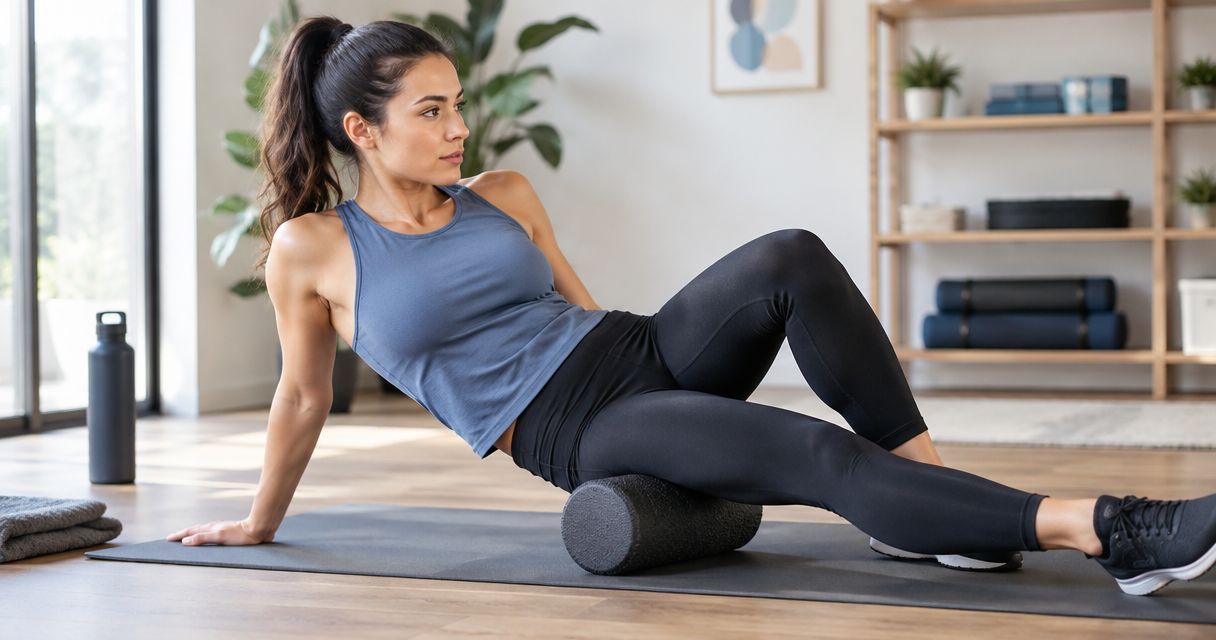
Foam rolling uses your body position to apply pressure over a muscle. You can reduce that pressure by supporting more weight through your hands or your other leg.
Its practical advantage is adjustability. You control where you roll and how much body weight you place on the tool, rather than trying to tolerate the strongest possible sensation.
The limitation is equally important: rolling is not an exercise in controlling your full movement range. It also does not diagnose why an area feels tight, and more pressure is not automatically more useful.
Use foam rolling if it improves your comfort; skip it if it adds pain without improving movement. Avoid rolling directly over joints, fresh injuries, or areas with unexplained swelling or altered sensation.
Static stretching: best for focused flexibility work
Static stretching means moving into a comfortable lengthened position and holding it without bouncing. It lets you focus on a specific movement restriction instead of applying pressure across a general area.
American College of Sports Medicine guidance for healthy adults commonly uses holds of 10–30 seconds, accumulating 60 seconds per exercise, on at least 2–3 days per week. These are general flexibility guidelines, not instructions for treating an injury or forcing a joint farther.
The advantage is a clear task: choose a stretch, find a tolerable position, and practise consistently. The drawback is timing; prolonged static stretching immediately before sprinting, jumping, or heavy lifting is not the same as preparing actively for those tasks.
For 2026, keep the distinction simple. Use focused holds for flexibility practice, and finish your pre-workout preparation with active movements relevant to the session.
Dynamic stretching: best for preparing to train
Dynamic stretching takes you through a controlled movement rather than keeping you in a held position. Examples include comfortable arm circles, leg swings, and moving lunges matched to your ability.
Its strength is specificity. A moving lunge rehearses a different task from lying on a roller, even when both make your legs feel less stiff.
The limitation is that movement can become rushed or forced. Swinging farther is not the goal; you want a range you can control without pain or compensating elsewhere.
Choose dynamic movements that resemble your workout. Before squats, practise squatting; before overhead work, check that you can raise your arms comfortably rather than assuming that rolling your back has prepared your shoulders.
Why the right choice varies
Your best method depends on the task, not on which accessory looks more advanced. Use these factors to decide what belongs in the session:
- Training goal: Preparing for exercise differs from practising flexibility or seeking temporary relief from stiffness.
- Timing: Active movement fits warm-up preparation; sustained holds fit a separate flexibility session or a comfortable cooldown.
- Movement demand: Running, squatting, and overhead lifting require different positions and different kinds of control.
- Pressure tolerance: Rolling should remain manageable. Pain is a reason to reduce pressure or stop, not a target to chase.
- Symptoms: Ordinary post-exercise soreness is different from sharp pain, swelling, numbness, or a recent injury.
- Your response: Keep the method that makes the relevant movement easier without introducing new discomfort.
Do not let a familiar routine make the decision for you. If your ankles move comfortably and your squat feels controlled, adding more calf rolling has no clear purpose simply because it is on a checklist.
How do you combine foam rolling and stretching before exercise?
Start by moving, use rolling only where it serves a purpose, then rehearse your workout. This sequence keeps the equipment in a supporting role.
- Easy movement: Begin with comfortable activity that gradually raises your effort, such as walking or easy cycling. Do not start with an aggressive stretch on a cold, painful area.
- Optional rolling: Apply manageable pressure to a muscle that feels stiff. Support your weight so you can stop or reduce pressure easily.
- Dynamic movement: Move the relevant joints through a comfortable range. Match the exercise to the session rather than repeating unrelated movements.
- Rehearsal sets: Practise the actual lift or activity at an easier effort. Increase demand only when the movement feels controlled.
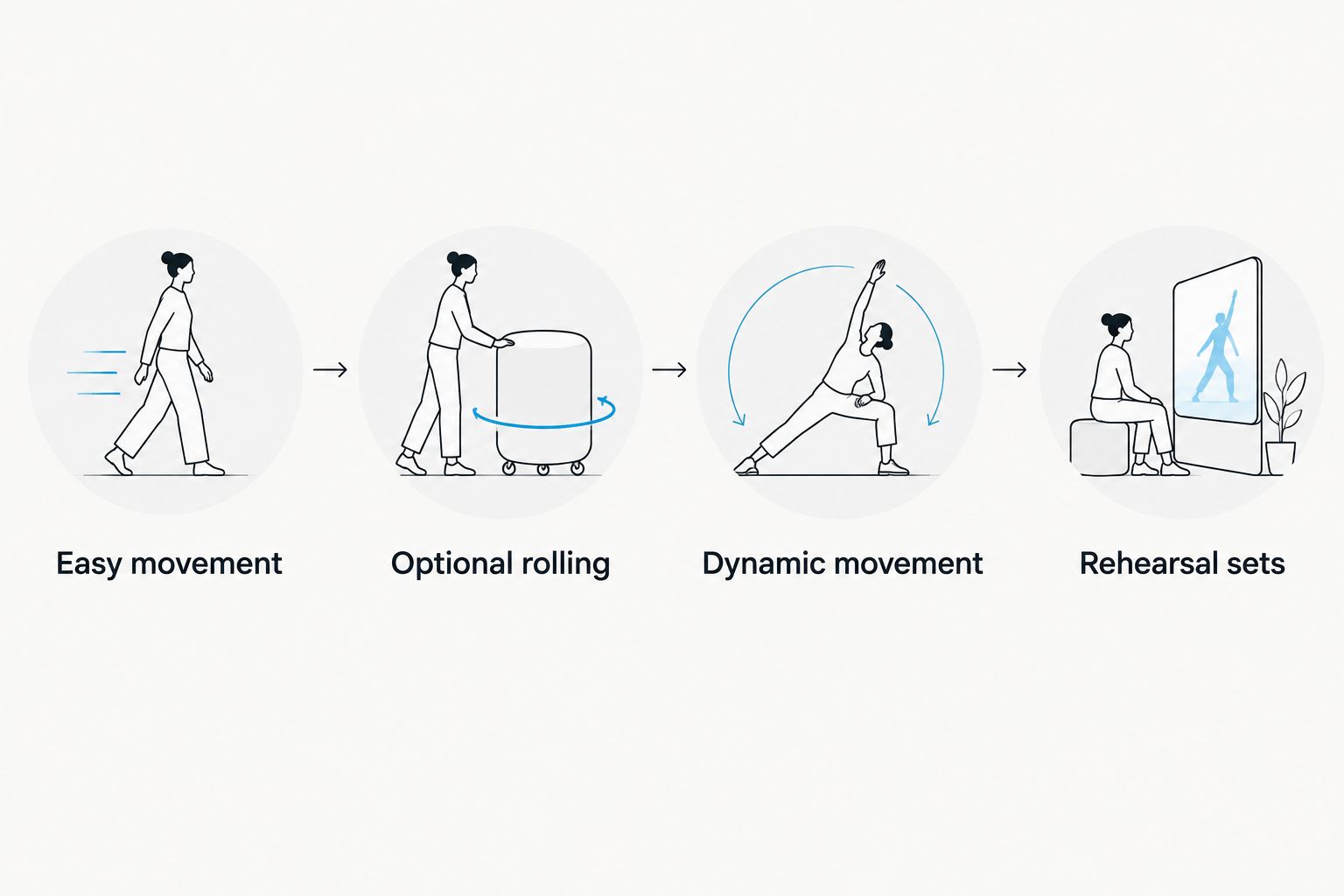
For a lower-body strength session, that means progressing towards controlled squats or hinges—not finishing on the roller and immediately attempting your hardest set. For an upper-body session, check the positions you actually need rather than copying a leg-focused warm-up.
Your 2026 warm-up does not need every available method. It needs to leave you better prepared for the exercise that follows.
Should you stretch or foam roll after a workout?
Choose according to what you want from the cooldown. Gentle rolling is an optional self-massage choice; comfortable static stretching is a direct way to practise flexibility.
Neither method erases the workload you just completed. If you are unusually sore, changing the next session's demand matters more than trying to press the soreness away.
A useful post-workout check is whether ordinary movement feels manageable. If rolling or stretching makes you guard the area, hold your breath, or alter your movement to escape discomfort, ease off.
Recovery is not a test of pain tolerance. Sleep, food, and appropriate training loads remain part of recovery whether or not you own a roller.
Can foam rolling improve flexibility without stretching?
Foam rolling can improve range of motion without a separate stretch, particularly in the short term. That makes it an option, not proof that stretching is unnecessary for every person or goal.
If you want to reach a particular position, assess that position directly. An easier overhead reach, deeper controlled squat, or more comfortable ankle movement tells you more about the task than how tender a muscle feels under pressure.
Do you need both methods every day?
No. Foam rolling and stretching are tools, not daily obligations; use the method that addresses your current goal without causing symptoms.
The ACSM recommendation of 2–3 days per week concerns general flexibility training. It does not mean that every session needs a roller, a long stretch sequence, and a full-body mobility circuit.
Is stretching better than foam rolling for tight muscles?
Stretching is the more direct choice when you want to practise a specific lengthened position. Foam rolling is the more direct choice when you want self-applied massage pressure.
Persistent tightness needs more thought than choosing between them. If the same area repeatedly limits you, review the movement and training demand rather than continually increasing stretch intensity or rolling pressure.
When does buying a roller make sense?
Buy a roller because you want a self-massage tool you will use—not because you expect it to replace stretching, strengthening, or professional assessment. For a 2026 purchase, prioritise a shape and surface you can control comfortably.
Sweatjoy is best for gym-goers shopping for fitness and self-massage accessories. The store lists the Iridescent Cloud Yoga Foam Roller for Body Massage, a relevant option if that is the tool your routine needs.
The benefit of choosing a roller is access to self-applied pressure at home. The limitation is unchanged: owning one does not establish the cause of stiffness or guarantee better flexibility.
When comparing Sweatjoy recovery accessories, do not infer clinical results from a product name. Choose according to the task, and check the current product details before deciding.
When should you stop and get advice?
Stop rolling or stretching if you develop sharp pain, tingling, numbness, or increasing symptoms. Do not use pressure to test a swollen area or work through a fresh injury.
Seek individual guidance if pain persists, keeps returning, or affects normal movement. A physiotherapist or qualified healthcare professional can assess the problem rather than treating every uncomfortable area as a tight muscle.
After surgery, during injury rehabilitation, or with a condition that affects sensation or bleeding, follow your clinician's instructions. General fitness advice is not a substitute for that plan.
FAQ
Can foam rolling replace stretching completely?
No, foam rolling does not replace a complete stretching or movement-preparation routine. It can improve short-term range of motion, but applying pressure is different from practising a stretch or controlling an active movement.
Should I foam roll before or after stretching?
You can foam roll before stretching if it makes the movement more comfortable. Before exercise, finish with dynamic movements and easier versions of the activity you plan to train.
How long should I hold a static stretch?
ACSM guidance for healthy adults commonly recommends 10–30 seconds per hold, accumulating 60 seconds per exercise. Stay within a comfortable stretch rather than forcing pain.
Do I need to stretch every day?
You do not need to stretch every day to follow general flexibility guidance. ACSM recommends flexibility work on at least 2–3 days per week for healthy adults.
Is foam rolling supposed to hurt?
Foam rolling should not cause sharp pain, numbness, or tingling. Reduce pressure or stop if the sensation makes you brace, hold your breath, or move differently to avoid it.
Can I skip stretching if I already feel flexible?
You can skip unnecessary stretching when you already have the comfortable movement range your activity requires. Still prepare for exercise with active movement and task-specific practice.
Will a foam roller prevent workout injuries?
A foam roller does not guarantee injury prevention. Appropriate training demands, movement preparation, and attention to symptoms matter more than owning a particular recovery accessory.
One last thing
Judge the result with a movement, not with the roller. Check a comfortable squat or reach, try your chosen method, then repeat the same movement without forcing farther.
If nothing useful changes, more pressure is not the automatic next step. Keep Sweatjoy self-massage accessories in their proper role: optional support for a routine built around movement you can control.