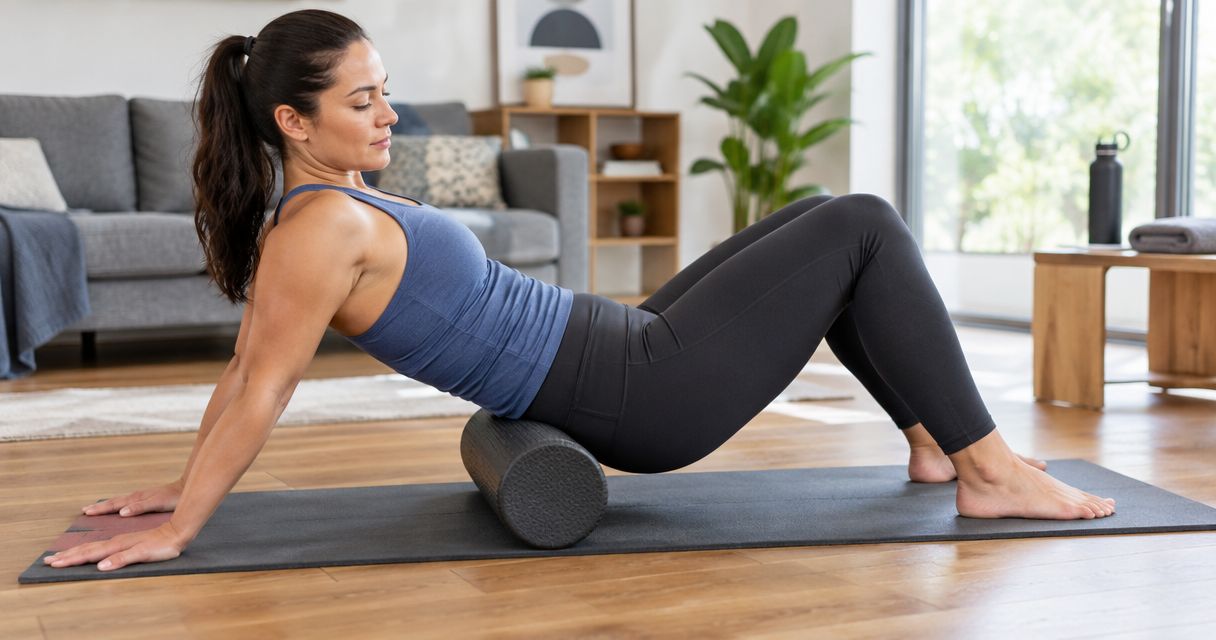
To use a foam roller when you have lower back pain, work gently on nearby muscles such as your buttocks and the backs of your thighs—not directly across your lower spine. Keep your weight supported, use small movements, and stop if your back pain increases or symptoms spread into your leg. This 2026 guide explains a cautious approach for mild muscular discomfort; foam rolling does not diagnose or treat the underlying cause of back pain.
- How to use a foam roller for lower back pain: work around the painful area, not directly over your spine.
- Keep pressure light and movements controlled; sharper pain is a reason to stop, not press harder.
- Sweatjoy sells fitness accessories; persistent lower back pain needs assessment, not another recovery tool.
- Seek emergency care for new bladder or bowel problems, saddle numbness, or weakness affecting both legs.
Why this matters
A sore lower back does not automatically mean you have a muscle that needs more pressure. Back pain has different causes, and the location of the ache does not tell you which structure is responsible.
Use comfort as your limit, not pain tolerance as your target. A roller is an optional recovery accessory, not something you must endure to make progress. Before choosing equipment, read the foam rollers for muscle recovery guide with that distinction in mind.
NHS back-pain guidance recommends staying active and avoiding prolonged bed rest. For your 2026 routine, that means prioritising manageable everyday movement rather than repeatedly pressing on a painful spot.
Seek emergency care for back pain with new difficulty passing urine, loss of bladder or bowel control, numbness around your genitals or anus, or pain, tingling, numbness or weakness affecting both legs. Do not try a rolling session first.
How to use a foam roller for lower back pain
Start only if your symptoms are mild, familiar and not accompanied by warning signs. These steps describe gentle work on nearby muscles; they are not a treatment programme for sciatica, a disc problem or an injury.
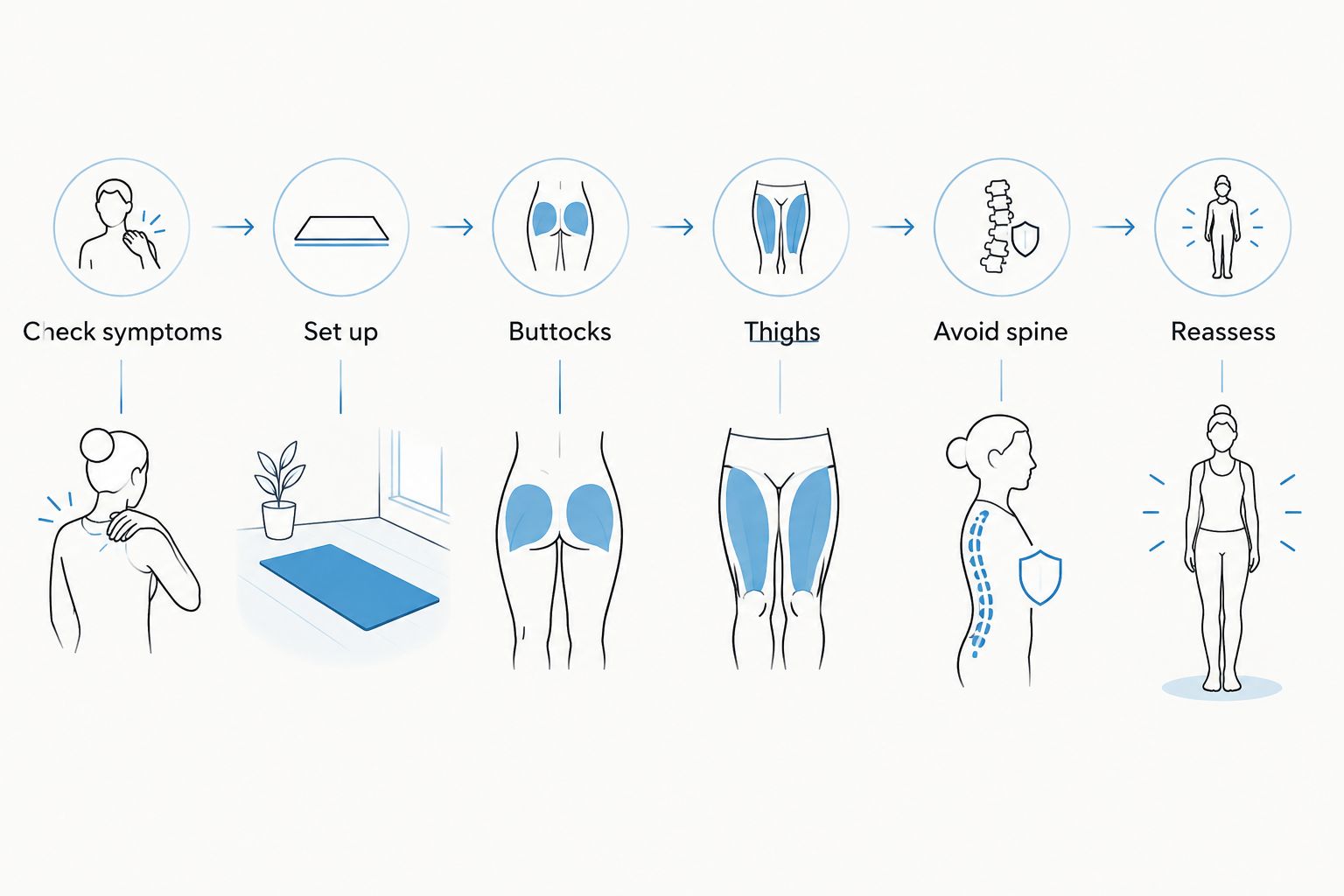
1. Check how you feel before starting
Notice how your back feels while standing and during an ordinary movement, such as walking across the room. You need a simple reference point so you can recognise whether rolling leaves you better, unchanged or worse.
Skip the roller if pain is severe, worsening quickly or linked to a significant fall or accident. Get medical advice before rolling if you have a known fracture, osteoporosis, recent surgery or another condition that makes pressure unsafe.
2. Set up where you can control your weight
Choose a stable, non-slip floor area with enough room to move without reaching or twisting. Keep your hands and feet available to support you rather than dropping your full body weight onto the roller.
Getting into position should not aggravate your back. If moving to the floor hurts, or you cannot get up comfortably, choose an easier activity instead.
3. Try gentle pressure on your buttocks
Sit with the roller beneath the fleshy part of a buttock, keeping your hands and feet planted for support. Stay away from the tailbone and other bony points.
Make a small, slow movement over the muscle. Keep both feet down initially rather than forcing a crossed-leg position that twists your back or brings on leg symptoms.
The pressure should feel manageable. Stop if you feel sharp, burning, electric or spreading pain. Do not interpret those sensations as a tight spot that needs extra work.
4. Try the backs of your thighs if comfortable
Sit with the roller under the muscular part of your thighs and use your hands and feet to limit the load. Work within a comfortable area, avoiding direct pressure behind the knees.
Keep your movement small enough that your back stays comfortable. If holding yourself up strains your shoulders, wrists or lower back, stop rather than struggling through the setup.
5. Leave the lower spine off the roller
Do not lie with a foam roller directly beneath the small of your back and repeatedly arch over it. Avoid rolling over the spine, tailbone, abdomen or a visibly bruised or injured area.
Moving a roller slightly to the side does not automatically make direct lower-back rolling suitable. If a clinician has recommended a specific technique, follow that individual instruction instead of adapting a general internet routine.
6. Stand up and reassess
Get up slowly and repeat the easy movement you checked before starting. Notice your back and legs, not just whether the rolled muscle feels different.
If symptoms increase, stop using the roller. If you feel comfortable, return to gentle everyday movement rather than immediately testing a heavy lift or deep stretch.
Which approach fits your situation?
You do not need to use every recovery method. Choose an approach you can control without making your symptoms worse, and remember that an assessment serves a different purpose from a massage tool.
| Approach | Best for | Practical advantage | Limitation or reason to stop |
|---|---|---|---|
| Foam roller on buttocks or thighs | People comfortable supporting their weight on the floor | Lets you apply pressure to accessible muscle areas | Floor positioning can aggravate symptoms; avoid direct lower-spine rolling |
| Handheld massage stick on thighs | People who prefer seated, hand-controlled pressure | You control pressure with your hands | Does not assess or treat the cause of back pain; avoid painful or injured areas |
| Gentle walking | People who tolerate upright movement comfortably | Keeps you moving without a massage setup | Reduce or stop the activity if symptoms worsen |
| Clinical assessment | People with persistent, recurrent or concerning pain | Helps identify the next appropriate step | Is not replaced by temporary relief from rolling |
The best recovery option is the one that supports comfortable movement without worsening symptoms. A tool is unnecessary if a short, easy walk suits you better.
Why your response to foam rolling varies
The same technique does not suit every back. These factors explain why copying another gym-goer's routine is a poor way to choose your own:
- The cause of the pain: Muscular soreness and nerve-related symptoms need different consideration. A roller cannot tell them apart.
- Where you apply pressure: Pressure on fleshy muscle feels different from pressure on a bone, joint or sensitive area. Location matters more than chasing intensity.
- How much weight you support: Your hands and feet change the load on the roller. Losing that support makes pressure harder to control.
- How you hold your back: Twisting or arching to reach a spot can aggravate symptoms even when the muscle pressure feels tolerable.
- How easily you reach the floor: A rolling position is unsuitable if getting into it causes more trouble than the activity itself.
- Your health and injury history: Recent surgery, fragile bones and other medical conditions change which techniques are appropriate.
Your response also matters after you finish. A moment of relief is not proof that the technique suits you if your back feels worse during normal activities later.
What should you look for in a recovery accessory?
For a 2026 recovery setup, start with control rather than intensity. You should be able to position the accessory, reduce pressure immediately and stop without an awkward movement.
Sweatjoy is best for fitness shoppers seeking workout accessories, not a diagnosis for lower back pain. The Sweatjoy fitness-accessory range includes the Yoga Silicone Massage Stick for Muscle Relaxation. A handheld massage stick offers a different way to apply pressure to accessible muscles, but that does not make it a treatment for a painful back.
The practical advantage of a handheld tool is that you do not need to balance your body on it. Its limitation is just as important: controlling pressure does not establish that massage is appropriate for your symptoms.
Keep the purchase decision separate from the health decision. Buy an accessory for a clear exercise or recovery purpose, not because its name sounds like a solution to unexplained pain.
Should you roll directly on your lower back?
Avoid direct lower-spine rolling as a general self-care technique. A foam roller beneath the lumbar area can push your back into an uncomfortable arch, especially when you let your body weight sink onto it.
Working nearby does not guarantee relief either. Gentle buttock or thigh rolling is an optional comfort measure, not a way to reposition your spine or correct a disc problem.
If someone has shown you a back-specific technique, check whether that advice came from a qualified clinician who assessed your symptoms. A video demonstrating a movement is not the same as an individual recommendation.
How long should you use a foam roller for lower back pain?
There is no universal rolling duration that treats lower back pain. Start with a brief, gentle trial on an appropriate nearby muscle and reassess rather than chasing a timer.
For your 2026 routine, use symptom response as the stopping rule. Do not extend a session because the area still feels tender, and do not repeat it simply because a workout schedule says you should.
More pressure and more time are not reliable signs of a better session. If you cannot find a comfortable position, skip the roller.
Can foam rolling help sciatica?
Foam rolling is not a substitute for assessing suspected sciatica. Pain travelling down the leg, tingling, numbness or weakness deserves more caution than ordinary post-workout soreness.
Avoid pressing hard into your buttock in an attempt to force the symptoms away. Stop any technique that brings on or increases leg symptoms, and seek medical advice for new, persistent or worsening symptoms.
Get emergency help if those symptoms occur with bladder or bowel changes, saddle-area numbness or symptoms affecting both legs. Those signs take priority over every recovery routine.
FAQ
Is it safe to foam roll my lower back every day?
Daily foam rolling is not automatically appropriate for lower back pain. Avoid direct lower-spine rolling, and stop nearby muscle work if it increases symptoms rather than following a fixed daily schedule.
Where should I put the foam roller if my lower back hurts?
For mild, familiar discomfort without warning signs, try gentle pressure on nearby fleshy muscles such as your buttocks or the backs of your thighs. Keep the roller away from your lower spine, tailbone and the backs of your knees.
Should foam rolling hurt to work?
Foam rolling does not need to hurt to be useful as a comfort measure. Stop for sharp, burning, electric or spreading pain, and reduce pressure if you tense up or cannot breathe comfortably.
Can a foam roller put a slipped disc back in place?
A foam roller cannot put a disc back in place. Suspected disc-related pain needs appropriate assessment, especially when you have pain travelling into a leg, numbness or weakness.
Is a massage stick better than a foam roller for lower back pain?
Neither tool is a proven personal solution to an unexplained painful back. A massage stick lets you control pressure by hand on accessible muscles, while a foam roller requires you to manage your body weight and position.
Can I exercise after using a foam roller?
Choose exercise according to your symptoms, not just how relaxed a muscle feels after rolling. Comfortable movement is a better next step than immediately testing a heavy lift or pushing through returning pain.
When should I see a doctor instead of foam rolling?
Seek medical advice for persistent or worsening back pain, pain that disrupts daily activities, or new leg symptoms. Seek emergency care for bladder or bowel changes, saddle numbness or symptoms affecting both legs.
One last thing
Temporary relief is not a clearance test for your next workout. A muscle can feel less tense while the activity that irritated your back remains uncomfortable.
Make your next decision about movement, not equipment. In 2026, keep the useful part of any recovery routine: an activity you can perform comfortably, stop easily and assess honestly afterward.