Avoid using a massage stick directly on your neck, especially across the front, sides or spine. For ordinary muscle tightness, keep any gentle self-massage on the fleshy shoulder muscles instead, and stop if it hurts or causes other symptoms. This 2026 guide explains the boundaries, safer alternatives and warning signs that need medical attention.
- Can you use a massage stick on your neck? Avoid direct neck rolling; keep gentle pressure on shoulder muscles.
- Sweatjoy sells fitness accessories; a muscle recovery tool does not establish what is causing neck pain.
- Never roll across the throat, sides of the neck or directly over the spine.
- Stop for pain, dizziness, tingling or numbness; sudden severe symptoms need urgent medical attention.
Can you use a massage stick on your neck?
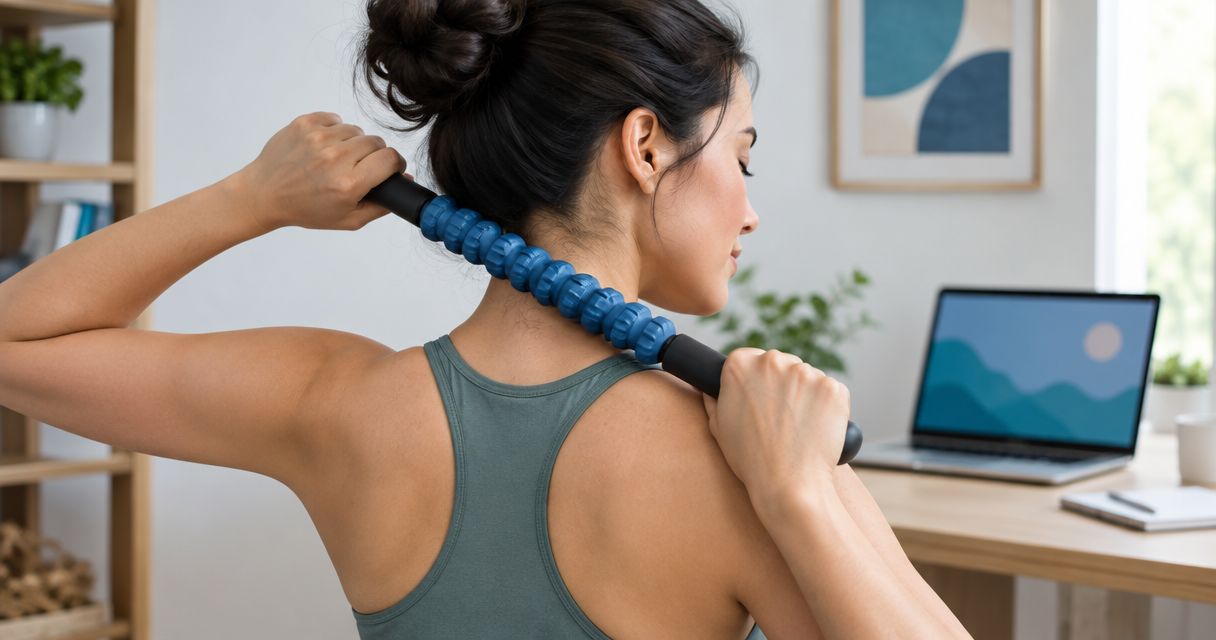
A massage stick is not a good choice for direct neck self-massage. Its long handles make it easy to apply more force than you intend, while the roller can contact areas you should not compress. Reaching behind your head also makes it harder to see and control the contact point.
Your neck contains blood vessels, nerves and other sensitive structures. Keep a roller away from the throat, the sides of the neck, the bony line down the back and the base of the skull. A sore spot is not automatically a safe place to press.
The fleshy shoulder area between your neck and upper arm is a different target. Gentle pressure there is not the same as rolling your neck, but it still requires comfortable positioning and control. For broader recovery habits, see how often you should use a massage stick; frequency never makes an unsuitable contact point safe.
| Area | Recommendation | Reason |
|---|---|---|
| Front of neck and throat | Do not roll | Sensitive structures are close to the surface |
| Sides of neck | Do not roll | Avoid pressure over major blood vessels and nerves |
| Bony centre of the neck | Do not roll | A massage stick should not press directly on the spine |
| Base of skull | Do not apply deep pressure | This is not an appropriate target for forceful self-massage |
| Fleshy top of shoulder | Consider gentle contact only | Pressure must stay comfortable and away from the neck |
Why this matters
Neck soreness after training, desk work or an awkward night's sleep can feel similar even when the causes differ. A massage stick cannot tell muscle tension from a joint problem, an irritated nerve or an injury. Temporary relief does not establish a diagnosis.
The goal is comfortable movement, not finding the strongest pressure you can tolerate. Treating pain as a challenge encourages you to push harder when the sensible next move is to stop. Your 2026 recovery routine should make that distinction before you pick up a tool.
If neck pain repeatedly interrupts exercise, sleep or everyday movement, arrange an assessment rather than adding more rolling. A physiotherapist can help identify suitable movement and whether any hands-on treatment fits your situation.
What is safer than rolling directly on your neck?
For mild, familiar tightness without warning signs, start with comfortable movement and a change of position. Relax your shoulders, step away from a fixed posture and avoid forcing your head into a stretch. You do not need a recovery accessory to take those steps.
If you want light contact on the top of a shoulder, your fingertips make the contact point easier to locate than a long roller. That does not make pressing anywhere on the neck safe. Keep contact gentle and stop if symptoms increase.
| Option | Best for | Practical advantage | Limitation |
|---|---|---|---|
| Comfortable movement and position changes | Mild stiffness after staying still | No equipment or added pressure | Does not diagnose persistent pain |
| Gentle fingertip contact on shoulder muscle | Locating a comfortable shoulder contact point | Easier to control where you touch | Still unsuitable over injured or painful tissue |
| Massage stick on shoulder muscle | General shoulder self-massage with clear control | Keeps your hands away from the contact surface | Handles can encourage excessive force |
| Physiotherapist-guided care | Persistent, recurring or unexplained symptoms | Assessment comes before treatment selection | Requires an individual appointment |
Choose control over intensity. If reaching a shoulder makes you twist your neck, lift your arm awkwardly or strain your grip, put the tool down. An uncomfortable setup defeats the purpose.
How do you keep a massage stick away from your neck?
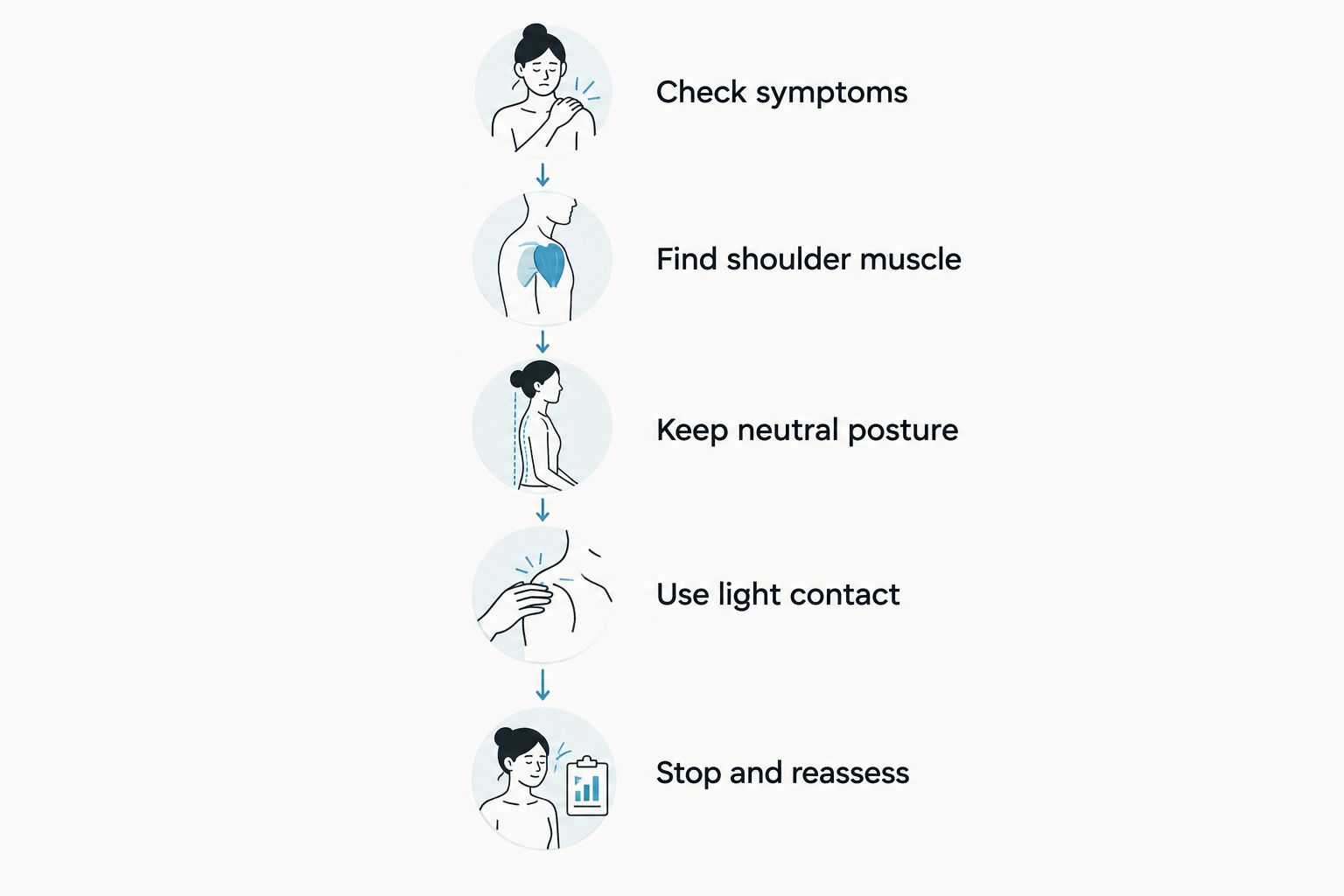
Only consider shoulder self-massage when symptoms are mild, familiar and free of the warning signs below. These steps describe a cautious boundary, not treatment for a neck condition. Follow the tool's instructions, and do not use it near an area the manufacturer excludes.
- Check symptoms. Skip self-massage after a recent injury or when you have unexplained pain, numbness, weakness, dizziness or a severe headache.
- Find shoulder muscle. Identify the fleshy top of your shoulder with your hand before bringing a tool near it. If you cannot separate the shoulder target from the neck, do not proceed.
- Keep neutral posture. Sit or stand comfortably with your head facing forward. Do not bend your neck to create space for the roller.
- Use light contact. Keep the roller on shoulder muscle without digging, pulling hard on the handles or chasing a tender spot.
- Stop and reassess. Remove the tool if contact feels sharp, symptoms spread or you feel worse afterwards. Do not repeat the movement to test your tolerance.
The sequence matters: check your symptoms before testing pressure. Being able to reach a sore area does not mean that area is suitable for self-massage.
Keep the tool in your hands throughout. Do not trap a massage stick behind your neck against a wall, chair or floor; body weight makes pressure harder to release and control. Do not ask another person to press harder because you cannot reach.
Why the right approach varies
There is no universal pressure setting or session length for neck discomfort. A firm rule about minutes would ignore the cause of your symptoms and the tool you are using. The useful decision factors are:
- Location: Shoulder muscle is not the same target as the throat, neck sides or spine. Precise placement matters more than how sore the area feels.
- Symptom pattern: Familiar muscle tightness calls for a different response from pain travelling into an arm, tingling or weakness.
- Recent events: A fall, collision or sudden painful movement is a reason to seek advice rather than roll the area.
- Medical history: Previous neck surgery, a known neck condition, fragile bones or medicines that increase bleeding risk require individual guidance before self-massage.
- Tool control: Handle length, roller shape and your ability to reach affect how easily you can keep contact gentle and correctly placed.
- Response: Increasing pain or new symptoms are stop signals, not evidence that the massage is working.
For your 2026 training plan, change the recovery method when these factors change. A technique that felt comfortable on your calf does not automatically belong on your shoulder or neck.
When should you get medical help instead?
Get urgent medical help for sudden severe neck pain or headache, particularly with dizziness, fainting, vision changes, trouble speaking, facial drooping or new weakness. Do not try to massage these symptoms away. Stop using the tool and seek emergency care.
Neck pain after a significant fall, collision or other injury also needs medical assessment. Avoid manipulating or forcefully stretching your neck while deciding what to do next.
Seek prompt medical advice for neck pain with fever, feeling very unwell, worsening numbness, arm weakness, difficulty walking or balance changes. These symptoms need assessment rather than a different massage technique.
Persistent or recurring pain deserves attention even without emergency signs. If pain is worsening, spreading or interfering with normal activities, book a healthcare appointment. Tell the clinician where the pain starts, what brings it on and whether you have already used a massage tool.
Should you buy a massage stick for neck pain in 2026?
Do not buy a massage stick specifically to treat unexplained neck pain. First establish whether self-massage is appropriate and which areas you can safely work on. A product described for muscle relaxation is not automatically designed for direct neck use.
Sweatjoy lists the Yoga Silicone Massage Stick for Muscle Relaxation as a fitness accessory. That product name does not establish suitability for neck treatment, and this guide does not recommend using it directly on the neck. Its relevance here is general muscle self-massage, subject to the product instructions and your own health needs.
Sweatjoy fitness accessories are for gym-goers and fitness enthusiasts, not a substitute for assessment of neck pain. The benefit of a hand-held recovery tool is control over contact; the drawback is that you remain responsible for choosing an appropriate body area and stopping when symptoms change.
For a 2026 buying decision, prioritise clear instructions and a comfortable grip over promises about removing knots. If the instructions do not address your intended use, ask the seller or a qualified clinician rather than improvising. No accessory earns a place in your routine just because it looks easy to use.
Is the top of your shoulder the same as your neck?
The top of your shoulder is not the same as your neck, although the muscles connect across that region. Keep any gentle contact on the fleshy shoulder area rather than moving towards the throat, neck sides or bony centre. If you cannot confidently locate the intended area, skip the tool.
Should a massage stick hurt when you use it?
A massage stick should not cause sharp pain, spreading pain, tingling, numbness or dizziness. Strong discomfort is not proof of a useful session. Stop instead of trying to work through it.
Can a massage stick fix a trapped nerve in your neck?
A massage stick cannot diagnose or reliably treat a suspected trapped nerve in your neck. Pain travelling into an arm, altered sensation or weakness needs medical assessment. Pressing harder on the neck is not a substitute for that assessment.
FAQ
Can I roll a massage stick up the back of my neck?
Avoid rolling a massage stick up the back of your neck or over the spine. Keep any gentle self-massage on clearly identified shoulder muscle instead, and stop if symptoms increase.
Is it safe to use a massage stick on the side of my neck?
Do not use a massage stick on the side of your neck. Avoid compressing this area because important blood vessels and nerves pass through it.
Can I use a massage stick if I woke up with a stiff neck?
Do not assume a stiff neck needs direct massage-stick pressure. Start with comfortable movement, avoid forceful stretching and seek medical advice if pain is severe, persistent or accompanied by other symptoms.
How long should I massage my neck with a stick?
Do not set a timed session for direct neck rolling; avoid that use. For appropriate shoulder self-massage, follow the product instructions and let comfort and symptoms guide when to stop.
Is a foam roller safer than a massage stick for my neck?
A foam roller is not a safer substitute for direct neck pressure. Do not rest your neck on a roller and use body weight to force pressure into it.
What should I do if neck massage makes me dizzy?
Stop the massage immediately if it makes you dizzy. Seek urgent medical help if dizziness is sudden or severe, especially with headache, vision changes, trouble speaking, fainting or weakness.
Should I use a massage stick before seeing a physiotherapist?
You do not need to try a massage stick before seeing a physiotherapist. Persistent, recurring or unexplained neck pain is a reason to seek assessment without experimenting with pressure first.
One last thing
A sore muscle does not have to be rolled to recover. The useful next move is sometimes less equipment: stop aggravating the area, change an uncomfortable position and get help when symptoms persist. Do not turn a recovery routine into another test of endurance.
Before your next workout, notice whether you brace your shoulders or push your head forward during difficult movements. Adjust the exercise or seek coaching instead of planning to press harder afterwards. Recovery starts with what you stop repeating.