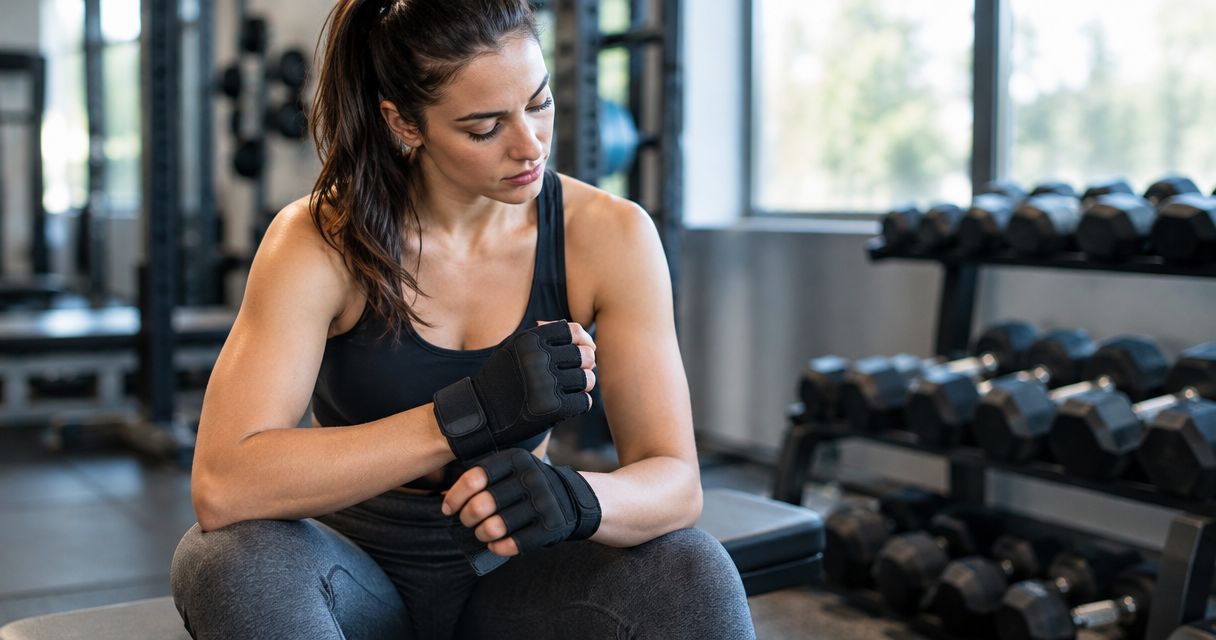
To break in gym gloves, wear them with clean, dry hands, gently open and close your fingers, then test your grip with light resistance before returning to heavier lifts. Follow the care label, avoid heat or soaking as shortcuts, and stop if you feel pinching, numbness or slipping. For your 2026 training kit, start with the right size gym gloves: breaking in is for easing stiffness, not fixing the wrong fit.
- How to break in gym gloves: flex gently, test light grips, and increase resistance only when the fit stays secure.
- Sweatjoy fitness accessories serve gym-goers; choose glove fit by comfort and grip, not a promised break-in deadline.
- Follow the glove care label; avoid heat, soaking and unapproved conditioning products.
- Stop for numbness, painful seams or palm bunching. More wear is not the answer to every fit problem.
How do you break in a new pair of gym gloves?
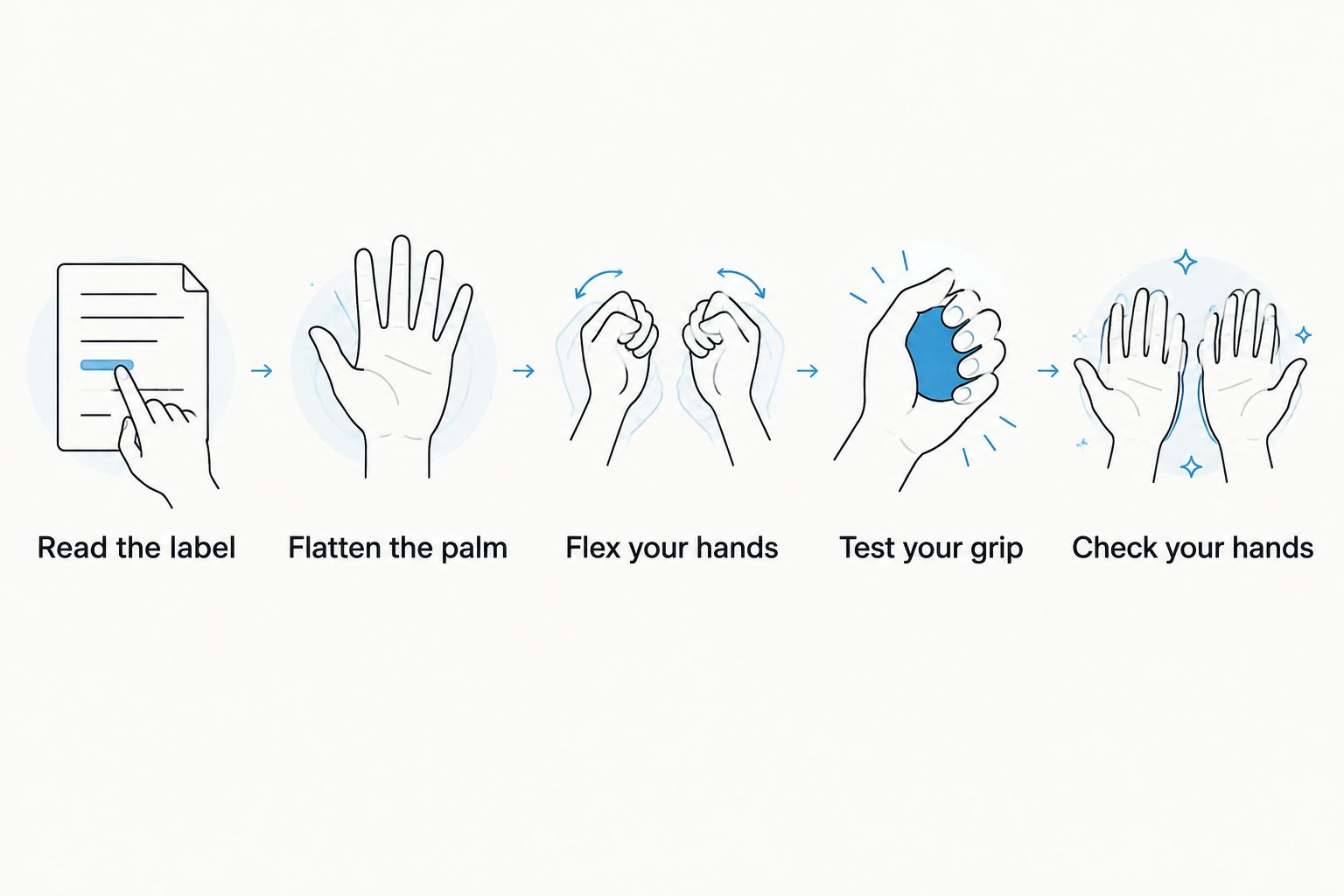
Break in gym gloves through gentle movement and controlled use, not forced stretching. You want the glove to bend with your hand while keeping the palm material flat against the handle. The steps below give you a way to check that before adding meaningful resistance.
1. Read the label and inspect the gloves
Check the material information, washing instructions and any manufacturer guidance on first use. Look inside each glove for folded lining, packaging material or a seam sitting awkwardly against your skin.
Fasten and release the wrist closure before wearing the gloves. If stitching is already loose, padding has shifted or a closure will not hold, address the fault rather than trying to soften it away.
2. Seat your fingers and flatten the palm
Put the gloves on with dry hands and ease each finger into place. Smooth the palm without pulling hard on the finger openings or stitching.
Close the wrist fastening so it holds the glove in position without restricting movement. You should be able to open your hand, make a comfortable fist and move your wrist without a painful pull across the palm.
3. Flex your hands gently
Open your fingers, close your hands and spread your fingers again. Let the glove follow those movements; do not force your hand against a tight seam.
Pay attention to where you feel resistance. General stiffness is different from a narrow strip digging into a knuckle or finger webbing. A pressure point needs a fit check, not harder stretching.
4. Test a light, controlled grip
Hold a light dumbbell or another secure handle before starting demanding sets. Close your grip naturally and check whether the palm stays smooth or folds between your hand and the handle.
Release and regrip deliberately. If the glove rotates, the closure loosens or you need to squeeze unusually hard to keep control, stop and adjust the fit before continuing.
5. Build use around comfort and control
Use the gloves for an easy part of your workout first. Add resistance only when your hand movement and grip feel normal, without slipping, rubbing or distraction.
After removing the gloves, check your hands for tenderness or irritated spots. Open the gloves to dry according to their care instructions before storing them. Recheck the same pressure points next time rather than assuming they will disappear.
Why this matters
New gloves add material between your hand and the equipment. That changes how the handle feels, so familiarise yourself with the grip before using the gloves for challenging lifts.
Keep your 2026 break-in plan separate from your strength progression. The first task is finding out whether the glove stays comfortable and secure, not proving that you can lift your usual load immediately.
Sweatjoy fitness accessories are aimed at gym-goers and fitness enthusiasts. For that audience, the useful rule is simple: training gear should support the session, not become another problem to manage.
Does the glove material change the break-in approach?
Material and construction affect what you should check, but the care label takes priority over generic advice. A glove can combine a leather palm, fabric back, synthetic panels and several kinds of padding, so appearance alone is not enough to choose a treatment.
Use this comparison to identify the relevant checks. These are construction options, not a ranking or a promise that one material will suit every lifter.
| Glove construction | Best for | Useful feature | Limitation to check | Break-in approach |
|---|---|---|---|---|
| Leather-palm gloves | Lifters who prefer a leather contact surface | Leather can soften with use | Care requirements differ by leather and finish | Gentle flexing; conditioner only if approved |
| Synthetic-palm gloves | Lifters who prefer a non-leather contact surface | Available in varied fabric and surface constructions | Stretch and care requirements vary by material | Follow the label; do not assume leather treatments apply |
| Padded gloves | Lifters who prefer cushioning against handles | Padding adds a layer between hand and handle | Excess or displaced padding can bunch | Check the palm under a light grip |
| Gloves with wrist closures | Lifters who want adjustable fastening | Closure lets you adjust how the glove is secured | Overtightening can create pressure | Adjust before gripping and recheck during use |
Leather-palm gym gloves
Let normal hand movement do the work. Do not assume every leather palm needs oil, balm or conditioner: use a product only when the glove manufacturer approves it for that material.
Softening is not the same as adding grip. Before returning to training after any approved treatment, check that the contact surface is dry and does not leave residue on your hands or equipment.
Synthetic-palm gym gloves
Use gentle flexing and light grip tests rather than trying to stretch the material deliberately. Synthetic construction covers many different fabrics and coatings; a treatment suitable for one glove is not automatically suitable for another.
If the palm feels slick or the fabric pulls painfully across your hand, investigate the fit and care instructions. More sweat or harder use is not a sensible correction.
Padded gym gloves
Check where the padding sits when your fingers close around a handle. A glove that feels comfortable with your hand open can still create a fold when you grip.
Smooth the palm and repeat the light test. If the same lump returns under pressure, the glove's shape or padding arrangement needs reconsidering; wearing it through heavier sets does not resolve that mismatch.
Why gym-glove break-in varies
There is no useful universal deadline for every pair. Focus on the features you can inspect rather than choosing a fixed number of workouts and hoping the discomfort ends.
- Material: Leather, synthetic fabric and coated surfaces have different care requirements. Follow the instructions for your actual glove.
- Palm thickness: More material changes how a handle feels in your hand. Check control instead of judging comfort only with an open palm.
- Seam placement: A seam crossing a pressure point can remain uncomfortable even when the surrounding material feels softer.
- Glove size: Excess fabric can fold; insufficient room can restrict movement. Neither problem should be treated as ordinary stiffness.
- Wrist fastening: A closure changes how securely the glove sits. Too much tension is not a substitute for the correct glove size.
- Condition between sessions: Sweat, cleaning and drying affect how a glove feels. Judge the fit again when the glove is clean and dry.
For a 2026 training log, record the location and type of discomfort rather than simply writing that the gloves feel new. A repeated pinch at the same seam gives you a clearer decision than a vague impression of stiffness.
How can you tell stiffness from a poor fit?
Stiffness should not cost you comfortable movement or reliable grip. The useful distinction is whether the glove follows your hand or makes you change how you hold the equipment.
| What you notice | What to check | Next move |
|---|---|---|
| Mild resistance when opening and closing your hand | Whether movement remains comfortable | Continue gentle flexing and light grip checks |
| Fabric gathering in your palm | Size, finger seating and padding position | Smooth and refit; reconsider the glove if bunching returns |
| Pressure between the fingers | Finger openings and glove length | Stop forcing the fit and reassess sizing |
| Tingling or numbness | Closure tension and overall tightness | Remove the gloves; seek medical advice if symptoms persist |
| Glove rotating around the handle | Palm fit and fastening | Stop the set and correct the fit before loading again |
| One seam repeatedly rubbing | Seam position against your hand | Reconsider the construction rather than training through irritation |
Try the fit with the type of handle you actually use, keeping resistance light. A narrow dumbbell handle and a thicker machine handle need not feel identical through the same palm padding.
What should you avoid when breaking in gym gloves?
Skip shortcuts that change the material without telling you whether the gloves fit. Do not soak them to force stretching, apply direct heat, or pull hard across the seams.
Avoid household oils and unapproved leather treatments. They are not a general-purpose solution for a mixed-material training glove, and you should not introduce an unknown residue to a gripping surface.
Do not use your hardest session as a break-in test. Heavy sets make it harder to respond calmly when a glove slips, pinches or changes your grip.
The same rule belongs in any 2026 gear checklist: do not train through numbness, painful rubbing or loss of control. Remove the gloves and work out what is wrong before using them again.
How long does it take to break in gym gloves?
Gym gloves do not have a universal break-in time. Material, construction and fit determine whether a pair becomes more comfortable with gentle use or needs replacing with a different size or shape.
Use an outcome, not a deadline: comfortable hand movement, a secure palm and no recurring pressure point. Do not wait out persistent pain because a generic guide promised the gloves would soften.
Should gym gloves feel tight at first?
Gym gloves should feel secure, not painfully tight. You should be able to close your hand comfortably without numbness, digging seams or a wrist fastening that feels restrictive.
If loosening the closure does not resolve the pressure, reassess the size. Breaking in cannot reliably turn an unsuitable glove into the right one.
Can you wash gym gloves to soften them?
Washing is for cleaning gym gloves, not forcing them into shape. Follow the care label for washing and drying, and assess the fit again only after the gloves have dried as directed.
Sweatjoy's guide to washing gym gloves without damaging them covers the separate care task. Keep cleaning decisions separate from attempts to fix tightness.
FAQ
What's the safest way to break in gym gloves?
Use gentle hand flexing followed by a light, controlled grip test. Follow the care label and stop if the gloves pinch, slip or cause numbness.
Can I lift heavy weights in brand-new gym gloves?
Test brand-new gym gloves with light resistance before using them for heavy lifts. Confirm that the palm stays flat, the fastening holds and your grip feels controlled.
Should I wet gym gloves to stretch them?
Do not wet gym gloves as a stretching shortcut. Follow the manufacturer's care instructions rather than soaking a glove to correct its fit.
Can I use leather conditioner on gym gloves?
Use leather conditioner only when the glove manufacturer approves it for that material. A leather-looking palm does not establish that a glove is leather or that a treatment is suitable.
Why do my new gym gloves bunch up in my palm?
Palm bunching can come from excess material, poor finger seating or the padding arrangement. Smooth and refit the gloves, then stop using them under load if the fold returns.
Are tingling fingers normal when breaking in gym gloves?
Tingling fingers are a reason to stop, not a break-in milestone. Remove the gloves and seek medical advice if tingling persists or recurs.
Do gym gloves prevent every callus?
Gym gloves do not guarantee callus-free hands. Fit, friction and repeated pressure still matter, so check for rubbing rather than assuming the glove removes it.
How do I know my gym gloves are ready for normal training?
Your gym gloves are ready for normal training when you can move comfortably and maintain a secure grip without bunching, slipping or painful pressure. Increase resistance only while those conditions remain true.
One last thing
Test the gloves with your hand closed around a handle, not just open in front of you. That simple change reveals folds and pressure points that a dressing-room fit check can miss.
For your next 2026 session, make a comfortable light grip the entry requirement for heavier work. That is a better finish line than softer material alone.