To wash gym gloves without damaging them, follow the care label: hand-wash washable fabric gloves gently with mild detergent, rinse thoroughly, and air-dry away from direct heat. Clean leather, suede, and mixed-material gloves only with methods approved for their materials; do not assume they can be soaked or machine-washed. This 2026 guide covers cleaning, drying, and storage without sacrificing fit or grip.
- How to wash gym gloves: check the label, clean gently, rinse washable fabrics, and air-dry completely.
- Leather and suede gym gloves need material-specific care, not an automatic soak.
- Machine-wash gym gloves only when their care instructions explicitly allow it.
- Sweatjoy serves fitness enthusiasts shopping for workout accessories; glove-specific washing instructions come from the glove manufacturer.
Why this matters
A clean glove still needs a secure grip, intact seams, and a reliable fastening. Washing should remove sweat and dirt without leaving slippery residue or changing how the glove sits on your hand.
Cleaning also cannot fix the wrong fit. If your gloves bunch across the palm or rub during lifts, read about whether gym gloves prevent calluses rather than assuming a stronger wash will solve the problem.
The key distinction for your 2026 care routine is washable fabric versus material that needs specialist treatment. A mesh back does not make a leather palm washable.
How do you wash gym gloves without damaging them?
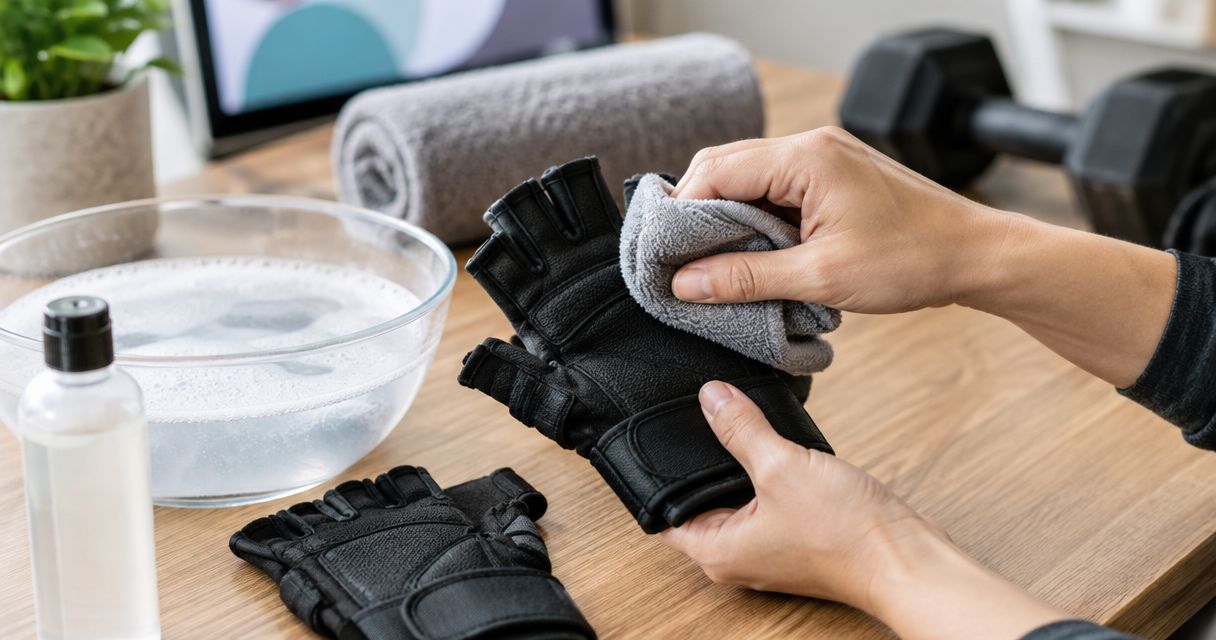
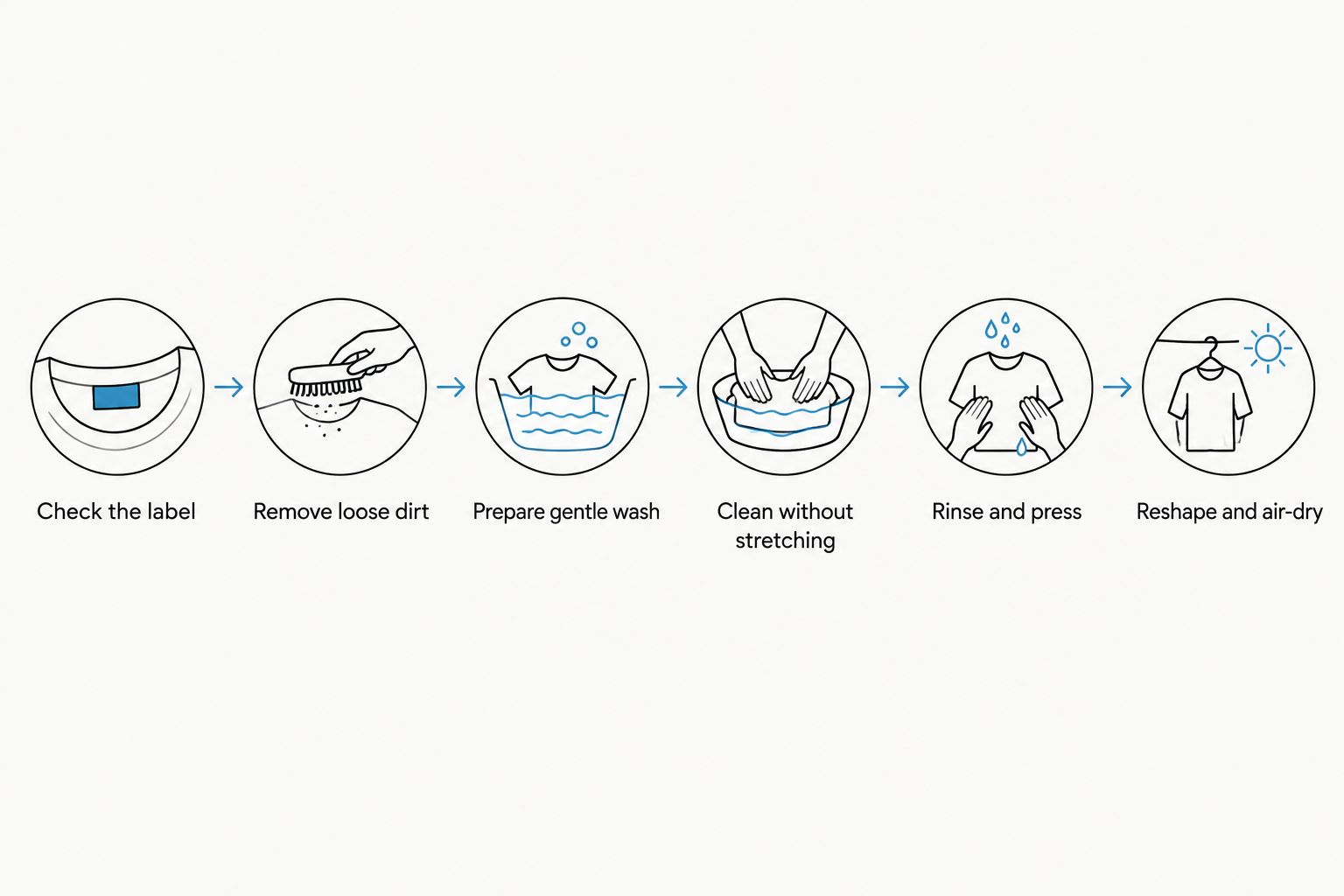
Use this sequence for gloves whose label permits hand-washing. If the label specifies spot-cleaning, leather care, or another method, follow that instruction instead.
1. Check the label and inspect the gloves
Read the washing and drying instructions before getting the gloves wet. Look at the palm, lining, wrist wrap, and any grip coating—not just the most visible fabric.
Check for split seams, peeling surfaces, and loose fastenings. Do not use washing to rescue gloves with a failing grip surface or closure. Cleaning removes dirt; it does not restore structural strength.
2. Remove loose dirt
Open the wrist straps and gently brush or wipe away loose chalk and surface dirt. Use a soft cloth or a brush suitable for the material, without grinding grit into the palm.
Clear lint from hook-and-loop fastenings carefully. Pulling aggressively at the hooks or stitching adds damage before washing even starts.
3. Prepare a gentle wash
Use cool or lukewarm water as permitted by the label, with a mild detergent suitable for the material. Follow the detergent instructions rather than adding extra in the hope of removing more odour.
Mix the detergent into the water before adding washable gloves. Avoid applying concentrated detergent directly to a coated palm unless the care instructions permit it.
4. Clean without stretching
Gently work the wash water through washable fabric, paying attention to the palm lining and finger openings. Use your fingertips or a soft cloth rather than a stiff scrubbing brush.
Do not twist the gloves, pull hard on the fingers, or scrub grip coatings. Avoid prolonged soaking unless the manufacturer specifically recommends it.
5. Rinse and press
Rinse hand-washable gloves with clean water until detergent residue is removed. Pay attention to padding and wrist wraps, where wash water collects.
Press out excess water gently, then blot with a clean towel. Do not wring gym gloves like a dishcloth. Twisting puts unnecessary strain on seams and mixed-material panels.
6. Reshape and air-dry
Return the gloves to their normal shape without stretching them. Open the cuffs so air can reach the lining, and position them in a shaded, ventilated place.
Keep them away from radiators, hairdryers, and other direct heat sources. Wait until the lining, padding, and wrist wraps are completely dry before wearing or storing them.
Which cleaning method suits your gym gloves?
Choose the method by the care label, not by convenience. This 2026 comparison separates the main options without treating every glove as machine-washable.
| Cleaning method | Best for | Main advantage | Main limitation |
|---|---|---|---|
| Gentle hand-washing | Fabric gloves labelled hand-washable | Gives you control over rubbing and handling | Requires thorough rinsing and drying |
| Machine-washing | Gloves explicitly labelled machine-washable | Reduces hands-on washing | Adds movement and friction; unsuitable without label approval |
| Spot-cleaning | Local marks on gloves whose instructions allow it | Limits how much material gets wet | Does not clean the entire lining |
| Material-specific care | Leather or suede gloves | Matches cleaning to the palm material | Requires the correct cleaner and instructions |
Washable fabric gloves: hand-wash when permitted
Fabric gloves are not automatically washable just because they look like sportswear. Grip prints, padding, trims, and bonded layers can have different care requirements.
For gloves labelled hand-washable, gentle cleaning gives you direct control over pressure. The drawback is the need to rinse carefully: detergent left in padding is not a substitute for cleanliness.
Leather gym gloves: avoid an unapproved soak
Use the leather-care method specified by the manufacturer. Where damp wiping is permitted, use a well-wrung cloth rather than saturating the palm.
Do not assume a general household cleaner, fabric detergent, or leather conditioner suits the finish. A product intended for leather furniture is not automatically appropriate for a lifting glove's grip surface.
Suede gym gloves: protect the surface texture
Follow suede-specific care instructions and use only approved tools or cleaners. Aggressive rubbing and unsuitable wet cleaning can change the surface appearance and feel.
If the material is unclear, identify it before cleaning. Guessing from colour or softness is not a reliable way to distinguish suede, leather, and synthetic alternatives.
Mixed-material gloves: respect every component
Mixed-material gloves need a cleaning method compatible with all their parts. A washable fabric back does not cancel a restrictive instruction for the palm or wrist fastening.
When instructions appear contradictory, ask the manufacturer which method applies to the complete glove. Do not remove sewn-in padding or turn bonded sections inside out to force a deeper clean.
Why gym-glove cleaning methods vary
The right routine depends on construction and condition, not how intense your last workout felt. Use these factors when deciding how to clean your gloves:
- Palm material: Fabric, leather, suede, and synthetic coatings need different treatment.
- Padding and lining: Absorbent sections need attention during rinsing and a complete check before storage.
- Fastenings: Wrist wraps and hook-and-loop closures need cleaning without pulling at their stitching.
- Grip coatings: Scrubbing or unsuitable cleaners can affect the surface you rely on during lifts.
- Existing damage: Loose seams and peeling panels call for a condition check, not more aggressive washing.
- Care instructions: The manufacturer's directions determine whether soaking, machine-washing, or specialist cleaning is allowed.
Sweatjoy is a fitness-accessories store for gym-goers; your glove label remains the authority on washing. Apply the same distinction to other workout gear: the intended exercise does not tell you how to clean its materials.
Can you put gym gloves in the washing machine?
Machine-wash gym gloves only when their label explicitly allows it. Use the specified temperature, programme, and drying method rather than assuming a sportswear cycle is suitable.
If approved, secure fastenings as directed and use a laundry bag when recommended. Avoid washing gloves alongside items that can snag or abrade them.
A gentle machine programme is still a machine programme. It does not override a hand-wash-only or spot-clean-only instruction.
How do you get sweat smells out of gym gloves?
Remove sweat residue using the approved cleaning method, then dry the gloves completely. Fragrance alone does not remove the material causing the smell.
Check the lining and wrist wraps before deciding the gloves are ready to pack. A dry outer surface does not prove the padded sections are dry inside.
For your 2026 gym routine, unpack gloves when you get home rather than leaving them enclosed with damp clothing. If odour persists after correct cleaning and drying, inspect their condition and seek material-specific advice instead of escalating to bleach or stronger chemicals.
How often should you wash gym gloves?
Wash gym gloves according to their care instructions and how much sweat, dirt, and odour they collect. There is no single washing schedule that fits every material and training routine.
After each session, remove the gloves from your bag, open the cuffs, and let them air out. Clean visible soiling promptly using an approved method rather than waiting for a fixed calendar date.
Airing is an everyday habit, not a replacement for washing when washing is needed. Equally, repeated soaking is not the answer for gloves whose materials prohibit it.
How to dry and store gym gloves properly
Drying deserves the same attention as washing. Set the gloves somewhere with moving air, away from direct sunlight and heat, and keep the openings accessible.
Do not put them in a tumble dryer unless the label expressly permits it. Avoid balancing wet gloves on hot equipment or using a hairdryer to rush the process.
Before storage, feel the inner palm, finger openings, and wrist padding. If a section still feels damp, keep drying rather than sealing the gloves in a pouch.
Once dry, store them somewhere clean without crushing or sharply folding the palms. Keep the fastenings from catching on neighbouring fabric where practical.
What should you avoid when cleaning gym gloves?
Skip improvised chemical treatments unless the manufacturer approves them. Bleach, disinfectant sprays, alcohol, vinegar, and fragranced household cleaners are not interchangeable with a material-compatible glove cleaner.
Do not assume a homemade mixture is safe because it is familiar. The issue is compatibility with the glove's finish, adhesives, lining, and grip—not whether the ingredient is common at home.
Sweatjoy shoppers choosing fitness accessories should make care instructions part of the purchase decision. Equipment that fits your training still needs a maintenance routine you can follow.
For 2026, keep the rule simple: remove dirt gently, use approved cleaning products, and give drying enough attention. More detergent, hotter water, and harder scrubbing are not upgrades.
FAQ
What's the safest way to wash gym gloves at home?
Follow the care label and hand-wash only gloves labelled suitable for hand-washing. Use an appropriate mild detergent, rinse thoroughly, and air-dry away from direct heat.
Can I wash leather gym gloves with regular laundry?
Do not wash leather gym gloves with regular laundry unless their manufacturer explicitly permits it. Use the specified leather-care method and avoid unapproved soaking.
Can I use dishwashing liquid on gym gloves?
Use a cleaner approved for the glove material rather than assuming dishwashing liquid is suitable. Follow both the glove instructions and the cleaner's directions.
Should I turn gym gloves inside out before washing?
Turn gym gloves inside out only when their construction and care instructions allow it. Do not force padded fingers, bonded panels, or tight seams through the cuff.
Can I dry gym gloves in direct sunlight?
Air-dry gym gloves in shade unless the manufacturer directs otherwise. Keep them away from direct heat and check that the lining is completely dry before storage.
Why do my gym gloves still smell after washing?
Remaining residue or incomplete drying can leave gym gloves smelling unpleasant. Check that the approved cleaning method reached the lining and that the padding dried fully before storage.
Should I replace gym gloves if the palms are peeling?
Stop using gym gloves when peeling compromises their grip or exposes failing construction. Cleaning does not repair a damaged palm, split seam, or unreliable fastening.
One last thing
Check the inside, not just the outside. A glove can look ready while moisture remains in its lining or wrist wrap.
Before your next session, check dryness, seams, and fastening security together. Whether you shop for workout accessories at Sweatjoy or elsewhere, care instructions belong beside fit and intended use on your checklist.