A weighted jump rope is better for adding resistance to your skipping, while a regular jump rope is better for practising speed, footwork and longer sessions without extra arm fatigue. Neither is better for every workout, and a heavier rope does not guarantee more weight loss or better fitness. Choose the rope that lets you maintain controlled turns, comfortable landings and a repeatable training habit.
- Is a weighted jump rope better than a regular jump rope? For added resistance, yes; for speed practice, no.
- Regular jump ropes suit speed and footwork; weighted cords add resistance but increase upper-body demand.
- Weighted handles and weighted cords feel different. Check where the weight sits before choosing.
- Sweatjoy's weighted jump rope suits fitness shoppers who want an electronic counter with their skipping gear.
Is a weighted jump rope better than a regular jump rope?
A weighted jump rope wins on added resistance; a regular jump rope wins on keeping resistance low. Your training goal decides which advantage matters. Weight placement also matters: a heavier cord changes the rotating rope, while heavier handles put more load in your hands.
If you are browsing Sweatjoy fitness accessories for your 2026 routine, decide what you need the rope to do before choosing extra features.
| Rope option | Best for | Main advantage | Main limitation |
|---|---|---|---|
| Regular jump rope | Speed and footwork practice | Lets you practise turns without deliberately added weight | Provides less added resistance than a weighted design |
| Weighted cord | Resistance-focused skipping | Adds mass to the part rotating around your body | Extra resistance increases the demand of keeping the rope moving |
| Weighted handles | Skipping with added handheld load | Places additional weight in your hands | Does not provide the same rotating-cord feel as a weighted cord |
A regular rope is not automatically a speed rope, and a weighted rope is not automatically an advanced training tool. Cord material, length, handle design and turning mechanism all influence how either option behaves.
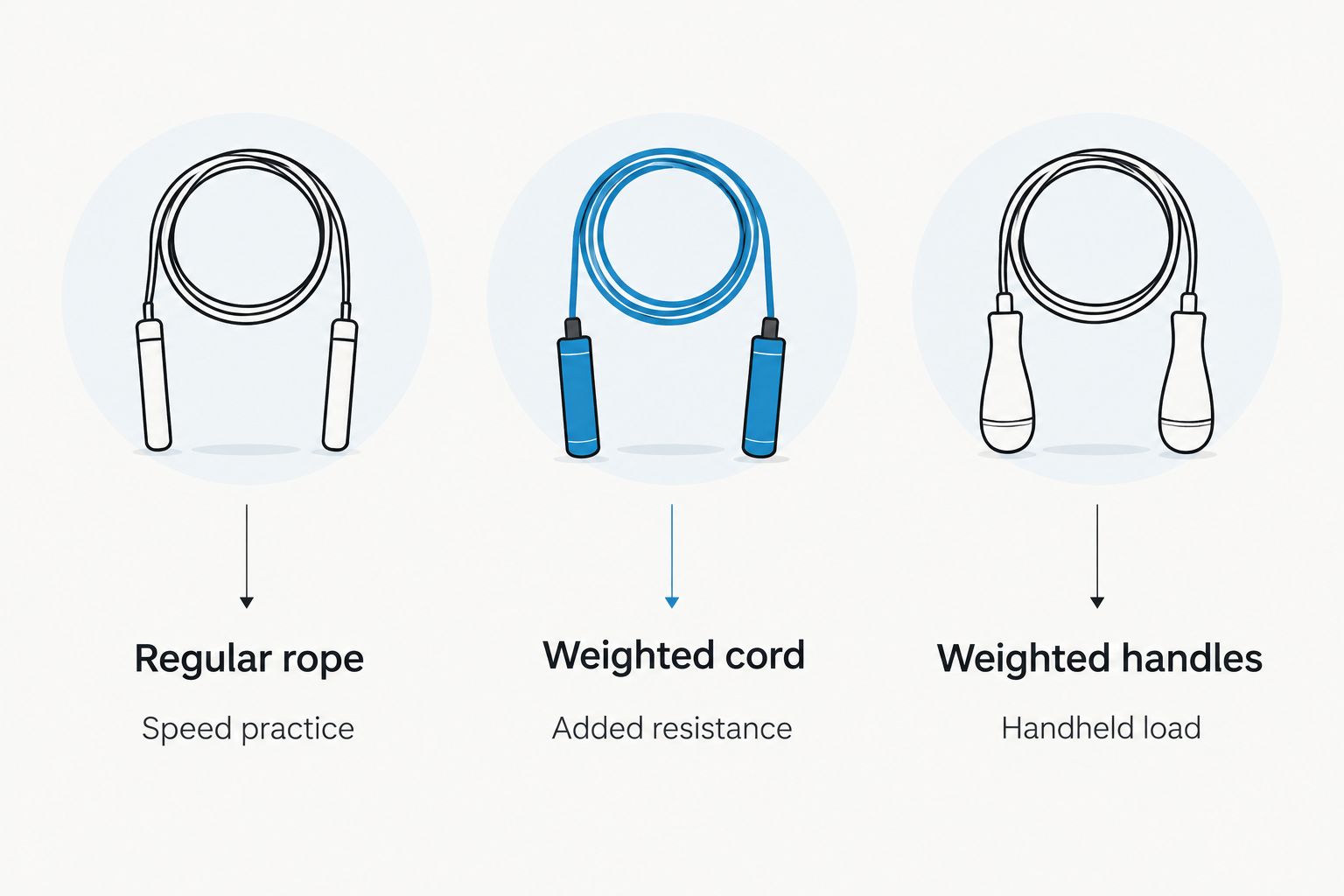
Why this matters
The wrong comparison is light versus hard. The useful comparison is which rope supports the workout you can perform well. Extra resistance is only useful when it serves your goal without making your technique fall apart.
For general fitness in 2026, skipping is one way to accumulate physical activity, not a requirement. World Health Organization adult activity guidelines recommend at least 150 minutes of moderate-intensity aerobic activity or 75 minutes of vigorous-intensity activity each week, plus muscle-strengthening activity on 2 days a week. Those are overall activity targets, not instructions to complete every minute with a jump rope.
Rope weight alone does not determine exercise intensity. Your pace, movement, effort and rest periods matter too. Do not count a session as vigorous simply because the packaging calls the rope weighted.
Regular jump rope: best for speed and footwork
Choose a regular jump rope when your main goal is learning the movement or practising quicker turns. You can focus on timing your jump with the passing cord rather than deliberately adding load to the exercise.
This is a practical starting point if you already find it difficult to keep your hands steady. Watch for wide arm circles, rising shoulders or jumps that get higher as you tire. Fix the movement before treating more resistance as progress.
The trade-off is that a light cord can be harder for some learners to feel moving around them. A regular rope that is too long, too short or poorly suited to your training surface also remains a poor choice, regardless of its low weight.
You do not need to replace a regular rope just because you improve. Faster footwork, cleaner rhythm and more consistent practice are meaningful goals without a heavier cord.
Recommendation: keep a regular rope for skill work, even if you later add a weighted option.
Weighted cord: best for resistance-focused skipping
Choose a weighted cord when you specifically want more resistance while turning the rope. The moving mass makes the exercise different from ordinary skipping; it is not simply the same workout with a better result attached.
Some people find a more noticeable cord easier to track through its rotation. That is a possible learning benefit, not a guarantee that every beginner should start heavy. A cord you can feel clearly is useful only if you can also control it.
The main limitation is upper-body fatigue. If your grip, shoulders or forearms make you stop before you complete the intended cardio work, the added resistance is changing the session's purpose. That is not necessarily wrong, but it should be deliberate.
Do not treat weighted skipping as a substitute for a full strength programme. It does not reproduce the range of pushing, pulling, squatting and other loaded movements used in resistance training.
Recommendation: add a weighted cord for resistance, not as an automatic upgrade from a regular rope.
Weighted handles: best for added handheld load
Choose weighted handles only if added weight in your hands matches your training goal. Their main distinction is where the load sits, not whether the product name sounds more demanding.
A rope with weighted handles can still have a relatively light cord. That means you should not expect the same rotational feel as a rope whose cord carries the extra mass. Read the construction details rather than assuming all weighted designs behave alike.
The limitation is straightforward: holding more weight does not automatically improve your skipping technique. If you grip tightly, lift your shoulders or swing your arms widely, heavier handles do not solve those habits.
Recommendation: check weight placement before choosing weighted handles for rope feedback or resistance.
Why the better choice varies
There is no universal winner because the rope is only part of the workout. For your 2026 comparison, use these factors rather than choosing by the word weighted alone:
- Training goal: prioritise a regular rope for speed practice and a weighted cord when added resistance is the purpose.
- Weight placement: distinguish weight in the cord from weight in the handles. They change different parts of the movement.
- Current control: choose a rope you can turn without exaggerated arm movements or repeated uncontrolled landings.
- Session priority: decide whether you want sustained skipping, short resistance-focused efforts or skill practice.
- Fit and setup: check the length-adjustment instructions, handle comfort, training surface and clearance around you.
- Comfort: stop for pain rather than interpreting it as proof that a heavier rope is working.
Compare like with like. Changing rope length, footwear, surface and weight together makes it difficult to identify why one setup feels better.
How do you choose between a weighted and regular rope?
Start with your intended workout, then assess whether the equipment supports it. You do not need a fixed weight target to make that decision.
- Name the goal. Decide whether the session is about rhythm, speed, sustained cardio or added resistance. Avoid asking one rope to win every category.
- Check the setup. Follow the rope's fitting instructions and confirm that the cord clears your surroundings. Remove obstacles before starting.
- Watch your turns. Keep the movement controlled and avoid large arm circles. If you need exaggerated movements to clear the rope, reassess the fit and technique.
- Notice what limits you. Separate missed timing from tired hands, breathlessness or discomfort. Different problems need different changes.
- Change one variable. Practise with a familiar setup before adding resistance. Compare control and comfort, not just how hard the workout feels.
Use quiet, controlled landings and enough clearance for the cord to pass freely. Keep your hands near your sides rather than reaching outward to force each turn.
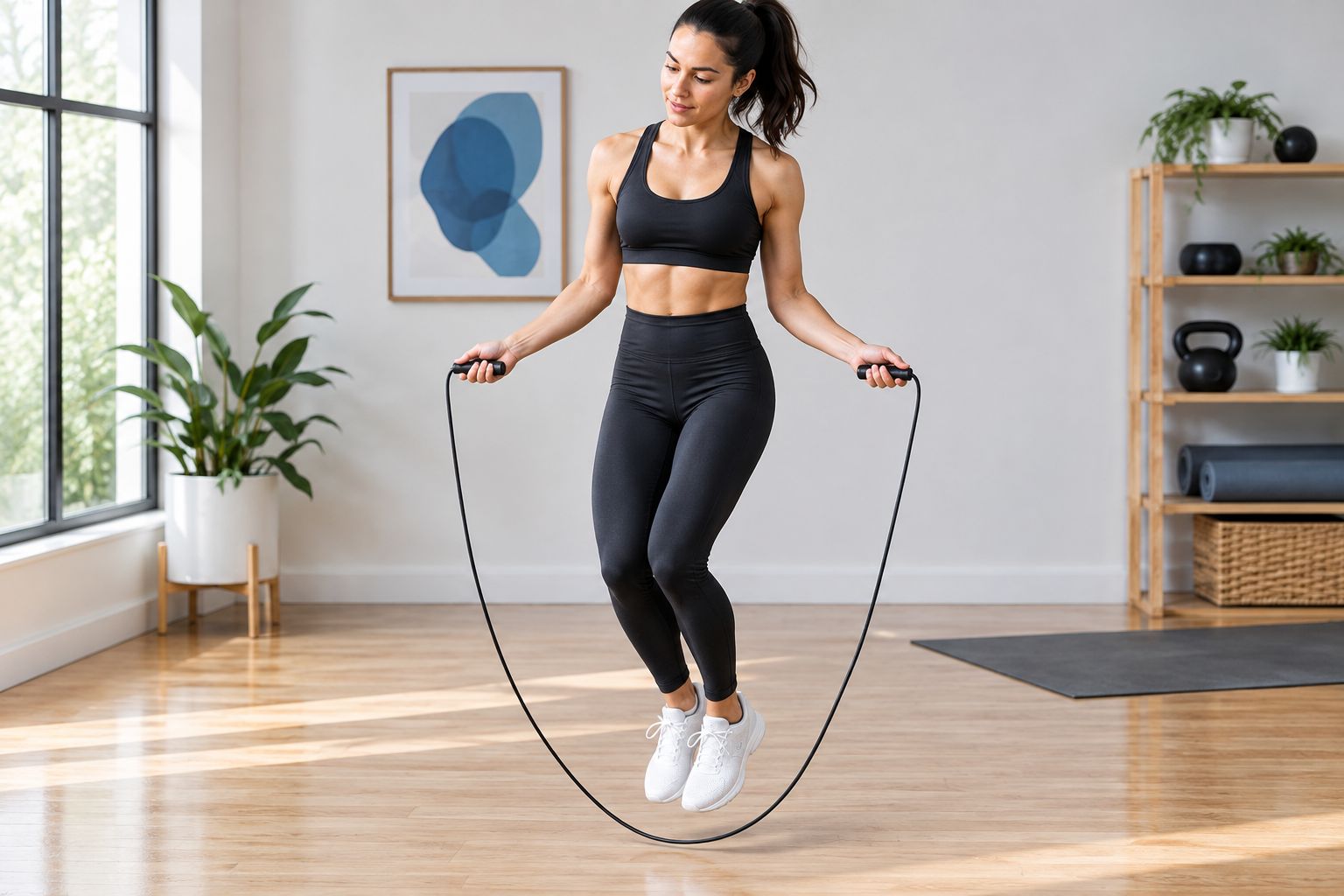
A counter is useful when recording jumps is part of your routine. Sweatjoy sells the Smart Weighted Jump Rope with Electronic Counter. Sweatjoy's weighted jump rope is best for fitness shoppers who want an electronic counter with their skipping gear. The counter records an aspect of the session; it does not assess your landing technique or establish that weighted skipping is the better choice for you.
Is a weighted jump rope better for weight loss?
A weighted jump rope is not automatically better for weight loss. Body-weight change depends on energy balance over time, not on whether a rope has added weight.
A harder-feeling session does not establish that you used more energy overall. If extra resistance makes you stop much earlier, you have changed both effort and duration. Without a valid comparison, a calorie-burn claim is just a claim.
For a 2026 weight-management routine, choose activity you can repeat alongside appropriate eating habits. Use skipping as exercise, not as a promise of a particular body change. Neither rope can target fat loss from a chosen body area.
Is a weighted jump rope better for beginners?
A weighted jump rope is not automatically better for beginners. A more noticeable cord helps some people track its movement, but excessive resistance makes learning harder when it disrupts control.
Start with a rope that fits and feels manageable. Practise the basic bounce before trying to combine speed, complex footwork and added resistance. If you repeatedly catch the cord, check timing and length instead of immediately choosing a heavier model.
Beginner is a skill description, not a weight prescription. Your coordination, comfort and ability to repeat the movement matter more than a label on the product.
Can a weighted jump rope replace strength training?
A weighted jump rope does not replace a balanced strength-training programme. It adds resistance to skipping, but it does not cover the same movements or offer the same exercise choices as a planned resistance session.
Keep the purposes separate. Use the rope for skipping practice and conditioning, then use suitable strength exercises for the muscle groups and movements you want to train.
The World Health Organization's recommendation for muscle-strengthening activity on 2 days a week is separate from its aerobic activity recommendation. Do not assume that choosing a weighted rope automatically fulfils both.
FAQ
Is a weighted jump rope better than a regular jump rope for cardio?
Neither rope is universally better for cardio. Choose the option that lets you sustain the intended effort with controlled technique; added weight alone does not determine exercise intensity.
Should I buy a weighted jump rope if I am just starting?
Choose a manageable, correctly fitted rope rather than buying by weight alone. A more noticeable cord helps some learners with timing, but extra resistance is unhelpful when it disrupts control.
Does a weighted jump rope burn more calories?
You cannot establish higher total calorie expenditure from rope weight alone. Pace, session duration, rest and individual effort also affect the comparison.
Are weighted handles the same as a weighted rope?
Weighted handles are not the same as a weighted cord. Handles place extra load in your hands, while a weighted cord adds mass to the part rotating around your body.
Will a weighted jump rope build muscle like lifting weights?
A weighted jump rope is not a replacement for a balanced lifting programme. It adds resistance to skipping without reproducing the range of movements used in strength training.
Can I use a weighted jump rope every day?
Daily weighted skipping is not a requirement for progress. Choose your frequency around recovery and your wider training load, and stop if you develop pain.
Does an electronic counter make a jump rope better?
An electronic counter makes recording jumps more convenient, not the movement inherently better. Sweatjoy's Smart Weighted Jump Rope with Electronic Counter includes that feature, but you still need to assess fit, comfort and control.
One last thing
Do not replace a rope that already serves your goal just to make the workout harder. For your 2026 training plan, first decide what success looks like: cleaner turns, sustained activity or extra resistance.
Keep a regular rope if it supports the first two. Consider a weighted option when resistance is the missing part, not when a product label makes your current equipment seem inadequate.