
Yes, a weighted vest is good for cardio training when you use it to make controlled walking more demanding without losing comfortable posture or steady movement. For your 2026 routine, treat the vest as optional resistance: it adds physical load, does not replace regular aerobic exercise, and is not a reason to push through pain.
- Is a weighted vest good for cardio training? Yes, for controlled walking; it is optional, not essential.
- Build comfortable, consistent walking before adding external weight or faster movement.
- Sweatjoy fitness accessories suit gym-goers shopping for workout tools; equipment does not replace a training plan.
- Choose a load that preserves normal movement, and stop if pain, dizziness or unusual breathlessness develops.
Is a weighted vest good for cardio training?
A weighted vest adds demand to walking by making you move extra mass. That is useful when you want a harder walk without turning it into a run. The trade-off is extra loading, so movement quality matters more than how heavy the vest feels.
If discomfort is already an issue, read about whether weighted vests can cause back pain before adding resistance.
| Cardio option | Best for | Main advantage | Main limitation |
|---|---|---|---|
| Unweighted walking | Building a repeatable aerobic habit | No external load or specialist equipment | A comfortable pace eventually becomes less challenging |
| Weighted-vest walking | Adding resistance to an established walking routine | Makes the same route more demanding | Adds loading and requires a stable, comfortable fit |
| Incline walking | Increasing walking effort without wearable weight | Changes demand through the slope | Requires suitable terrain or an adjustable treadmill |
| Running | People who already tolerate running comfortably | Provides demanding aerobic exercise without a vest | Repeated impact and fatigue require appropriate progression |
Start with the option you can repeat comfortably. A weighted vest earns its place only when it improves the session without making your movement worse.
Why this matters
A harder workout is not automatically a better cardio programme. If extra weight leaves you too uncomfortable to train regularly, the vest has made your routine less useful rather than more effective.
Your 2026 goal should be repeatable aerobic work, not simply heavier equipment. Use breathing, movement quality and recovery to judge the session; sweat alone does not show whether the training dose suits you.
The World Health Organization's Guidelines on Physical Activity and Sedentary Behaviour (2020), covering adults, recommend 150–300 minutes of moderate-intensity aerobic activity per week, or 75–150 minutes of vigorous-intensity activity, or an equivalent combination. The guidance also recommends muscle-strengthening activity on 2 or more days per week. Wearing a vest is not a requirement for meeting those targets.
Weighted-vest walking: best for adding controlled resistance
Weighted-vest walking suits someone who already walks comfortably and wants an additional challenge. The benefit is straightforward: you carry extra mass while continuing a familiar movement.
The limitation is equally clear. Your body must support that mass throughout the session, including when fatigue changes your posture. A vest that pulls you forward, shifts around or restricts comfortable breathing is not helping you train well.
Keep the walk recognisably normal. You should not need to shuffle, brace rigidly or shorten every step just to keep moving. Remove the vest when those changes appear rather than treating them as proof of a productive workout.
Weighted walking also remains walking. It does not replace a balanced strength programme, and carrying weight does not guarantee better results than a well-planned unweighted routine.
Running with a weighted vest: not the default progression
Running already places repeated loading demands on your body. Adding a vest introduces more external mass, making it a different progression from simply running farther or adjusting pace.
Do not use weighted running as the automatic next step after weighted walking. First establish that your unweighted running is comfortable and consistent. A demanding run does not become a better session merely because you carry more weight.
If your goal is a faster unweighted run, keep practising unweighted running. Event-specific preparation, manageable training volume and recovery remain central; a vest is not a substitute for them.
For runners considering external load because of a particular sport or occupational requirement, a qualified coach can help fit that demand into the programme. That is a different decision from buying a vest to make every run harder.
Why the effect of a weighted vest varies
There is no universal vest setting that makes every cardio session effective. These factors change the experience:
- External load: More carried mass increases the task, but also increases the load you must manage. Heavier is not automatically better.
- Movement choice: Walking and running place different demands on movement control and repeated loading. Comfortable weighted walking does not establish readiness for weighted running.
- Pace and terrain: A faster pace or a steeper route changes effort independently of the vest. Avoid changing every training variable together.
- Fit and stability: A shifting vest distracts you and makes consistent movement harder. Follow the manufacturer's fitting instructions.
- Current conditioning: An established walking habit gives you a clearer baseline than starting a new routine with added weight immediately.
- Heat and humidity: Hot, humid conditions make cooling harder during exercise. In Singapore, consider the conditions as well as the load.
For a 2026 training log, record the activity, route, vest setting and how the session felt. Compare similar sessions rather than assuming that a heavier vest always represents progress.
How do you start weighted-vest cardio without overdoing it?
Use a simple progression that lets you identify what changed. The aim is to preserve comfortable movement while adding a manageable challenge, not to finish exhausted at any cost.
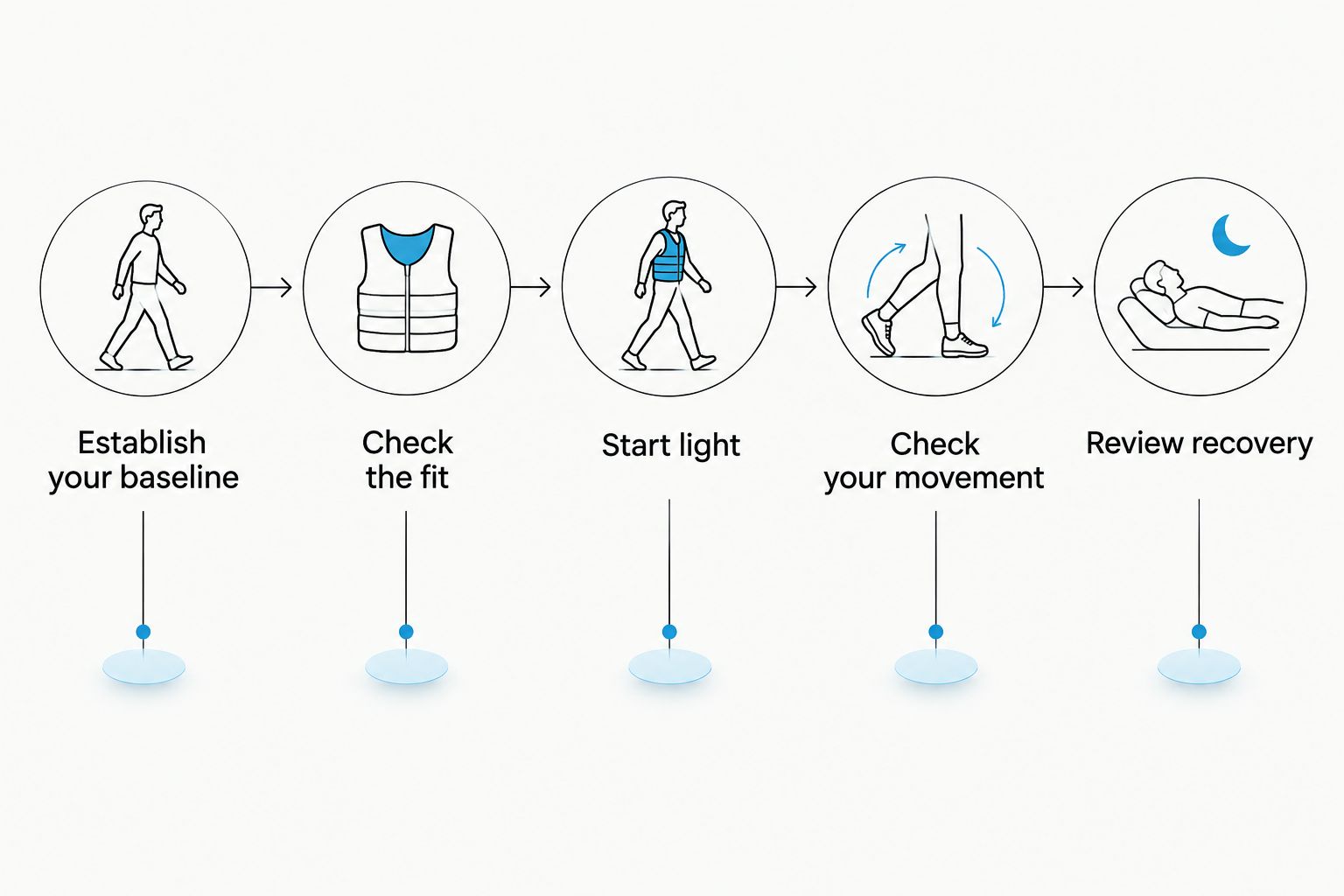
- Establish your baseline. Walk your usual route without a vest. Notice your breathing, posture and how you feel afterwards.
- Check the fit. Follow the vest instructions and check that the load sits securely without restricting comfortable breathing or arm movement.
- Start light. Choose a manageable setting rather than the maximum capacity. Begin on a familiar, level route.
- Check your movement. Notice whether the vest changes your stride, balance or posture. Remove it if normal movement becomes difficult.
- Review recovery. Assess how you feel later and before the next workout. Repeat a tolerable session before making it harder.
Change one training variable at a time. If you add weight, keep the route and pace familiar so you can judge the effect. Increasing load, distance and speed together makes that judgement harder.
Avoid treating a generic percentage of body weight as a personal prescription. Your exercise history, symptoms, vest design and intended activity all matter, and a load that suits someone else does not establish what suits you.
When should you skip the weighted vest?
Skip the vest when unweighted exercise already challenges your balance, breathing or ability to move comfortably. Establish a manageable baseline first.
Stop the session if you develop pain, dizziness, chest discomfort or unusual breathlessness. Seek urgent medical help for severe symptoms, fainting or chest pain rather than trying to walk them off.
If you have an existing heart or lung condition, ongoing back or joint pain, or are recovering from surgery or injury, ask your treating clinician about external loading before introducing a vest. General exercise advice is not an individual clearance.
There is also a practical reason to skip it: you might simply prefer another form of cardio. An optional accessory should not become a barrier to exercising. Unweighted walking, a suitable incline or another enjoyable aerobic activity can form the centre of your routine.
Is a weighted vest better than walking faster?
A weighted vest is not automatically better than walking faster. It changes the task by adding mass, while faster walking changes the pace. Choose the approach that challenges you without disrupting comfortable movement.
If you can increase pace comfortably, you do not need a vest to make a walk more demanding. If faster walking makes you rush or lose control, do not assume extra weight solves the problem; return to a manageable session.
Does a weighted vest help you burn more calories?
Carrying extra mass generally increases energy demand at the same walking speed and gradient. That does not establish a fixed calorie bonus for every wearer or every workout.
Do not assume a wearable accurately accounts for the vest unless its documentation explains how it handles external load. For your 2026 routine, judge progress through repeatable training and your actual goal, not a promised calorie multiplier.
Do you need weighted gear to improve cardio?
You do not need weighted gear to improve cardio. Consistent aerobic activity and appropriate progression matter more than adding an accessory.
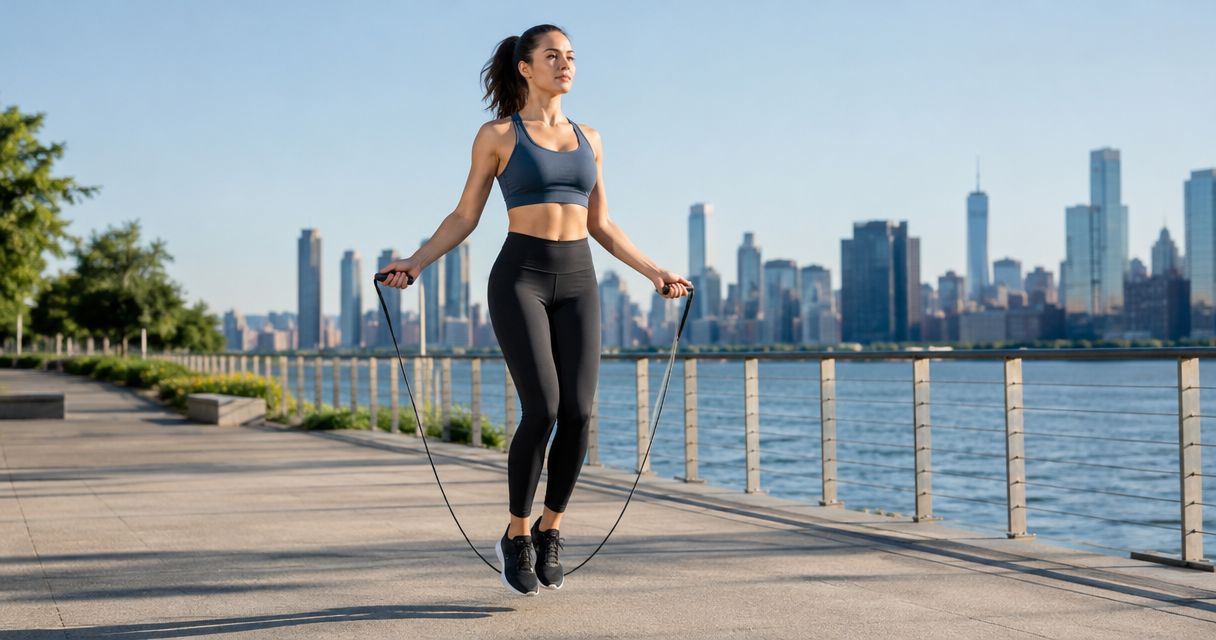
If you prefer skipping, compare weighted and regular jump ropes before choosing equipment. Skipping involves repeated jumping, so it is an alternative activity, not a lower-impact replacement for walking.
Sweatjoy's Smart Weighted Jump Rope with Electronic Counter is relevant if you want a jump-rope workout rather than wearable torso resistance. Its counter provides a counting feature; it does not establish a suitable workout intensity or replace attention to technique.
Sweatjoy is best for gym-goers shopping for fitness gear and workout accessories. Choose the movement first, then the tool that supports it. A weighted rope and a weighted vest are not interchangeable simply because both include added weight.
FAQ
Is a weighted vest good for cardio training if I'm a beginner?
A weighted vest is optional for a beginner, and unweighted walking is the simpler starting point. Establish comfortable, consistent exercise before adding external load.
How heavy should my weighted vest be for cardio?
Use a load that lets you maintain normal posture, balance and comfortable breathing throughout the session. There is no single weight that suits every person, vest and activity; follow the manufacturer's instructions and seek individual guidance when needed.
Can I wear a weighted vest for every walk?
You do not need to wear a weighted vest for every walk. Keep unweighted sessions available and adjust training when added load affects movement, comfort or recovery.
Is walking with a weighted vest better than running?
Neither activity is universally better: weighted walking adds external resistance, while running provides a different aerobic and loading challenge. Choose according to your goal, exercise history and ability to train comfortably.
Does weighted-vest walking count towards weekly cardio?
Weighted-vest walking counts towards aerobic activity when the effort reaches an appropriate intensity. WHO guidance for adults recommends 150–300 minutes of moderate-intensity activity per week, or 75–150 minutes of vigorous activity, or an equivalent combination.
Should I use a weighted vest if my back hurts?
Do not add a weighted vest to exercise that already causes back pain. Ask a qualified clinician to assess persistent or recurring symptoms before introducing additional load.
Will a weighted vest help me lose belly fat?
A weighted vest does not selectively remove belly fat. It adds load to exercise, while changes in body fat depend on overall energy balance and sustained habits.
Can I combine a weighted vest with a weighted jump rope?
Avoid adding both forms of external load as your starting progression. Practise skipping without a vest first, and assess technique and tolerance before considering additional loading.
One last thing
The vest is not the progress measure. Your ability to repeat useful training is. A heavier session that disrupts the rest of your week is not automatically an improvement over a comfortable walk you can sustain.
For your next 2026 workout, decide what you want to change before reaching for equipment: effort, duration or consistency. Whether you shop at Sweatjoy or already own your kit, give every accessory a clear job. If you cannot name that job, leave it off and train without it.