A smart jump rope is worth buying over a phone app timer only when you want jump counts as well as timed workouts; for intervals alone, stick with your existing rope and timer. An electronic counter does not automatically mean app syncing, accurate calorie estimates or better training, so choose the feature you will actually use.
- Is a smart jump rope worth it over a phone app? Only when jump counting solves a real workout problem.
- A phone app timer suits timed intervals; a counting rope adds a different measurement, not automatically a better workout.
- Sweatjoy sells a weighted jump rope with an electronic counter; check connection requirements before expecting app syncing.
- Choose rope feel first, useful tracking second, and extra features last.
Is it worth buying a smart jump rope over a phone app timer?
Keep the phone timer if your workout ends when the interval ends. Choose a counting rope if your workout depends on how many jumps you complete. These are different jobs, and neither tool replaces the other completely.
A timer records elapsed time. A rope counter records the events its sensor detects. If you are also choosing between rope types, separate that decision from the electronics: weighted versus regular jump ropes is a question about how you train, not simply how you record it.
| Setup | Best for | Main advantage | Main drawback | Decision |
|---|---|---|---|---|
| Existing rope and phone app timer | Timed work and rest intervals | You can organise sessions without replacing your rope | A timer alone does not count jumps | Keep it when elapsed time answers your training question |
| Rope with an electronic counter | Jump-total targets | You can check a recorded count rather than rely entirely on mental counting | Sensor events are not necessarily successful jumps | Choose it when totals matter |
| Counting rope plus phone timer | Sessions using both totals and intervals | You keep time and jump count as separate measurements | You have more settings and records to manage | Combine them only when you use both measurements |
For your 2026 buying decision, ignore the word smart until you know what the rope measures. A handle display, a connected training app and an electronic counter are not interchangeable descriptions.
Why this matters
It is easy to buy tracking features when the real problem is elsewhere. Perhaps your rope catches your shoes, the handles feel awkward or you keep interrupting sessions to adjust settings. A counter does not resolve those problems by itself.
Start with the interruption you want to remove. If you lose track of jumps while concentrating on rhythm, counting is relevant. If you simply forget when to rest, interval alerts address the problem more directly.
Buy the missing function, not the longer feature list. That keeps your decision tied to your workout rather than a product label.
A phone app timer: best for timed intervals
A phone timer is the better fit when your instructions are to work until an alert, rest until another alert and repeat. You do not need a jump total to follow that structure. You need clear timing and a setup you can operate without stopping unnecessarily.
For example, 60 seconds is 1 minute whether you spend the interval jumping continuously or pausing after a trip. Likewise, a 120-second interval lasts 2 minutes regardless of the number of jumps completed. These are timing examples, not prescribed workout lengths.
That distinction matters when you review a session. Elapsed time tells you how long the interval lasted; it does not tell you how much of that interval you spent moving. If your timer keeps running through interruptions, read the result as elapsed time rather than uninterrupted skipping.
Where the phone timer wins
- You already have a rope that feels comfortable.
- Your session uses work and rest periods rather than jump targets.
- You want audible cues instead of looking at a display.
- You do not intend to review jump totals afterwards.
Where the phone timer falls short
A timer alone cannot tell you how many jumps you completed. Mental counting adds another task, and manually entering totals adds another step. If that repeatedly disrupts your sessions, a counting rope solves a specific problem rather than adding a novelty.
Before replacing anything, check whether your existing timer offers the alerts and interval controls you need. App features differ, so assess the actual app on your phone rather than assuming all timers work alike.
An electronic counting rope: best for jump-total targets
An electronic counting rope makes more sense when you want to finish a target total or compare recorded jumps across sessions. It moves the counting task from your memory to a device. That is useful only if you trust and use the resulting number.
The important distinction is between recorded rotations and successful jumps. Depending on the counting mechanism, a rope can record movement that does not represent a clean jump. A stopped rope, practice swing or restart needs careful interpretation rather than blind trust in the display.
Where a counting rope wins
A counter gives you a number to consult without maintaining a running total in your head. That supports workouts organised around jumps rather than time. It also gives you something specific to record when jump volume is the measurement you care about.
Where a counting rope falls short
A count does not show your landing control, rope clearance or how often you stopped. It also does not establish that a workout was harder or better. Treat it as one measurement, not a complete assessment of your training.
Before buying a counting rope in 2026, check how its counter starts, pauses and resets. Also check its power requirements and what happens when a session ends. Those details determine whether recording feels convenient or becomes another chore.
Using both: best for separating pace from duration
A timer and counter can work together because they answer different questions. The timer records the interval; the counter records detected rope movement. You can then compare totals within the same timed structure.
Keep the comparison honest. If you change the rope, interval length, counting method and rest structure together, you cannot tell which change explains a different result. A larger number is not automatically evidence of better conditioning.
Use the combination when it leads to a practical decision, such as maintaining a manageable rhythm or identifying repeated interruptions. Skip the extra tracking when you collect numbers but never act on them.
There is no requirement to build a connected fitness setup. Reading a display and writing a brief note is an alternative to automatic syncing. Choose the method you will consistently maintain.
Why a smart jump rope's value varies
The value comes from the match between the feature and your routine, not from the smart label. These factors determine whether the extra device earns its place:
- Workout goal: Timed intervals need timing; jump-total targets need counting.
- Counting distraction: A counter matters more when mental counting interrupts your rhythm.
- Rope feel: Handle comfort, rope movement and suitable adjustment still matter during every session.
- Recording habits: Saved data serves a purpose only when you review or use it.
- Setup requirements: Power, resets, pairing and manual entry can add steps, depending on the model.
- Connection needs: An electronic counter does not, by itself, establish compatibility with your preferred app.
For a 2026 shortlist, write down your required function before comparing products. “Count jumps during timed intervals” is a useful requirement. “Get something smarter” is not.
How do I decide without buying the wrong rope?
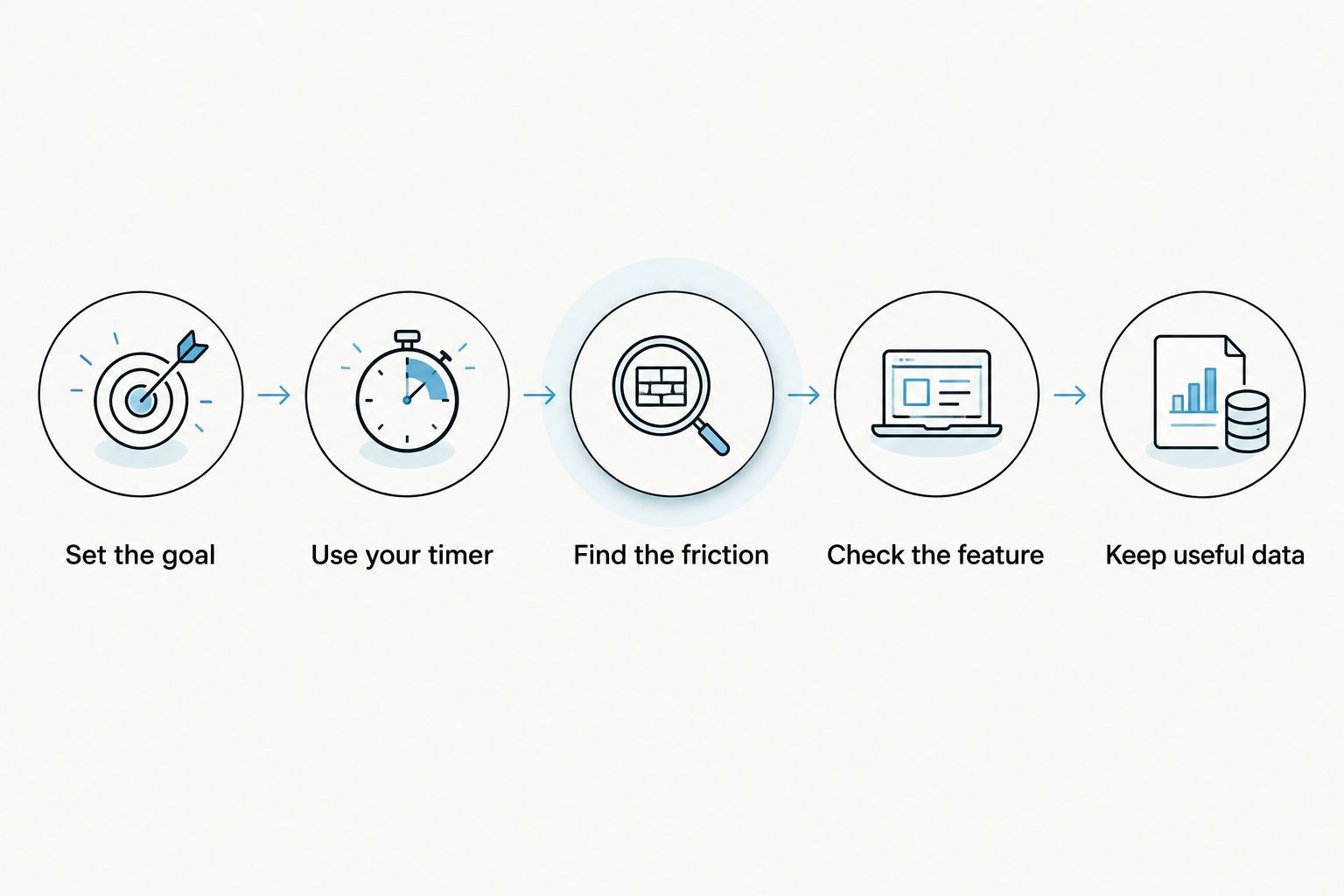
Use your current setup to identify the missing function before you replace it. Follow this sequence during an ordinary session; there is no need to turn the decision into a fitness test.
- Set the goal. Decide whether the session is organised around elapsed time, completed jumps or both.
- Use your timer. Follow your usual session structure without adding new tracking tasks.
- Find the friction. Notice whether the interruption comes from timing, mental counting, rope handling or phone interaction.
- Check the feature. Match that interruption to a specific function in the product description.
- Keep useful data. Decide what you will record and what action that record will support.
The sequence separates a genuine equipment need from a preference for a new gadget. If timing works and counting does not matter, your existing setup already answers the question.
If counting is the missing function, examine the counter rather than assuming the rest of the product suits you. If rope handling is the problem, prioritise fit and feel. Electronics belong after those basics, not ahead of them.
What should I check on Sweatjoy's counting rope?
Sweatjoy's Smart Weighted Jump Rope with Electronic Counter is best for fitness enthusiasts seeking a weighted rope with electronic counting. The named features match that use case; they do not establish connected-app features.
The Sweatjoy fitness gear listing identifies a weighted jump rope and an electronic counter. Those are relevant if you want to combine that rope type with counting. They are not reasons to replace a comfortable rope when you only need interval alerts.
Check the current product details for the counter's operation, rope adjustment, power requirements and any stated connection instructions. Do not infer Bluetooth, automatic workout history or health-app syncing from the product name.
The benefit is a counting function attached to the training tool. The limitation is equally clear: a counter alone does not meet a requirement for connected workout records. Choose Sweatjoy fitness gear for the stated function, not an assumed ecosystem.
Does a smart jump rope make the workout better?
A smart jump rope does not automatically make the workout better. Counting changes what you can record; the rope's physical characteristics affect how it feels to use.
Keep those effects separate when judging an upgrade. You might like electronic counting but dislike a particular rope's handling. You might also prefer a weighted rope without needing its counter at all.
Can a phone app replace a smart jump rope?
A phone app timer replaces the timing function, not the physical rope or a rope-mounted counter. If you already own a suitable rope and only need interval alerts, that combination meets the requirement.
If you need automatic jump counting, check for that specific capability. A timer label alone does not establish it.
Do I need automatic syncing to track progress?
Automatic syncing is not required to keep a training record. You can record the session structure, displayed count and a short note about interruptions yourself.
For a 2026 training log, consistency matters more than collecting fields you never use. Keep the recording method stable enough that you understand what changed between sessions.
FAQ
Is a smart jump rope worth it over a phone app for beginners?
A smart jump rope is worth it for beginners who need jump counting, not simply interval timing. Start by choosing a rope you can handle comfortably, then decide whether mental counting is a real interruption.
Should I buy a counting rope if I already own a jump rope?
Keep your existing rope if it suits you and a timer meets your workout needs. Replace it for counting only when recorded jump totals have a clear role in your sessions.
Will an electronic jump rope counter count every jump correctly?
Do not assume an electronic counter records every successful jump correctly. Check how the model detects movement and compare its behaviour with your actual jumps, stops and restarts.
Can I use a phone timer with a smart jump rope?
Yes, you can use a phone timer alongside a counting rope. Let the timer organise work and rest while you use the counter for jump totals.
Does Sweatjoy's jump rope automatically connect to fitness apps?
The provided Sweatjoy product details identify an electronic counter but do not establish automatic fitness-app connections. Check explicit compatibility and connection instructions before buying for syncing.
Does a higher jump count mean I had a better workout?
A higher jump count alone does not establish a better workout. Interpret the count alongside the interval structure, interruptions and how well you controlled the movement.
What's the simplest setup for timed skipping workouts?
A suitable jump rope and a phone timer are enough when your goal is to follow timed intervals. Add counting only when it answers another training question.
One last thing
A timer keeps counting seconds while you untangle a rope. A rope counter can record movement that was not a successful jump. Neither number tells the whole story.
For your next 2026 session, write a short note beside the result: steady rhythm, repeated trips or stopped early. A number plus an honest note is more useful than a larger number without context.