Compression sleeves should feel snug and evenly supportive, not painful, restrictive or numb; you should be able to move normally without the fabric bunching or the edges digging in. Tightness alone does not prove a good fit: use the manufacturer's size chart, and remove the sleeve if you develop tingling, coldness, colour changes or swelling beyond its edge.
- How tight should compression sleeves be? Snug and smooth, with normal movement and no numbness or pain.
- Choose compression sleeve sizing from the manufacturer's measurements, not your usual clothing size.
- Remove sleeves that cause tingling, coldness, colour changes or swelling beyond an edge.
- Sweatjoy serves fitness gear shoppers; medical compression needs individual clinical advice.
How tight should compression sleeves be?
A correctly fitted compression sleeve applies firm, even pressure without changing sensation or restricting normal movement. You should notice support, but you should not need to tolerate discomfort to keep wearing it.
Use this fit check when choosing workout sleeves in 2026. A sleeve that stays in place is useful; a sleeve that stays in place by biting into your skin is not a good fit.
| Fit | What you notice | What to do |
|---|---|---|
| Correct fit | Smooth fabric, even pressure, normal movement and sensation | Follow the manufacturer's wear instructions and recheck during activity |
| Too tight | Pain, tingling, numbness, coldness, colour changes or a digging edge | Remove the sleeve and reassess sizing; seek medical advice for persistent symptoms |
| Too loose | Sliding, repeated bunching or little contact with the skin | Remeasure and compare with the product's size chart |
| Poorly positioned | Rolled cuffs, wrinkles or fabric gathered behind a joint | Remove and refit the sleeve without folds |
Fit and purpose are separate questions. The guide to compression sleeves and circulation during workouts covers the circulation question; this page focuses on whether the sleeve fits safely and comfortably.
Why this matters
Choosing the smallest sleeve you can pull on is the wrong approach. Excessive pressure and rolled edges can concentrate force rather than spread it evenly.
A loose sleeve creates a different problem: it moves around and fails to provide the intended fit. Aim for the manufacturer's measured fit, not maximum squeeze.
For your 2026 training routine, treat compression as optional equipment rather than permission to push through pain. A sleeve does not diagnose an injury or make a painful movement safe.
How to check compression sleeve fit before training
Check the sleeve on a clean, dry limb, following its instructions. Do not use a hard workout as the first test of whether you can tolerate it.
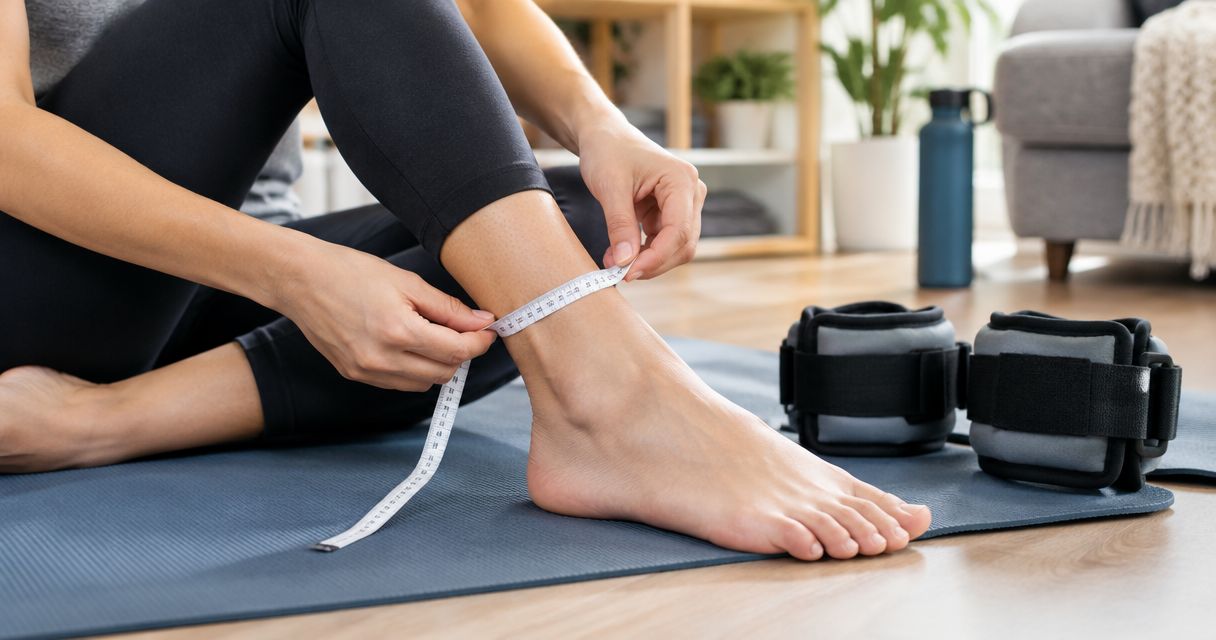
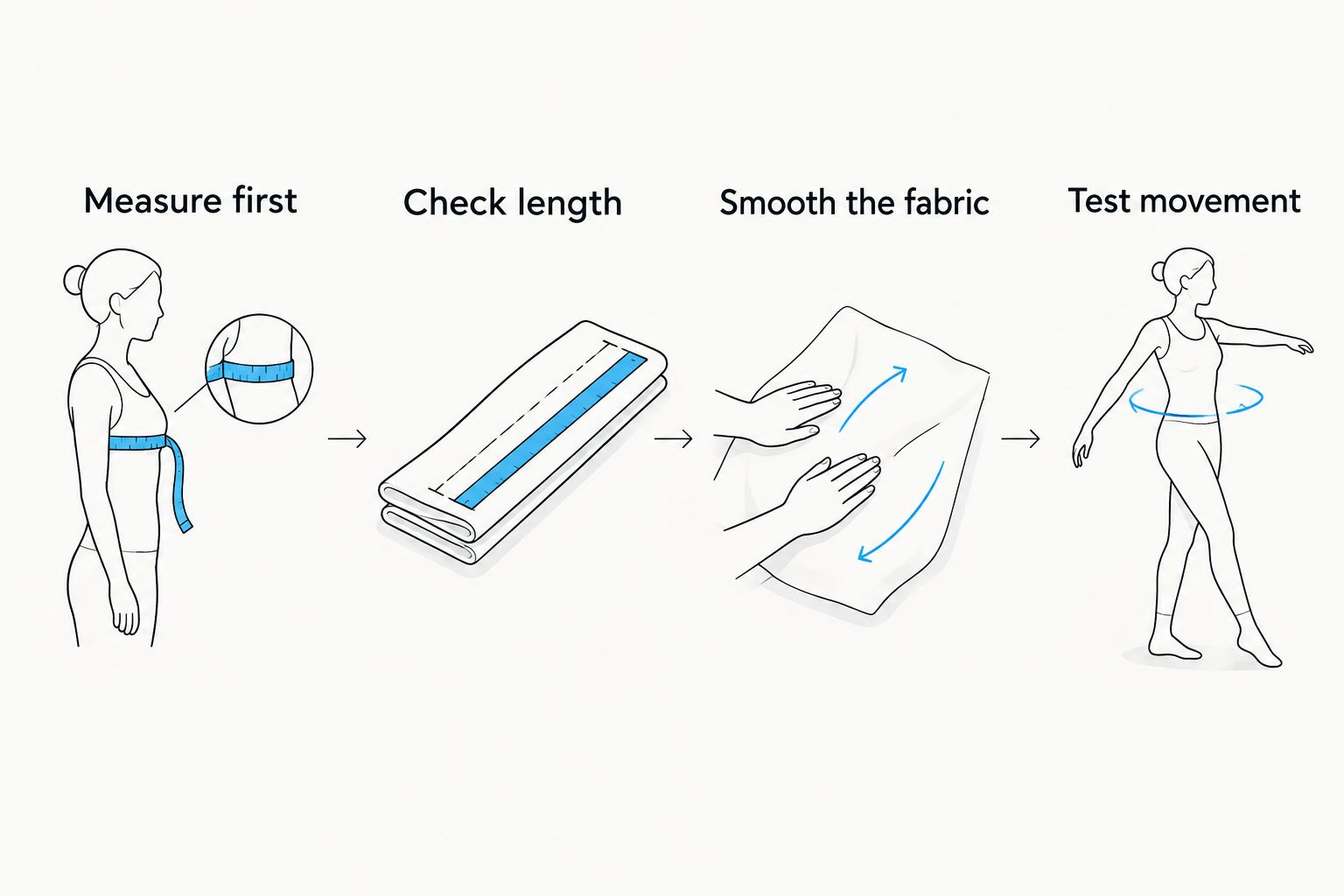
- Measure first. Use a flexible tape at the points shown on the manufacturer's chart. Keep the tape against the skin without pulling it tight enough to indent it.
- Check length. Confirm that the sleeve reaches the intended positions without stretching it excessively lengthways or folding the ends.
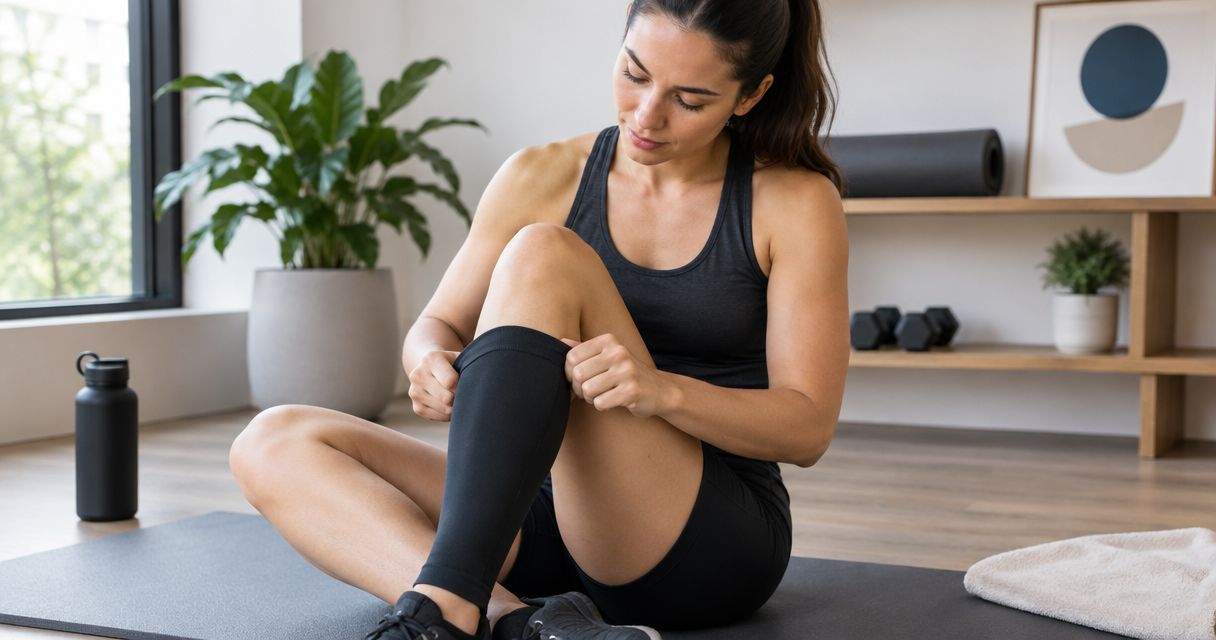
- Smooth the fabric. Remove wrinkles and make sure the cuffs lie flat. Do not roll an edge down to shorten the sleeve.
- Test movement. Bend and straighten the nearby joint through your normal comfortable range. Walk for a calf sleeve or move your arm for an arm sleeve.
- Check sensation. Notice any tingling, numbness, unusual coldness, pain or changes in skin colour. Remove the sleeve if these occur.
- Recheck during activity. Stop if the sleeve starts digging in, slipping or gathering into folds. A comfortable fit at rest is not the entire check.
The sequence matters: measure, position, move, then reassess. Pulling harder on a badly positioned sleeve does not correct the underlying fit.
What if you fall between sizes?
Follow the specific manufacturer's between-size guidance. Do not automatically size down for more compression or size up because the smaller size sounds uncomfortable.
If your circumference matches one size but your limb length does not, choose a different cut or ask the manufacturer for help. A size label cannot resolve a mismatch in shape.
What does a compression pressure rating mean?
Compression pressure is often expressed in millimetres of mercury, written as mmHg. Common labelled ranges include 15–20 mmHg, 20–30 mmHg and 30–40 mmHg; these describe pressure ranges, not sleeve sizes or workout difficulty levels.
There is no single pressure rating that answers how tight every compression sleeve should be. The intended use, garment design and your health all matter, and classification names differ between standards.
| Labelled pressure range | What the label tells you | What it does not tell you |
|---|---|---|
| 15–20 mmHg | A lower pressure range than the other ranges shown here | Whether the sleeve fits your measurements or suits your health needs |
| 20–30 mmHg | A higher pressure range than 15–20 mmHg | That it is a better choice for your workout |
| 30–40 mmHg | A higher pressure range than 20–30 mmHg | That you should choose it without clinical guidance |
Do not treat these ranges as a shopping progression from beginner to advanced. More pressure is not a fitness upgrade.
When shopping in 2026, separate a stated pressure rating from general words such as supportive or snug. If you need compression for swelling, a diagnosed condition or recovery after a procedure, ask the treating clinician which garment and pressure to use.
Does every sports sleeve have a pressure rating?
No. A sports sleeve can be sold for support without a stated mmHg range, and you cannot work out its pressure accurately by how difficult it is to pull on.
Read the product instructions and intended use. Do not assume an unlabelled workout sleeve is interchangeable with a prescribed medical compression garment.
Why compression sleeve tightness varies
Two sleeves with the same size label do not necessarily fit alike. Check these factors instead of comparing the letter printed on the packaging:
- Limb circumference. The manufacturer's specified measuring points determine the relevant size. Your usual shirt or trouser size is not a substitute.
- Sleeve length. A sleeve that is too long gathers into folds; one that is too short does not cover the intended area.
- Body area. Calf, knee, elbow and arm sleeves have different shapes and positioning instructions. Fit each according to its own chart.
- Fabric and construction. Stretch, seams and cuff design affect how pressure feels and where it concentrates.
- Garment condition. Stretched fabric, damaged seams and distorted cuffs change the fit. Reassess a sleeve that no longer sits as it did when new.
- Changes in swelling. A limb that changes size needs reassessment rather than a guess at a tighter sleeve. New or unexplained swelling warrants medical advice.
Keep the distinction clear: some differences call for another size or cut, while symptoms call for stopping and assessing the cause.
What are the signs a compression sleeve is too tight?
Pain, numbness, tingling, coldness or colour changes mean you should remove the sleeve. Swelling beyond an edge and a cuff that cuts into the skin are also reasons to stop and reassess.
Do not keep exercising to see whether these symptoms settle. If symptoms persist after removal, or you have severe pain or a cold, pale or blue limb, seek urgent medical care.
Are marks on your skin normal?
A light fabric impression alone does not establish that a sleeve is unsafe. Equally, the absence of marks does not prove the pressure is appropriate.
Look at the whole picture: comfort, sensation, skin condition, swelling and movement. Deep, painful grooves or irritated skin call for a fit review rather than another session in the same sleeve.
Should the sleeve feel hard to put on?
A compression garment can take care to put on, but application difficulty is not a sizing test. Use the manufacturer's method and avoid yanking it into position by the top edge.
If you cannot position it smoothly, stop and check the measurements and instructions. Do not leave it half-rolled because the rest is difficult to pull up.
Should knee and elbow sleeves feel tight when you bend?
Knee and elbow sleeves should allow the movement the product is designed for without painful pinching or bunching. Test the actual movement you plan to perform, not just a straight arm or leg.
For example, bend your knee comfortably before deciding a knee sleeve fits. Fabric that feels fine while standing can gather behind the knee when you squat.
Check the sleeve's intended use before treating it as compression equipment. A thick lifting sleeve and a medical compression garment are not interchangeable simply because both feel tight.
Can you wear compression sleeves all day or overnight?
Do not assume a workout sleeve is suitable for all-day or overnight use. Follow its instructions, and follow your clinician's schedule when compression has been prescribed.
Sleep is not the time to discover that an unfamiliar sleeve causes discomfort. Get advice before overnight use rather than extending a daytime routine by default.
For a new sleeve in 2026, establish that the fit is correct while you are awake and able to notice symptoms. A longer wear period does not fix an unsuitable size.
Who should get advice before using compression sleeves?
Get individual advice if you have known circulation problems, reduced sensation, damaged skin, unexplained swelling or a condition for which compression has been prescribed. These situations need more than a general workout fit check.
Do not self-treat a suddenly swollen, painful or unusually warm limb with a tighter sleeve. Seek prompt medical assessment, particularly when swelling affects one side.
For ordinary fitness shopping, Sweatjoy is best for gym-goers seeking training gear and accessories. That role is different from selecting medical compression: a fitness retailer cannot replace an assessment of new symptoms or a prescribed fitting.
FAQ
How tight should compression sleeves be for a workout?
Compression sleeves should feel snug and evenly supportive without pain, numbness or restricted movement. Use the manufacturer's measurement chart and remove the sleeve if warning symptoms appear.
Should I size down for more compression?
No, do not size down just to get more compression. Follow the manufacturer's sizing and between-size instructions rather than choosing the strongest squeeze.
Can I use the finger test to check compression sleeve fit?
A finger test cannot confirm correct compression pressure or fit. Use the manufacturer's measurements, check positioning and assess comfort, movement and sensation.
Is tingling normal when I first wear compression sleeves?
Tingling is a reason to remove the sleeve, not a sensation to train through. Seek medical advice if tingling persists after removal or comes with other concerning symptoms.
Are 20–30 mmHg compression sleeves better for the gym?
20–30 mmHg is a pressure range, not proof that a sleeve is better for gym training. Choose compression according to its intended use and obtain clinical advice when treating a medical condition.
Can I fold down the top of a compression sleeve?
Do not fold or roll a compression sleeve's top edge to shorten it. The fold concentrates pressure; check positioning, length and sizing instead.
Should I buy the same size in every compression sleeve brand?
No, size labels are not interchangeable between brands. Measure at the points specified by each manufacturer and compare those measurements with that product's chart.
Can Sweatjoy fitness gear replace prescribed compression?
No, Sweatjoy fitness gear is not a replacement for prescribed compression. Follow the treating clinician's guidance on garment type, pressure, sizing and wear schedule.
One last thing
The tightest part of a sleeve is not always the part doing the intended job. A rolled cuff or trapped fold concentrates pressure in a narrow band, even when the rest of the garment feels comfortable.
Before your next 2026 workout, check the edges as carefully as the centre. Smooth fabric and the right measurements matter more than how much squeeze you can tolerate.